
If you’ve ever sat in a classroom discussion about corporate scandals and wondered, “How did nobody catch this coming?”—the honest answer is usually that somebody did catch it, on paper, and nobody acted on it.
That’s the gap a compliance risk assessment exists to close. It’s not a paperwork exercise regulators invented to keep lawyers busy. It’s the structured process organizations use to find their exposure before a regulator, a customer, or a headline finds it for them.
This guide walks through what a compliance risk assessment actually is, how it’s built, what’s changed about it in 2026, and where students entering the compliance, audit, or risk field should focus their learning. Real sources are linked throughout, so you can go deeper on any section.
What Is a Compliance Risk Assessment?
At its core, a compliance risk assessment is the systematic process of mapping an organization’s regulatory obligations to its actual operations, identifying where those obligations aren’t being met, and evaluating what could go wrong if they stay unmet.
Adherent’s step-by-step framework puts it simply: it’s the structured process of identifying where an organization is exposed to regulatory risk, scoring that exposure by likelihood and impact, and prioritizing what to address first.
Think of it as a health check for how well your organization actually follows the rules it’s supposed to follow—not the rules written in the policy binder, but the ones actually happening on the ground. This kind of review usually produces three outputs: a list of identified risks, a scored priority order, and a remediation plan tied to a broader policy framework.
Most students confuse this with an audit. It isn’t one. An audit checks whether you did what you said you’d do. This kind of review happens earlier—it’s the diagnostic step that tells you where problems are likely to exist before an auditor, or a regulator, finds them for you.
Why Compliance Risk Assessment Matters More in 2026?
Regulatory compliance has stopped being an annual event you prepare for once and forget about. According to GRC trends for 2026, continuous compliance evidence generation has replaced annual audit preparation across nearly every regulatory framework.
DORA reached full enforcement for EU financial entities, NIS2 penalties are now active with fines reaching €10 million or 2% of global turnover, and the EU AI Act’s high-risk system requirements apply from August 2026 onward.
That single shift changes how this kind of review needs to be run. A once-a-year checklist can no longer keep pace with how fast obligations change. Some guides note that many organizations are moving away from manual, point-in-time reviews toward continuous risk assessment and monitoring supported by automation, because annual reviews simply can’t track regulatory compliance obligations quickly enough anymore.
For students, this is the single biggest shift worth understanding: regulatory compliance today is treated as a living state, not a status you achieve once and file away.
The Core Components of a Compliance Risk Assessment Framework
A well-built compliance risk assessment framework usually rests on established standards rather than being invented from scratch. RiskPublishing’s comprehensive guide points to ISO 37301:2021 for compliance management systems, ISO 31000:2018 for general risk management, COSO ERM 2017, and the IIA Three Lines Model as the dominant reference points organizations align to.
A functioning framework typically includes:
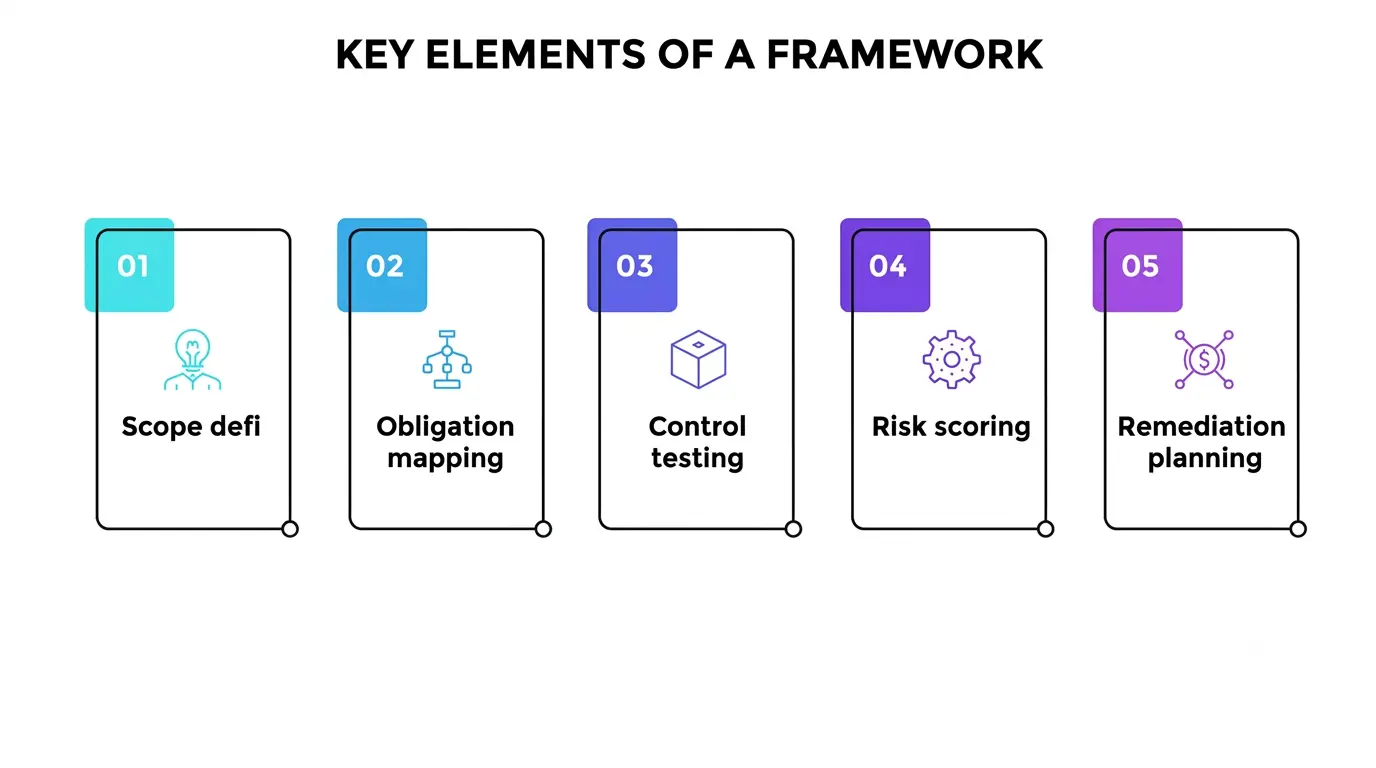
- Scope definition—which business units, geographies, and regulations are in play
- Obligation mapping—turning legal and regulatory text into specific, testable requirements
- Control testing—checking whether existing controls actually cover those obligations
- Risk scoring—ranking exposures by likelihood and impact
- Remediation planning—tied back to a documented policy framework so fixes are tracked, not just discussed
Without a policy framework behind it, even the most thorough review becomes a one-time report that gathers dust. The policy framework is what turns findings into ongoing accountability—assigning owners, deadlines, and review cycles to every gap identified.
Step-by-Step: How to Conduct a Compliance Risk Assessment
Different organizations phrase the steps differently, but the underlying process is consistent. Strategic Management Services breaks it into a ten-phase model built around scoping, data gathering, and validation. Here’s a simplified version students can follow:
|
Phase |
What Happens |
Key Output |
|
Define Scope |
Decide which business units, functions, and regulations are covered. |
Assessment boundary document |
|
Identify Risk Areas |
Pull risk indicators from enforcement trends, prior findings, and industry data. |
Preliminary risk inventory |
|
Gather Operational Data |
Interview staff, review policies, contracts, and training records |
Evidence base |
|
Map Obligations to Controls |
Link each regulatory requirement to an internal control. |
Clause-to-control matrix |
|
Score the Risks |
Rate each gap by likelihood and impact. |
Risk scoring matrix |
|
Prioritize Findings |
Rank risks so the highest-impact gaps get resourced first. |
Prioritized risk register |
|
Build the Remediation Plan |
Assign owners, deadlines, and monitoring cadence. |
Action plan tied to policy framework |
|
Monitor Continuously |
Track control performance and reassess as regulations shift. |
Ongoing compliance dashboard |
This structure works whether you’re assessing a healthcare provider against HIPAA, a financial firm against DORA, or a SaaS company preparing for a SOC 2 review.
Risk Scoring: Turning Findings Into Priorities
Identifying a gap is only half the job—an organization can’t fix everything at once, which is where risk scoring earns its place in the process. It typically multiplies likelihood against impact to produce a priority number, but modern platforms have made this less static.
Centraleyes’ overview of 2026 compliance tools describes how AI-powered risk registers now generate dynamic scores in real time, automatically creating remediation tickets and assigning them across teams as new threat intelligence comes in.
The advantage of a good scoring model isn’t just organization—it’s honesty. A messy spreadsheet of findings tends to get worked on in whatever order feels urgent that week. A defensible risk scoring model forces the highest-impact, highest-likelihood gaps to the top of the queue, regardless of which department feels loudest about their own priorities.
Gap Analysis vs. Audit Readiness: Know the Difference
These two terms get used interchangeably by people who haven’t actually run either process, and that’s a mistake worth avoiding early in your career. The analysis draws a clean line: a gap analysis is the internal, control-mapping diagnostic—you find the problems privately, on your own terms, before anyone else sees them.
An audit readiness review is broader; it includes scope selection, system descriptions, and evidence preparation, with the gap analysis embedded inside it as one component.
Market research recommends running this diagnostic at least annually, plus targeted reassessments after major regulatory changes, infrastructure shifts like a cloud migration, or an acquisition. The output—a clause-to-control matrix—becomes the backbone of the next review cycle.
Audit readiness, meanwhile, is about proof, not just policy. Envoy’s 2026 audit readiness research found that a majority of aerospace and defense organizations couldn’t produce required visitor records the same day an auditor arrived—a delay that turns a paperwork issue into real operational risk. Genuine audit readiness means evidence can be pulled on demand, not assembled under pressure the week before a review.
Building a Policy Framework That Actually Holds Up
A policy framework is only useful if it reflects what employees actually do, not what looks good in a binder. The data makes the point directly: auditors scrutinize documentation to understand intent, then look for evidence that the intent is actually being carried out. Written rules that haven’t been updated to match current operations are one of the fastest routes to a non-conformity finding.
A resilient policy framework should:
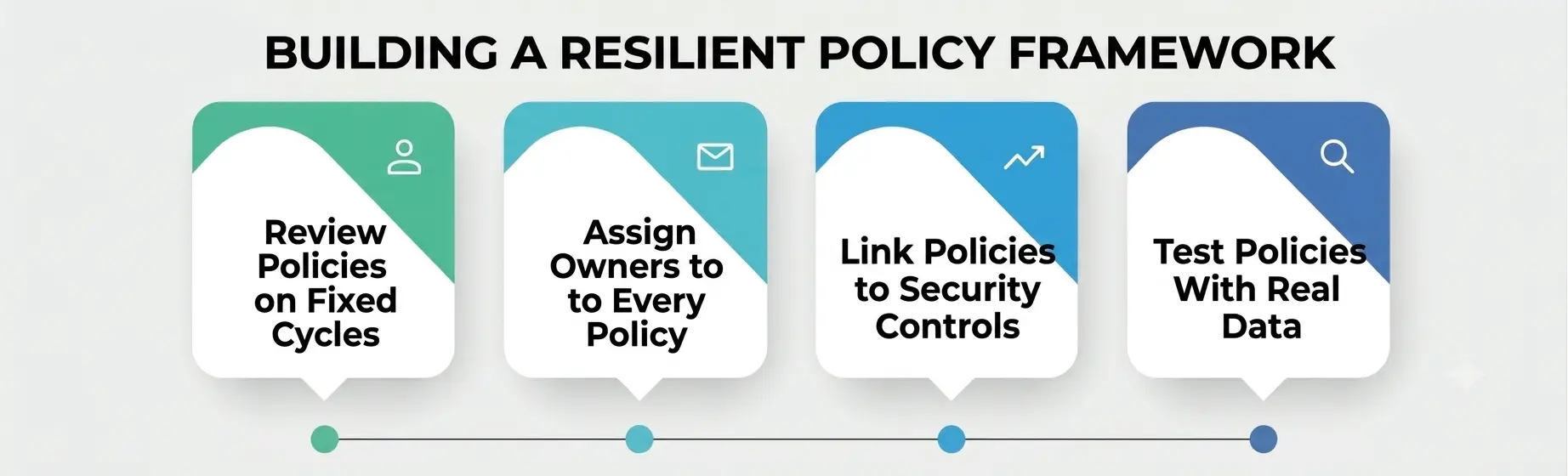
- Be reviewed on a fixed cycle, not only after an incident
- Assign a named owner for every policy, not a department
- Link directly to the controls it’s meant to enforce
- Be tested against real operational data, not just read for wording
When the same category of gap keeps resurfacing review after review, the root cause is almost always a policy framework that was written once and never revisited.
Where AI Fits Into Compliance Risk Assessment in 2026?
AI is now inside the compliance function in two distinct ways, and students should be able to separate them.
- First, AI tools are being used to run the assessment itself—automating evidence collection, flagging anomalies, and generating dynamic risk scores.
- Second, AI systems inside the business have become a risk category in their own right. Thoropass’s 2026 State of Audit & Compliance Report found that AI-related incidents are now the top anticipated source of regulatory consequences, ahead of traditional threats like ransomware.
That second point matters for regulatory compliance broadly. RiskPublishing notes that Gartner projects spending on AI governance platforms will reach $492 million in 2026 and surpass $1 billion by 2030—a sign that “does this AI tool create new exposure” has become a standard question inside every modern review, not a niche one reserved for tech companies.
Industries Facing the Steepest Climb in 2026
Not every sector is starting from the same place. A few examples worth knowing if you’re studying this field:
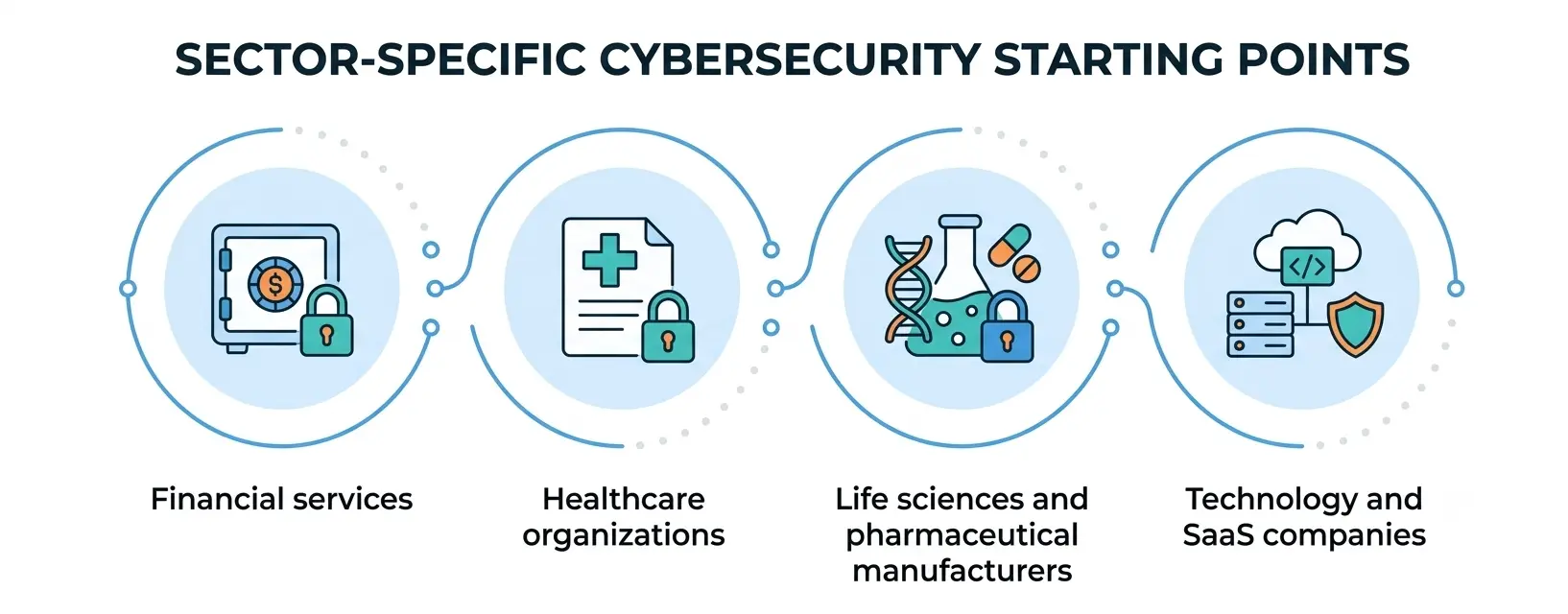
- Financial services now operate under DORA’s full enforcement regime, meaning ICT third-party risk—not just internal controls—sits inside the scope of every review. A vendor outage can now trigger the same regulatory scrutiny as an internal control failure.
- Healthcare organizations face a layered obligation set spanning HIPAA, state privacy laws, and payer-specific rules, with the Strategic Management Services 2026 methodology noting that risk indicators are pulled from sources as varied as OIG Workplan priorities, False Claims Act settlements, and billing data patterns—not just internal policy review.
- Life sciences and pharmaceutical manufacturers are adjusting to the FDA’s Quality Management System Regulation, which took effect on February 2, 2026. APS Inc.’s guide to audit readiness in GxP environments points out that legacy spreadsheets and unvalidated “shadow IT” tools are now among the most common findings auditors flag in this sector.
- Technology and SaaS companies are dealing with a newer category entirely: AI use policies. Auditors increasingly want to know whether a company has a formal AI tool approval workflow and whether employees are prevented from feeding sensitive customer data into public AI models—a question that barely existed in most audit programs two years ago.
Common Mistakes Students and New Compliance Professionals Make
- Treating the assessment as a one-time project. DeepStrike’s 2026 compliance statistics point to a persistent gap between how confident organizations feel about their controls and how deep that implementation actually goes—a gap that widens fast without continuous review.
- Skipping the evidence check. A policy that exists on paper but isn’t matched by system logs or records is a finding waiting to happen.
- Confusing severity with visibility. The loudest complaint in a department isn’t always the highest-scored risk.
- Ignoring third-party exposure. Vendor and supply-chain obligations are now a regulatory mandate under frameworks like NIS2 and DORA, not an optional add-on.
- Treating audit readiness as a once-a-year sprint instead of a standing operational capability.
A Personal Note
I’ll be honest about something most guides skip: the first compliance risk assessment I ever watched fall apart didn’t fail because the framework was wrong. It failed because the team treated the final report as the finish line instead of the starting point.
The scoring was accurate, the gaps were real, and then the document sat in a shared folder for eight months while nobody owned the fixes. If you take one thing from this piece into your career, let it be this—the assessment is only as good as the follow-through behind it. A perfect risk score means nothing without someone accountable for closing the gap it points to.