
In this article, we have listed the top 10 Cloud Security Interview questions along with sample answers. You will also find additional questions and useful tips to help you prepare for your upcoming interview.
Top 10 Cloud Security Interview Questions
Q.1 What is Cloud-Native Security, and why is it important?
Cloud-native security refers to security practices, tools, and controls that are designed specifically for cloud environment, rather than being adapted from traditional on-premises security models. It focuses on zero-trust networking, automation, and compliance automation to ensure system reliability, scalability, and flexibility.
Example Use Cases:
- Securing Kubernetes clusters using RBAC and network policies.
- Implementing IAM least-privilege policies in Azure, AWS, or GCP
- Integrating security scans into CI/CD pipelines
- Using CSPM tools to detect insecure configurations
Q.2 What are the main security challenges in multi-cloud environments?
A multi-cloud environment means using services from more than one cloud providers, such as AWS, Azure, and Google Cloud. Managing security across multiple cloud environments can be challenging.
Here are some challenges involved in multi-cloud environment:
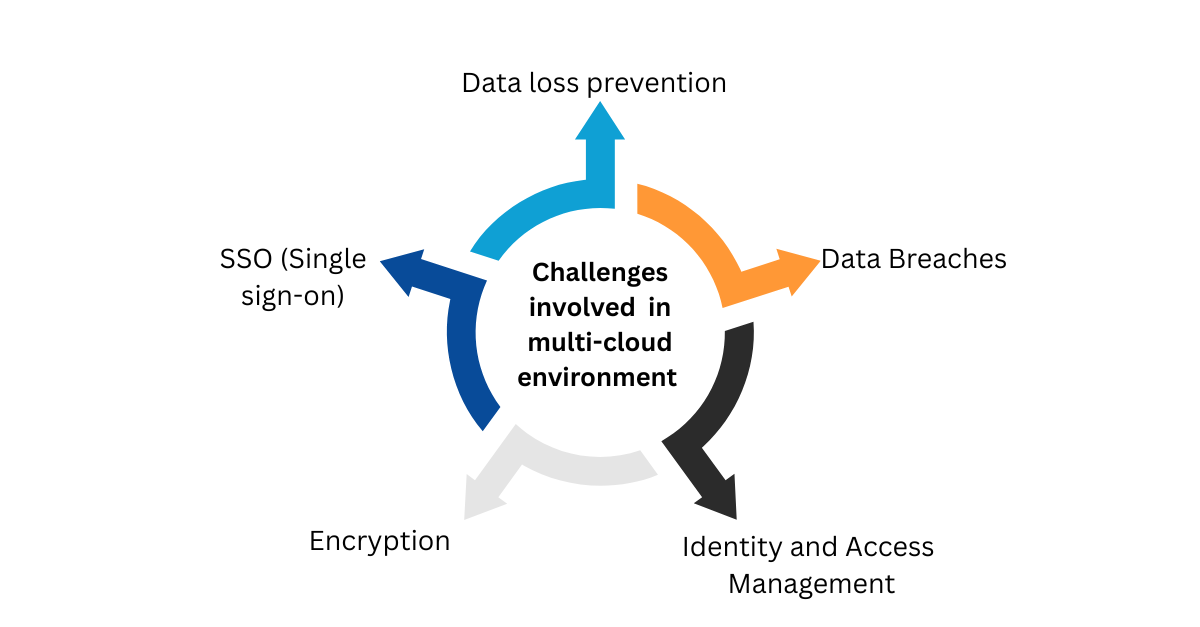
Data loss prevention:
In a multi-cloud environment, data loss prevention can be a major issue because data is stored and processed across multiple cloud platforms. Without proper DLP controls, sensitive data can be accidentally shared or accessed by users unauthorized users or applications.
Data Breaches:
The risk of data breaches and unauthorized access increases because data is spread across multiple clouds. Unsecured APIs, misconfigurations, and weak access controls in any one cloud environment can lead to a unauthorized access to sensitive and confidential data.
Identity and Access Management:
Identity and Access Management(IAM) can be a major challenge in multi-cloud environments because each cloud provider has its own IAM system. Which can result in inconsistent access policies ,users may have excessive permission, and unauthorized access if there is no centralized IAM(Identify and Access Management).
Encryption:
To enhance security in a multi-cloud environment, data should be encrypted both at rest and in transit. Since each cloud provider uses different encryption services, managing encryption keys securely require careful planning and coordination.
SSO (Single sign-on):
If SSO is not configured properly across multiple cloud environment, it can create security gaps or a single point of failure. Without SSO user must manage multiple credentials, increasing the risk of weak passwords and credential reuse.
Q.3 What are the best practices for securing APIs in the cloud?
Securing APIs in the cloud is very important because APIs connect multiple applications and services. Securing API is mandatory to prevent unauthorized access and data leaks.
The best practices for securing APIs in the cloud includes:
Q.4 What is Security Information and Event Management (SIEM) in the cloud?
SIEM stands for Security Information and Event Management. It is used to collects, stores, and analyzes security logs and events from cloud services. SIEM monitors activities to detect unusual and suspicious behavior. It is basically a security system. It generates alerts when potential threats are detected.
SIEM provides centralized visibility across all cloud services. SIEM sends an alert if someone tries to log in multiple times using wrong password or access data from an unusual location.
Q.5 How do you protect against insider threats in cloud security?
Insider threats are cybersecurity risks that occur when current or former employees, contractors, or partners misuse their authorized access to company systems, sensitive information, company policy, business ideas, and intellectual property (IP). These attacks usually involve data theft, which can be sold on the dark web.
Protecting against insider threat, requires a strong security such as technical controls, strong security culture, and continuous behavior monitoring. Insider threats can seriously damage a company’s reputation.
Best Practices for Insider Threats Prevention:
Q.6 Explain the concept of Data Loss Prevention (DLP) in the cloud.
DLP stands for Data Loss Prevention. It is a set of tools and policies designed to help organization mange, prevent, and detect unauthorized access and leakage of sensitive data. It is important when organization adopt cloud infrastructure, handling sensitive data becomes more complex.
DIP can generate some information that can be critical for monitoring the information. DLP monitors the data movement in the cloud environment, identifies sensitive data such as password or card details, and sends alerts if suspicious activity is detected.
Q.7 How do you ensure compliance in cloud security?
Compliance in cloud security means making sure that cloud systems follow laws, regulations, and security standards such as ISO 27001, GDPR, HIPAA, or PCI-DSS.
Ways to Ensure Compliance in the Cloud
- Understand Compliance Requirements: First, identify which regulations apply to the organization (for example, data privacy or financial rules).
- Use Cloud Security Policies: Set rules for data access, storage, and sharing to meet compliance standards.
- Identity and Access Management (IAM): Give access only to authorized users using roles, least privilege, and multi-factor authentication (MFA).
- Data Protection: Encrypt data at rest and in transit to protect sensitive information.
- Continuous Monitoring and Logging: Track user activities and system logs to detect violations and security incidents.
- Regular Audits and Assessments: Perform security audits and compliance checks to ensure rules are being followed.
- Automated Compliance Tools: Use cloud-native tools to automatically check and fix non-compliant configurations.
Q.8 What is identity federation?
Identity federation means using one trusted login to access multiple systems or cloud services without creating separate usernames and passwords for each one. Let’s understand with example, you can think of it like login with google once you log in to google, then you can access YouTube, Google Drive, and Gmail you don’t need any sperate passwords for each app.
Q.9 How does a Web Application Firewall (WAF) protect cloud applications?
A Web Application Firewall (WAF) protects cloud applications by monitoring and filtering incoming web traffic and blocking malicious requests before they reach the application. In simple words, if a hacker uses the login form and sends a malicious input to steal data, the WAF blocks the request if it detect anything suspicious.
How WAF Works (in simple words)
- WAF sits between users and the web application
- It checks every request (HTTP/HTTPS)
- If a request looks harmful, WAF blocks or allows it based on rules
Q.10 What are the best practices for securing APIs in the cloud?
Securing APIs in the cloud means protecting APIs from unauthorized access, data theft, and attacks.
Here are some best practices mentioned below for securing APIs in the cloud:
- Use Authentication & Authorization: Allow only verified users or apps to access APIs (OAuth, API keys, tokens).
- Use HTTPS (Encryption): Encrypt data while it is being sent to prevent data interception.
- Apply Rate Limiting: Limit the number of API requests to stop abuse and DDoS attacks.
- Validate Input Data: Check user input to prevent SQL injection and other attacks.
- Use API Gateways: Manage, monitor, and secure APIs from one central point.
- Enable Logging & Monitoring: Track API usage and detect suspicious activities.
- Apply Least Privilege Access: Give only the required permissions to users and services.
Conclusion:
Cloud security is no longer optional—it is a critical skill for professionals working with AWS and Azure. Understanding concepts like cloud-native security, IAM, DLP, SIEM, and API protection not only helps in interviews but also prepares you for real-world cloud security challenges. If you are preparing for cloud security roles, keep practicing these concepts hands-on and stay updated with evolving cloud threats and compliance requirements.