
In the world of technology today, automation is really important. We need to automate things like setting up computers, getting applications to work and managing the systems that run everything. Having an Ansible certification is a way to show that you are good at these things. When companies look for people to hire, they want someone who can automate tasks and make sure they work correctly reduce the amount of work that needs to be done and manage big systems.
Ansible certification is a way to prove that you have these skills and that you can do these things well. Employers like to see Ansible certification because it shows that you can automate tasks reliably reduce effort and manage systems at scale, with Ansible.
Getting an Ansible certification shows that you really understand how automation works and you can use it in real situations. Passing the exam the first time you take it is not just about being lucky or memorizing a lot of stuff. It is, about studying in a structured way practicing what you learn, and understanding how Ansible actually works when you use it.
The discussion in this article would cover important information related to the exam. We will see what challenges the student mostly face at the time of preparation and how to overcome these challenges. This discussion would also focus on the objectives of the Ansible certification exam. This guide is useful for both whether you are beginner or working professional preparing for Ansible certification. So, without any further ado, let’s start!

What is Ansible Certification?
Ansible Certification is an industry-recognized certification that helps to validate a candidate’s practical and theoretical expertise in using Ansible to automate IT tasks. It proves you can use Ansible in real projects, improve job opportunities and support career growth.
Why Do We Need Ansible Certification?
Ansible certification is highly demanded in modern IT environments. It helps you prove technical capability, improve job opportunities, and grow in automation-driven roles such as Cloud Engineering and DevOps. Let us understand it by an example why and where it is needed.
There is a company that runs an e-commerce platform the setup includes multiple servers such as multiple application servers, background worker servers, and separate cache servers. In a traditional approach, the system administrator must log in to each server individually to change configurations and fix issues.
It increases manual processes, that become time-consuming and error-prone. This is where Ansible plays a crucial role, the entire infrastructure can be automated and orchestrated from a single control node. This reduces manual effort, eliminates configuration drift, and ensures reliable and repeatable deployments across the organization.
Here are some reasons why you need to have this certification:
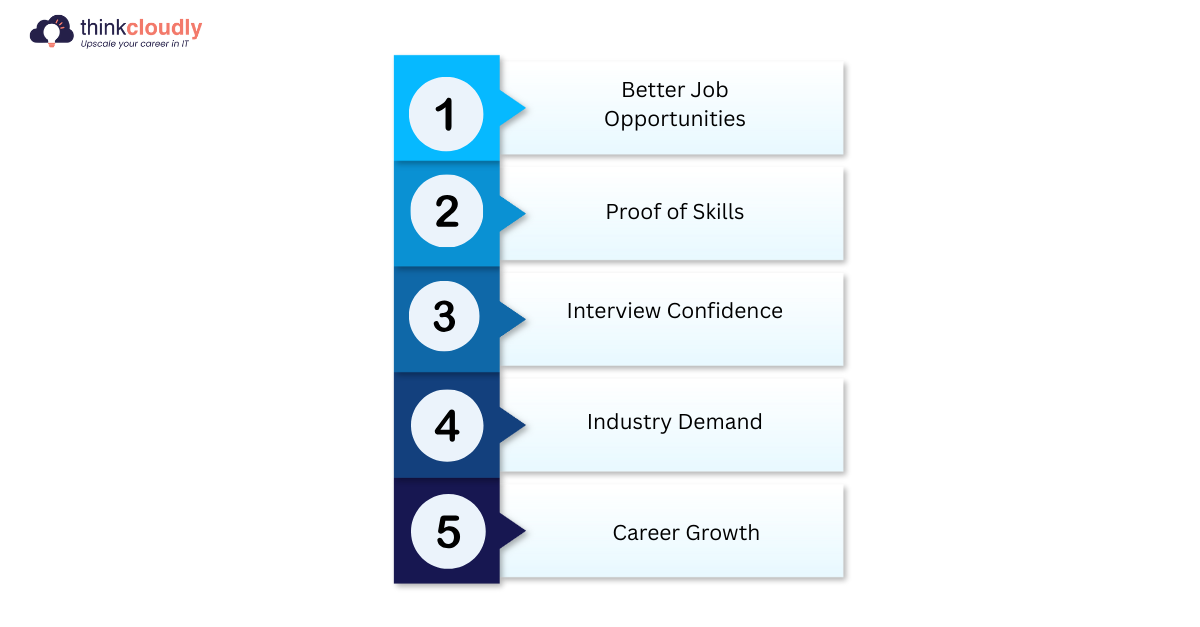
- Better Job Opportunities: Ansible certification improves your chances of getting shortlisted for automation focused roles. Many companies prefer only certified candidates when hiring for DevOps and infrastructure roles.
- Proof of Skills: In today’s competitive job market, simply having skills is not enough; employers look for verified credentials. Ansible certification helps you prove your practical ability and automation knowledge.
- Interview Confidence: Ansible certification helps you prepare for practical and scenario-based interviews. Since this exam is hands-on, certified candidates can clearly explain automation workflows and logic only if they have applied them practically .
- Industry Demand: Modern IT environments rely heavily on automation to handle large and complex infrastructures, and Ansible is one of the most widely used tools for this purpose. Certification proves that you understand current industry automation practices.
- Career Growth: Ansible certification supports long-term career development by opening doors to advanced automation and cloud roles. It enables professionals to shift from manual work to smarter, automation-focused careers.
Is Ansible Certification right for me?
This certification is right for you if you are a DevOps engineer , cloud engineer or system administrator who works with configuration management, deployment processes, and Linux servers. Ansible certification can strengthen your profile and improve job opportunities. It is useful if you want to work with automated infrastructure.
However, if you are completely new to IT or do not yet understand Linux basics, it is better to first build foundational skills before attempting the certification. Overall, Ansible certification is ideal for professionals who want long-term career growth in automation, DevOps, and cloud computing.
In IT, Which Departments Use Ansible?
Ansible is used in any department where repetitive IT tasks need automation. Here are the main ones:
|
IT Department |
How Ansible Is Used |
|
DevOps Department |
Used for:
|
|
Cloud Operations/Cloud Engineering |
Used for:
|
|
Network operations
|
Used for:
|
|
IT Operations
|
Used for:
|
|
Security/GRC/Compliance Teams
|
Used for:
|
|
Application Support Teams
|
Used for:
|
How Can I Prepare for Ansible Certification Step by Step?
Preparing for Ansible Certification does not have to be overwhelming. You can cover all the important topics and gain hands-on experience by following a structured approach.
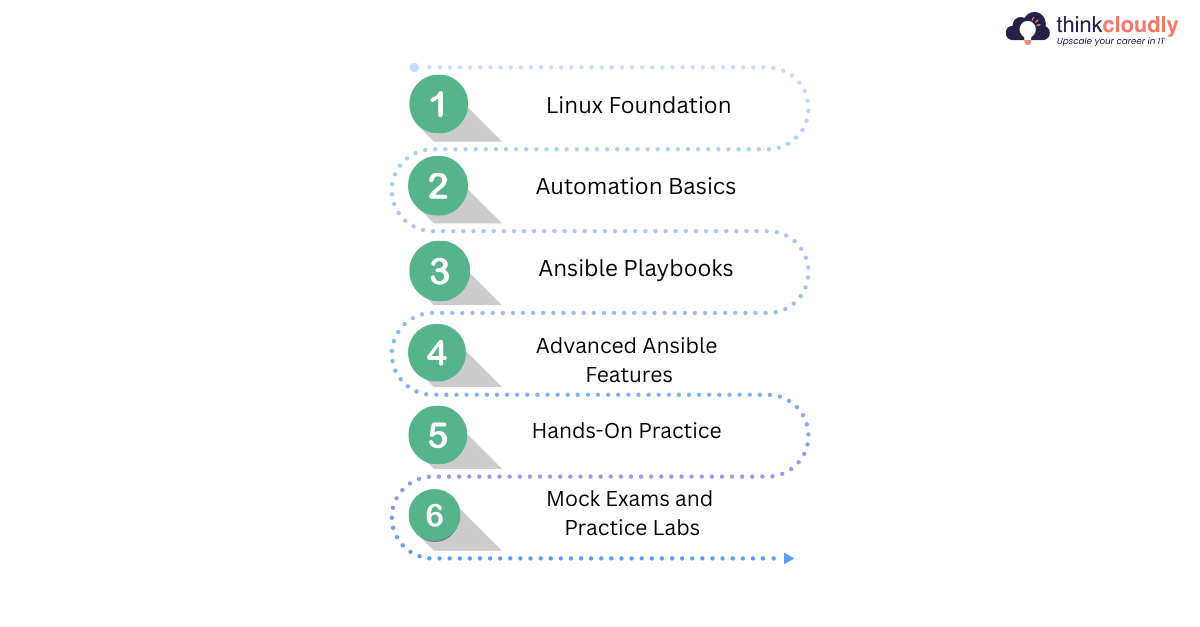
Step 1: Build a Strong Linux Foundation:
Having a knowledge of Linux command is very essential because Ansible primarily runs on Linux systems. When you work with Ansible, then you must write playbooks and manage inventories, so without Linux commands, it becomes confusing.
Basic commands to master includes:
- ls, cd, pwd → Navigate directories
- cp, mv, rm → Copy, move, and remove files
- cat, less, tail → View file contents
- grep, find → Search for files or text
- chmod, chown → Change file permissions and ownership
Step 2: Understand Automation Basics:
Learn the basic of automation in DevOps and Cloud so you gain knowledge to work with automated infrastructure. You can familiarize yourself with topics like CI/CD pipelines, Infrastructure as Code (IaC), and Configuration Management.
Step 3: Master Ansible Playbooks:
Most Ansible certification exams focus heavily on playbooks. They are the core of automation. Playbooks define which task should be done, on which servers, and in what order. A playbook is a YAML file that contains one or more plays, and each plays contains multiple tasks. It allows you to automate repetitive tasks across multiple servers consistently and reliably.
Step 4: Explore Advanced Ansible Features:
If you want to manage complex, secure, and large-scale environment then having the knowledge of advance Ansible feature is essential.
Important topics for the certification exam include:
- Ansible Vault for Secrets Management: It you want to secure API keys, passwords, SSH credentials, and tokens then familiarity with this concept is more important. Since it is used to secure sensitive information.
- Error Handling and Debugging: Error handling helps Ansible respond gracefully to failures instead of stopping abruptly.
- Dynamic Inventories: Dynamic inventories allow Ansible to fetch server lists automatically from cloud platforms or external systems.
- Cloud Integrations: Ansible integrates with major cloud providers to automate cloud infrastructure and services.
Step 5: Hands-On Practice:
The key to success is practical experience. Automate real-world tasks such as:
- Server configuration
- Application deployment
- Patching systems
- Multi-node orchestration
Step 6: Take Mock Exams and Practice Labs
Before the exam, test your skills with practice labs and mock exams. Focus on understanding concepts rather than memorizing commands. Since the exam is practical and time-bound, this step is critical.
By following these steps in the right order, you build both conceptual clarity and real-world automation skills. This structured approach not only helps you pass the Ansible certification exam on your first attempt but also prepares you to use Ansible confidently in real production environments.
Conclusion:
Automation is a skill that grows with practice. Passing the Ansible certification exam on your try is something that anyone can do if they are willing to put in the work and prepare in a smart way. You do not need to be extremely talented to pass the Ansible certification exam. All you need is to be disciplined and get lots of hands-on practice with Ansible and have a plan, for studying Ansible.

