

In the modern digital world, network security is one of the top priorities for organizations. While firewalls, antivirus software, and intrusion detection systems protect us from many threats, attackers often exploit basic network protocols. One such attack is ARP spoofing, also known as ARP poisoning. Understanding this ARP spoofing attack and how a Security Operations Center (SOC) detects it is crucial for cybersecurity professionals.
Understanding ARP (Address Resolution Protocol)
ARP is a protocol used in IPv4 networks to map logical addresses (IP) to physical addresses (MAC). Every time a device communicates within a local network, it needs to know the MAC address of the recipient.
The ARP process is simple:
-
A device broadcasts an ARP request asking, “Who has this IP?”
-
The device with the requested IP responds with its MAC address.
-
The sender stores this mapping in its ARP table for future communications.
This system is trust-based, which is what makes it vulnerable to attacks like ARP spoofing and ARP poisoning, leading to a potential ARP spoofing attack.
What is ARP spoofing?
ARP spoofing, also called ARP poisoning or arp poisoning attack, is a network attack where an attacker tricks devices into sending data to them instead of the intended device. ARP, a protocol that matches IP addresses to physical MAC addresses, normally trusts all responses, which makes this possible and enables an ARP spoofing attack. By sending fake ARP messages, attackers can intercept, modify, or block network traffic through ARP spoofing. This allows them to steal sensitive information or disrupt communication during an ARP spoofing attack. SOC analysts detect ARP spoofing and ARP poisoning by monitoring network traffic, checking for unusual IP-to-MAC mappings, and using tools like Wireshark or IDS systems.
How SOC Detects ARP Spoofing
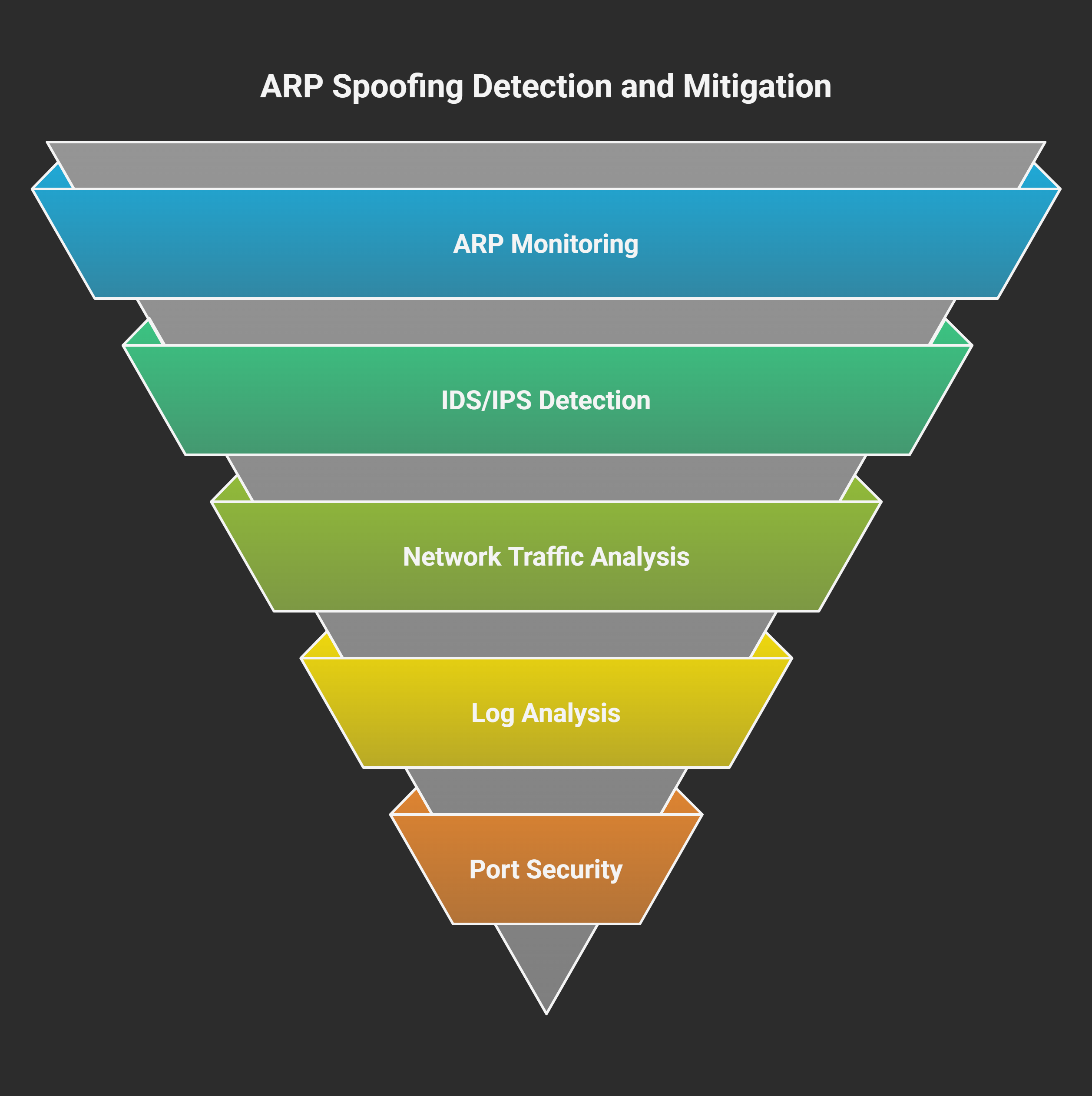
SOC analysts monitor the network for signs of ARP spoofing and ARP poisoning using a combination of real-time monitoring, log analysis, and alertsto detect any ARP spoofing attack. Here are the key steps:
1. Monitoring ARP Tables
Analysts watch for duplicate IP-to-MAC mappings in ARP tables, which is a common indicator of ARP spoofing and ARP poisoning. If multiple MAC addresses are associated with the same IP, it could indicate ARP spoofing attack.
2. Analyzing Network Traffic
Using tools like Wireshark, analysts capture ARP traffic and inspect packets for irregularities related to ARP spoofing. Frequent ARP replies from the same device or unexpected IP-MAC combinations are red flags of an ARP spoofing attack or ARP poisoning attempt.
3. Correlating Logs
SOC teams cross-reference ARP activity with DHCP logs, switch MAC tables, and endpoint security alerts to identify ARP spoofing or ARP poisoning behavior. Correlation helps determine whether the behavior is malicious or due to legitimate network changes or an active ARP spoofing attack.
4. Using IDS/IPS Alerts
Intrusion Detection Systems (IDS) like Snort or Suricata can detect ARP spoofing and ARP poisoning patterns and generate alerts for SOC analysts to respond to a possible ARP spoofing attack.
Conclusion
ARP spoofing, ARP poisoning, and ARP spoofing attack techniques are deceptively simple yet potentially dangerous network attack that can allow attackers to intercept, modify, or block network traffic. Since ARP relies on trust, devices can be easily tricked into sending data to the wrong recipient, putting sensitive information at risk. SOC analysts play a critical role in detecting and mitigating ARP spoofing and ARP poisoning by monitoring ARP tables, analyzing network traffic, correlating logs, and leveraging IDS/IPS alerts. Understanding how ARP spoofing works and how to detect an ARP spoofing attack is essential for maintaining network security and ensuring the integrity of organizational data. With the right tools, vigilance, and best practices, SOC teams can effectively protect networks from these attacks. SOC teams can effectively protect networks from ARP spoofing, ARP poisoning, and related ARP spoofing attack techniques.

