
If you are preparing for your first job in artificial intelligence, especially from a non-technical background, it’s important to understand the basics of generative AI.
Generative AI has become one of the most in-use services for areas in artificial intelligence tools like chatbots, content generators, and automation systems. Interviewers usually focus on concepts rather than coding. If you are from a non-technical background, this blog will help you prepare for the most asked questions while guiding you on important topics, such as generative models, AI alignment, traditional AI, tokenization, prompt engineering, hallucination in Generative AI, synthetic data, ethical concerns, and reinforcement learning and conversational AI.
Generative AI Interview Questions and Answers
Traditional AI is different from generative AI; traditional AI is used to analyze data and make predictions. Whereas generative AI works to generate new content such as text, images, and audio.
To prepare for your interview, it is important to understand that it is essential to shift from traditional AI to generative systems. Here are the most asked generative AI and traditional AI interview questions, which will help you to prepare for your interview:
Q1. What is generative AI?
Answer: Generative AI is a type of artificial intelligence that helps you to generate new content, such as text, images, or audio. It works using a generative model, which is trained on large datasets to learn patterns and generate similar outputs.
Q2. What is the difference between Traditional AI and Generative AI?
Answer:
|
Aspect |
Traditional AI |
Generative AI |
|
Purpose |
Traditional AI helps to analyze existing data to make predictions. |
Generative AI helps to generate new content such as text, images, and audio. |
|
Output |
Traditional AI provides structured and fixed outputs such as scores, labels, and predictions. |
This provides more creative output such as stories, designs, and even responses. |
|
Data usage |
Data is used to train models that help to give accurate predictions. |
Data is used to learn the structure of the existing text and generate output from the given examples. |
|
Technologies used |
Traditional AI uses rule-based systems, machine learning, and regression models. |
Diffusion models, Generative adversarial networks (GANs), transformers, and deep learning models. |
|
Examples |
Credit scoring, medical diagnosis, and spam detection. |
AI platform, ChatGPT, Gemini, Midjourney, DALL-E, and GitHub Copilot. |
Q3. What is Prompt Engineering?
Answer: Prompt engineering is important to understand for job preparation, as it is used to design the input to get meaningful output. Prompt engineering is used to give clear instructions as input data to AI for getting the expected output.
For example, if you are providing a weak prompt like “Write about gen AI.” This prompt will not provide you with the expected result. Your prompt should be “Write about Artificial Intelligence in 100 words for beginners.”
So, to receive better results, you should have good prompt engineering skills.
Q4. What is Tokenization?
Answer: Tokenization in generative AI is used to break long sentences into small parts called tokens that will help the AI model to understand the input and provide you with meaningful output.
For example, Artificial intelligence is useful for us
Token: Artificial| intelligence| is| useful| for| us
Tokenization is the most important and basic topic for understanding artificial intelligence.
Q5. What is a generative model?
Answer: A generative model is animportant concept in generative AI and conversational AI systems. A generative model helps to learn patterns from the input data to generate new output based on these patterns.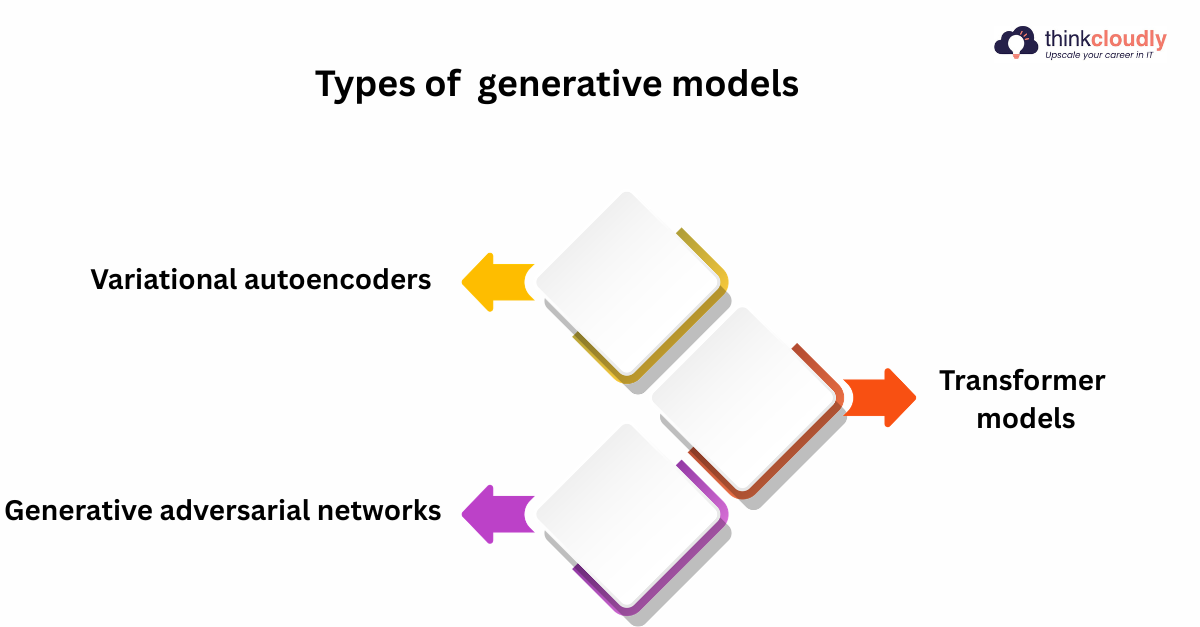
For example:
- GANs (generative adversarial networks)
- VAEs (Variational autoencoders)
- Transformer models
All these models are commonly used in artificial intelligence.
Q6. What is hallucination in generative AI?
Answer: Hallucination in generative AI occurs when the AI generates incorrect or wrong output, but that sounds correct. Hallucination in generative AI occurs because of AI’s predictions as it predicts patterns, not facts. It can also be a disadvantage of artificial intelligence.
Q7. What is AI Alignment?
Answer: It’s important to have an understanding of AI alignment if you are preparing for an Artificial intelligence interview. AI alignment makes sure that AI systems behave according to human values.
-
AI alignment helps to make AI safe and reliable
-
AI alignment helps to prevent harmful and biased outputs
Q8. What do you mean by synthetic data?
Answer: Synthetic data is data that is generated artificially to train conversational AI models instead of working on real-world data. Synthetic data is used to protect privacy. It reduces the dependency on real data. Synthetic data helps to improve the scalability of artificial intelligence systems.
Q9. What are the ethical concerns in generative AI?
Answer: If you want to be aware of artificial intelligence, you should have an understanding of the ethical concerns. There are some ethical concerns in conversational AI.
which are listed below: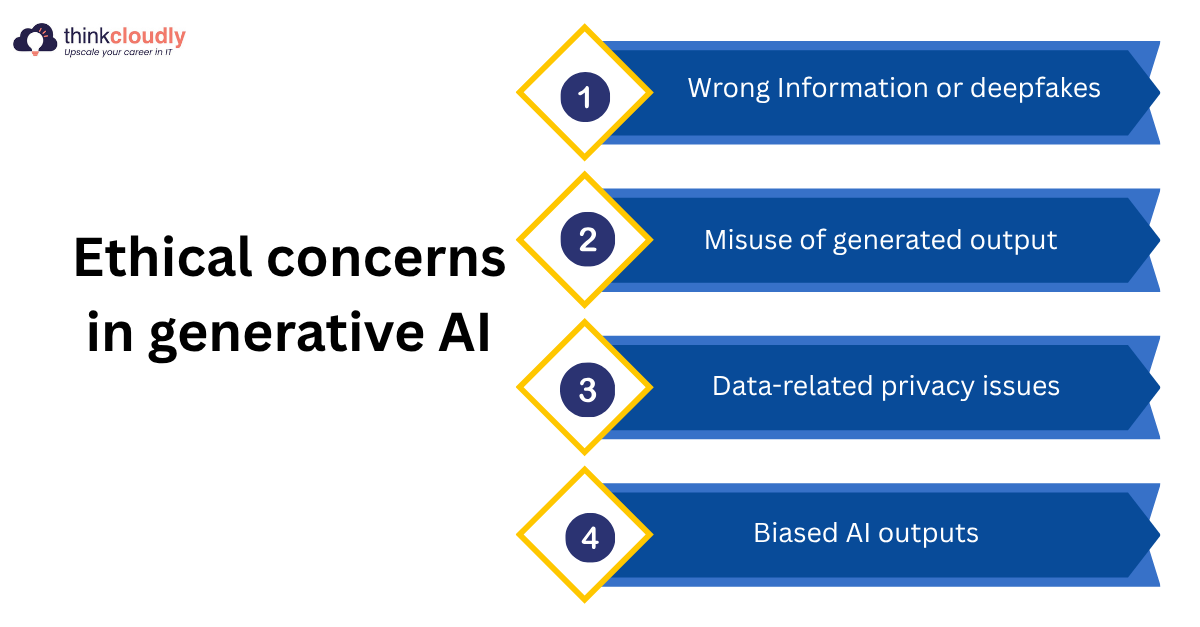
- Wrong Information or data, deepfakes
- Misuse of generated output
- Data-related privacy issues
- Biased AI outputs
Q 10. What do you mean by Reinforcement learning?
Answer: Reinforcement learning works like humans, as we humans learn from mistakes. Similarly, Reinforcement learning is a process where AI learns from past mistakes using penalties and rewards.
- Reinforcement learning is used in training advanced AI systems.
- Reinforcement learning helps in better decision-making.
- Reinforcement learning plays an important role in improving conversational AI systems by learning from feedback.
Conclusion
If you want to genuinely crack your generative AI interviews and if you are from a non-technical background, then you should have an understanding of all the basic concepts as a beginner. In this blog, we have listed topics such as how generative model are different from traditional AI, AI alignment, tokenization, prompt engineering, hallucination in Generative AI, synthetic data, what the ethical concerns are, reinforcement learning, and conversational AI which are mostly asked and important to understand.
Having a basic understanding and clear communication skills can help you to stand out in generative AI interviews, as it is important to have skills because of the growing demand for artificial intelligence. Stay consistent with your preparation and keep practicing interview questions to build confidence.

