
So, are you someone who is searching for the most frequently asked Agile Scrum interview questions that could help you excel in the interview? No worries, in this article, to help you succeed during your interview, we have listed the top Agile Scrum interview questions and answers that will definitely help you build a strong foundation and perform confidently in your interview.
If you are preparing for an ASM certification or Agile Scrum Master role, these questions will help you strengthen your core concepts.
I also want to highlight one more important thing here: I have framed the answers to all these questions based on my experience. You can frame them in your own words so that you can confidently answer all the questions. So, without any further ado, let’s get started!
Develop Advanced Agile & Scrum Competency for ASM Interview Success
To succeed in an ASM interview, you need a clear understanding of Agile and Scrum concepts rather than just memorizing answers. Preparing for an ASM certification helps you build strong fundamentals and boosts your confidence.
By consistently practicing and applying ASM principles in real scenarios, you can improve your problem-solving skills and stand out in interviews. A practical approach to Agile makes it easier to perform well and grow in Scrum roles.
Q.1 What is Scrum Script?
A Scrum Script means a prepared way of speaking or a guideline for what to say during Scrum meeting or interviews. It is basically a structured explanation of Scrum roles, events, and processes so that someone can communication clearly during the scrum meeting.
Q.2 What is the duration of Scrum Script?
The duration of a spring usually ranges from 1 week to 4 weeks, and many teams prefer a 2-week sprint to maintain faster feedback and continuous delivery. This concept is commonly asked in Agile Scrum interviews to evaluate a candidate’s fundamental knowledge.
Q.3 What is Agile Methodology?
Agile methodology is an approach where work is divided into small parts called sprints. Agile methodology is one of the foundational topics covered in most ASM certification training program. In simple words, the team instead of completing the entire project at once, the team works in short cycles, gathers feedback, and make improvements quickly.
Q.4 What is the difference between Agile and Scrum?
Agile methodology is a flexible approach used in software development where work is completed in small iterations and teams continuously improve the product based on feedback. Within Agile, there are several frameworks that help teams implement these principles effectively. One of the most widely used frameworks is Scrum, which provides a structured way of managing work through defined roles, events, and artifacts.
The main difference between Agile and Scrum are:
|
Agile |
Scrum |
|
Agile is a methodology or mindset. |
Scrum is a framework used to implement Agile. |
|
Agile focuses on principles and values. |
Scrum focuses on specific roles and processes. |
|
Agile is a broad concept. |
Scrum is one framework under Agile. |
|
Agile does not define strict roles. |
Scrum defines roles like Scrum Master, Product Owner, and Development Team. |
|
Agile can use frameworks like Scrum or Kanban. |
Scrum uses sprints, daily stand-up meetings, reviews, and retrospectives. |
This comparison is a very common topic asked in ASM interview.
Q.5 What is the increment?
In Scrum, an Increment is the completed and usable part of the product that the team delivers at the end of sprint. Each increment adds new features to the product and moves it closer to the final product. The increment must meet the Definition of Done, meaning it is fully completed and ready for review.
Q.6 What are the different Agile frameworks?
Agile frameworks are structured approaches used to implement the principle of Agile in project management and product development. These frameworks help teams deliver high-quality products through iterative development, iteration, and continuous improvement.
Here are some of the most commonly used Agile frameworks include: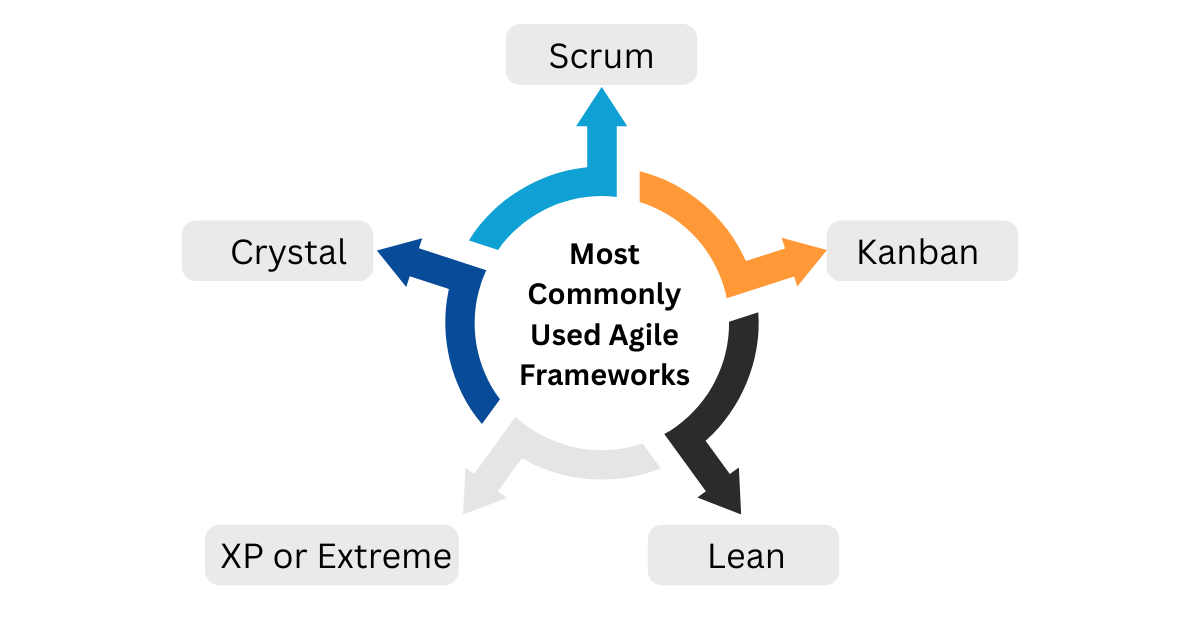
- Scrum: Scrum is the most widely used Agile framework. It divides work into short iterations called Sprints, usually lasting 2–4 weeks.
- Kanban: Kanban focuses on visualizing workflow and limiting work in progress (WIP). Teams use a Kanban board to track tasks and improve efficiency by continuously delivering work instead of working in fixed iterations.
- Lean: Lean focuses on eliminating waste, improving efficiency, and delivering value to customers quickly. It is derived from Lean manufacturing principles and promotes continuous improvement.
- XP or Extreme Programming: Extreme Programming emphasizes technical excellence and frequent releases. It includes practices such as pair programming, test-driven development (TDD), continuous integration, and frequent feedback from customers.
- Crystal: Crystal is a family of Agile methodologies that focus on team communication, simplicity, and flexibility. The framework adapts depending on the size and complexity of the project.
Q.7 What is Iterative Development in Agile?
Iterative development in agile is an approach where a project is built and improved through repeated cycles called iteration. Each iteration usually includes activities such as planning, designing, developing, testing, and reviewing. At the end of each sprint, the team delivers a working increment of the product that can be reviewed and improved in the next iteration.
Q.8 What are the artifacts in Scrum?
In the Scrum Framework, artifacts are the important elements that provide transparency and key information about the project. They help the Scrum team to track progress, manage work, and ensure everyone understand the product goals.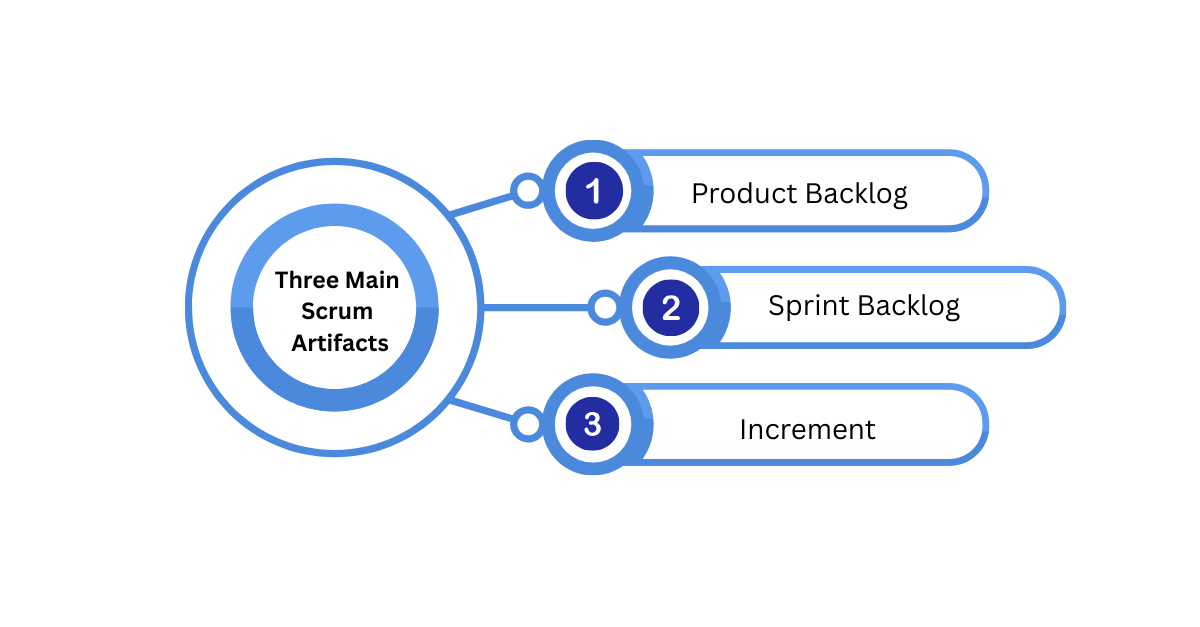
Product Backlog
The Product Backlog is a prioritized list of all the features, improvements, and fixes that need to be developed in the product. It is managed and maintained by the Product Owner.
Sprint Backlog
The Sprint Backlog contains the set of tasks or user stories that the development team commits to completing during a Sprint. It is created during Sprint Planning and helps the team track daily work.
Increment
The Increment is the working product or functionality delivered at the end of a Sprint. It represents the completed work that meets the Definition of Done and adds value to the product.
Q.9 What is the product backlog?
The Product Backlog is a prioritized list of all the features, improvements, and fixes that need to be developed in the product. The backlog is continuously updated and refined based on customer feedback, business needs, and project priorities.
Q.10 What are the different roles in Scrum?
There are mainly three roles in the Scrum Framework, that work together to successfully deliver a product.
- Product owner: The Product Owner decides what to build and in which order.
- Scrum Team: The Scrum Team is responsible for developing and delivering the product.
- Scrum Master: The Scrum Master supports the team and make sure the Scrum process runs smoothly.
Q.11 What is the Minimum Viable Product (MVP)?
A Minimum Viable Product (MVP) is a basic version of a product that includes only the most important features needed to solve the main problem for users. The goal of an MVP is to release the product quickly, collect user feedback, and improve it in future versions.
Q.12 What is Sprint Retrospective Meeting?
A Spring Retrospective is a meeting held at the end of each Sprint in the Scrum Framework. The main purpose of the Sprint Retrospective is to analyze the team’s work process and find ways to improve teamwork, productivity, and efficiency.
Q.13 What is the Definition of Done (DoD)?
The Definition of Done (DoD) is a set of clear criteria that a product increment must meet before it is considered complete. The Definition of Done helps maintain quality, transparency, and consistency in the development process.
Q.14 What is an epic in Agile?
An, Epic is a large user story or a big piece of work that cannot be completed in a single sprint. Because it is too large, it is usually broken down into smaller user stories that can be completed in different sprints. Epics help teams organize large features or requirements and manage them more easily during development.
Q.15 What is velocity in Scrum?
Velocity is a metric used to measure how much work a team can complete during a single Sprint. It helps teams understand their productivity and plan future sprints more accurately.
Q.16 What is planning poker?
In Scrum Framework , Planning Poker is a simple method used to estimate how much effort a task or user story will take to complete. In this method, each team member is given cards with numbers such as 1,2,3,5,8,13. These numbers represent the effort or complexity of the task. Planning Poker helps the team work together and make better estimates.
Q.17 How do you handle conflicts within a Scrum team?
Conflicts in a Scrum team can occur due to different opinions, misunderstandings, or work approaches. In the Scrum Framework, the Scrum Master plays an important role in resolving conflicts and maintaining a healthy team environment. First, the Scrum Master listens to all team members carefully and understands the root cause of the conflict. Then they encourage open communication, allowing everyone to express their opinions respectfully.
After that, the Scrum Master helps the team focus on the project goals rather than personal differences and guides them to find a solution that benefits the whole team. If needed, the Scrum Master can facilitate a discussion or meeting to resolve the issue collaboratively.
Q.18 What is acceptance criteria?
Acceptance Criteria are a set of conditions or requirements that a product feature or user story must meet to be accepted as complete.
These criteria clearly explain what needs to be done for the work to be considered finished. Acceptance criteria help the development team understand the expected outcome of a task and ensure that the product meets the customer’s requirements.
Q.19 What is the purpose of Daily Stand-up meetings?
n the Scrum Framework, a Daily Stand-up meeting (also called the Daily Scrum) is a short meeting held every day during a Sprint. It usually lasts about 15 minutes. The main purpose of this meeting is to help the team stay aligned, track progress, and identify any problems early.
Q.20 What is a burndown chart?
A Burndown Chart is a visual tool used in the Scrum Framework to track the progress of work during a Sprint. It shows how much work is remaining and how much has been completed over time.
The chart usually has:
- X-axis (horizontal line): Time or number of days in the Sprint
- Y-axis (vertical line): Amount of work remaining (usually measured in story points or tasks)
As the team completes tasks, the line on the chart moves downward, showing that the remaining work is decreasing.
Q.21 What is a burn-up chart?
A Burn-up Chart is a visual tool used in the Scrum Framework to track the progress of completed work over time. It shows how much work has been finished compared to the total work required in the project or sprint.
The chart usually has:
- X-axis (horizontal line): Time (days or sprints)
- Y-axis (vertical line): Amount of work (story points or tasks)
A burn-up chart typically has two lines:
- Total work line – shows the total amount of work planned.
- Completed work line – shows how much work has been finished by the team.
As the team completes tasks, the completed work line moves upward, showing progress toward the total work.
Q.22 What will you do if a team member is not performing well?
If a team member is not performing well, I would understand the root cause, provide support or guidance, encourage collaboration, and monitor their progress.
Here’s how to handle it:
- Understand the Problem: Talk to the team member privately to understand why their performance is low. It could be due to lack of skills, unclear requirements, personal issues, or workload problems.
- Provide Support and Guidance: Offer training, mentorship, or resources to help them improve. Clarify expectations and provide constructive feedback.
- Encourage Collaboration: Pair the team member with other team members for guidance or mentorship. Encourage teamwork to help them learn and improve.
- Monitor Progress: Track their performance over time and celebrate improvements. Adjust tasks if needed to align with their skill level.
- Escalate if Necessary: If performance does not improve despite support, discuss the issue with the Product Owner or HR as a last resort.
Q.23 What is Agile scaling?
Agile Scaling is the process of applying Agile practices across multiple teams or large projects to ensure collaboration, alignment, and consistent delivery of value. Popular frameworks for scaling include SAFe, LeSS, Nexus, and DAD.
Q.24 What is Scrum of Scrums?
Scrum of Scrums is a meeting where representatives from multiple Scrum teams coordinate work, share progress, and resolve cross-team dependencies to ensure smooth collaboration on large projects.
Q.25 What are Agile metrics?
Agile Metrics are measurements used to track and evaluate the performance, progress, and efficiency of Agile teams. They help teams understand how well they are delivering value, identify areas for improvement, and make data-driven decisions. Agile metrics focus on both team performance and product delivery, rather than just individual productivity.
Final Note:
By practicing these ASM interview questions and understanding the Agile and Scrum principles deeply, you’ll not only be ready for interviews but also gain practical knowledge that will help you excel as a Scrum professional in real-world projects .So, stay consistent with your preparation, and focus on clarity.

