
Here’s a number that stopped me in my tracks: the global ITSM software market is expected to touch nearly $15 billion in 2026 and is forecast to more than double by 2031, growing at a compound rate above 16% a year. Every one of those dollars needs a human being who knows how to configure, administer, and run the platform behind it — and in most enterprises, that platform is ServiceNow.
So if you’ve been wondering whether ServiceNow training is still worth your time in 2026, the market has already answered that question. What it hasn’t answered is which course, path, or certification will actually get you hired. That’s what this guide is for.
I’m writing this as someone who has sat through more modules than I’d like to admit, made every rookie mistake in the book, and eventually landed a role through the right mix of study material and stubbornness. This isn’t a recycled list pulled from a marketing page—it’s a practical look at what actually works right now, when platform releases move fast and exam formats keep changing underneath us.
Why ServiceNow Training Matters More Than Ever in 2026
ServiceNow isn’t just another software vendor. It sits at the center of how large organizations manage incidents, changes, HR requests, and customer service, all from one platform. As enterprises lean harder into automation and AI-driven workflows, the people who can build, maintain, and troubleshoot that platform become genuinely hard to replace.
That’s exactly why proper platform training has moved from “nice to have” to a near-mandatory step for anyone entering IT service management. The urgency is also structural. In late 2025, ServiceNow shifted its exam delivery to Pearson VUE, and the entire eligibility model changed.
Instead of the old “no voucher, no exam” system, candidates now need to unlock formal exam eligibility by completing the correct course on ServiceNow University before they can even register, as explained on the ServiceNow Community. Skip this step and you can lose weeks just figuring out logistics before you sit the test.
What to Look For Before You Choose a Course?
Not every course labeled “ServiceNow” is built the same way, and picking the wrong one wastes time and money. Before enrolling in any professional training program, run it through a short checklist:
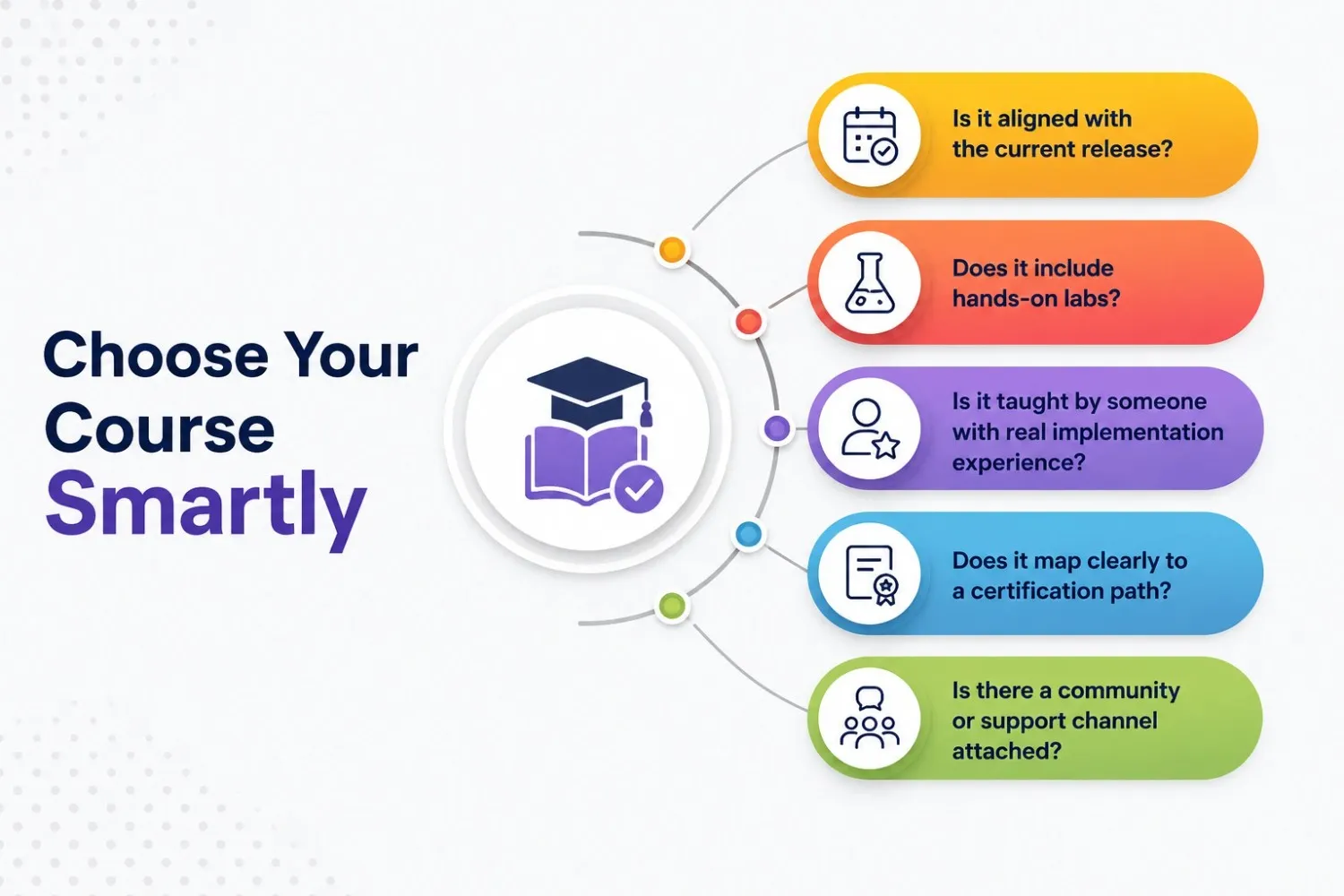
- Is it aligned with the current release? Outdated screenshots or workflows will actively confuse you during the exam.
- Does it include hands-on labs? Reading slides will not prepare you for a scenario-based exam. You need a free Personal Developer Instance to practice in.
- Is it taught by someone with real implementation experience? Professional training led by a working consultant covers edge cases generic courseware skips.
- Does it map clearly to a certification path? A good course tells you exactly which exam it prepares you for.
- Is there a community or support channel attached? Getting stuck on a lab exercise at 11 p.m. is far less painful when there’s somewhere to ask.
A solid provider of professional training checks every one of these boxes, and if a course fails more than one, it’s worth looking elsewhere.
The Certification Path: From CSA to CIS Certification
Every serious ServiceNow career starts in the same place: the Certified System Administrator exam, known as CSA. It’s the foundation for almost everything else on the platform, and nearly every job posting mentioning ServiceNow lists it as a baseline requirement. Earning your CSA certification proves you can navigate the interface, manage users and roles, and handle the day-to-day admin tasks that keep an instance running smoothly.
Once you’re a certified system administrator, the next decision is which direction to specialize in. Most professionals choose between the developer track for those who want to script and build applications or one of the many CIS specializations for implementing specific modules. If your interest leans toward IT service delivery, an ITSM certification is usually the natural next step, since it remains one of the most requested credentials in ServiceNow job listings.
There’s an important wrinkle in 2026. ServiceNow introduced a new Data Foundations exam that’s now a mandatory prerequisite for seven existing specializations, including the ITSM certification path. According to Lucky X Study Guides, anyone already holding an affected CIS certification has until December 31, 2026, to pass this new exam, or their credential loses active status. If your ServiceNow training plan includes any of these specializations, build this extra step into your timeline from day one.
Best Courses and Platforms to Learn ServiceNow in 2026
There’s no single “best” course for everyone—it depends on your budget, your learning style, and where you are in your career. Here’s a comparison of the main options professionals are using this year to prepare for their certified system administrator exam or a later specialization.
|
Training Option |
Best For | Format | Typical Cost |
Certification Focus |
|
Now Learning (official) |
Beginners starting from zero | On-demand + instructor-led | Free to moderate |
CSA, CAD, CIS-DF |
|
Instructor-led partner courses |
Structured classroom learners | Live virtual sessions | Higher, often employer-funded |
CSA and CIS specializations |
|
Udemy practice courses |
Exam-focused revision | Self-paced video + quizzes | Low, one-time fee |
CSA, CAD, ITSM basics |
|
LinkedIn Learning |
Working professionals, short modules | Self-paced video | Subscription-based |
CSA fundamentals, soft skills |
|
Community study groups |
Peer support and troubleshooting | Free forums and discussion boards | Free |
All certification levels |
Whichever option you pick, treat the official ServiceNow University materials as your primary source and everything else as supplementary. Exam questions are written against the official blueprint, so professional training that ignores it will only get you partway there.
Core Skills You Actually Build Through Certified System Administrator Training
Beyond the certificate itself, good ServiceNow training builds skills that translate directly into daily job performance. Here’s what you should expect to walk away understanding, broken down into the areas that matter most.
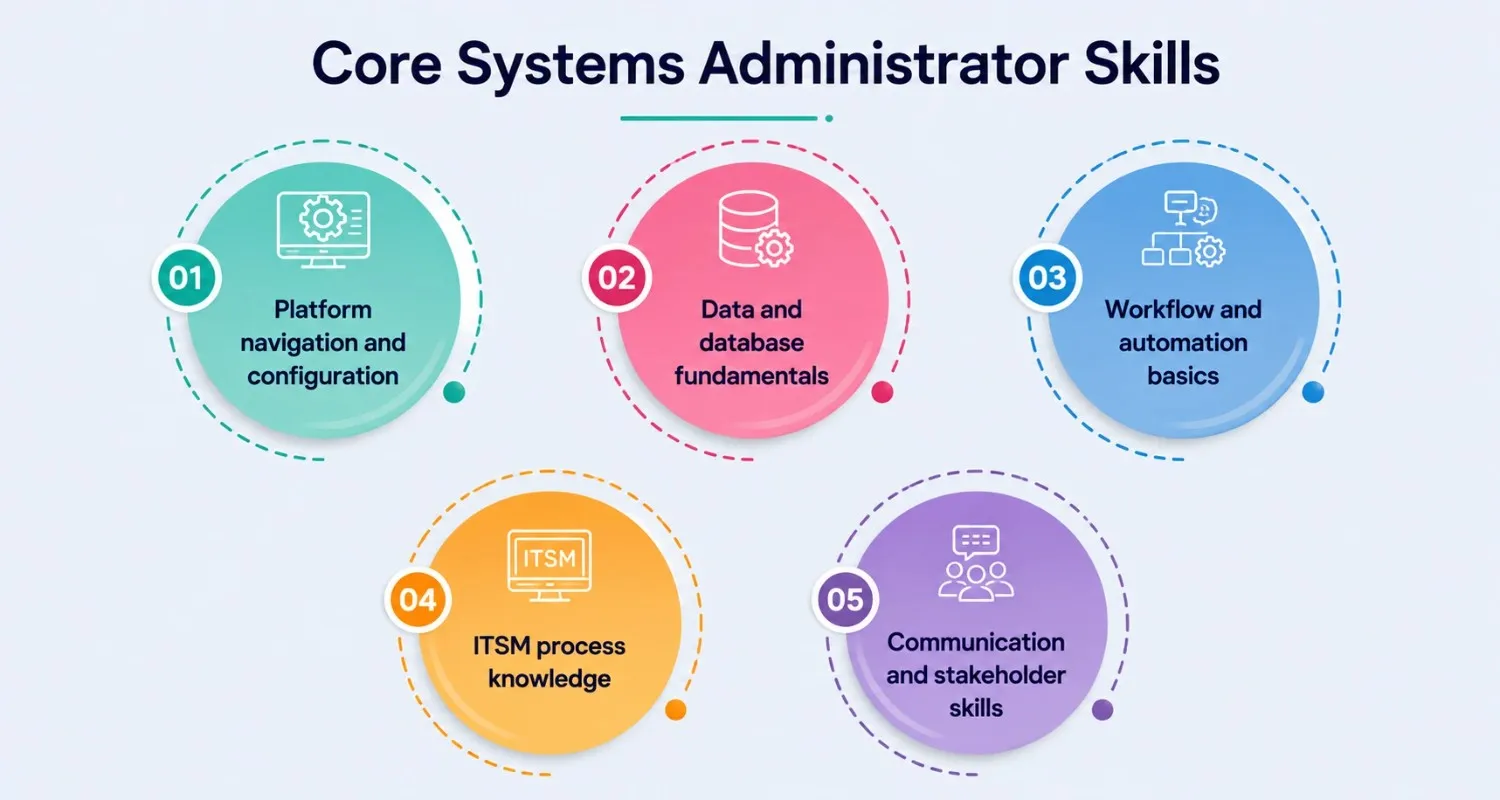
1. Platform navigation and configuration
- Customizing forms, lists, and views for different user roles
- Building and modifying Access Control Lists (ACLs) safely
2. Data and database fundamentals
- Understanding table inheritance and relationships
- Managing the Configuration Management Database (CMDB)
3. Workflow and automation basics
- Setting up notifications, business rules, and flows
- Building simple service catalog items end to end
4. ITSM process knowledge
- Handling incident, problem, and change records correctly
- Connecting ITSM process concepts to actual ticket queues
5. Communication and stakeholder skills
- Translating technical configuration into plain language for non-technical teams
- Presenting dashboards that make sense to managers, not just engineers
These are the exact skills employers are testing for in interviews, not just in the exam room, so don’t treat them as boxes to tick and forget.
My Personal Experience Learning ServiceNow
I’ll be honest about how messy my own path was. I started with a scattered mix of YouTube videos and half-finished courses, convinced I could skip straight to advanced topics. It didn’t work. I failed my first mock exam because I hadn’t built enough hands-on comfort with the developer instance—I could recognize concepts on a screen but couldn’t configure them under time pressure.
What turned things around was slowing down and treating my ServiceNow training like a real course load, not a weekend project. I rebuilt my study plan around structured, professional training with actual labs, gave myself six weeks instead of two, and practiced the same workflows until they felt automatic.
Passing the CSA certification exam on my second attempt felt less like luck and more like the result of finally respecting the process. That’s exactly why I tell people not to rush this — the platform rewards patience far more than cramming.
Common Mistakes People Make During Certification Prep
A few patterns show up again and again among people who struggle with their first certification attempt:
Skipping hands-on practice in favor of passive video watching is the most common one. ServiceNow exams are scenario-based, and you cannot reason your way through a filter condition question you’ve never actually built. Another frequent mistake is choosing outdated professional training that still references a platform release from two or three versions ago.
People also underestimate how much the certification landscape has shifted this year, particularly around new prerequisite exams tied to CIS certification pathways, and end up registering for the wrong exam order entirely.
What ServiceNow Training Actually Does for Your Career?
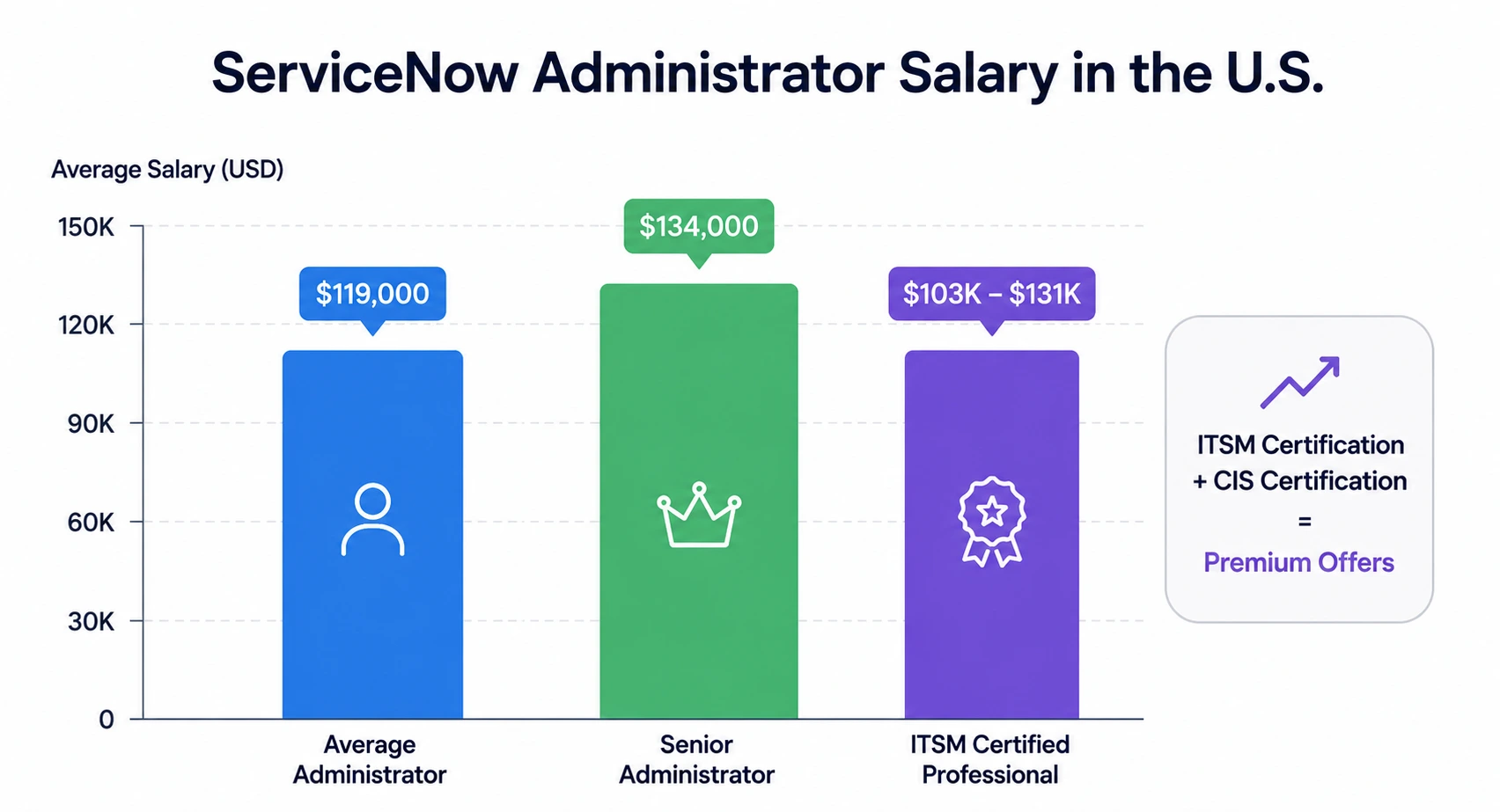
The financial case is not abstract. In the United States, the average ServiceNow administrator earns roughly $119,000 a year, with senior administrators averaging closer to $134,000. Professionals who specialize in an ITSM certification often land in the $103,000 to $131,000 range, and pairing that credential with a second CIS certification is what separates average offers from premium ones.
Beyond salary, certification changes how recruiters see your resume. A verified CSA certification tells an employer they don’t need to spend weeks confirming basic competency, and a documented ITSM certification signals you understand real process design, not just button-clicking. Combined with steady double-digit growth in ITSM software adoption worldwide, as tracked by Mordor Intelligence, the demand curve for certified professionals is not slowing down anytime soon.
Building a Realistic Study Plan
Keep the plan simple. Start with four to six focused weeks, working through official material daily rather than cramming on weekends. Use a free developer instance from day one so every concept gets tied to something you’ve built. Layer in practice exams only once you’ve finished the core coursework. And once you pass your first exam, resist chasing three more certifications at once—depth in one specialization consistently outperforms a resume full of shallow badges, a pattern confirmed by NowBen.
Final Thoughts
Choosing the right training path in 2026 comes down to picking material aligned with the current platform release, committing to genuine hands-on practice, and understanding exactly how the certification journey connects to the job you actually want. Start with your CSA credential, build real comfort in a developer instance, and only then decide whether an ITSM certification, a broader CIS specialization, or a developer track fits your goals best.
The market data backs up the effort: enterprise demand for certified professionals keeps climbing, salaries remain strong, and the platform isn’t going anywhere. Put in the structured hours now, and the return on your ServiceNow training will show up in your career for years to come.