

Hey friend, let’s be real for a second.
Setting up an enterprise GRC program can feel like a massive headache. You hear people talking about GRC implementation, GRC framework, governance risk compliance, enterprise risk management; and integrated GRC programs all the time, but actually making it happen in the real world is a totally different ball game.
I’ve been through this process with several organizations, and I wrote this guide like we’re just sitting together chatting. No fancy jargon, no corporate fluff — just honest, practical advice that actually works. Whether you’re starting from scratch or trying to fix a messy existing setup, these key steps to successfully implement an enterprise GRC program will help you move forward with clarity and much less stress.
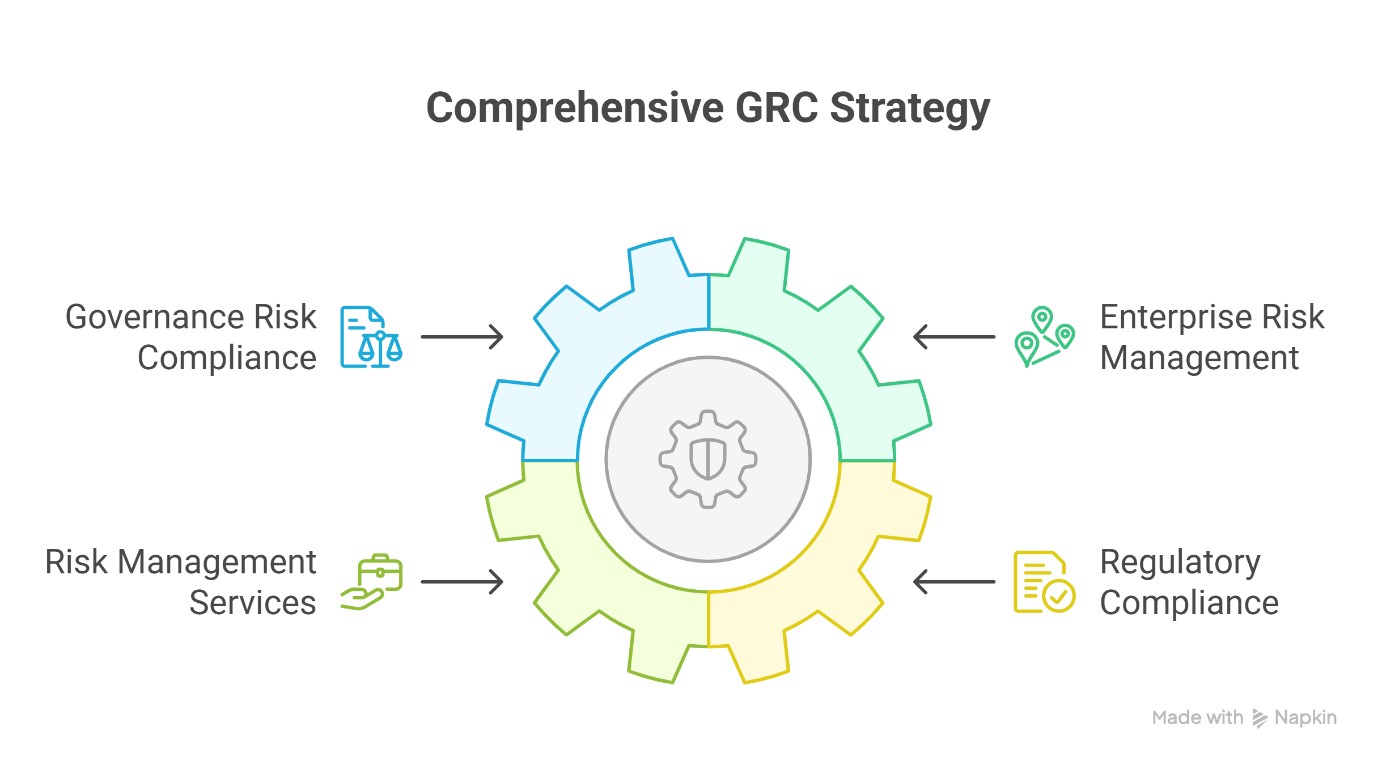
We’ll talk about strengthening governance risk compliance, building better enterprise risk management, using risk management services wisely, staying on top of regulatory compliance, and creating a truly useful integrated GRC program that supports your business instead of slowing it down.
Let’s get into it.
What Is an Enterprise GRC Program, Really?
At its heart, an enterprise GRC program is your organization’s complete system for making sure everyone knows the rules, understands the risks, and actually stays compliant.
It brings together governance (who makes decisions and who’s accountable), risk management (finding problems early and dealing with them), and compliance (following all the necessary laws and standards). When these three areas work together properly in an integrated GRC program, you get better visibility, fewer nasty surprises, and much smarter decisions across the company.
The truth is, many teams struggle because they treat GRC implementation like a one-off project. But building a strong enterprise GRC program takes time, patience, and consistent effort.
Why You Should Focus on GRC Implementation Right Now
Things are changing incredibly fast these days. New regulations keep popping up, threats are getting smarter, and senior leaders are demanding real proof that risks are being managed properly.
A well-thought-out GRC implementation helps you:
- Stop wasting time on duplicated work across departments
- Make better decisions with stronger enterprise risk management
- Feel way more confident when regulatory compliance audits come around
- Turn governance risk compliance from a painful chore into something that genuinely helps the business grow
When your integrated GRC program starts running smoothly, everything just feels less stressful for the entire team.
Top 8 Practical Steps to Successfully Implement an Enterprise GRC Program
Here’s a straightforward roadmap I’ve seen work well in real life. Take it one step at a time — there’s no need to rush everything at once.
Step 1:
Get Clear on What You Want to Achieve Sit down with leadership and ask the honest question: What do we really need from this enterprise GRC program? Are we trying to make audits easier, reduce big risks, or improve enterprise risk management company-wide? Getting aligned early makes the whole GRC implementation process so much smoother.
Step 2:
Take an Honest Look at Where You Stand Right Now This step is crucial. Before building anything new, take a good, hard look at what you already have — your current policies, risk registers, compliance processes, and tools. Ask: Where is governance risk compliance working? Where are the gaps in enterprise risk management? Are we struggling with regulatory compliance anywhere? This honest assessment saves you from wasting time later.
Step 3:
Build Your GRC Framework and Define Roles Now it’s time to create the actual structure. Choose or build a GRC framework that fits your company size and industry. Clearly define who owns governance, who leads enterprise risk management, and how regulatory compliance will be handled. Set up a small cross-functional team to guide your integrated GRC program — this helps break down silos and keeps everyone moving together.
Step 4:
Create Simple, Usable Policies and Processes Write policies that normal people can actually read and follow. Focus on practical controls that support governance risk compliance and strengthen enterprise risk management. Keep things clear and repeatable so teams will actually use them.
Step 5:
Strengthen Your Enterprise Risk Management Enterprise risk management is the heart of any good enterprise GRC program. Move away from yearly checklists to more continuous risk tracking. Identify risks regularly, assess them properly, and decide what to do about them. If your internal team needs support, don’t hesitate to bring in risk management services for expert help and fresh perspective.
Step 6:
Choose Helpful GRC Automation Tools Let’s be honest — doing everything manually is exhausting fast. Look for GRC automation tools that can handle repetitive work like evidence collection, monitoring, and reporting. Pick tools that actually connect with what you’re already using and support your integrated GRC program.
Step 7:
Train Your People and Manage the Change Your enterprise GRC program will only succeed if people understand it and buy into it. Keep training practical and straightforward. Explain why these changes matter, listen to concerns, and communicate openly. When done right, GRC implementation feels like a shared team effort.
Step 8:
Keep Monitoring, Measuring, and Improving Set up simple metrics to track how your enterprise GRC program is doing. Review progress regularly because regulatory compliance rules and business needs keep evolving. Treat your GRC framework as a living system, not a finished project.
Common Challenges During GRC Implementation
Most teams face the same issues: getting real buy-in from leadership, breaking down department silos, and stopping scope creep. The best way through it? Move in phases and keep communication open and honest.
The Real Benefits of a Strong Integrated GRC Program
When you implement it properly, you’ll notice fewer surprises, much better enterprise risk management, smoother regulatory compliance, happier auditors, and more time to focus on actual business growth. It brings real peace of mind.
Final Thoughts
Implementing an enterprise GRC program takes real time and effort, but it’s one of the smartest investments you can make. Follow these key steps to successfully implement an enterprise GRC program, stay patient, and celebrate the small wins.
Start with just one or two steps this month. Small, consistent progress really adds up.
If this guide made GRC implementation feel more doable, please share it with your team. Got questions about your specific situation? Drop a comment below — I’m always happy to chat and help.
Here’s to building a stronger, calmer, and more confident future with your enterprise GRC program!

