

Hey friend, ransomware has become one of the scariest realities for businesses these days. One bad email or a single weak point in your setup, and suddenly systems are locked, data is stolen, and attackers are demanding a big ransom. If you’re feeling anxious about ransomware, you’re definitely not alone.
The encouraging part is that a smart GRC ransomware approach can actually help a lot. In this guide, I’ll explain it in plain, everyday language — how GRC in cyber security can support you in dealing with ransomware risks.
We’ll look at how it connects with things like enterprise risk management, cyber risk management, security governance, building a solid enterprise cybersecurity risk framework, using GRC automation for security risks, proper GRC implementation in cybersecurity, compliance management, data breach prevention, security risk management, cyber threat management, and data risk management.
Let’s talk about this the way two colleagues would — openly and practically.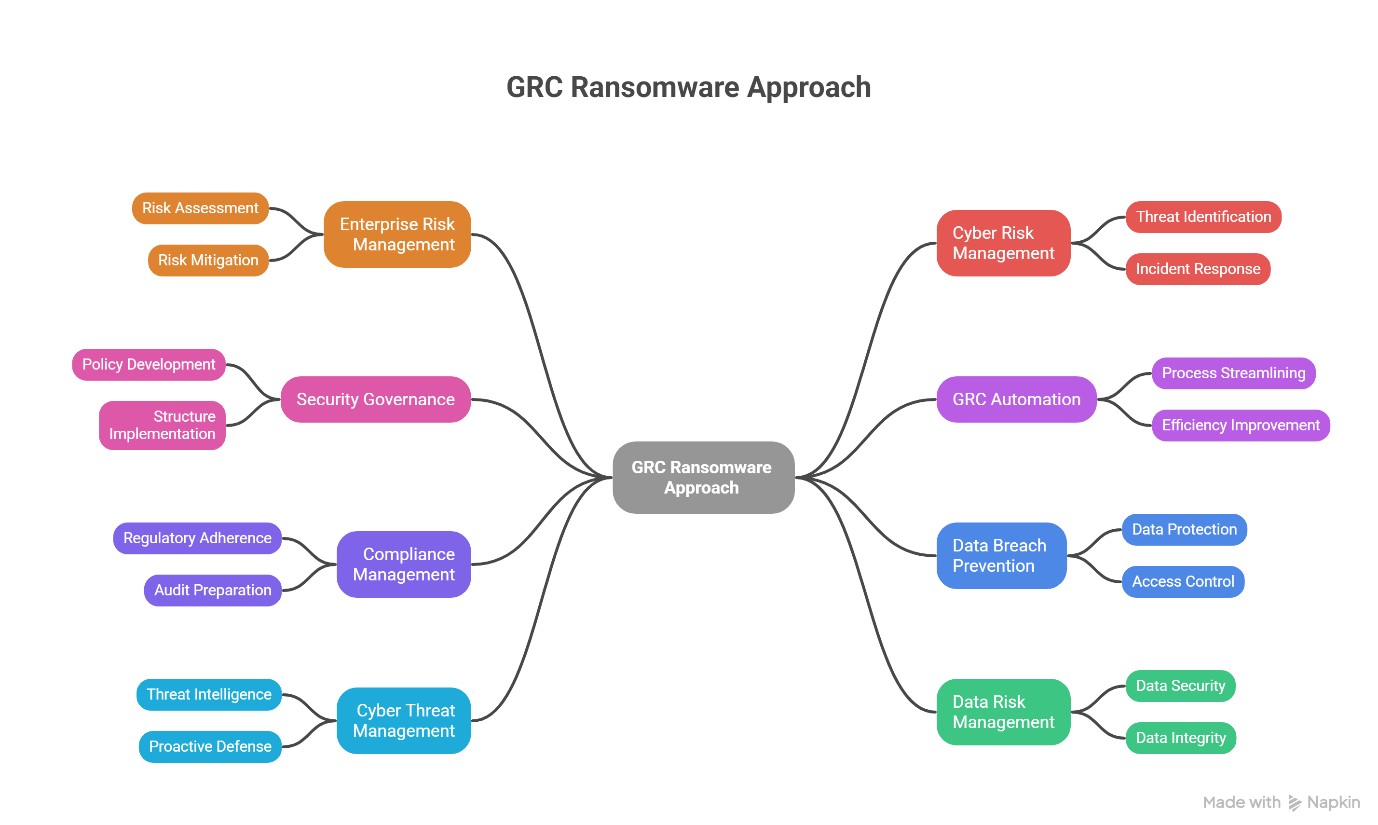
Ransomware usually slips in through small weaknesses. Good practices help you find and fix those weaknesses before things go wrong.
What Is GRC Ransomware?
GRC ransomware is about applying Governance, Risk, and Compliance thinking specifically to ransomware threats. GRC in cyber security adds structure so that protecting against ransomware isn’t something the IT team handles completely on its own.
With GRC ransomware, security governance helps set clear expectations and responsibilities. Enterprise risk management and cyber risk management let you understand which risks are most serious. Security risk management and cyber threat management focus on the actual weak spots that ransomware attackers tend to target.
When you have a thoughtful plan supported by GRC in cyber security, you stop purely reacting after an incident and start working to prevent or reduce the damage upfront.
How GRC in Cyber Security Strengthens Your Defense Against Ransomware
GRC in cyber security can be surprisingly effective against ransomware. Here’s how it plays out in real life:
Security governance makes sure people know what they’re responsible for — things like testing backups regularly and training staff to recognize suspicious emails. Enterprise risk management helps you evaluate how likely an attack is and what the potential impact could be. Cyber risk management zeroes in on the digital threats that often open the door to ransomware.
Building a strong enterprise cybersecurity risk framework as part of your strategy gives you a clearer picture of where you’re vulnerable. When combined with sensible GRC implementation in cybersecurity, those high-level ideas turn into daily habits that support security risk management and cyber threat management.
In the end, GRC simply brings governance, risk, and compliance together — and that combination creates a much more solid base for handling ransomware.
Building a Strong Enterprise Cybersecurity Risk Framework with GRC Ransomware
A practical enterprise cybersecurity risk framework is one of the key pieces when dealing with ransomware.
It helps you:
- Identify the systems and data that would hurt the most if hit by ransomware
- Improve data risk management by properly classifying sensitive information
- Prioritize the controls that actually help with data breach prevention
GRC in cyber security makes this framework more effective when you apply good GRC implementation in cybersecurity. Security governance keeps things on track with regular reviews, while enterprise risk management and cyber risk management help you adapt to new ransomware tactics.
Compliance Management and Data Breach Prevention in GRC Ransomware
Ransomware attacks frequently lead to data exposure, which brings regulatory headaches. This is where compliance management becomes important.
GRC in cyber security supports compliance management by keeping policies current and making it easier to gather evidence when needed. This also strengthens data breach prevention by limiting what attackers can actually access or steal.
When your approach includes solid security risk management and cyber threat management, you lower both the chance of an attack succeeding and how much damage it causes if it does.
The Power of GRC Automation for Security Risks
Trying to handle everything manually just doesn’t work well against fast-moving ransomware threats. That’s why GRC automation for security risks has become really helpful.
GRC automation for security risks can:
- Watch your controls continuously and warn you when something breaks
- Automatically collect evidence needed for compliance management
- Support security risk management and cyber threat management without exhausting your team
When paired with sensible GRC implementation in cybersecurity, it gives your people more time to focus on enterprise risk management and data risk management instead of repetitive work. (GRC ransomware count: 8)
Practical Steps for GRC Ransomware Success
Here’s a straightforward roadmap to strengthen your efforts using GRC in cyber security:
- Strengthen security governance and assign clear owners for ransomware preparedness.
- Enhance enterprise risk management and cyber risk management by including realistic ransomware scenarios.
- Focus on data risk management to protect your most critical information.
- Build a practical enterprise cybersecurity risk framework as part of your plan.
- Support GRC implementation in cybersecurity with simple training for your team.
- Introduce GRC automation for security risks to keep an eye on key controls.
- Improve compliance management so you’re ready if regulators get involved.
- Keep reviewing your security risk management and cyber threat management practices on a regular basis.
These steps help turn ransomware protection into a normal part of your GRC in cyber security routine.
Real Benefits of Using GRC Ransomware Strategies
When you put this into practice through GRC in cyber security, teams often notice:
- Better data breach prevention and fewer successful attacks
- Stronger enterprise risk management and cyber risk management
- Smoother compliance management when something happens
- More effective security risk management and cyber threat management
- Greater overall confidence thanks to a solid enterprise cybersecurity risk framework
It won’t remove every possible risk, but it makes ransomware attacks much harder to succeed and a lot less destructive.
Final Thoughts on GRC Ransomware
Ransomware is a tough challenge, and it’s not disappearing anytime soon. But strategies supported by GRC in cyber security can give you a much better chance to protect your business. By paying attention to enterprise risk management, cyber risk management, security governance, enterprise cybersecurity risk framework, GRC automation for security risks, GRC implementation in cybersecurity, compliance management, data breach prevention, security risk management, cyber threat management, and data risk management, you’re building genuine resilience.
Start small. Choose one area — perhaps strengthening security governance or looking into GRC automation for security risks — and take that first step.
If this guide helped you see how GRC ransomware and GRC in cyber security can work together, feel free to share it with your team. Got questions about your own setup? Leave a comment — I’m happy to chat.
Stay safe out there, and keep building stronger defences.

