


Two people sit in the same office. Same building, same floor, same general type of work — fixing tech problems for the people around them.
One is called a Help Desk Technician. The other is called an IT specialist.
The Help Desk Technician takes home around $50,000 a year. The IT specialist takes home around $81,000.
That is a $30,000 to $35,000 difference — for work that, on the surface, looks almost identical.
This is not a rumor. This is what the numbers actually show. And once you understand why that gap exists, you also understand exactly how to get yourself to the other side of it.
What a Help Desk Technician Actually Does
A help desk technician is usually the first person a company calls when something breaks. Someone can’t log in. A printer won’t connect. An application keeps crashing. The help desk person picks up that ticket, walks the user through a fix, and moves on to the next one.
The work is real, and it matters. Without help desk support, most offices would grind to a halt within a day. But the role is defined by response. Something breaks; you fix it. Someone asks; you answer. It is reactive by nature.
Most help desk roles involve password resets, basic hardware troubleshooting, software installation, and routing problems to someone else when they get complicated. The person in this role is the front line — visible, busy, and often undervalued.
Entry-level help desk pay starts around $38,000 to $48,000 a year. The average sits closer to $50,000 to $64,000, depending on the company and location.
What an IT Specialist Actually Does
An IT specialist does some of the same things, but the job scope is wider and goes deeper.
Where a help desk technician responds to problems, an IT specialist also prevents them. They manage systems, set up infrastructure, handle network configuration, oversee security protocols, and often make decisions about what tools and systems a company should be running in the first place.
They are not just fixing — they are building and maintaining. They understand why things break, not just how to patch them. They work with more complex systems, have more independence in their role, and are expected to use their own judgment rather than follow a script.
The average salary for an IT specialist in the United States is around $81,000 a year. Senior roles push past $100,000. The gap between this and a help desk role is not small.
The Real Reason the Gap Exists
Here is the honest answer — it is not really about what you do every day. It is about what your title says you can do and what your credentials prove.
Two people can handle the same ticket, solve the same problem, and walk away from the same situation. But if one of them has certifications, a broader skill set, and a title that signals seniority, they will be paid more. Every time.
The job market does not just pay for the work you’re currently doing. It pays for the range of work you could do, the problems you could solve if they came up, and the trust a company places in you to handle things without supervision.
Help desk titles signal entry-level. IT specialist titles signal capability. That perception — backed by the right credentials — is what creates the gap.
The Salary Gap at a Glance
|
Role |
Average US Salary (2026) |
Level |
Key Differentiator |
|
Help Desk Technician |
$50,000 – $64,000 |
Entry |
Reactive support, ticket-based |
|
IT Specialist |
$81,000 – $95,000 |
Mid-Senior |
Proactive, systems-level ownership |
|
IT Support Specialist |
$65,000 – $71,000 |
Mid |
Bridge between the two roles |
|
Senior IT Specialist |
$100,000+ |
Senior |
Strategy, infrastructure, leadership |
Why the Same Work Pays Differently
Walk into any mid-size company, and you will likely find people in both roles doing similar tasks on certain days. The IT specialist might reset a password just like the help desk person does. But three other things separate them.
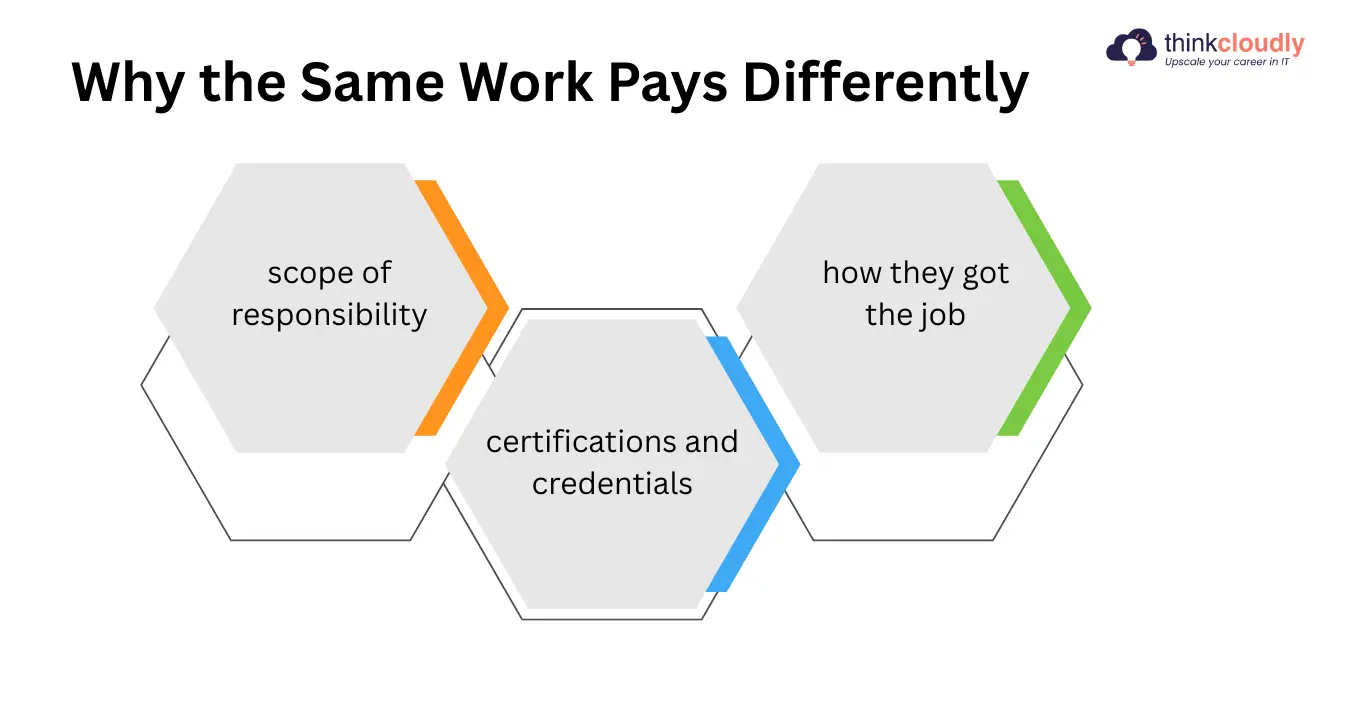
First — scope of responsibility
The IT specialist owns systems. They are accountable if the network goes down, if security is breached, or if a server migration fails. The help desk technician is accountable for a ticket. That difference in accountability is priced in.
Second — certifications and credentials
IT specialists typically carry certifications that prove they have advanced knowledge. CompTIA Network+, CompTIA Security+, Microsoft certifications, Cisco credentials — these are not just pieces of paper. They signal to an employer that this person has been tested, has studied specific technical domains, and can be trusted with more complex work.
Third — how they got the job
Most help desk positions are entry-level. Most IT specialist positions require that you demonstrate prior experience or credentials before you’re hired. The process of getting the role filters who get in, and that filtering raises the floor on pay.
5 Ways Help Desk Professionals Can Close the Gap
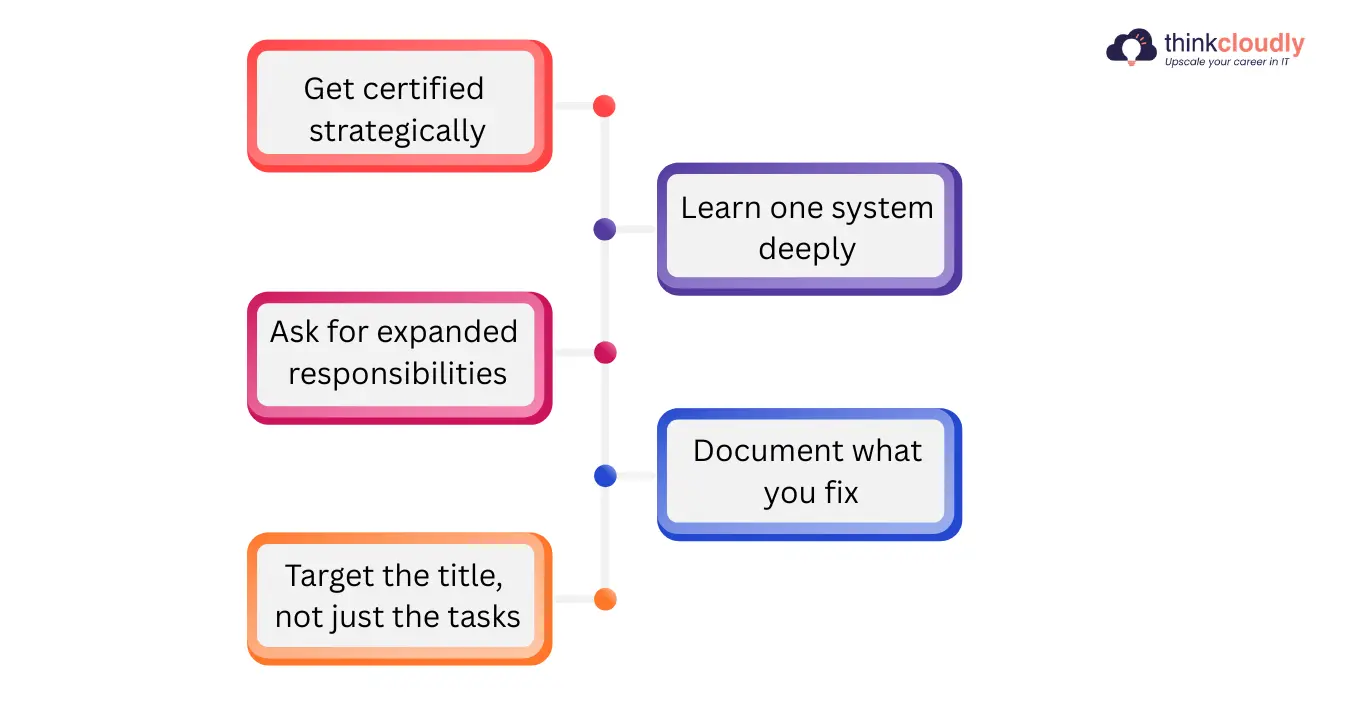
If you are currently in a help desk role and want to move up, here is what actually works:
-
Get certified strategically — CompTIA A+ is where most people start, but CompTIA Network+ and Security+ are what push you into IT specialist territory. These certifications are widely recognized and directly tied to salary bumps
-
Learn one system deeply—Pick a platform your company uses—Microsoft 365, Azure, AWS, or a networking stack—and become the person who knows it better than anyone else on the team
-
Ask for expanded responsibilities — Before you can get the title, you often have to do some of the work. Volunteer for projects outside ticket resolution. Work on migrations, setup tasks, and system audits
-
Document what you fix — Start keeping a record of every non-routine problem you’ve solved. This becomes your portfolio when you’re applying for the next-level role
-
Target the title, not just the tasks—When you apply for new roles, apply for IT Specialist positions, not just help desk jobs. The title you accept shapes your salary ceiling for the next several years
Where to Actually Build These Skills in 2026
Not all online resources age the same way. These are the ones that stay current:
-
Official documentation first — For Microsoft certifications, go to Microsoft Learn. For CompTIA, go directly to CompTIA’s site. These are updated with every exam version change
-
GitHub and hands-on labs — Reading is not enough. Set up a home lab, practice on virtual machines, and build the kind of experience that shows up in interviews
-
Filter by date on every platform — IT exam content changes. A study guide from 2021 for a 2026 exam version may cost you the test
-
Use AI tools alongside docs, not instead of them—AI assistants can help you study, but certification exams test current exam objectives—always verify against the official source
-
Communities like Reddit’s r/sysadmin and r/ITCareerQuestions—These have fresher, more real-world career advice than most polished career blogs
What Most People Get Wrong About This
A lot of people in help desk roles assume the gap will close naturally over time — that if they just stay long enough, the pay will catch up.
It usually does not work that way.
Time in a help desk role without deliberate upskilling mostly just makes you a more experienced help desk technician. The salary ceiling for that role does not move much with experience alone. What actually moves the number is a title change, and that title change almost always requires a change in credentials or demonstrated scope of work.
The people who cross from $50,000 to $80,000 do not wait. They add certifications, they move to a company that will recognize a higher title, or they prove expanded capability in their current role and negotiate accordingly.
The path is clear. It is just not automatic.
The Bottom Line
The $35,000 gap between a Help Desk Technician and an IT Specialist is real, it is common, and it is not random. It is the direct result of how titles, credentials, and scope of responsibility are priced in the job market.
If you are currently on the help desk side of that gap, the distance between where you are and where you want to be is not talent. It is not experience. For most people, it comes down to certifications, title targeting, and the willingness to take on a broader scope of work before you get paid for it.
That is a learnable, achievable path. And it starts with understanding exactly why the gap exists in the first place.
Sources & Further Reading
The data and statistics in this article are drawn from the following sources:
- Glassdoor — Help Desk Technician Salary United States 2026—Average help desk technician salary range of $52,553 to $79,563 cited in the salary section.
- Salary.com — IT Specialist Salary United States 2026 — An average IT Specialist salary of $81,238 is used to establish the salary gap.
- Zippia — IT Specialist vs Help Desk Specialist Salary Comparison — Salary comparison data ($81,241 vs. $51,065) used in the gap analysis.
- IT Support Group — IT Support Salary: What Help Desk Really Pays 2026 — Entry-level help desk range of $38,000 to $48,000 and the path to higher-paying roles.
- BeyondTrust — Top IT Support Certifications 2026 — Reference for CompTIA and certification importance in IT career advancement.
- Indeed — Help Desk Technician Job Description 2026—Used to define help desk responsibilities and career advancement paths.
- Bureau of Labor Statistics — Computer Support Specialists — Supporting data on computer support specialist salary medians and job outlook.
All salary data is sourced from United States-based reports and reflects 2025–2026 figures. Figures may vary by location, company size, and individual experience level.