

Imagine starting your workday by fixing a bug in a code sample, then spending your lunch break filming a quick explainer video for YouTube. By afternoon you’re on a conference stage in front of hundreds of developers. By evening you’re back at your laptop, helping a stranger on the internet figure out why their API call keeps failing for free, just because you want to.
No, this isn’t someone burning themselves out across three different jobs. This is a single role, at a single company, with a single very healthy paycheck.
Most people have never heard of it. Even a lot of people who work in tech would struggle to explain it if you asked.
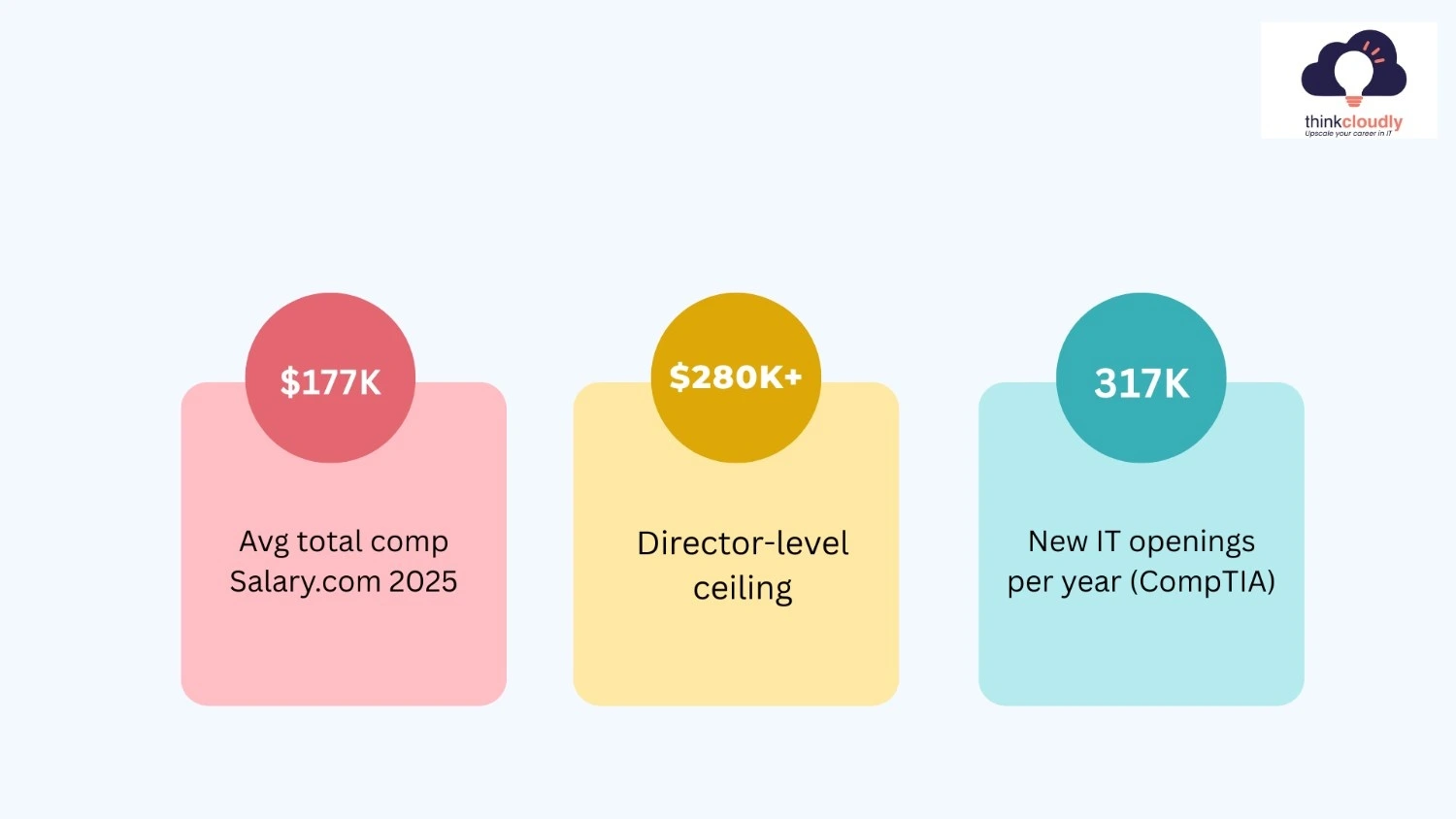
The job is called Developer Advocate, sometimes Developer Relations Engineer, sometimes just “DevRel” among the people who do it. And the pay? According to Salary.com’s 2025 figures, someone managing a developer relations team in the US takes home around $165,000 in base salary, which climbs closer to $177,000 once performance bonuses are factored in. Step into a senior or director-level position at a well-funded tech company, and total compensation of $200,000 to $280,000 is genuinely within reach.
That $170,000 number people sometimes throw around? For the folks actually in this field, it is not the dream , it is often just the starting point.
What on Earth does a developer advocate actually do?
When a technology company, say, a cloud platform, an AI startup, or a payments service, builds a product that other software developers need to use, they face a classic problem: how do you help thousands of strangers understand your complex product, fall in love with it, and keep using it?
That is where Developer Relations comes in. A developer advocate sits at the crossroads of engineering, education, and community. They write tutorials that make complicated tools feel manageable. They build sample apps and video demos. They speak at technology conferences. They hang out in online communities answering questions for free — not to sell anything, but to genuinely help. And crucially, they carry those developers’ frustrations back to the engineering team, directly influencing the product itself.
The role grew out of “technical evangelism,” which Apple and Microsoft experimented with in the 1990s. But DevRel as we know it today was shaped by companies like Twilio and Stripe in the 2010s. A 2026 analysis found that Twilio credited its developer advocates as a primary driver of reaching $5 billion in revenue and over 10 million registered developers on its platform.
Why has nobody told you about this?
The job does not fit neatly into any category most people recognize. It is not quite engineering, not quite marketing, not quite public relations. Job boards frequently list it under completely different headings—”Technical Evangelist,” “Developer Experience Engineer,” “Community Engineer,” and “Platform Advocate.” If you have never been inside a tech company, you might scan the listings and skip straight past it.
There is also a self-selection effect. Many of the people currently doing this work stumbled into it by accident. They were software engineers who turned out to love writing and speaking. Or they were technical writers who learned enough code to become credible on stage. The role rewards a hybrid personality that traditional career paths rarely cultivate on purpose.
Why companies pay so much for this role
Developers are notoriously resistant to traditional advertising. They do peer research, read documentation, watch real demos, and ask community questions before committing to any platform. A great developer advocate, someone developers genuinely trust, can be worth millions in acquired developer accounts.
The salary picture in full
The pay varies by seniority, company size, and location, but it is consistently impressive at every level. Glassdoor currently reports the average base salary for a developer relations engineer at $141,309. A 2025 career guide places the Developer Advocate base range at $140,000 to $180,000. At the entry level, total compensation typically starts around $90,000—still well above the median US household income. The table below shows what to expect across career stages.
|
Entry |
Junior Developer Advocate | $80K – $110K | ~$90K – $120K |
Content, community support |
|---|---|---|---|---|
|
Mid-level |
Developer Advocate | $120K – $160K | ~$140K – $180K |
Talks, tutorials, feedback loops |
|
Senior |
Senior DevRel Engineer | $155K – $190K | ~$177K – $220K |
Strategy, partnerships, product influence |
|
Level |
Common title | Base salary range | Total comp (incl. bonus) |
Primary focus |
|
Manager |
Developer Relations Manager | $150K – $184K | ~$177K – $200K |
Team leadership, ROI measurement |
|
Director |
Director of Developer Relations | $180K – $240K | ~$200K – $280K+ |
Ecosystem strategy, executive reporting |
The skills that get you hired
Technical writers, product managers, and sales engineers have all made successful transitions into DevRel. What employers look for is a specific combination of competencies that are genuinely rare in a single person.
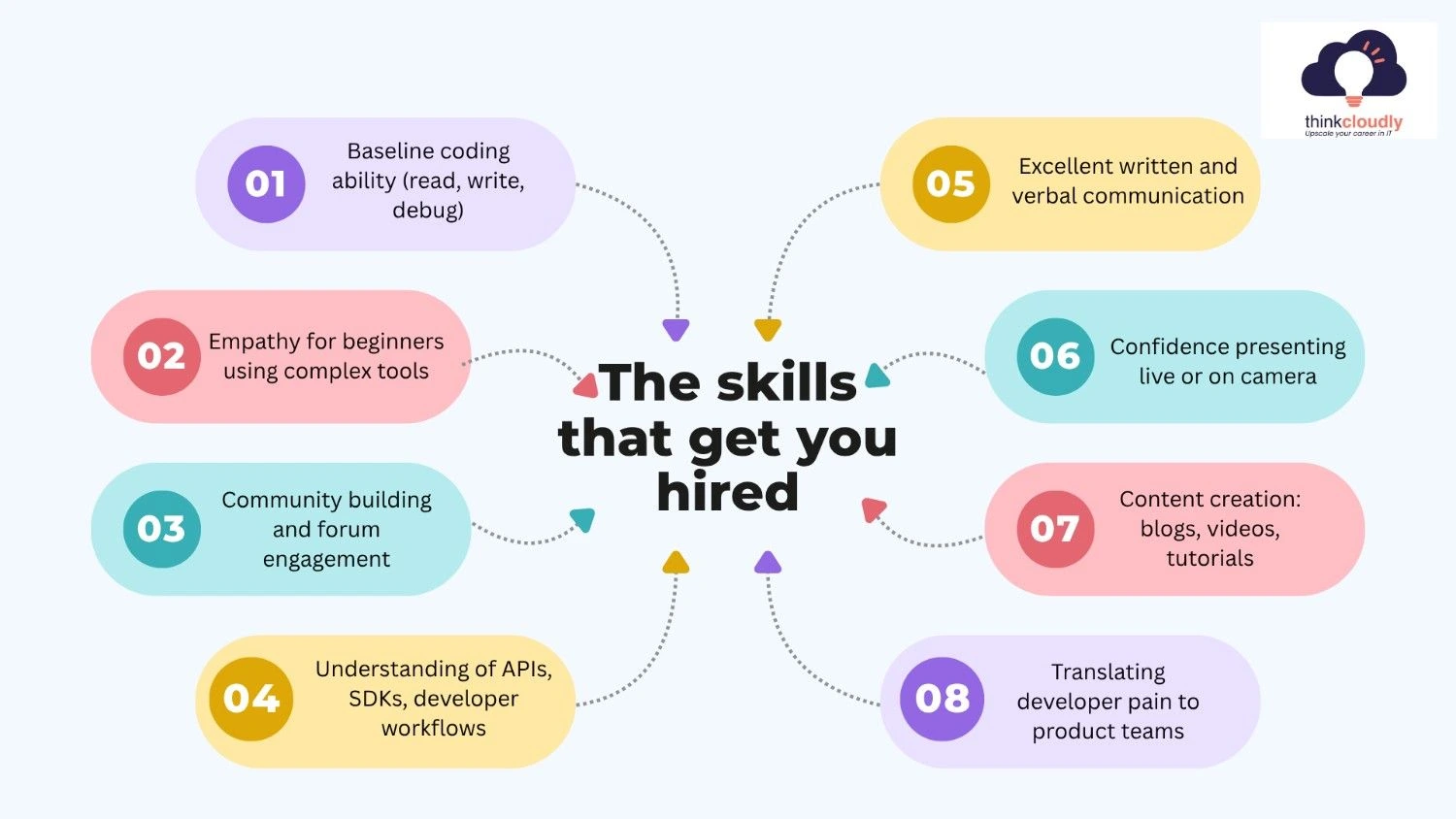
The technical bar is lower than being a full software engineer, but it is not zero. You need enough coding credibility that developers respect you enough to build a working demo, spot a bug in example code, and understand why a certain API design is frustrating. Think of it as “fluent in the language” rather than “able to architect the whole system.”
The state of the market right now
The honest picture is mixed. The 2024–2025 period saw a wave of layoffs in DevRel teams at larger companies. These cuts disproportionately hit practitioners who could not demonstrate measurable return on investment. Teams that survived were those with clear metrics: developer acquisition numbers, activation rates, community growth, and attributable revenue from developer-sourced leads.
The broader IT market, however, remains strong. CompTIA’s 2025 State of the Tech Workforce report projects US tech sector jobs growing from 6.09 million in 2025 to 7.03 million by 2035. The Bureau of Labour Statistics reported computer and IT occupations had a median annual wage of $105,990 in 2024, with IT managers at a median of $169,510—putting Developer Relations squarely in the upper tier. The surviving DevRel ecosystem is arguably stronger and more professionally rigorous than it has ever been.
Could this be the right career for you?
Ask yourself three questions. Do you genuinely enjoy helping people understand something difficult? Are you comfortable with code, even if you do not live in it all day? Do you like writing, speaking, and creating content? If the answers are “yes,” you might be one of the rare hybrid people the tech industry is actively searching for—and willing to pay handsomely to keep.
The path in is not a traditional one. Companies hire advocates who already have a voice in the community. That means building your presence before you apply: write blog posts, contribute to open-source projects, answer questions in developer forums, and record short videos explaining concepts you know well. The portfolio you build publicly is your real application.
Sources & References
The data and statistics in this article are drawn from the following sources:
- Salary.com — Developer Relations Manager Salary in the United States — base salary and total compensation figures for Developer Relations Managers in the US (April 2025)
- Glassdoor — Developer Relations Engineer: Average Salary & Pay Trends — average base salary data for Developer Relations Engineers (2026)
- AlgeriaTech News — Developer Relations in 2026: The Career That Bridges Code — career growth context, Twilio revenue milestone, and post-layoff DevRel landscape (March 2026)
- Vinish.Dev — What is a Developer Advocate? A Complete Career Guide for 2026 — role definition, career path, salary range, and how to break into DevRel (November 2025)
- reo.dev — Developer Advocate: Complete Career Guide for DevRel Professionals — skills requirements, non-traditional entry paths, and career progression (December 2025)
- Robert Half — 2026 Salary Guide: Highest-Paying IT Jobs — employer survey data on premium pay for roles bridging technical credibility and community influence (2026)
- DevOps School—Developer Advocate Role Blueprint, Responsibilities, Skills, KPIs, and Career Path—structured breakdown of Developer Advocate responsibilities and measurable KPIs (April 2026)
- CompTIA via TechTarget — State of the Tech Workforce 2025 — US tech sector job growth projections from 6.09 million (2025) to 7.03 million (2035)
- U.S. Bureau of Labor Statistics — Employment Projections 2024–2034 Overview and Highlights — median annual wages for computer and IT occupations and IT managers (August 2025)
- Research.com — 2026 Highest Paying Jobs in IT and Technology — comparative salary benchmarking across top-paying IT roles (February 2026)
- Nexford University—Top 10 Highest Paying IT Jobs & Careers 2026—educational context on high-value IT career paths and entry requirements (April 2026)
- Develocity—Exploring Salaries in DevRel Careers: Research Report—community-sourced salary research specific to Developer Relations practitioners (2023, updated 2024)