
Choosing the right certification at the right time can significantly accelerate your cybersecurity career. In today’s fast-growing cybersecurity industry, Cyber threats are increasing rapidly, making skilled professionals more valuable than ever becoming a SOC analyst is one of the most promising career choices. It offers strong job security, growth opportunities, and high demand across industries. Professionals with real-time cyber threat detection, Organizations actively seek candidates who can monitor, detect, and respond to threats quickly analysis, and response skills are in high demand. However, to start or grow your career in this field, choosing the right SOC analyst certification is extremely important. The right certification helps you stand out and proves your practical skills to employers. This guide will help you in selecting the best certification. It will also help you understand which certification fits your current skill level, so stay tuned with me all the way through.
Why Do You Need a SOC Analyst Certification?
A certified SOC analyst demonstrates it, builds trust with employers, and increases your chances of getting hired by showing that you have the ability to keep an eye on security alerts, look into incidents, and defend the company against cyberattacks. It helps to validate practical skills in SIEM tools, network security, incident response, threat intelligence, and log analysis, preparing you for the workforce.
Beginner-Level Certification:
If you are new to cybersecurity or transitioning from a different field, starting a career as a SOC analyst can feel overwhelming. A strong foundation in cybersecurity concepts, security monitoring, incident analysis, and real-world SOC tools can be developed with the help of Beginner-level certifications. These certifications are perfect for students, freshers, and IT professionals looking to enter the cybersecurity domain confidently. This beginner-level certification makes it easier to land your first SOC analyst job.
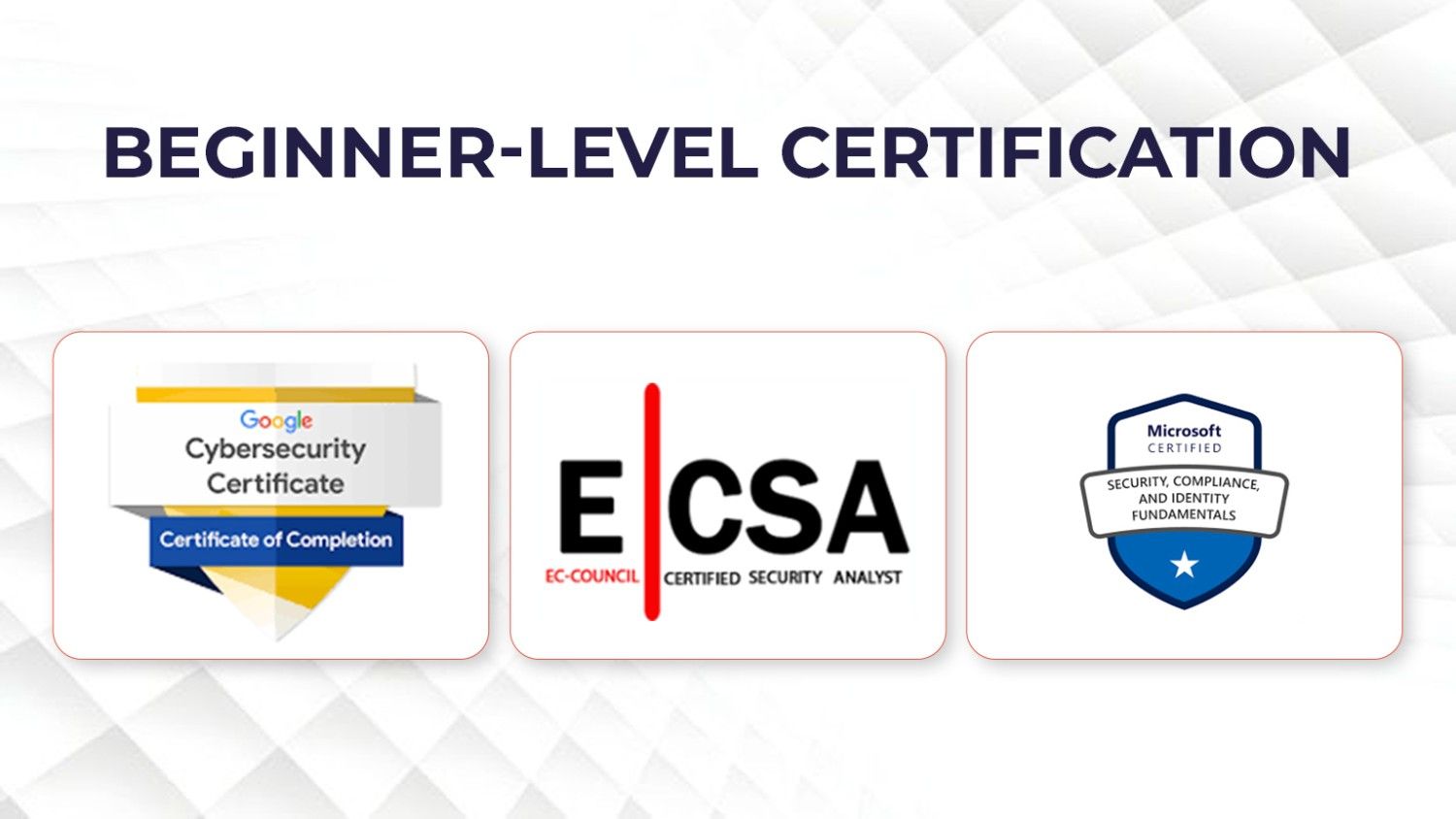
Google Cybersecurity Professional Certificate
This is one of the most beginner-friendly cybersecurity programs created by Google. It covers the foundations of Linux, threat detection, incident response, security monitoring, and SIEM tools like Splunk. This course includes hands-on labs and real case studies.
EC-Council Certified SOC Analyst (CSA)
CSA is specially designed for SOC beginners who want job-ready skills. During this course you will learn alert analysis, log analysis, malware investigation, and hands-on SOC tools. This certification is good for those who want deep SOC knowledge.
Microsoft SC-900 (Security, Compliance & Identity Fundamentals)
This certification is good for beginners interested in cloud and SOC together. SC-900 teaches the basics of cloud security.
It covers how organizations protect user identities, manage access, secure cloud data, and use Microsoft security tools.
It can be a good starting point before SC-200/Cloud SOC jobs.
Mid-Level Certification:
After completing entry-level SOC training or gaining some basic experience, mid-level certifications can help advance your career by strengthening your technical abilities. The advanced threat detection, incident response, forensic analysis, and SIEM-based investigation skills needed for SOC L2 and L3 positions are the main focus of these certifications.
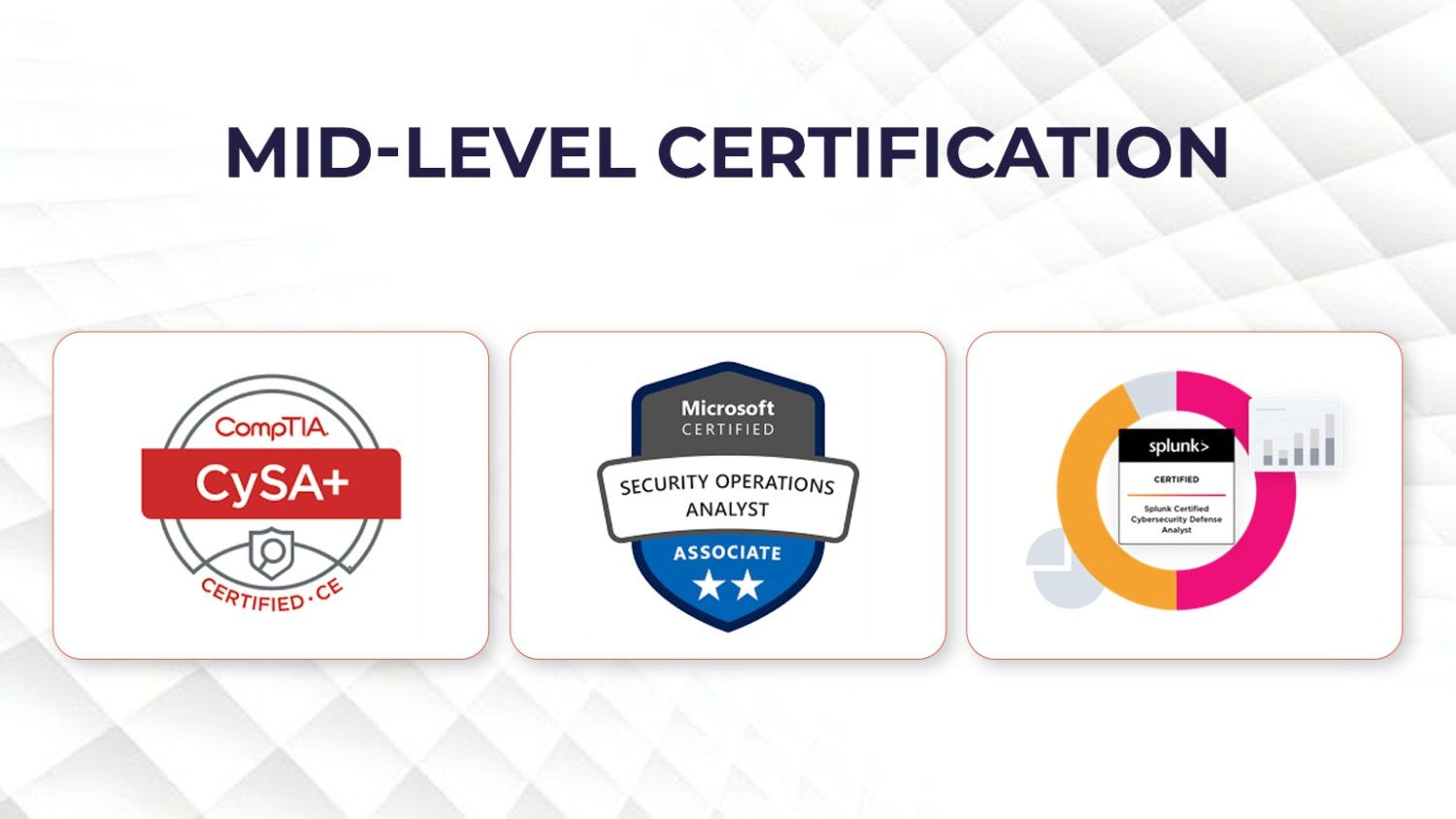
CompTIA CySA+ (Cybersecurity Analyst)
If you have basic SOC knowledge and want to move to an SOC L2 profile, then you can choose this certification. This certification focuses on real SOC tasks. CySA+ teaches you advanced threat detection, malware analysis, vulnerability management, and incident response.
Microsoft SC- 200
This certification is good for analysts aiming for cloud-based SOC roles. Microsoft SC-200 focuses on Azure Sentinel and cloud SOC operations. This certification helps you to learn advanced topics in detail, such as threat hunting, SOAR automation, and cloud log investigation.
Splunk Certified Cybersecurity Defense Analyst (CDA)
This certification is good for those who are working in an SOC environment. It will help you to learn Splunk (security tool ). During this certification you will learn threat monitoring, log analysis, and investigation of security alerts. It is one of the most widely used SIEM tools in SOC worldwide.
Advance-Level Certification:
If you are aiming to specialize or move into senior-level cybersecurity roles, you can choose these advanced certifications because they prepare you for high-level roles such as SOC lead, Incident Response, and Security manager. These certifications focus on complex attack analysis, digital forensics, advanced defence strategies, and real-time response to sophisticated cyber threats.
GCIH (GIAC Certified Incident Handler)
This certification is good for SOC level 3 analysts. It focuses on how to handle real cyber-attacks. During this certification you will learn in-depth incident response, attacker techniques, and threat containment. It prepares analysts to handle major cyber breach situations. It will teach you how to respond to major security threats and protect systems from further damage.
OSCP (Offensive Security Certified Professional)
It is one of the toughest hands-on hacking certifications. This certification is ideal for soc analysts who want to transition to red team. It teaches sophisticated attack techniques such as penetration testing, exploitation, and complex attack strategies.
CISSP (Certified Information Systems Security Professional)
This certification is one of the most respected and advanced certifications in the cybersecurity industry. It is good for those who want to move into high-level technical roles. It covers 8 major security domains, which include everything needed to protect an organization at a large scale. It teaches you to design a company’s security system rather than just handling day-to-day threats.
Final Thoughts:
Choosing the right SOC analyst certification is one of the most important steps. Your decision should depend on where you currently stand, beginner, mid, or advanced, and what role you want to achieve next. Certifications will help you to validate your skills and help to add value to your resume. Whether you start with Google Cybersecurity professional certificate, EC-Council (CSA), CISSP, OSCP and CySA + it helps to add value in your journey.
The right certification can improve your confidence, increase job opportunities, and open doors domestically and internationally to high-paying security roles. Before choosing any certification, take some time to compare training content and hands-on labs of training programs. You can build a strong and secure future in cybersecurity if you learn with dedication and consistency.