

When I first came across the term “Tokenization in LLMs,” I honestly thought it sounded like some super complicated tech jargon and almost scrolled right past it. But man, once I finally sat down and understood what tokenization is, everything about how these AI chatbots work suddenly clicked. If you’ve ever used ChatGPT, Grok, Claude, or any other AI and wondered how the heck it actually understands what you’re typing, then Tokenization in LLMs is where the whole magic starts.
Let me explain it the way I wish someone had explained it to me.
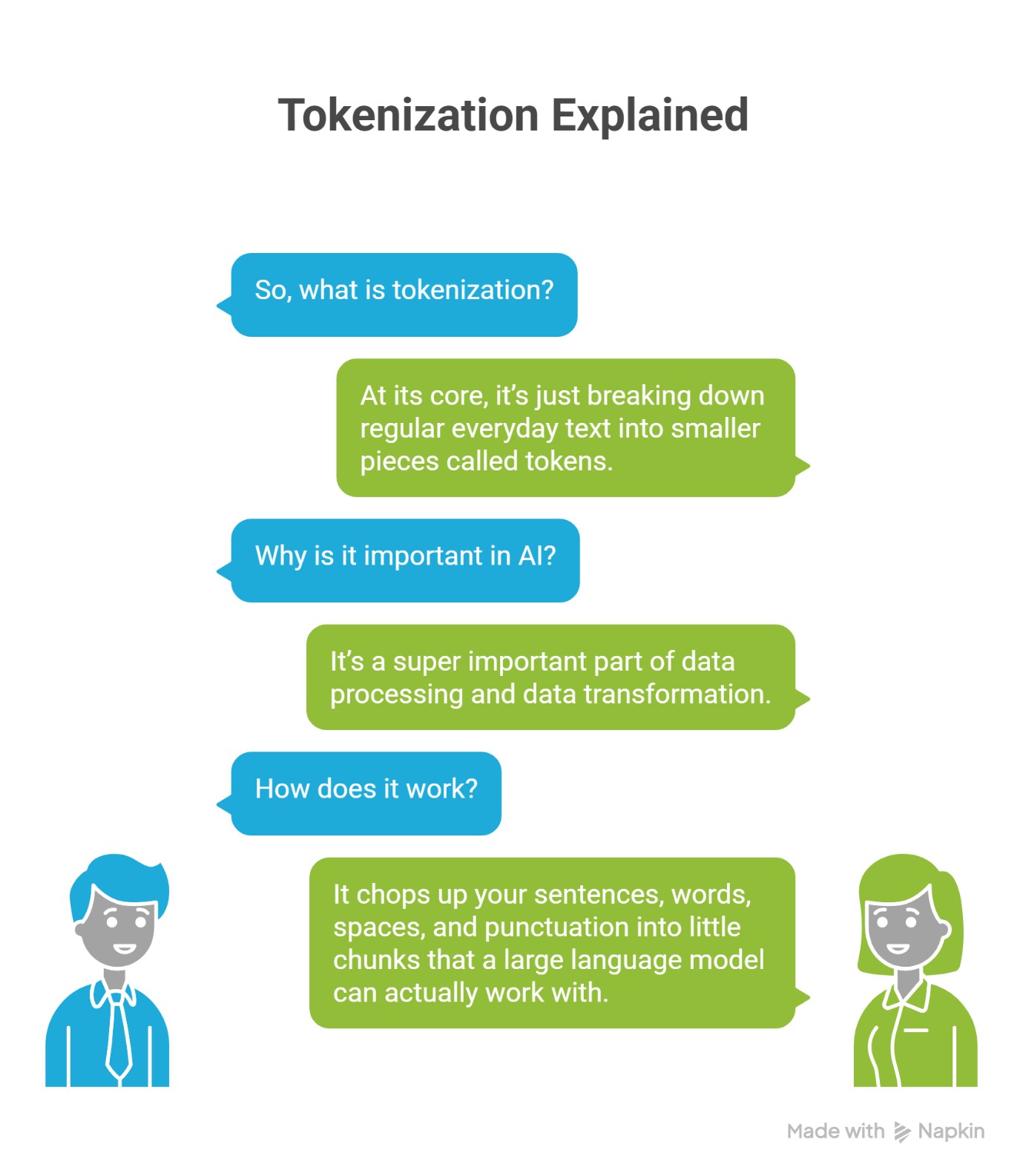
So, what is tokenization? At its core, it’s just breaking down regular everyday text into smaller pieces called tokens. This tokenization step in AI models is a super important part of data processing and data transformation. Your brain does this automatically — you read a sentence, and your mind picks up the words and their meaning without any effort. But computers? They don’t understand words like we do. They need everything turned into numbers. That’s exactly what Tokenization in LLMs does. It chops up your sentences, words, spaces, and punctuation into little chunks that a large language model can actually work with.
For example, something as simple as “I love learning about AI” might get split by Tokenization in LLMs into tokens like [“I”, ” love”, ” learn”, “ing”, ” about”, ” AI”]. Then each token gets converted into a number based on the model’s vocabulary. Those numbers are what the large language model really “sees” and processes. Without good data tokenization, the whole system would be totally lost. This is why getting Tokenization in LLMs right is so fundamental in token based language models.
Why Tokenization in LLMs Actually Matters A Lot
Tokenization in LLMs matters way more than most people realize. The way a large language model handles Tokenization in LLMs affects almost everything — how big its vocabulary gets, how well it deals with slang or brand new words, how fast it runs during data processing, and even how much context it can remember at once.
If you do Tokenization in LLMs well, the large language model feels smart, natural, and quick. Do it poorly and even the most advanced token-based language models start acting dumb or weird. I’ve seen this happen myself while experimenting with different models. That’s why the big AI companies spend crazy amounts of time obsessing over their tokenization techniques.
Every single message you send and every reply you get goes through this tokenization step in AI models. It directly impacts the quality of data processing and data transformation happening behind the scenes. In token based language models, smart Tokenization in LLMs means lower costs and better performance. Bad data tokenization wastes tokens, burns more money, and sometimes leads to strange misunderstandings. So yeah, Tokenization in LLMs is quietly one of the most important foundations in modern AI.
How Tokenization in LLMs Works in Real Life
Let’s walk through what actually happens when you type something like “Can you explain tokenization in simple terms?”
Here’s the process step by step:
First, the system uses Tokenization in LLMs to quickly break your sentence into tokens. Then it turns those tokens into numbers using its built-in vocabulary as part of data tokenization. Those numbers get fed into the large language model. The large language model does its magic and spits out new numbers. Finally, those numbers get converted back into normal readable words.
This whole cycle of Tokenization in LLMs happens every single time you chat with any large language model. It’s lightning fast, so you never notice it, but it’s working non-stop in the data processing pipeline.
Different Tokenization Techniques (Explained Without the Boring Stuff)
There are a few main tokenization techniques that people use in Tokenization in LLMs, and each has its own personality.
Word-level tokenization is the simplest — it just splits wherever there’s a space. It works okay for basic data processing but completely falls apart with unusual words, names, or different languages. A large language model relying only on this feels very limited.
Character-level tokenization treats every single letter as a token. It’s super flexible and can handle anything, but it creates really long sequences, which makes training and running token based language models slow and expensive.
Subword tokenization is what almost all good large language models use these days. This is the sweet spot among tokenization techniques. It breaks words into meaningful pieces — like splitting “tokenization” into “token” and “ization”. Because of this approach in Tokenization in LLMs, today’s models handle new words, slang, typos, and multiple languages much better during data transformation.
These subword tokenization techniques are a big reason why modern large language models feel so capable compared to older ones.
Tokenization Tools That Developers Actually Rely On
Most people don’t build their own tokenization from scratch. They use ready-made tokenization tools, and honestly, these tools make life so much easier.
Hugging Face Tokenizers is probably the most popular one right now — it’s easy to use and works with tons of models. SentencePiece is excellent when you’re dealing with many languages in one large language model. And TikToken is what OpenAI built specifically for their GPT models. It’s blazing fast and optimized for efficient data processing.
These tokenization tools have made proper data tokenization accessible even for smaller teams and individual developers working on token-based language models. They handle all the complicated parts of tokenization techniques so you can focus on building actual useful stuff.
Challenges, Future, and Why This Stuff Excites Me
Even with great tokenization techniques, there are still headaches. New slang, technical terms, code snippets, emojis — all of these can mess up data tokenization if the system isn’t prepared. Multilingual support makes the tokenization step in AI models even trickier.
That’s why researchers keep working on better ways to do Tokenization in LLMs. We’re seeing experiments with more dynamic approaches, better handling of mixed content, and methods that use fewer tokens overall. All of this leads to smarter data processing and smoother data transformation.
Understanding what is tokenization has genuinely changed how I look at AI. It’s not flashy, but once you see how Tokenization in LLMs affects everything, you start appreciating why some chatbots feel smoother, faster, or just plain better than others.
Conclusion
At the end of the day, Tokenization in LLMs isn’t the flashy part everyone talks about, but it’s the quiet foundation that makes large language models actually work. Once you truly understand what is tokenization and data tokenization are, you start noticing why some AIs feel smooth and smart while others feel clunky. It touches every part of data processing and data transformation in token-based language models.
Whether you’re a developer using tokenization tools or just someone curious about AI, knowing the basics of Tokenization in LLMs gives you a much better understanding of how these systems operate. If this post helped you, I’d really appreciate it if you shared it — and if you have any doubts, drop a comment, I actually read them all.

