

The role of a SOC Analyst is becoming more critical because of the growing complexity of cybersecurity threats. Therefore, most organizations depend and trust on a SOC analyst to monitor, detect and respond to any security incidents in real time. As a result of this, the candidates should ensure that they fulfill these expectations and must be well prepared for advanced SOC analyst job interview questions.
This guide covers the most important job interview questions and answers that recruiters commonly ask in an interview. You must go through it if you are preparing for a role as a security operations center analyst. Every SOC analyst should master these job interview questions.
Top 20 Job Interview Questions and Answers
Preparing for a SOC analyst job interview questions is more than just memorizing answers. Employers judge you on your ability to analyze cyber threat and your knowledge of tools used by a modern security operations center analyst. Here are some important job interview questions asked by the recruiters to check your knowledge and skills to hire you as a security operations center analyst or SOC analyst:
1. What is the role of a SOC Analyst?
Answer: The main role of a SOC analyst is to act like a defence system of an organization and depends on SIEM security information and event management for cyber threats. A security operations center analyst is primarily responsible for monitoring and responding towards cyber threats.
Key pillars of the SOC analyst role are:
- Monitoring: A SOC analyst keeps an eye on the security systems to ensure there is no suspicious activity across the network.
- Triage: A security operations center analyst or SOC analyst determines real threats among various false positives.
- Incident Response: A SOC analyst follows standard operating procedure to act after an attack is confirmed.
- Remediation: A SOC analyst assist in the cleanup and documentation to ensure that the same vulnerabilities are not exploited again.
2. What is a Security Operations Center (SOC)?
Answer: A SOC analyst is an organization’s centralized function to use people, processes and technologies to support the ongoing development of its security posture. This environment is powered by SIEM security information and event management.
The primary purpose of a SOC analyst in SOC is to detect, analyze and respond to incidents caused by technical vulnerabilities through the use of both technical solutions and a solidly developed set of business processes. The security operations center analyst ensures continuous protection of digital assets.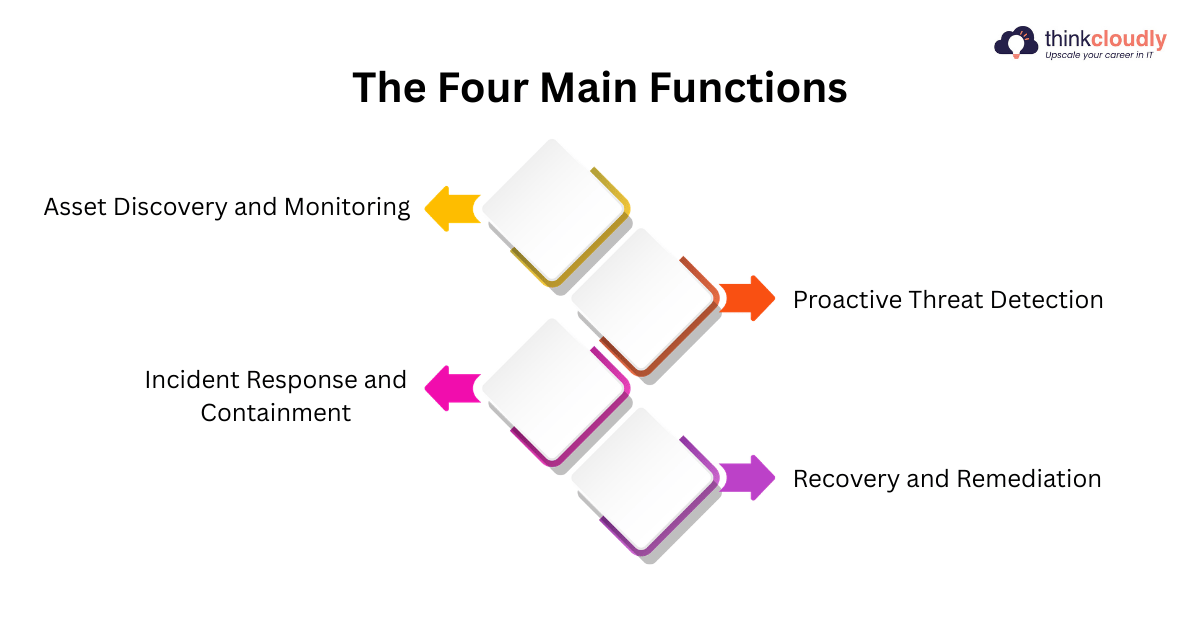
3. What is SIEM security information and event management and why is it important?
Answer: SIEM Security Information and Event Management provide security by collecting, storing and analyzing security data from multiple sources. SIEM security information and event management serves as a centralized repository for security log data in order to allow a SOC analyst to monitor activity across an organization and detect potentially malicious activity rapidly. SIEM security information and event management platforms are core tools in a SOC analyst workflow.
The importance of the SIEM security information and event management for a SOC analyst is undeniable because:
- Centralized Visibility: A security operations center analyst can watch the entire IT environment from one point of view.
- Faster Threat Detection: The use of automated correlation allows for the detection of more complicated attacks.
- Real-Time Incident Response: Security teams are able to respond to incidents immediately.
- Compliance & Auditing: Logs created by a SIEM security information and event management system are useful for determining if an organization has met regulations.
- Reduced Investigation Time: A SOC analyst know exactly where incidents are occurring. This helps a security operations center analyst to respond faster.
4. What are the main responsibilities of a SOC Analyst?
Answer: A SOC analyst performs both technical and analytical duties.
The key responsibilities of a SOC Analyst are:
- Continuous Security Monitoring: A SOC analyst monitors security tools and alerts every second mostly through SIEM security information and event management dashboards.
- Alert Triage and Investigation: Every alert does not indicate a real threat. A SOC analyst filters false positives and investigates the genuine security incidents.
- Log Analysis: Reviewing logs from everywhere helps the SOC analyst to detect and trace the source of threats.
- Incident Response Support: A SOC analyst is responsible for minimizing the damage caused by the threat and escalate serious issues to the senior teams.
- Threat Detection using SIEM security information and event management Tools: SIEM security information and event management tools are used by a SOC analyst to identify attack patterns across the organization.
- Documentation and Reporting: Every incident and the patterns are documented clearly by a SOC analyst.
5. What is the incident response?
Answer: Incident response refers to the systematic and organized process a SOC analyst follows, supported by SIEM security information and event management systems, that involves the identification and management of security incidents to reduce harm caused by the incident to return to a normal operating state as soon as possible.
A cybersecurity incident is any event involving malware, breach of data, phishing, ransomware or attempting to gain unauthorized access to a system. Whenever these types of incidents occur, the SOC analyst is at the forefront of detecting the incident and beginning the response phase.
6. What is log analysis?
Answer: The process of reviewing logs by a SOC analyst generated by the various systems and network devices, collected within SIEM security information and event management tools, to identify any abnormal activity, security threat or operational problem is called log analysis. Every action that takes place has been recorded in a log file.
A SOC analyst uses the logs to identify unauthorized access attempts, abnormal network traffic patterns and repeated errors on a system. By reviewing log data, the security operations team can identify the timeline of events, and how an incident occurred so they can determine the extent of any damages incurred.
7. What are false positives in security monitoring?
Answer: In security monitoring, false positives are alerts that suggest a potential security threat often triggered by SIEM security information and event management rules. One way that security systems identify an event as suspicious is through an alert from the system security tools such as intrusion detection systems, endpoint protection platforms and SIEM security information and event management solutions. Managing alert noise is essential for a SOC analyst.
For example, if an employee logs in from a different location or a system conducts automated updates, both scenarios may generate alerts but there will not be any malicious activity. A SOC analyst must thoroughly investigate each alert, validate its sources and eliminate false positives.
8. What is the difference between IDS and IPS?
Answer: Here is the tabular representation of the difference between IDS and IPS:
|
Feature |
IDS (Intrusion Detection System) |
IPS (Intrusion Prevention System) |
|
Primary Function |
Detects suspicious or malicious activity |
Detects and actively blocks malicious activity |
|
Response Type |
Passive monitoring and alerting |
Active prevention and automatic action |
|
Position in Network |
Placed outside the traffic flow (out-of-band) |
Placed in line with network traffic |
|
Action on Threat |
Sends alerts to the security team |
Blocks or drops malicious packets immediately |
|
Impact on Traffic |
No impact on network performance |
May slightly affect performance due to inline inspection |
|
Control Level |
Requires manual response from an analysts |
Automatically enforces security policies |
|
Risk of Disruption |
No risk to legitimate traffic |
Incorrect rules may block legitimate traffic |
|
Use Case |
Monitoring and forensic analysis |
Real-time threat prevention |
|
Role in SOC |
Helps a SOC analyst in detecting threats |
Helps prevent threats before damage occurs |
Both systems support the investigations of a SOC analyst.
9. What is threat intelligence?
Answer: Organizations can use threat intelligence as data collected and analyzed for real-time and future cyber threats that can essentially harm their systems, data and users. Security teams can use threat intelligence to gain a better understanding of how the attackers operate, including what tools and techniques are being used by the attackers and what vulnerabilities they commonly target.
Threat intelligence allows a security operations center analyst or SOC analyst to stay careful instead of simply reacting to attacks after they occur. Security teams can prepare for potential threats by using the intelligence they gather from analyzing real-life attacks, identifying potential attack vectors (e.g. IP addresses), analyzing behavior of the malware and using hacker tactics to predict where the next attack may occur.
10. What is a security incident?
Answer: A security incident is any activity that negatively impacts an organization systems or networks detected usingSIEM security information and event management solutions, by either threatening to do so or compromising them altogether. Security incidents can include anything from minor occurrences such as failed login attempts to your email account, to major events like ransomware attacks, data breaches, malware infections or insider abuse of access rights.
When a security incident does take place, it is up to a security operations center analyst to quickly detect the incident, determine how it happened and take appropriate actions to minimize any damage that may have occurred as a result of it.
11. How do you prioritize security alerts?
Answer: A security operations center analyst or SOC analyst monitors security alerts on both their risk level and possible harm to the firm. With the number of alerts generated daily in today’s environment being extremely high, the analyst can respond more quickly and accurately by concentrating on only those alerts classified as the more severe ones.
Additional factors to consider while prioritizing alerts:
- Severity Level: Any alert classified as severe and indicating a potentially damaging event are considered to have the highest priority.
- Likelihood of Threat: If multiple indicators suggest a potentially malicious incident has occurred, the severity of the alert will be escalated.
- Threat Intelligence Support: Any alert occurring in a manner related with established threat patterns and information from threat intelligence feeds are considered as the most reliable.
- False Positive Probability: Alerts that have a high probability of being false positives will be at lower severity level.
- Automated Risk Scoring: SIEM security information and event management, as well as other security tools, will classify alerts using a risk score.
These criteria help a security operations center analyst or SOC analyst in reducing response time.
12. What is malware analysis?
Answer: Malware analysis refers to examining a malicious piece of software to learn about its functions, spreads and effect. The analysis supports security personnel in identifying the type of malware involved, identifying the actions performed by the malware and determining how attackers use strategies and technologies to execute malware attacks. Technical investigation skills are important for a security operations center analyst or SOC analyst.
Malware analysis allows SOC analyst to trace back to the source of the infection, determine the severity of the damage and develop means to detect and prevent malware attacks in the future. Malware analysis is typically performed within secured environments to prevent further propagation of the malware, and is an important part of the process for enhancing an organization’s overall cybersecurity posture.
13. What is a phishing attack?
Answer: Phishing attacks are a form of cyberattacks in which attackers use deception to obtain sensitive information from individuals (e.g., logins, credit cards and confidential data) by pretending to be a legitimate entity. Phishing attacks may be done via email, messaging service or fraudulent website.
In phishing attacks, victims are asked to click on the malicious links, download the infected attachment or submit login credentials through a malicious webpage. Phishing attempts are monitored and investigated by a security operations center analyst or SOC analyst whose purpose is to detect phishing attempts, identify credential theft, prevent data breaches and avoid financial loss. Phishing is one of the most prevalent and successful types of social engineering used by cybercriminals.
14. What is network traffic analysis?
Answer: Analyzing network traffic is the continual observation and study of data packets integrated with SIEM security information and event management, that are travelling through the network for the purposes of gaining an understanding of communications patterns and identifying suspicious activities. It provides the security team visibility into what users are connecting to the network, what data they are transferring and if there are any suspicious behaviors taking place.
When the flow of traffic is examined, a security operations center analyst or SOC analyst will be able to identify indicators of cyber threat activity including unauthorized access, data exfiltration, malware communication and abnormal volume spikes of network usage. Performing regular analysis of network traffic is an important part to detect an attack at an early stage.
15. Which tools are commonly used by a SOC Analyst?
Answer: A SOC Analyst uses several security tools to monitor and address Cyber Security incidents.
- SIEM security information and event management Tools: Consolidate security logs from numerous platforms into one location for examination and interpretation.
- EDR Tools: Find and fix device level cybersecurity incidents by observing endpoint activity.
- IDS/IPS Systems: Discover and prevent potentially risky network activities.
- Firewalls: Inspect all inbound and outbound traffic according to established security criteria.
- Threat Intelligence Platforms: Allow for research into newly created threats and the techniques merged with SIEM security information and event management.
Tool based job interview questions are asked to check the practical knowledge.
16. What is vulnerability management?
Answer: A continuous process of identifying, assessing, prioritizing and addressing potential security weaknesses in networks and applications tracked by SIEM security information and event management tools, before being attacked is known as vulnerability management. Vulnerabilities arise from outdated software, poor configuration management and insufficient coding. Risk reduction is the main goal of every SOC analyst.
As part of this process, a SOC analyst will work with security teams to identify vulnerabilities using automated scanning tools, assess how severe they are and make sure that vulnerability remediation is properly addressed. Through effective vulnerability management, organizations can decrease their level of cyber risk, improve their security posture and ultimately help defend against the likelihood of experiencing a cyberattack.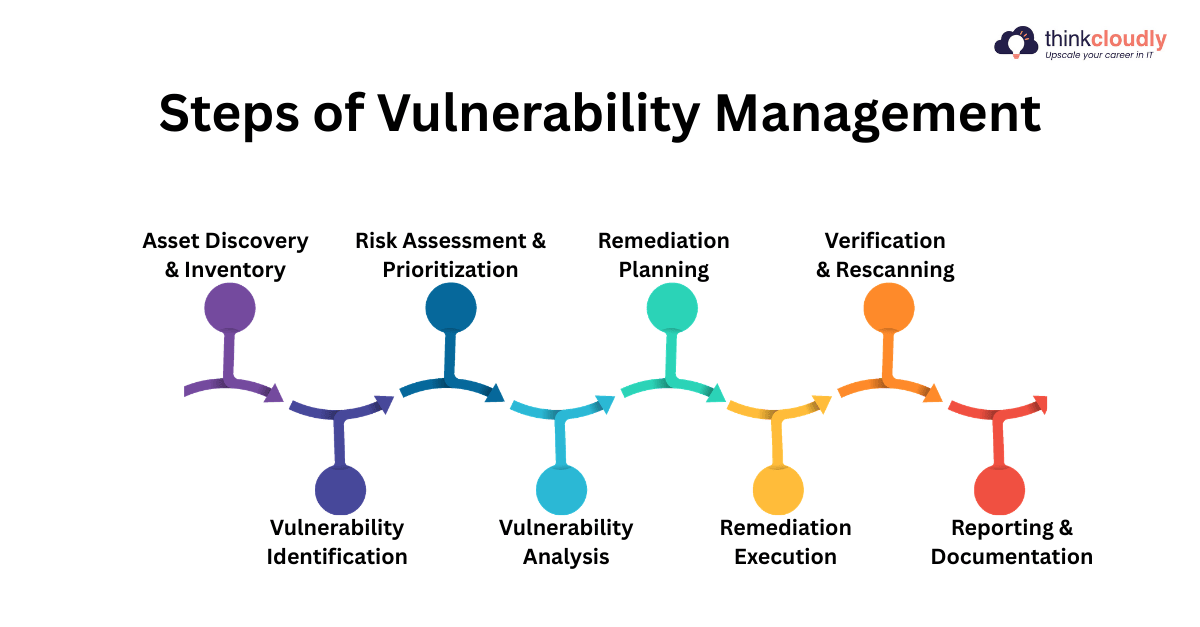
17. What is endpoint security?
Answer: Endpoint security involves ensuring that all endpoint devices are safe from cyber threats. Because they are all endpoints, they provide the attacker with a potential means of access, so protecting them is very important. Specialized tools for endpoint security help organizations detect, prevent and respond to various types of threats to each device, including malware, ransomware, unauthorized access or other forms of suspicious activity on the device.
A SOC analyst monitors endpoint alerts, investigates potential threats to those endpoints and takes steps to ensure that the threatening endpoints do not infect other endpoint devices or the larger network of devices.
18. What is threat hunting?
Answer: Threat hunting is a cybersecurity practice where security professionals actively search for hidden or undetected threats within a network before automated tools generate alerts. Instead of waiting for alarms, analysts investigate unusual patterns, suspicious behaviors and subtle indicators of compromise that may signal an ongoing attack.
A security operations center analyst or SOC analyst performs threat hunting by analyzing logs, network traffic, endpoint data and threat intelligence to uncover advanced threats that bypass traditional defences. This approach helps organizations in detecting attacks early, reduce potential damage and strengthen overall security posture.
19. How do security operations center analyst or SOC Analyst handle alert fatigue?
Answer: When there are so many alerts coming through to a security operations center analyst team that they can’t pay attention to what is truly threatening, this is referred to as Alert Fatigue. A SOC analyst works to alleviate the problem by using security tools to create fewer false positives. They also categorize alerts by different risk levels and respond accordingly. This process allows security operations center analyst or SOC analyst to concentrate on legitimate threats and more effectively respond to them after the fact.
20. What is the difference between a security event and a security incident?
Answer: Here is the list of differences between a security event and a security incident:
|
Aspect |
Security Event |
Security Incident |
|
Meaning |
Any observable activity in a system or network |
An event that poses a real security threat |
|
Nature |
Routine and common |
Harmful and requires action |
|
Risk Level |
Usually low or no risk |
High risk to systems or data |
|
Examples |
User login, file access, system alert |
Data breach, malware infection, unauthorized access |
|
Action Required |
Logged and monitored |
Investigated and responded immediately |
|
Volume |
Occurs frequently in large numbers |
Occurs less often but more serious |
|
SOC Analyst Role |
Monitored by a SOC analyst for anomalies |
Escalated and handled through incident response |
Understanding the difference is essential for a security operations center analyst or SOC analyst.
Conclusion
To be properly prepared for an interview as a security operations center analyst or SOC analyst, you must have technical expertise that is applied through a practical understanding of security operations in the real world provided in these job interview questions. Companies are interested in professionals who express critical thinking and the ability to secure digital assets effectively. Continuous learning is expected from a security operations center analyst. Practicing job interview questions regularly improves confidence and response quality.
If you master this job interview questions and educate yourself on working with tools such as SIEM security information and event management, you will be positioning yourself as a security operations center analyst that can meet the numerous challenges faced by modern-day cyber criminals.

