
If you’re feeling a bit lost with all the talk about cybersecurity these days, you’re not alone. Terms like the zero trust security model and GRC in cybersecurity get thrown around a lot, but what do they really mean for your day-to-day work?
I put this guide together to make it straightforward. We’ll walk through how GRC in cybersecurity plays a key role in making the zero trust security model actually work. You’ll see clear explanations of the zero trust framework, why identity access management matters so much, how a solid data protection framework fits in, the importance of a strong security governance model, and how GRC automation tools can make everything easier.
By the end, you’ll have practical ideas you can use—no matter the size of your team. Let’s make security feel less overwhelming and more doable.
Think of the zero trust security model like a smart doorman who checks everyone carefully—never assuming they’re safe just because they’re “inside.”
What Is the Zero Trust Security Model, Really?
This model is built on one simple but powerful idea: never trust, always verify. In the old days, once someone was inside your network, they were often trusted by default. That approach doesn’t cut it anymore with remote work, cloud apps, and clever threats everywhere.
In this model, every request for access—whether from an employee, a partner, or a device—gets checked every single time. No automatic trust. This zero trust framework focuses on verifying who you are, what device you’re using, and whether the request makes sense right now.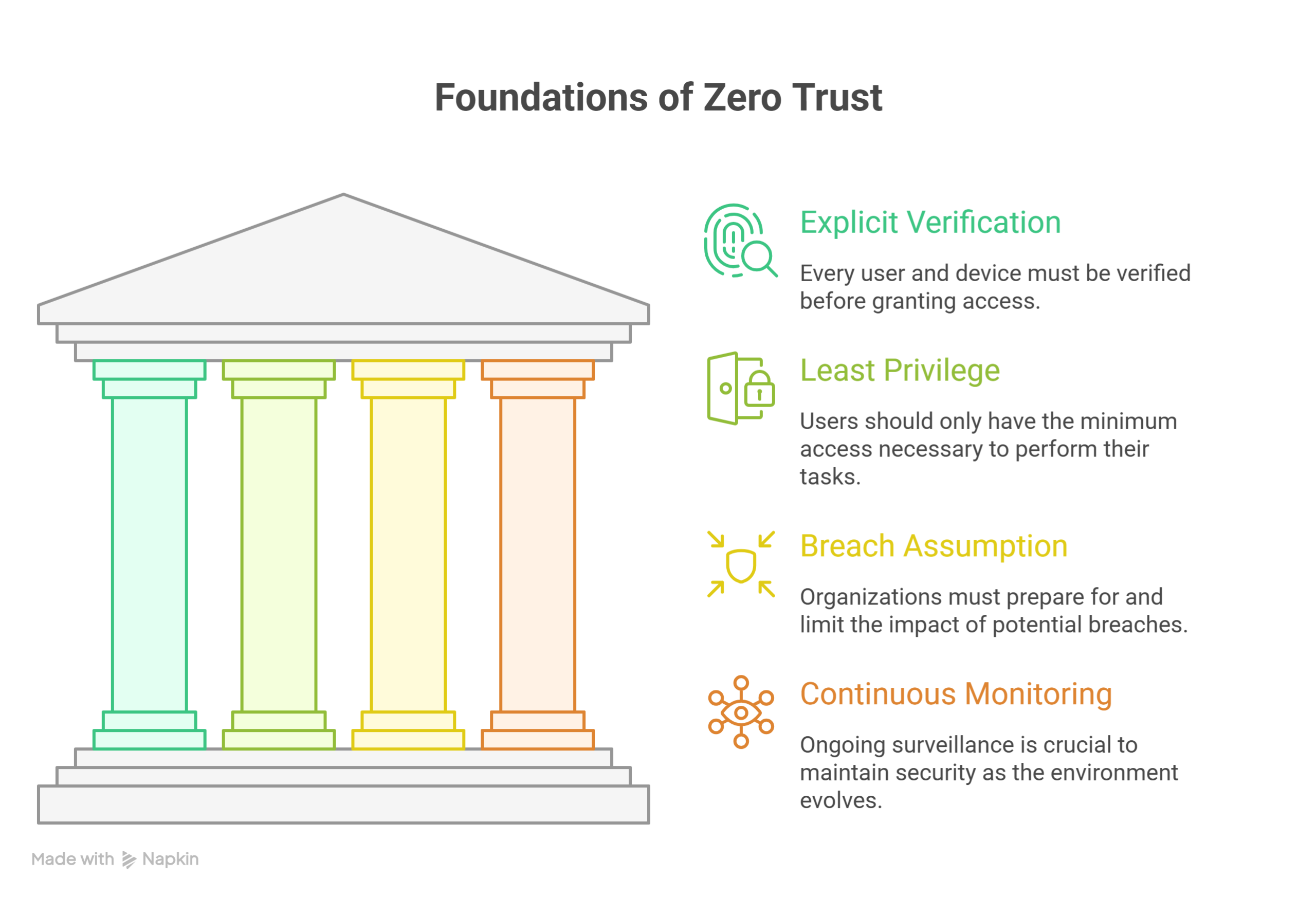
Key parts of the zero trust framework include
- Explicit verification of every user and device
- Giving the least amount of access needed (least privilege)
- Assuming a breach could happen and limiting damage
- Continuous monitoring so things stay secure as they change
Many organizations follow structured zero trust frameworks like those from CISA or NIST. The goal? Reduce risk by making the zero trust security model part of how you operate every day, not just a one-time project.
Why GRC in Cybersecurity Matters for Zero Trust
Here’s where things get really practical. The zero trust security model brings great technical tools, but you need structure to make it last. That’s the job of GRC in cybersecurity.
GRC in cybersecurity stands for Governance, Risk, and Compliance. It helps you set clear rules, spot and manage risks, and stay on top of regulations. When you combine GRC in cybersecurity with the zero trust security model, your efforts don’t stay stuck in the IT department—they become part of your whole organization’s way of working.
A good security governance model within GRC in cybersecurity makes sure everyone knows their role. It turns the zero trust framework from a tech experiment into something reliable and measurable. Without GRC in cybersecurity, even the best zero trust security model can become messy or hard to maintain over time.
GRC in cybersecurity works like a balanced system—governance sets direction, risk management spots issues early, and compliance keeps everything above board.
How the Zero Trust Framework and GRC in Cybersecurity Work Together
The role of GRC in this models is like having a coach for your security team. The zero trust framework gives you the plays (the tools and checks), while GRC in cybersecurity makes sure the whole team follows them consistently.
With GRC in cybersecurity, you can:
- Create policies that support the zero trust security model across departments
- Use real-time data from the zero trust framework to understand risks better
- Make compliance easier by linking identity access management and monitoring directly to your rules
This connection helps the zero trust security model scale as your business grows. It also makes audits less painful because evidence is collected naturally through the zero trust framework and managed via GRC in cybersecurity.
Identity Access Management: The Foundation of Zero Trust
Identity access management is at the heart of any strong zero trust security model. In the zero trust framework, identity access management goes beyond a simple login. It checks identity continuously—looking at who you are, where you’re logging in from, what device you’re on, and whether your behavior looks normal.
When you integrate identity access management with GRC in cybersecurity, you get better control. Policies from your security governance model can automatically enforce rules like just-in-time access or multi-factor checks. This reduces mistakes and helps prove compliance during reviews.
Good identity access management makes the zero trust security model feel protective rather than restrictive. It supports the data protection framework by ensuring only the right people reach sensitive information.
Building an Effective Data Protection Framework with Zero Trust
Data is one of your most valuable assets, and the data protection framework in this security model treats it that way. Instead of protecting just the network perimeter, you protect the data itself—no matter where it lives.
GRC in cybersecurity helps define how data gets classified, labeled, encrypted, and monitored. The zero trust framework then enforces strict rules: access is only granted after full verification through identity access management.
Together, they create a data protection framework that reduces breach impact and supports regulations like GDPR or HIPAA. Your security governance model ensures these practices stay up to date and aligned with business needs.
See how the zero trust framework brings identities, data, applications, and governance together for complete protection.
Creating a Practical Security Governance Model
A security governance model isn’t about adding more paperwork—it’s about clarity and accountability. In the context of this security model, your security governance model answers important questions: Who makes decisions? How do we involve business teams? What do we measure to know we’re improving?
GRC in cybersecurity strengthens this security governance model by connecting leadership with technical teams. It ensures the zero trust framework evolves as threats or regulations change. When your security governance model works well, identity access management and the data protection framework become smoother and more effective.
How GRC Automation Tools Make Zero Trust Easier
Manual work can’t keep up with the continuous checks needed in the zero trust security model. That’s why GRC automation tools have become so helpful in 2026.
Popular GRC automation tools like Vanta, Drata, MetricStream, and others connect directly to your zero trust framework.
They can:
- Automatically monitor controls tied to identity access management
- Collect evidence for compliance without extra effort
- Send alerts when risks appear in your data protection framework
- Help your security governance model stay on track with real-time dashboards
Using GRC automation tools with GRC in cybersecurity saves time and reduces errors. Teams spend less time on repetitive tasks and more time on strategic improvements to the zero trust security model.
Step-by-Step: Implementing GRC with Your Zero Trust Security Model
Here’s a simple, realistic way to get started:
- Assess where you stand with the zero trust framework and GRC in cybersecurity today.
- Build or update your security governance model with clear roles and policies.
- Strengthen identity access management as the core of verification.
- Develop a robust data protection framework with classification and encryption.
- Choose GRC automation tools that fit your existing systems.
- Roll out in phases—start with critical areas, then expand.
- Train your team and review progress regularly using the zero trust security model principles.
Challenges like cost or resistance to change are normal, but a strong security governance model and the right GRC automation tools help you move forward steadily.
Real Benefits of Combining GRC in Cybersecurity with Zero Trust
When GRC in cybersecurity supports the zero trust security model, you often see:
- Fewer successful attacks because threats are contained early
- Smoother audits thanks to better identity access management and logging
- Stronger data protection framework that builds customer trust
- More efficient operations through GRC automation tools
- A security governance model that aligns security with business goals
It’s not just about checking boxes—it’s about building real resilience.
Final Thoughts: Make GRC Your Partner in Zero Trust Success
The zero trust security model offers powerful protection, but it shines brightest when paired with solid GRC in cybersecurity. From the zero trust framework and identity access management to the data protection framework, security governance model, and GRC automation tools—each piece supports the others.
Start small. Pick one area—like reviewing your identity access management or exploring GRC automation tools—and take a step this week. Your efforts will pay off in better security and peace of mind.
If this helped clarify the role of GRC in zero trust security models, feel free to share it with your team. Got questions about applying this in your organization? Drop a comment—I’d love to hear from you.
Stay secure and keep moving forward!

