
Here is a number that stopped me mid-scroll earlier this year: global spending on cloud infrastructure hit $129 billion in a single quarter of 2026, growing 35% faster than it did just twelve months before. That is not a slow, steady climb — it is an industry sprinting to hire people who actually know how to run it. If you have ever typed “which AWS cloud computing course should I take” into a search bar at 11 p.m., wondering whether you are already behind, you are not alone, and you are not behind. I have spent the last several years building on AWS, breaking things in production, and mentoring newcomers into the field, and this guide is the one I wish someone had handed me on day one.
Why an AWS Cloud Computing Course Matters More in 2026
Amazon Web Services still commands the largest share of the global cloud market, holding around 28-30% of worldwide cloud infrastructure spending in the first quarter of 2026, ahead of every other provider. That single fact explains why so many hiring managers still list AWS skills first. But the bigger shift is what companies are hiring for.
It is no longer just “someone who can launch a server. ” Teams now want people who understand cloud architecture end to end—how to design systems that stay available, scale automatically, and don’t fall over during a traffic spike. That shift already spans serverless computing, cloud-native applications, and cloud migration work—skills that used to sit in separate job descriptions and now show up together in a single posting.
According to Computer Weekly’s reporting on 2026 cloud revenue trends, the market has now posted nine straight quarters of accelerating growth, with AI workloads pulling enormous new demand into the sector. That growth does not stay contained to data centres — it turns into open job requisitions, and a well-structured AWS cloud computing course is usually the fastest, cheapest way to become qualified for them without going back to a four-year degree.
What a Genuinely Good Cloud Training Program Should Teach You
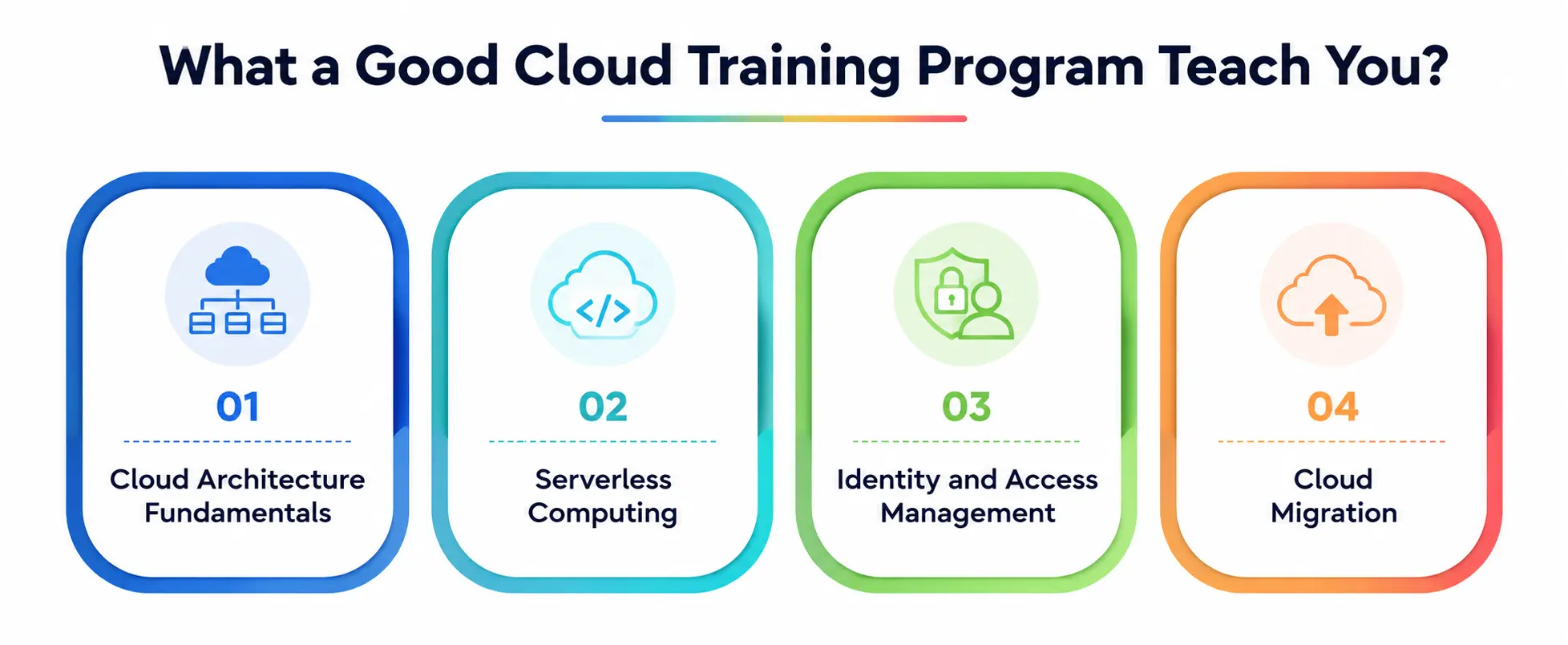
Not every course is built the same way, and I have sat through some that were little more than slide decks read aloud. A course worth your evenings and weekends should walk you through the full stack of modern cloud work, not just one narrow slice of it. At minimum, it should cover:
- Cloud architecture fundamentals—designing for fault tolerance, cost efficiency, and scale, not just clicking through a console
- Serverless Computing — building with Lambda, event triggers, and managed services so you stop thinking in terms of individual servers
- Identity and Access Management — the single most tested, most misunderstood, and most security-critical topic on every AWS exam and every real production account
- Cloud Migration—moving legacy workloads off old data centres without breaking the business along the way
A course that skips any of these four is teaching you half a job. I learned this the hard way on my first Migration project, where I understood the AWS console perfectly but had never been taught how Identity and Access Management policies actually cascade across accounts — and a small misconfiguration migrationeam a very stressful weekend.
Comparing the Top AWS Learning Paths in 2026
Below is a side-by-side look at how the major training routes stack up, accounts, and pricing and structure and how well each one builds real cloud-native applications and identity and access management skills as of 2026.
|
Platform / Path |
Best For | Typical Cost (2026) | Time to Complete |
Hands-On Labs |
|
AWS Skill Builder (Official) |
Beginners wanting AWS-verified content | Free–$49/month | 4–8 weeks |
Yes |
|
Coursera (AWS-partnered) |
Structured, university-style learners | $49–$79/month | 6–10 weeks |
Limited |
|
A Cloud Guru / Pluralsight |
Exam-focused, hands-on practice | $35–$45/month | 4–6 weeks |
Extensive |
|
Udemy self-paced courses |
Budget-conscious, self-motivated learners | $15–$25 one-time | 6–12 weeks |
Moderate |
|
Instructor-led corporate training |
Teams and enterprise upskilling | $1,000+ per seat | 1–2 weeks intensive |
Extensive |
None of these are objectively “the best” in isolation—the right AWS cloud computing course depends entirely on how you learn, how much time you have, and whether you’re chasing a certification badge or a working project you can show in an interview.
The Best Learning Path by Skill Level
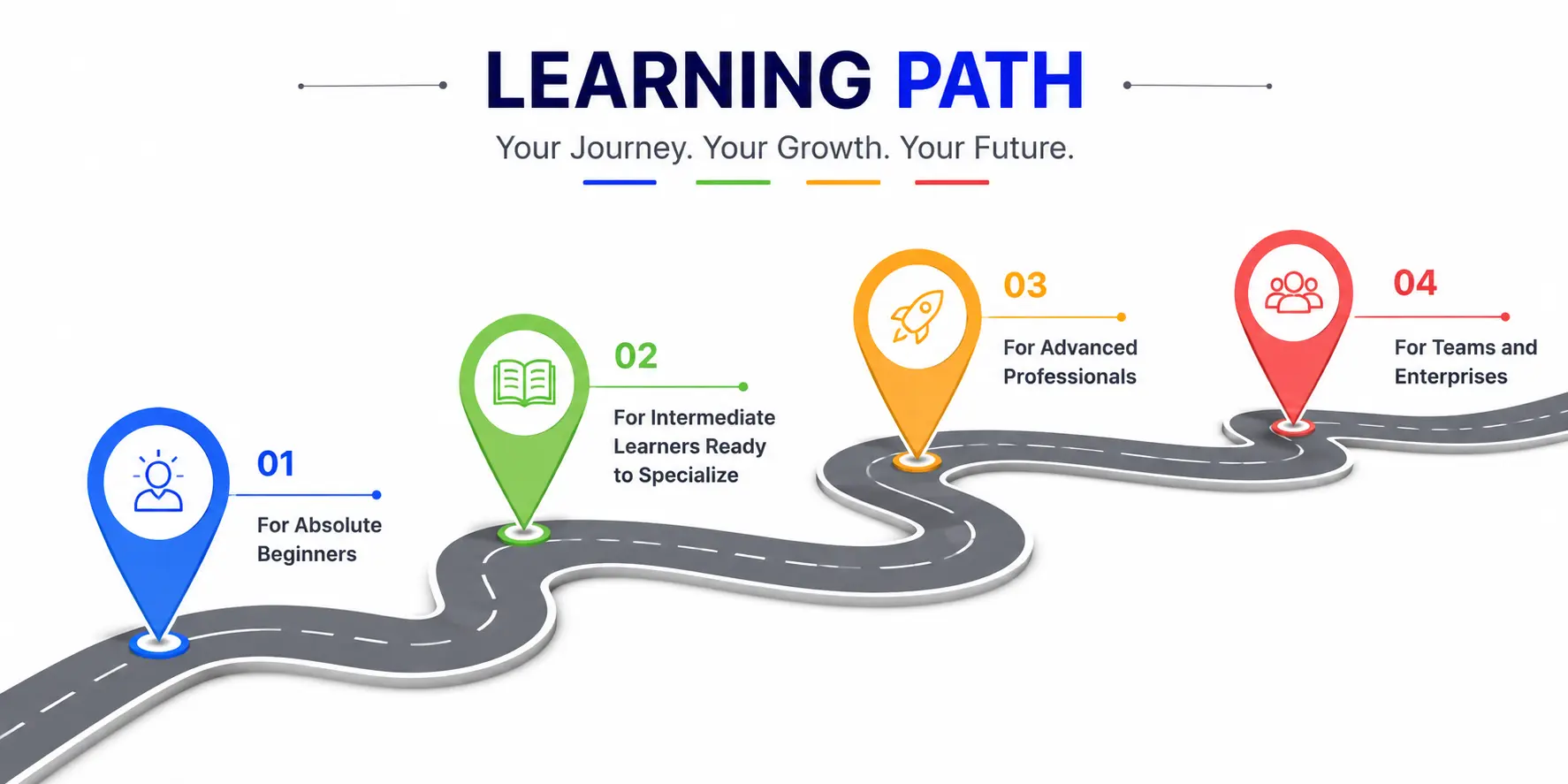
1. For Absolute Beginners
If you have never touched a cloud console, start with something built around the AWS Certified Cloud Practitioner exam. This is the foundational AWS cloud computing course track, and it exists specifically to teach non-technical and early-career learners how billing, security basics, and core services fit together before anything more advanced.
2. For Intermediate Learners Ready to Specialise
Once the basics feel comfortable, move to associate-level material—Solutions Architect Associate, Developer Associate, or SysOps Administrator. This is where cloud architecture stops being theoretical. You start designing real systems, working with hybrid cloud setups that connect on-premises infrastructure to AWS, and learning how cloud-native applications are actually deployed with containers and managed services.
3. For Advanced Professionals
Professional and specialty-level tracks (DevOps Engineer Professional, Security Specialty, Machine Learning Specialty) assume you already have production experience. These courses go deep on multi-cloud strategy since most large enterprises today run workloads across more than one provider rather than committing to a single vendor. They also expect fluency in Serverless Computing architectures and cloud-native applications built on containers, since production workloads at this level rarely run on a single, simple server anymore.
4. For Teams and Enterprises
Companies rolling out cloud skills across an entire department usually need something different: cohort-based, instructor-led training with custom labs mapped to their own environment, often blending cloud migration planning with hybrid cloud governance and multi-cloud cost-control workshops.
The Skills That Actually Show Up on the Job
A well-designed AWS cloud computing course does more than prepare you for an exam — it should leave you able to walk into a live environment and contribute. Expect real coursework to include serverless computing patterns for event-driven systems, container orchestration for cloud-native applications, and enough identity and access management depth that you can write least-privilege policies without guessing. You should also come away comfortable planning a cloud migration from start to finish and confident enough to discuss multi-cloud trade-offs with a technical lead without freezing up.
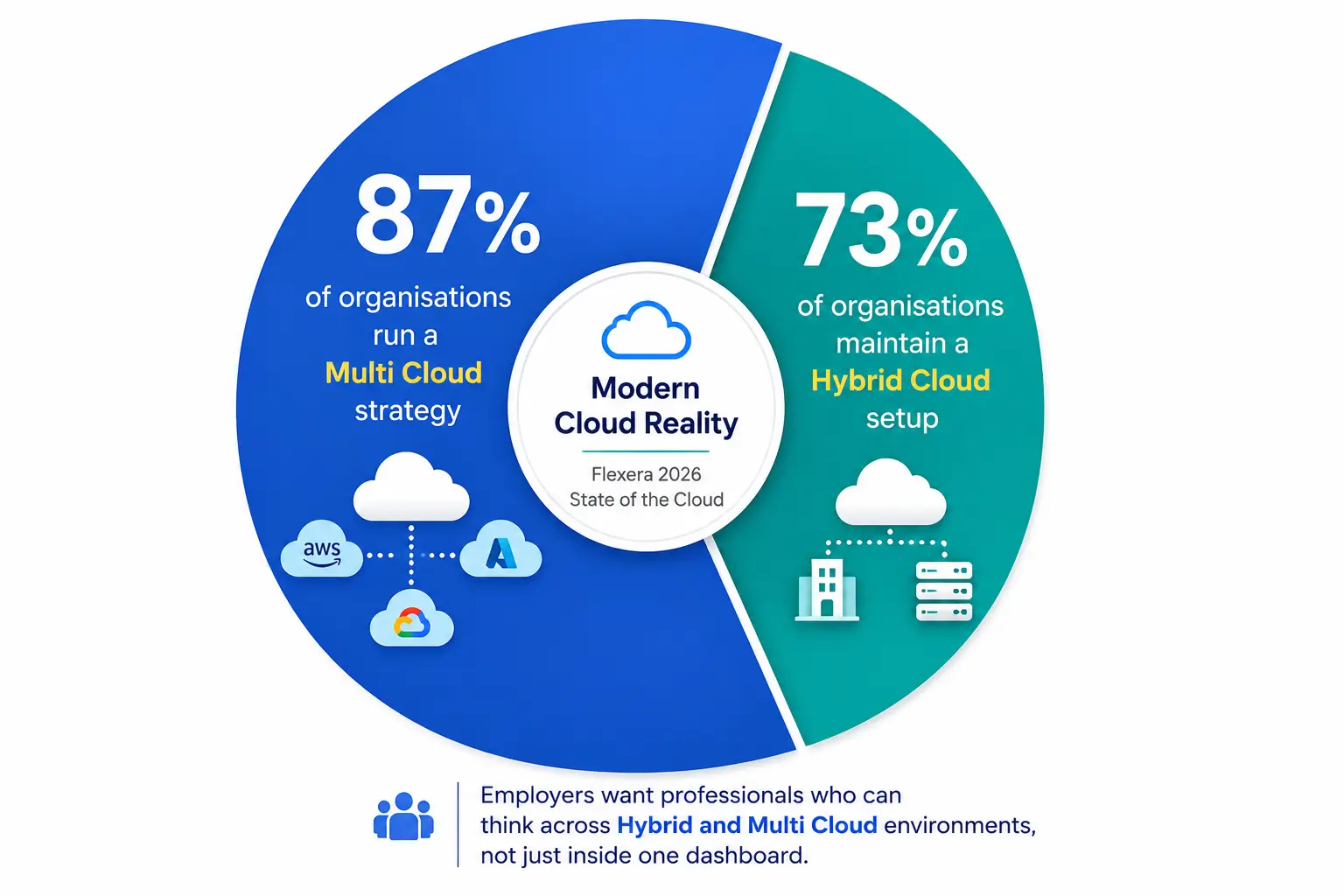
Roughly 87% of organizations now run a multi-cloud strategy, and about 73% maintain a hybrid cloud setup that mixes on-site infrastructure with public cloud services, according to Flexera’s 2026 State of the Cloud data reported by industry analysts. That statistic alone tells you why single-provider knowledge is no longer enough — employers want people who can reason across a hybrid cloud and multi-cloud landscape, not just inside one dashboard.
A Personal Note From Someone Who Has Been Through It
I want to be honest about something most course marketing pages won’t tell you: certifications don’t get you hired on their own. I passed my first AWS exam after six weeks of study and still got rejected from three interviews because I couldn’t explain why I’d chosen a particular cloud architecture pattern, only that I’d memorized it.
What actually moved the needle for me was building small, ugly, real projects alongside the coursework—a serverless contact form, a badly-optimized migration script, and a hybrid cloud demo that connected a Raspberry Pi to an AWS account just to prove I could. None of it was impressive. All of it made me able to talk like someone who had actually done the work, not just watched videos about it.
If you take one thing from this section, let it be this: treat every AWS cloud computing course as a starting point for building, not a finish line.
Career and Salary Outlook in 2026
The financial case for investing time in an AWS cloud computing course remains strong. AWS-certified professionals in the United States earn a median salary in the six figures, with the average sitting around $112,000 annually and top earners crossing $150,000, according to current labor-market data. Specialised roles pay even more—solutions Architect, Professional, and Security Specialty holders regularly report salaries between $150,000 and $200,000 in recent industry salary surveys. Payscale’s own AWS-focused research shows a similar pattern, with pay climbing steadily as professionals move from foundational to specialty credentials.
None of this is a guarantee — no course, mine included in spirit, can promise a number. But the direction of travel is unmistakable: as cloud migration projects multiply and multi-cloud complexity grows, the people who understand cloud architecture, identity and access management, and serverless computing at a practical level continue to out-earn generalists.
Final Thoughts
Choosing the right AWS cloud computing course is less about finding a mythical “perfect” platform and more about being honest with yourself about where you currently stand and how you actually learn. Start with foundational material if the console still feels unfamiliar. Move into associate-level cloud architecture and cloud-native application work once the basics click. Push into professional and specialty tracks only once you’ve got real cloud migration or hybrid cloud experience to anchor the theory. And whichever path you pick, pair it with a small project of your own—that’s the part no exam can replace and the part every hiring manager actually notices.