
The cloud industry is not waiting for anyone. Every week, another batch of companies shifts their operations online — and they all need skilled people to make it work. If you have cloud skills, you are sitting on something valuable. And here is the thing — you do not need a full-time job to use those skills. Freelancing is a real option in 2026, and the market for it is only getting bigger.
This guide covers everything you need to move forward — what to charge, where to look for work, and how to bring in that first paying client.
Why Cloud Engineering Freelancing Is Booming in 2026
The shift to the cloud is no longer something companies are planning—it is something they are actively doing right now. Smaller businesses that used to rely on physical servers are now moving everything to AWS, Google Cloud, or Azure. The problem? Bringing on a full-time engineer is expensive. Between salary, benefits, and ongoing costs, it adds up fast. Freelancers solve that problem neatly.
For you, this creates a real opportunity. Instead of answering to one employer, you can serve multiple clients, take on work that matches your strengths, and set your own income ceiling.
Geography is no longer a barrier either. The remote-first culture that took hold a few years ago has stuck. Companies across Europe, North America, and beyond are comfortable bringing in remote freelance talent. Your client base is no longer limited to your city or country.
What Skills You Actually Need
Clients are looking for someone who can solve a specific problem well. The most common types of freelance cloud work showing up in 2026 include:
Infrastructure setup using tools like Terraform or Pulumi comes up constantly. Cloud cost reviews — finding where a company is wasting money on unused resources — are always in demand. Security hardening and access control configuration are other areas where companies pay well. Container orchestration with Kubernetes is growing steadily, and helping teams automate their software delivery through CI/CD pipelines is something almost every engineering team eventually needs.
You do not have to cover all of this. Focus on two or three areas, go deep, and make those your selling points.
Certifications carry real weight when you are just starting. The AWS Certified Solutions Architect, Google Professional Cloud Architect, and Microsoft Azure Solutions Architect Expert are the three that clients recognize most consistently. Holding even one of these tells a potential client that you know what you are doing—without them having to take your word for it.
Freelance Cloud Engineer Rates in 2026
What you can earn depends on your experience, your niche, and who your clients are. Here is a straightforward look at current market rates:
|
Experience Level |
Hourly Rate (USD) |
Typical Projects |
|
Junior (0–2 years) |
$35 – $65 |
Basic cloud setups, monitoring, support |
|
Mid-Level (2–5 years) |
$70 – $120 |
Infrastructure builds, migrations |
|
Senior (5+ years) |
$125 – $200+ |
Architecture design, security, cost optimization |
|
Niche Expert (FinOps, MLOps) |
$180 – $300+ |
Consulting, complex multi-cloud work |
Where your client is based matters a great deal. Clients from North America and Western Europe typically have larger budgets than those in other markets. Also worth considering—once you build speed and efficiency, fixed-price project fees tend to bring in more money than billing by the hour.
Best Platforms to Find Cloud Engineering Freelance Work
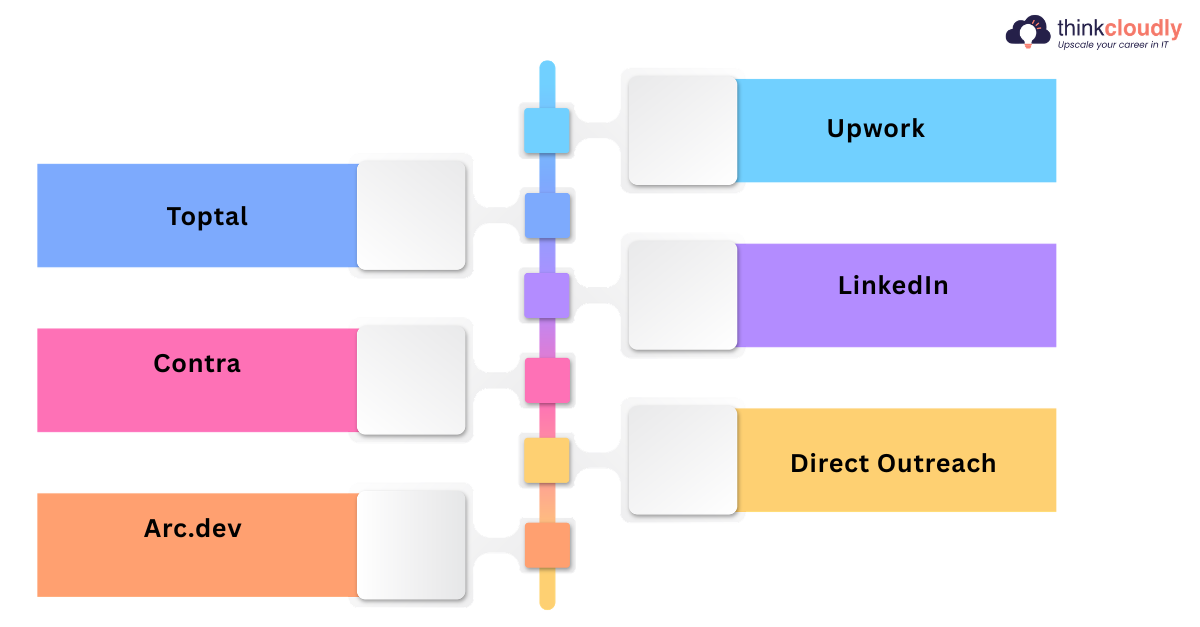
Upwork
Upwork has the largest volume of freelance job postings globally. Cloud and DevOps work is a strong category there. The platform deducts a percentage from your earnings — somewhere between 10 and 20 percent, depending on how much you have billed a particular client — but the sheer number of available projects makes it worth being on. A solid profile and a few positive reviews go a long way toward unlocking better-paying work.
Toptal
Toptal runs a strict screening process, which keeps the talent pool small and the client quality high. The tradeoff is that getting through their application takes time. But engineers who make it through consistently report earning more per hour than they would on open platforms.
Contra
Contra takes nothing from your earnings — no commissions, no platform fees. You invoice, and you keep the full amount. The platform is still growing, but it already has a solid base of tech clients and works well for engineers who prefer ongoing client relationships over quick one-off jobs.
Most cloud engineers do not think of LinkedIn as a place to find freelance work, but it consistently delivers. Keeping your profile current, sharing posts about cloud topics, and making direct connections with founders and technical leads often result in work coming to you rather than you having to apply. Many deals close in the DMs, not through any job listing.
Arc.dev
Arc.dev sits in the remote technical talent space with a focus on startup clients. If working with early-stage or growth-stage companies sounds appealing, this is a good platform to have a profile on. Their vetting process means you are mostly dealing with clients who are serious about hiring.
Direct Outreach
A straightforward method that many people overlook: find companies actively posting cloud engineering job listings on platforms like LinkedIn or Indeed, and reach out to their CTO or engineering manager directly. They have already shown they need cloud help. Offering freelance availability as a faster and more flexible option than a full hire often gets a real response.
How to Land Your First Client
Getting that first client takes a slightly different mindset than everything that comes after. Here is what actually moves the needle.
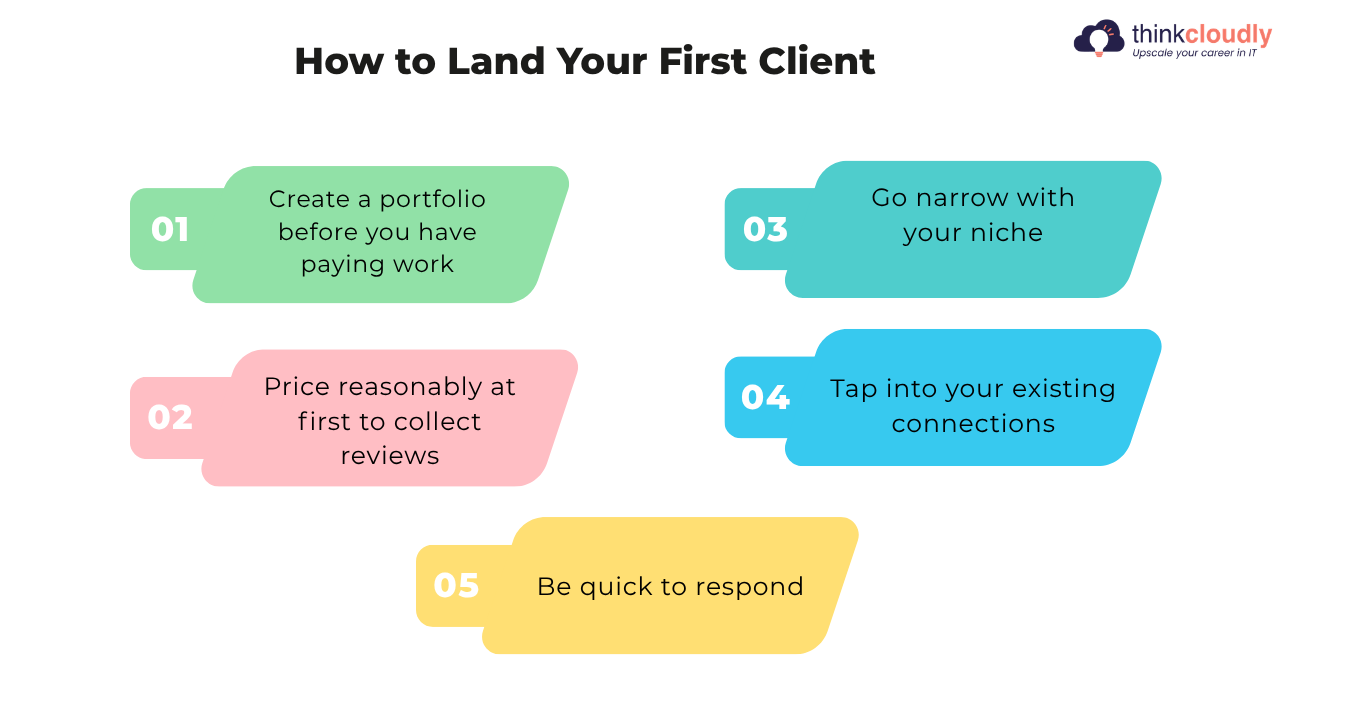
- Create a portfolio before you have paying work: Pick a real-world scenario—say, a three-tier application on AWS — build it yourself, write up what decisions you made and why, and post it publicly. GitHub works. So does a simple personal site or a LinkedIn article. It demonstrates capability in a way that a resume alone cannot.
- Go narrow with your niche: Saying you are a cloud engineer is not enough. Saying you specialize in AWS infrastructure for early-stage SaaS companies is. When you narrow your focus, the right clients find you faster—and you stop getting lost in a crowd of generalists all pitching the same thing.
- Price reasonably at first to collect reviews: This is not about working for less than you are worth forever—it is a short-term move to gather the social proof that makes every future conversation easier.
- Tap into your existing connections: A post on LinkedIn saying you are open to freelance cloud projects, or a direct message to a former coworker, costs nothing and can produce results faster than any cold application. The first client for many freelancers is someone who already knows their work.
- Be quick to respond: When someone reaches out with potential work, reply the same day—ideally within a few hours. Most clients are asking multiple people at once. A fast, clear response that addresses their actual question is often all it takes to stand out.
Setting Up as a Freelancer — The Basics
A few practical things need to be sorted before you take on paid work.
Payment infrastructure matters more than most beginners expect. For clients in other countries, Wise and Payoneer are the two most practical options—both handle multiple currencies and charge reasonable fees. PayPal is widely recognized but tends to cost more in transaction fees.
Every project should have a written agreement. It does not have to be long — even a clear one-page document that covers what you will deliver, when, what it costs, and what happens if the scope shifts is enough to protect both sides. Tools like Bonsai offer free contract templates built for freelancers.
Log your hours on every engagement, even when you are billing a flat project fee. Over time, this data tells you a lot — whether your pricing is accurate, which types of projects eat more time than expected, and where your workflow has room to improve.
On the tax side, freelancers handle their own obligations. The right amount depends on your country’s rules, but reserving roughly a quarter to a third of each payment before you spend it is a safe general approach.
Common Mistakes New Freelance Cloud Engineers Make
Setting rates too low is the most common early error. The logic feels safe — charge less to win more work — but it tends to attract clients who push back on everything and rarely stick around. Setting a reasonable rate from day one signals that you take your work seriously.
Saying yes to every project is a related trap. A client whose brief is unclear or who communicates in a scattered way before the project even starts is unlikely to become organized once work begins. Learning to spot misaligned clients early saves a lot of frustration.
Skipping documentation is something engineers do to save time in the short run, but it costs more later. Clients who receive clean, well-explained documentation are far more likely to come back. It also makes any future handoff smooth, which reflects well on you.
Letting marketing slide when you are busy is a pattern that leads to feast-and-famine cycles. The engineers who maintain a steady stream of work are the ones who keep showing up online and in conversations, even when their schedule is full.
Building Long-Term Freelance Income
One client is a start. A consistent pipeline is the goal.
At the end of every successful engagement, ask whether the client knows anyone else facing similar challenges. A warm referral from a satisfied client converts at a much higher rate than any cold outreach you could do.
Retainer agreements are worth pitching to clients you have worked with more than once. A monthly arrangement covering a set number of hours for ongoing infrastructure support or monitoring gives you income you can count on — and clients tend to like having a known expert available when things break.
Staying current technically is not optional in this field. Cloud providers push updates constantly, and the engineer who keeps pace with those changes is simply worth more than one who coasts on knowledge from two years ago. Following official release notes, building side projects with newer tools, and writing about what you learn keeps both your skills and your visibility sharp.
A Note on Learning Before You Freelance
If you are still building your cloud knowledge before going independent, the quality of how you learn matters more than where. Hands-on practice in real cloud environments builds the kind of problem-solving instinct that clients pay for. Video content alone rarely gets you there. Look for structured programs that give you actual infrastructure to work with, not just concepts to memorize. That gap in practical experience is often what separates engineers billing $200 an hour from those still working their way up to $60.
Final Thoughts
Cloud engineering freelancing in 2026 is not a backup plan or a temporary thing to do between jobs. It is a legitimate, well-paying career path that more engineers are choosing on purpose. The demand is real, the rates are strong, and the infrastructure for finding clients and getting paid has never been easier to navigate.
Pick a direction, build something to show, and get in front of the right people. The first client takes the most effort. Everything after that builds on it.
Sources & Further Reading
The data and statistics in this article are drawn from the following sources:
- Upwork Global Skills Index 2025 — Hourly rate ranges across experience levels for cloud and DevOps professionals
- LinkedIn Economic Graph — Workforce Report 2025 — Remote work normalization and cloud hiring trends
- Flexera 2025 State of the Cloud Report — Cloud overspend and cost optimization demand context
- Toptal Engineering Blog — Platform selectivity and rate premium context for freelance developers
- AWS Certification, Google Cloud Certification, Microsoft Azure Certifications—Certification names and client recognition
- Arc.dev Remote Developer Salary Report 2025 — Remote rate benchmarks and platform overview
- Wise Business — Payment tool recommendations for cross-border freelancers