
Here’s a number that surprised even me: Over 80% of certified ServiceNow professionals hold just one starting credential, yet that single certification opens the door to roles paying $80,000 to $140,000 a year across the world. If you’ve been wondering whether a ServiceNow certification is worth your time in 2026, that gap between “one exam” and “six-figure job offers” is exactly why so many people are asking the same question right now.
I remember sitting at my kitchen table three years ago, staring at a login screen for a ServiceNow developer instance I barely understood, wondering if I’d wasted my money on the exam voucher. I hadn’t. That decision quietly changed the direction of my career, and I want to walk you through everything I’ve learned since then, updated with the latest 2026 data, so you can make a smarter, faster decision than I did.
What a ServiceNow Certification Actually Is
A ServiceNow certification is a proctored, skills-based credential issued directly by ServiceNow, the company behind one of the world’s largest workflow automation and IT service management platforms. Unlike generic IT certifications that test broad theory, these exams validate hands-on ability: configuring workflows, managing access controls, building applications, and using automation tools inside a live-style platform environment.
Why does this matter in 2026 specifically? Because enterprise demand for automation tools has exploded. Organizations are digitizing HR, customer service, security operations, and IT support all on a single platform, and they need people who can prove they know how to run it.
According to ServiceNow University, the company now offers more than two dozen certifications spanning administration, development, implementation, and architecture, and it continues expanding its credentialing program every year to match this demand for verified cloud skills.
This hands-on focus is also why many professionals now rank it among the more practical IT certifications available, especially compared with purely theoretical exams that never test real automation tool experience in a live environment.
The Full Certification Path: Beginner to Architect
Most people assume they need years of coding experience to start. They don’t. The entry point is designed for everyday IT professionals building a fresh IT career path. Building real cloud skills through this path also strengthens your resume for adjacent tech jobs, even outside the ServiceNow ecosystem itself.
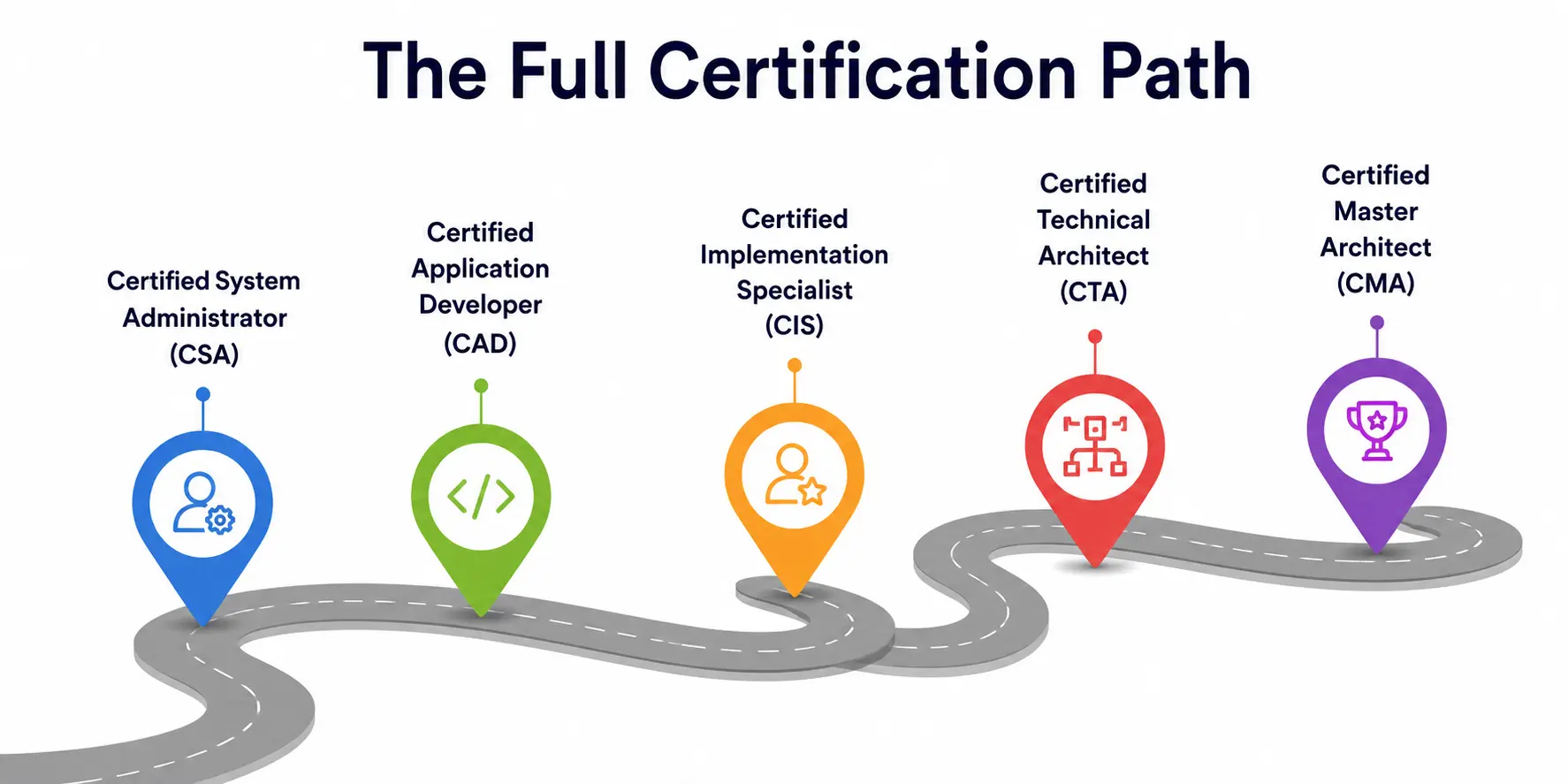
- Certified System Administrator (CSA) is where almost everyone begins. It’s a 60-question, 90-minute exam covering navigation, forms, access controls, and basic workflow setup. According to SNReady’s 2026 certification guide, CSA is held by roughly 95% of ServiceNow professionals and is treated as a near-mandatory foundation for every other credential in the ecosystem.
- Certified Application Developer (CAD) follows for people who enjoy scripting and building custom apps rather than just configuring existing ones. It leans harder into automation tools, APIs, and integration logic, making it a strong option for anyone who wants to sharpen software skills while working directly with enterprise-grade automation tools.
- Certified Implementation Specialist (CIS) tracks let you specialize in IT service management, customer service, HR delivery, or security operations. Interestingly, as of 2026, ServiceNow now requires the CIS–Data Foundations exam as a prerequisite before several other CIS tracks, a change that has reshaped how people plan their study order this year.
- Certified Technical Architect (CTA) and Certified Master Architect (CMA) sit at the top. These require years of implementation experience and multi-day practical exams, but they represent the highest-earning tier in the entire ecosystem. These specialist routes matter most if you’re building an IT career path around one specific ecosystem within enterprise cloud platforms rather than general administration.
Costs, Timelines, and 2026 Salary Data
Here’s where the return on investment becomes obvious. According to Thinkcloudly’s 2026 blog, certified administrators typically start between $80,000 and $100,000 and average around $116,000 to $117,000 in the United States, while certified developers average $120,000 to $128,000, with experienced professionals reaching $140,000 or higher.
Most candidates prepare for the CSA in four to eight weeks, studying one to two hours a day. Exam fees run around $300 for a first attempt, with CIS-level exams costing closer to $450. Compared to a full university degree, this is a remarkably efficient path into cloud platforms and enterprise software skills — a big reason this credential keeps outperforming many traditional IT certifications on cost-per-dollar career impact.
When you weigh a single exam fee against the cost of most degree-based IT certifications, the math favors this route heavily, especially for professionals eyeing higher-paying tech jobs in enterprise software. It’s also part of a broader shift across cloud platforms in general, where one focused cloud certification now often outweighs a broad, unfocused list of skills on a resume.
Certification Levels at a Glance
|
Certification |
Level | Typical Prep Time | Average Salary (2026) |
Best For |
|
CSA |
Foundational | 2–4 weeks | $80K–$117K |
Everyone starting out |
|
CAD |
Professional | 4–6 weeks | $120K–$128K |
Developers, scripters |
|
CIS (ITSM, CSM, HR, SecOps) |
Professional/Specialist | 4–8 weeks each | $120K+ |
Module specialists |
|
CTA |
Expert | Months, multi-part | Highest tier |
Senior architects |
|
CMA |
Expert | Years of experience | Highest tier |
Principal consultants |
Why Are Employers Prioritizing This Credential Over Traditional Degrees?
Hiring managers across industries keep telling the same story: they trust a validated exam more than an unverified resume line. A few reasons show up again and again in 2026 hiring data.
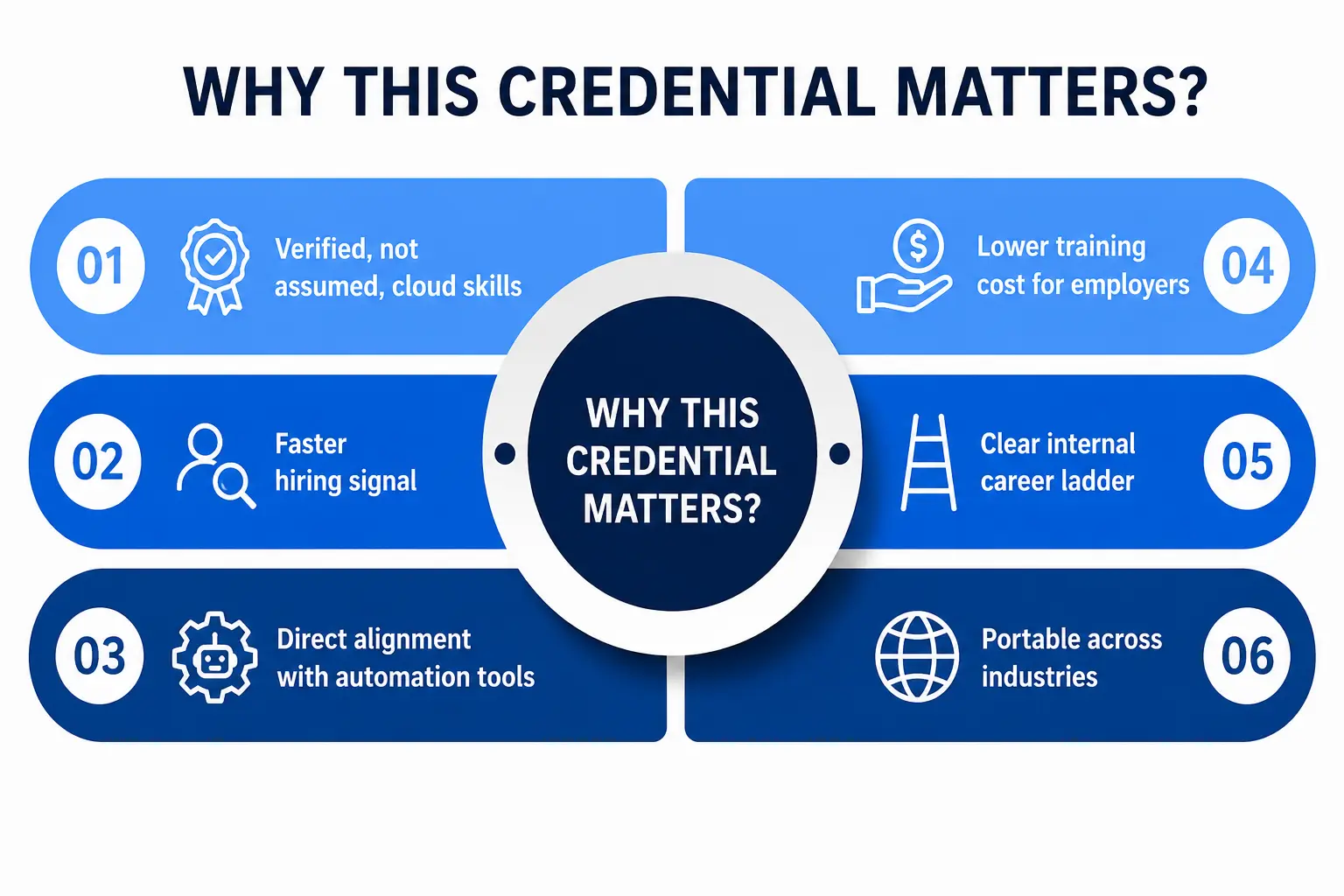
1. Verified, not assumed, cloud skills
A ServiceNow certification proves someone can actually configure a live system, not just describe one in an interview.
2. Faster hiring signal
Recruiters scanning hundreds of applications use certifications as an instant filter for tech jobs that require platform-specific knowledge.
3. Direct alignment with automation tools
As companies automate HR, ITSM, and customer workflows, they specifically need people fluent in the platform running those automations.
4. Lower training cost for employers
A certified hire needs less onboarding time, which employers openly value when comparing candidates for the same tech jobs.
5. Clear internal career ladder
Many companies use certification levels to map promotions, making the credential a built-in IT career path rather than a one-time achievement.
6. Portable across industries
The software skills and cloud skills validated by this credential transfer cleanly into healthcare, finance, retail, and government roles alike, widening the range of tech jobs available to certified professionals.
This pattern mirrors what’s happening across cloud certification in general. A 2026 report found that cloud-certified professionals earn 20–25% more than non-certified peers, and 92% of hiring managers agree that certifications simplify hiring decisions and validate real capability.
My Personal Experience Earning My First Certification
I’ll be honest — I almost gave up during my second week of studying. I came from a general IT support background with zero exposure to workflow platforms, and the terminology alone (ACLs, update sets, and import sets) felt like learning a new language. What actually worked was ignoring the theory-heavy videos and spending 30 minutes a day inside a free personal developer instance, breaking things on purpose and fixing them.
By the time I sat for the CSA exam, I wasn’t memorizing answers—I understood the platform. That single certification got me my first interview request within ten days of updating my profile, something no unrelated degree had ever done for me. If you’re on the fence, my honest advice is: build the habit of daily hands-on practice over passive reading, every single time.
Looking back, it was that steady focus on real software skills, not chasing every new credential, that actually reshaped my IT career path.
How It Compares to Other Cloud Certification Paths
It’s fair to ask how this stacks up against AWS, Azure, or Google Cloud credentials, since many professionals are choosing between multiple cloud platforms right now. According to CertStud’s 2026 salary analysis, broad cloud platform certifications like Azure Administrator Associate reached an average salary of $148,849 in 2026, and IT leaders report certified employees add over $30,000 in value annually regardless of vendor.
The difference is specialization depth. General cloud certification proves you can operate infrastructure. A platform-specific credential proves you can run an entire business function end-to-end — a distinction that matters increasingly as more enterprises adopt niche, workflow-specific platforms alongside their broader cloud environment.
Ultimately, choosing between competing cloud platforms comes down to specialization, and pairing broad cloud platform knowledge with one focused credential tends to be the smartest long-term move.
Looking Ahead: Why This Credential Keeps Gaining Ground
The broader trend across IT certifications in 2026 points the same direction: employers want proof, not promises. Stacking practical software skills with a recognized credential remains one of the fastest ways to sharpen your cloud skills and stand out in a crowded market. For anyone plotting a long-term IT career path, starting with a foundational exam and building upward, module by module, is still the most reliable route available.
Final Thoughts
A ServiceNow certification isn’t a magic ticket, but the 2026 data is hard to argue with: real salary growth, real hiring priority, and a genuinely achievable study path for people starting from zero. Whether you’re switching careers, adding to existing cloud skills, or building your first real IT career path, this is one of the most efficient credentials available in enterprise technology today. Start with the foundational exam, practice daily inside a free developer instance, and let the results speak for themselves—mine certainly did.