

Here’s a number that stopped me mid-scroll last month: worldwide IT spending is on track to hit $6.15 trillion in 2027, and a huge slice of that is flowing straight into cloud infrastructure. So here’s the question I get asked constantly by friends switching careers: is it actually still worth spending your evenings studying for the Azure Administrator Certification (AZ-104), or has the market already moved on?
I sat the AZ-104 exam myself eighteen months ago, and I’ve spent the past few weeks digging through 2027 salary reports, job boards, and Microsoft’s own documentation to give you a straight answer, not a sales pitch.
I’m going to walk you through what this credential pays in 2027, who is actually hiring Azure administrators, what the AZ-104 exam costs versus what it returns, and whether it still makes sense if you’re starting from zero. I’ll also share a few things nobody told me before I booked my exam slot.
Why Did I Even Bother With the Azure Administrator Certification?
I was a fairly ordinary on-premises systems administrator. Servers, backups, and the occasional 2 a.m. outage call. When my company announced a “cloud-first” migration, I had two choices: learn fast or become replaceable. I picked the Azure Administrator Certification, officially called Microsoft Certified: Azure Administrator Associate, because it was the one credential that kept showing up in every internal job posting my manager forwarded me.
It’s still the most recognized Microsoft certification for hands-on infrastructure roles anywhere in the Azure ecosystem. The exam itself, AZ-104: Microsoft Azure Administrator, tests whether you can actually run an Azure environment, not just talk about it. That includes managing identities in Microsoft Entra ID, configuring an Azure Virtual Network, deploying virtual machines, and keeping storage and monitoring running smoothly.
Microsoft doesn’t require any prerequisite exam before AZ-104, though they do recommend around six months of hands-on experience first, and honestly, I’d agree with that. I tried to skip the hands-on labs the first time, and it showed on my mock scores.
AZ-104 Exam Details at a Glance
Before we get to money, here are the AZ-104 exam facts people search for most. Always confirm them on the official AZ-104 study guide on Microsoft Learn before you book, because Microsoft updates the exam periodically.
|
AZ-104 exam detail |
What to expect |
|---|---|
|
Certification earned |
Microsoft Certified: Azure Administrator Associate |
|
Exam code |
AZ-104: Microsoft Azure Administrator |
|
Number of questions |
Around 40–60 |
|
Exam duration |
About 100 minutes of exam time; plan for roughly 2 hours in the seat. |
|
Passing score |
700 out of 1000 (scaled, so not the same as 70%) |
|
AZ-104 exam cost |
$165 USD in the US; price varies by country |
| Question types |
Scenario-based, case studies, drag-and-drop, and some hands-on lab tasks |
| Prerequisites |
None required; AZ-900 is optional. |
|
Validity and renewal |
1 year; renew for free with an online assessment on Microsoft Learn. |
| Delivery |
Pearson VUE test center or online proctored |
AZ-104 Skills Measured: What the Exam Actually Covers
The AZ-104 syllabus is split into five domains. The weightings below reflect the current skills outline; check Microsoft Learn for the latest version.
| AZ-104 domain | Weight | What you’ll actually do |
|---|---|---|
|
Manage Azure identities and governance. |
20–25% |
Microsoft Entra ID users and groups, RBAC, Azure Policy, resource locks, subscriptions, and cost management |
|
Implement and manage storage |
15–20% |
Storage accounts, Blob and Azure Files, access keys, SAS tokens, redundancy |
|
Deploy and manage Azure compute resources |
20–25% |
Virtual machines, ARM templates, Bicep, App Service, containers |
|
Implement and manage virtual networking. |
15–20% |
Azure Virtual Network, subnets, NSGs, peering, Azure DNS, load balancing |
|
Monitor and maintain Azure resources |
10–15% |
Azure Monitor, alerts, Log Analytics, Azure Backup, Site Recovery |
If you’re short on time, networking and identity are the two domains where most candidates lose marks. More on that in my study notes below.
What Does the Azure Administrator Certification Actually Pay in 2027?
This is the part everyone wants first, so let’s not bury it. Based on the MSCertQuiz 2026 survey, certified Azure administrators in the United States earn between $88,000 and $161,000 a year, with a national average Azure administrator salary of around $110,000. Others show entry-level roles starting closer to $70,000–$90,000, while professionals with five-plus years of experience regularly clear $130,000–$200,000, and in high cost-of-living hubs like San Francisco, salaries reach $145,000–$160,000.
What surprised me is how consistent the premium is across sources. One 2027 certification-salary analysis found that holding just the AZ-104 certification typically pushes a base salary to $100,000–$130,000, and professionals who pair it with a security credential often see raises of 20–35% over single-certified peers. That tracks with what happened to me. I didn’t get promoted the week I passed, but my next performance review conversation was a very different one.
The Scope: Who Actually Hires Azure Administrators in 2027
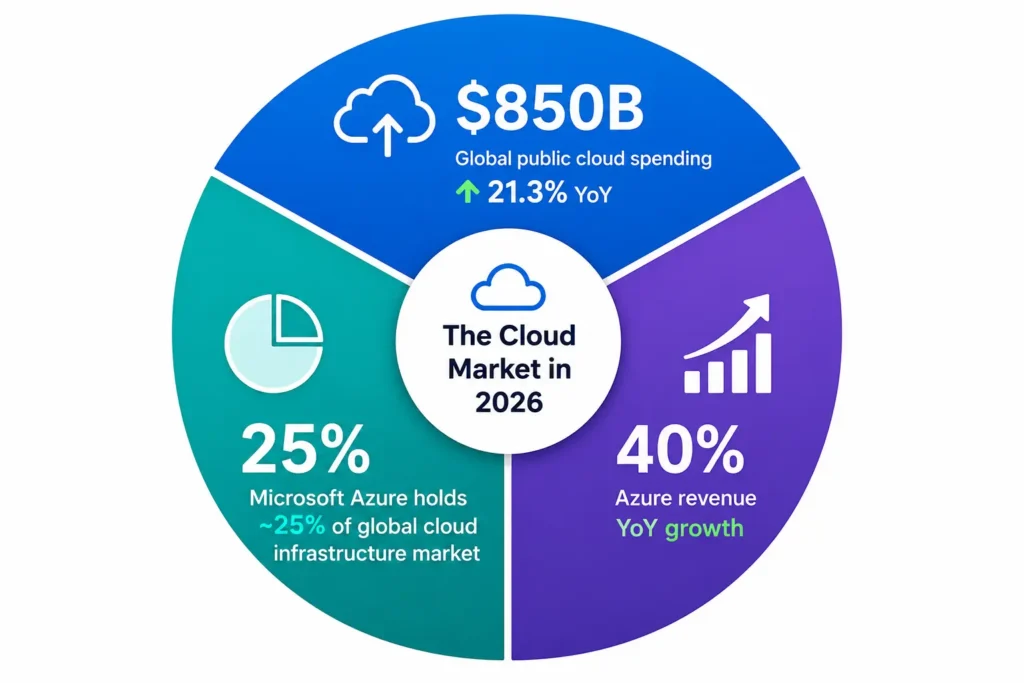
The scope question matters more than the salary number, honestly, because a high salary means nothing if nobody’s hiring. The global cloud market has genuinely exploded. Gartner forecasts public cloud end-user spending alone will reach roughly $850 billion in 2027, a jump of 21.3% from the year before. Microsoft Azure now holds about a quarter of the global cloud infrastructure market, and Microsoft reported Azure revenue grew sharply, around 40% year over year, in its most recent quarter.
That growth translates directly into Azure administrator jobs and open cloud administrator roles. Employers hiring a cloud administrator today aren’t just looking for someone who can click around a portal. Job postings increasingly expect candidates who understand governance, cost optimization, and how to keep operations running as workloads shift toward AI-heavy environments.
A recurring theme across multiple 2027 hiring guides is that administrators who can manage automated pipelines and enforce compliance across hybrid environments are pulling ahead of those doing purely manual tasks.
A few sectors stood out to me as particularly hungry for AZ-104 certified talent right now:
- Financial services and insurance: heavily regulated, migrating slowly but paying well; median salaries here often exceed $98,000.
- Healthcare systems: cloud adoption sits near 94%, though sensitive data migration is still catching up due to compliance rules.
- Government and public sector: sovereign and regional cloud spending is forecast to grow over 35% in 2027 alone, creating fresh administrator demand.
- Managed service providers and consulting firms: these companies hire cloud administrator talent in bulk to service multiple client environments simultaneously.
Zoom out and the numbers get even more interesting. Data center investment is expected to grow more than 30% in 2027 as enterprises race to build out infrastructure for AI-heavy workloads. None of that spending happens without people who can provision, secure, and monitor the underlying infrastructure day to day, which is exactly the gap the Azure administrator role fills.
Job growth estimates for this associate-level track sit in the double digits year over year, and multiple 2027 hiring reports put active openings tied to this credential in the tens of thousands across North America and Europe alone. What stood out to me while researching this piece is how little that demand is concentrated in pure-tech companies.
Hospitals, insurers, universities, and city governments are all hiring for the same skill set, which tells you this isn’t a bubble tied to one industry’s budget cycle. If you’re wondering whether to specialize, I’d say don’t overthink it early on. Learn Azure broadly first (identity, networking, storage, and compute) and specialize once you know which part of cloud operations actually excites you.
Cost vs. Return: Is AZ-104 Worth It?
Let’s talk numbers plainly. The AZ-104 exam cost is $165 in the US and similar in most countries after local pricing. Add a study subscription or a few practice tests and you’re realistically looking at $250–$400 total. Against a documented salary premium of $15,000 or more, that’s a return that’s hard to argue with on spreadsheet terms alone, and demand for this role, according to recent job-market tracking, is still accelerating rather than cooling off.
But I want to be honest about the caveat nobody puts in the marketing copy: the Azure Administrator Certification on its own, with zero hands-on experience, will not get you hired. I’ve watched people pass the exam using only practice dumps and then struggle badly in interviews when asked to actually configure an Azure Virtual Network or troubleshoot a resource lock.
|
Experience level |
Azure administrator salary (2027, US) | Time to prepare for AZ-104 |
Common titles |
|---|---|---|---|
|
Entry-level |
$70,000 – $90,000 | 8–12 weeks | Junior Cloud Administrator, Cloud Support Associate |
| Mid-level (3–5 yrs) | $90,000 – $130,000 | 4–8 weeks (refresher) |
Azure Administrator, Cloud Engineer |
|
Senior (6+ yrs) |
$125,000 – $200,000+ | N/A, renewal only |
Senior Cloud Administrator, Cloud Architect |
Table compiled from 2027 salary aggregation across Glassdoor, ZipRecruiter, and LinkedIn Salary Insights.
Why Zero Trust Architecture Changed What the AZ-104 Exam Tests
Something worth flagging for anyone studying right now: the AZ-104 exam content has quietly shifted toward security-first thinking. Microsoft’s own guidance now frames identity as the primary security perimeter, and the AZ-104 blueprint leans heavily on Microsoft Entra ID, Conditional Access, role-based access control (RBAC), and least-privilege principles that sit at the heart of Zero Trust Architecture. Every access request has to be authenticated using signals like user identity, device health, and location before it’s trusted.
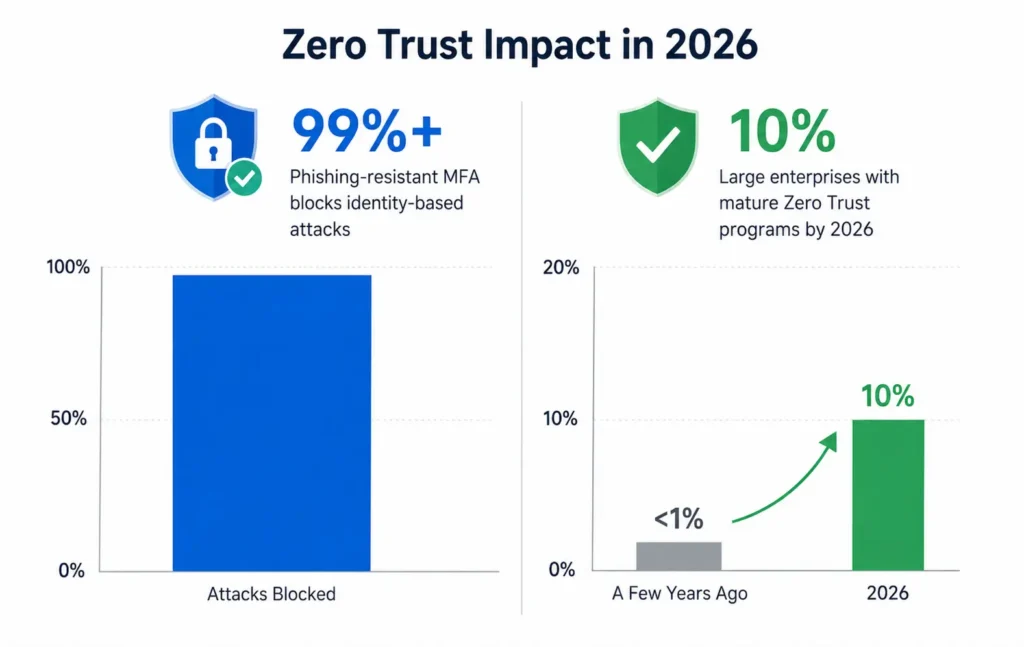
This isn’t a small detail. Recent 2027 zero-trust research shows phishing-resistant multi-factor authentication blocks more than 99% of identity-based attacks, even when a password has already been stolen. The same research notes that only around 10% of large enterprises are expected to reach a genuinely mature Zero Trust Architecture program by 2027, up from under 1% a few years earlier, which means administrators who understand these controls are the ones organizations are desperate to keep.
My AZ-104 Study Plan: A Personal Note on Preparing for the Exam
I won’t pretend the study process was glamorous. I spent about seven weeks doing an hour most evenings, mostly inside a free Azure sandbox, deliberately breaking things so I’d understand how to fix them. The domain that tripped me up most wasn’t storage or compute. It was networking, specifically subnetting and configuring an Azure Virtual Network with proper network security groups.
If you’re newer to networking concepts, budget extra time there. One more thing I wish someone had told me going in: the AZ-104 exam rewards scenario thinking over memorization. Several questions dropped me into a messy, half-configured environment and asked what I’d fix first, not multiple-choice trivia about default settings. I started keeping a running list of every mistake I made in my sandbox, however small, and reviewed it before bed most nights.
It sounds tedious, and it was, but it’s the single habit that moved my practice scores from the low 600s to comfortably above the 700 passing score in about three weeks. My other honest tip: don’t chase a general Microsoft certification just to collect badges. Pick the one that matches the job you actually want next, and go deep instead of wide.
Where the Azure Administrator Certification Fits in the Microsoft Certification Path
This certification isn’t meant to be the only Microsoft certification you’ll ever hold. Think of it as the entry ticket into the ecosystem. Most people who want to learn Azure seriously treat AZ-104 as step one, then branch out based on where their career is heading. If you’re brand new to cloud, the AZ-900 Azure Fundamentals exam is an optional warm-up. If networking is your thing, the next credential worth chasing is AZ-700, which goes deeper into designing and securing an Azure Virtual Network at enterprise scale.
If security interests you more, AZ-500 builds directly on the Zero Trust Architecture concepts this credential only introduces. And if architecture is the goal, an active AZ-104 is required before you can earn the Azure Solutions Architect Expert badge through AZ-305. I’d tell anyone starting out, “Don’t rush to stack five badges in a year.” Every Microsoft certification you add should map to a real skill gap in your day-to-day cloud operations work, not just be a resume line.
When I decided to learn Azure networking properly after passing my exam, it wasn’t because a roadmap told me to. It was because I kept hitting Azure Virtual Network configuration problems at work and wanted to actually understand what I was doing instead of copying documentation. That’s still the best reason to learn Azure at any stage of your career.
Conclusion: Should You Pursue the Azure Administrator Certification in 2027?
If you’re already working in IT infrastructure and your organization touches Azure in any capacity, the Azure Administrator Certification (AZ-104) remains one of the more rational career investments available in 2027. The exam cost is low, the salary data is consistent across independent sources, and the scope of hiring across finance, healthcare, government, and consulting shows no sign of slowing down as global cloud spending pushes toward the trillion-dollar mark.
Just go in with realistic expectations: pair the exam with genuine hands-on practice, keep building toward cloud operations maturity, and treat the credential as a floor to build on, not a finish line. Whether this is your first Microsoft certification or another line on a growing shelf of badges, the fundamentals you pick up here (Azure Virtual Network design, Microsoft Entra ID governance, and Zero Trust Architecture thinking) carry over into almost every cloud operations role that comes next.