
Security Operation Center is referred to as SOC. A SOC analyst helps organizations improve their threat detection, prevention, and response capabilities. In order to stop cyberattacks, SOC analysts constantly monitor security logs and examine suspicious activity. They closely monitor security systems around-the-clock. They generate alerts for any threats if they find any possible incidents. SOC analysts are important because they protect organizations from cyber threats by detecting and responding to attacks before they are exploited
How does a SOC works?
The massive amount of data that modern networks produce on a daily basis makes it difficult to spot
Possible threats. SOC analysts collect security data from Intrusion Detection System(IDS), Intrusion Prevention Systems(IPS),firewall, and SIEM platforms as sources and endpoints. This makes it easier to identify suspicious behavior, anomalies, and unusual activity throughout the network. They report serious threats to senior analysts or incident response teams so they can take necessary action after gathering and reviewing security logs.
Why SOC Analyst Skills Matter in Today’s Cybersecurity World
Cyberattacks are growing more frequent in today’s technology driven world , and businesses are more dependent on technology than ever. Every industry is dealing with sophisticated threats like ransomware, phishing , and insider attacks from financial institutions and healthcare systems to e-commerce platforms and government infrastructure. The massive rise in cybercrime highlights how crucial SOC analyst expertise is to maintaining robust security operations.
Modern businesses are implementing proactive security measures to identify threats early, assess risks, and take action before harm is done, instead of waiting for an attack to occur. A knowledgeable SOC analyst is essential in this situation. Threat detection, incident response, log analysis, and security monitoring are among the abilities needed for SOC analyst positions that support businesses in protecting their digital assets around-the-clock.
The need for SOC analysts is increasing rapidly ,with a shortage of cybersecurity professionals and rising cyberattacks . Having strong technical and analytical skills can help you build a secure and promising career in cybersecurity.
Most Demanding SOC Analyst Skills You Need to Get Hired
A successful career as a SOC analyst requires mastering both hard and soft skills. Professionals who can quickly identify threats, evaluate security incidents, and effectively communicate under pressure are in high demand today. The most crucial abilities listed below will help you stand out.
A Technical Skills Required for SOC Analyst
Monitoring and securing an organization’s digital environment requires an understanding of SOC analyst tools and technologies because technical expertise forms the foundation of a SOC analyst’s responsibilities.
Understanding Operating Systems, Firewall & IDS IPS:
In order to investigate attacks and maintain network security ,SOC analyst must have strong knowledge of Windows/Linux OS, firewall policies , and intrusion detection/prevention systems.
SIEM Tools (Splunk, QRadar, Elastic, Microsoft Sentinel):
One of the most important technical skills required for SOC analyst is Security Information and Event Management tools to monitor security logs, correlate events ,and identify suspicious activity in real time.
Log Analysis, Packet Capture & Network Security:
To track the path of an intrusion and spot signs of compromise, an analyst needs to be able to analyse logs and network packets. This knowledge helps to improve threat visibility across the organization.
Incident Response & Threat Hunting:
An analyst with strong incident response skills can evaluate security alerts, stop breaches, and minimize damage. Threat hunting aids proactively search for hidden attackers within systems before they cause harm.
Endpoint Protection, EDR Tools & Malware Analysis
To detect malware, ransomware, and other endpoint-based attacks, familiarity with Endpoint Detection and Response (EDR) tools for endpoints such as CrowdStrike, Carbon Black , or Defender is essential.
To secure systems and increase your chances of hiring success in cybersecurity mastering these SOC analyst tools and technologies are important.
SOC Analyst Learning Path: Step-by-Step Roadmap
If you want to know how to become a SOC analyst, follow this structured SOC analyst learning path designed for beginners to advance professionals. This beginner’s SOC analyst roadmap will walk you through the fundamental knowledge, resources, and practical experience needed to begin a career in cybersecurity.
Step 1: Learn Networking & Security Basics
Learn the fundamentals of networking, operating systems, firewalls, VPNs, protocols (TCP/IP,HTTP, DNS), and fundamental security concepts first. You can better understand how networks function and how attacks occur if you have a solid foundation.
Focus on:
- Networking fundamentals
- Linux & Windows basics
- Cybersecurity fundamentals (CIA triad, malware types, vulnerabilities)
Step 2: Practice SOC Tools & Hands-on Labs
Practical experience is essential to becoming a SOC analyst. Practice monitoring simulated attacks and utilising actual security tools.
Important tools to learn:
- SIEM tools (Splunk, QRadar, Elastic SIEM, Microsoft Sentinel)
- IDS/IPS systems
- Firewalls & Endpoint security tools
- Ticketing & case management tools
Step 3: Advanced Skills & Specializations
Once you are comfortable with tools and projects, expand into advanced areas to stand out in the cybersecurity job market.
Advanced topics:
- Threat hunting & malware analysis
- Digital forensics
- Cloud security (AWS, Azure)
- MITRE ATT&CK framework
- Scripting automation (Python, Bash, PowerShell)
By following this SOC analyst learning path consistently with practice and real-world labs, you can confidently build a job-ready skillset and start a powerful career in cybersecurity.
Top Certifications to Become a Certified SOC Analyst
Here are some of the top and most recognized certifications that can help you become a certified SOC analyst and accelerate your career growth.
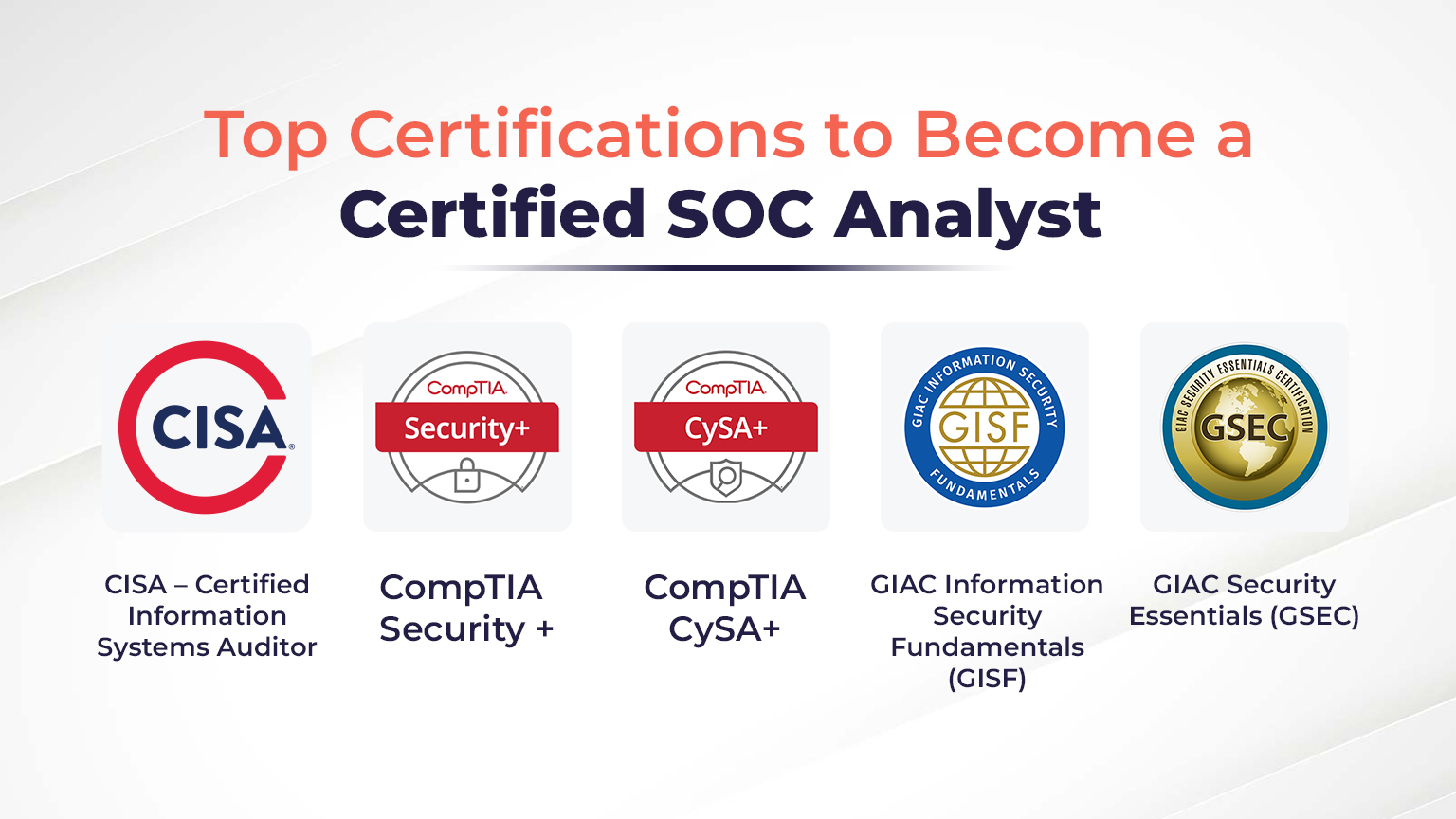
CompTIA Security +
Beginners who want to start a career in cybersecurity or SOC analyst roles can choose this certification, helps to build a strong foundation and is accepted worldwide as an entry-level security certification.
ComTIA CySA+
It focuses on real SOC skills like threat detection, log analysis, and incident response. People who already know basics and want practical skills to work as SOC analyst or Cybersecurity Analysts can choose this certificate.
GIAC Information Security Fundamentals (GISF)
This certification offers a strong knowledge of risk management, network security, and cybersecurity concepts. Before entering technical roles, students or freshers should learn the fundamentals of information security.
GIAC Security Essentials (GSEC)
People who want deeper technical knowledge for SOC, network defence, or blue team positions can choose this certification because it will give you the hand-on knowledge to protect and monitor systems in real environments.
CISA – Certified Information Systems Auditor
Professionals interested in auditing, IT governance, security compliance, or risk management rather than hands-on SOC operations can choose this certificate ,because it focuses on auditing ,governance and evaluating security controls within organizations.
Conclusion:
Strong technical knowledge ,hand-on training, and continuous learning are necessary for becoming a SOC analyst. You can develop the confidence required to work in a real Security Operations Center by learning networking, security principles, and SOC tools, as well as practicing actual lab scenarios.
Earning certifications and taking part in SOC analyst training programs can improve your knowledge and expand your career options. Qualified SOC analysts are in high demand due to the daily increase in cybersecurity threats. If you start learning now and take the right route, you can have a successful and secure career in cybersecurity.