
Cyberattacks in 2026 are faster, smarter, and more damaging than anything seen before. Attackers now use artificial intelligence to create novel malware, craft convincing phishing emails at scale, and probe defences automatically. A human security team working with traditional tools cannot keep pace.
The answer is AI cybersecurity tools. These platforms use machine learning to detect threats that signature-based approaches miss entirely, reduce the alert noise that overwhelms security teams, and automate responses to known attack patterns. Organizations using AI-powered detection find breaches 74 days faster on average. AI also reduces security analyst workload by 60 to 80 percent by handling high-volume data analysis automatically.
This guide covers the 10 best AI cybersecurity tools in 2026 — platforms that real security teams use in production environments. Honest capabilities, real pricing, and clear guidance on who each tool is built for.
Why AI Cybersecurity Tools Are Essential in 2026
Traditional security worked on a simple premise: build a list of known bad things and block them. Signature databases, firewall rules, blacklists. It worked when attacks were slow and predictable.
Attacks in 2026 are neither. Attackers use AI to mutate malware faster than signature databases update, automate reconnaissance across thousands of targets simultaneously, and generate phishing content that bypasses conventional filters.
Modern AI tools change this dynamic by learning what normal behaviour looks like — then detecting deviations in real time. They correlate events across millions of data points simultaneously. They automate security operations that previously required hours of manual investigation. And they build cyber resilience by continuously improving as they process more data about your specific environment.
Quick Comparison Table
|
Tool |
Category | Free Plan | Starts At |
|
CrowdStrike Falcon |
Endpoint + Threat Intel | No |
$59.99/device/year |
|
Darktrace |
Network security + NDR | No |
Custom enterprise |
|
SentinelOne |
Endpoint + XDR | No | $45/device/year |
| Microsoft Sentinel | SIEM + AI analytics | Pay-per-use | $2.46/GB ingested |
| Palo Alto Cortex XSIAM | SOC automation | No |
Custom enterprise |
|
Snyk |
Software composition analysis | Yes | $25/month |
| Proofpoint | Email + phishing detection | No |
Custom pricing |
|
IBM QRadar |
SIEM + threat intelligence | Free Community | Custom enterprise |
|
Vectra AI |
Network detection + response | No |
Custom pricing |
| Wiz | Cloud + application security | No |
Custom pricing |
Top 10 AI Cybersecurity Tools Reviewed
1. CrowdStrike Falcon — The Gold Standard for Endpoint Protection
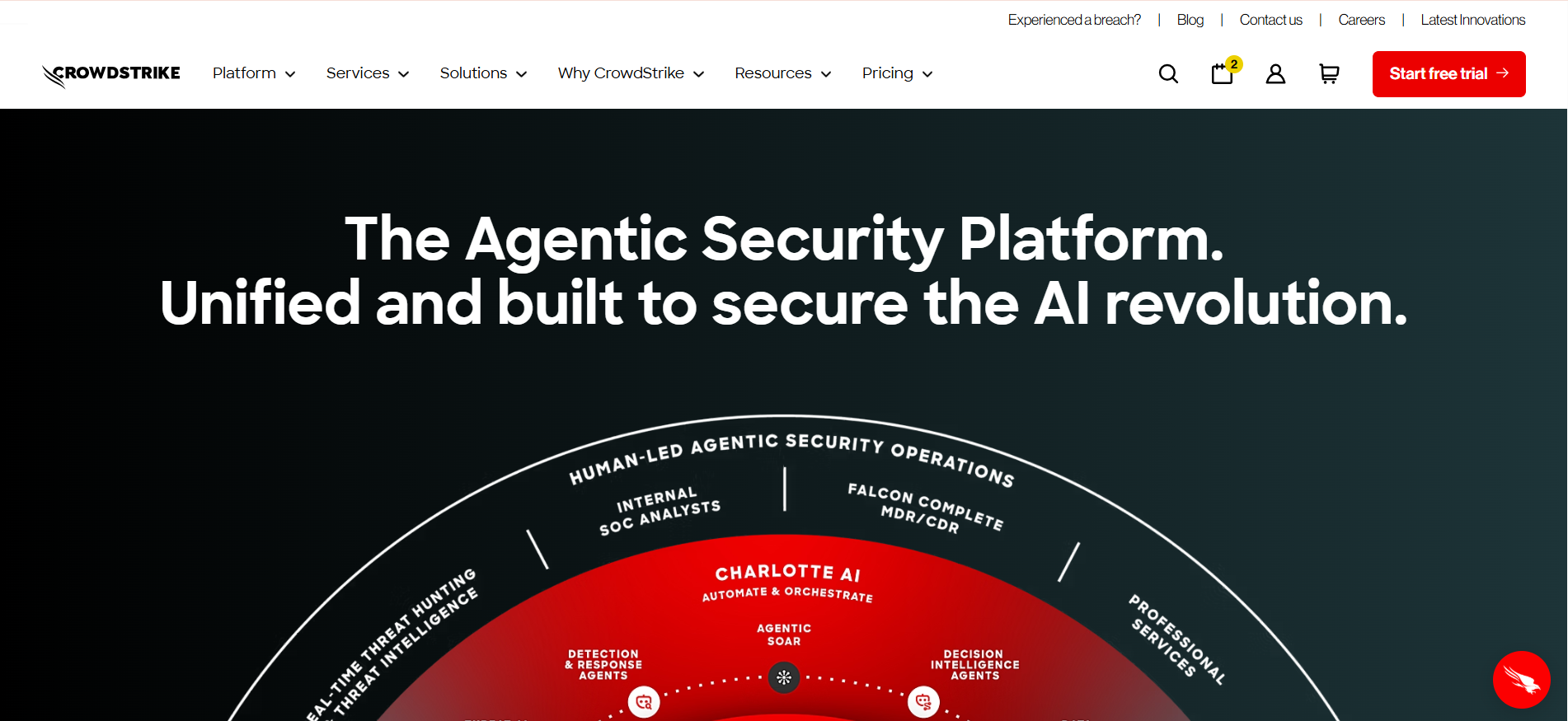
CrowdStrike Falcon is the most widely trusted AI cybersecurity tool for endpoint detection and response. It has earned the top spot in Gartner’s Magic Quadrant for Endpoint Protection Platforms for five consecutive years and has achieved 100% detection in MITRE ATT&CK evaluations.
The Threat Graph processes petabyte-scale security events globally — when one customer faces a novel attack, every other customer benefits immediately. Charlotte AI, the generative AI assistant, converts natural language queries into sophisticated threat hunting operations, reducing investigation time by over 40 hours per analyst per week. CrowdStrike tracks 265+ adversary profiles and delivers class-leading threat intelligence across its entire customer network.
Pricing: $59.99 to $184.99 per device per year depending on tier.
Good fit for: Large enterprises needing industry-leading endpoint protection, organizations without large SOC teams that benefit from managed threat hunting, and security teams wanting the broadest threat intelligence network available.
Where it falls short: Premium pricing is difficult for small businesses. Primarily endpoint-focused with less depth at the network layer. Complex feature set has a learning curve for smaller teams.
2. Darktrace — AI That Learns Your Network
Darktrace takes a fundamentally different approach to network security. Instead of relying on predefined rules, its unsupervised machine learning builds a model of normal behaviour for every user, device, and workflow — then detects deviations in real time.
This approach, called the Enterprise Immune System, is particularly effective for catching insider threats and novel malware. The Autonomous Response engine (RESPOND) takes surgical action to contain threats — slowing a suspicious connection or isolating a device — without disrupting business operations. Security teams report this capability has stopped ransomware propagation before analysts even reviewed the alert. Darktrace covers network security, cloud, email, and IoT through a single platform.
Pricing: Custom enterprise pricing. Annual contracts typically start in the mid-five figures.
Good fit for: Organizations needing comprehensive network security across hybrid environments, teams detecting insider threats and novel attacks, and companies with OT/ICS environments where autonomous response prevents downtime.
Where it falls short: Generates false positives during initial learning — plan 3 to 6 months of tuning. Higher cost than point solutions. Autonomous response may be too aggressive without proper tuning.
3. SentinelOne — Autonomous Response With AI Rollback
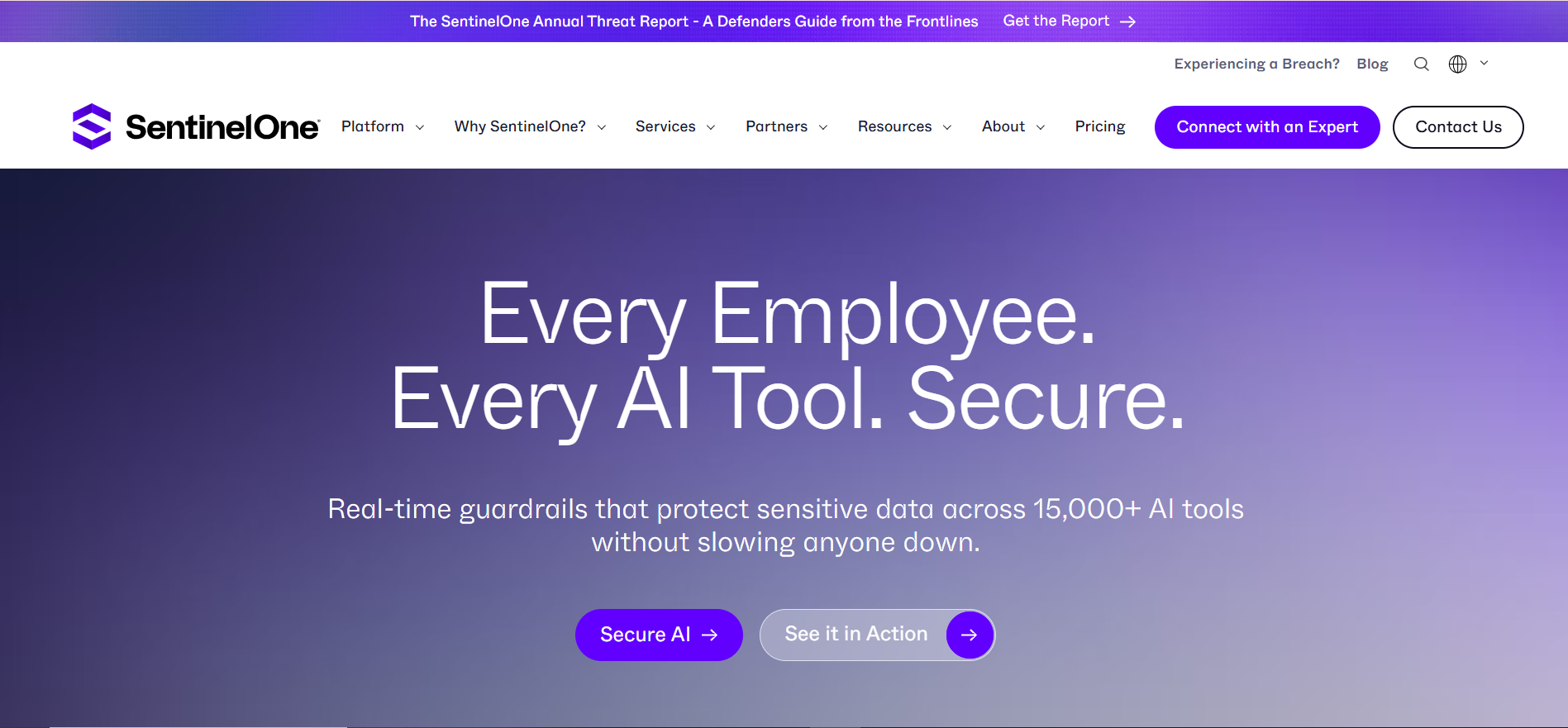
SentinelOne’s Singularity Platform wins on one specific capability: autonomous remediation. If ransomware executes, SentinelOne automatically rolls back all affected files to their pre-attack state using shadow copies — tested to restore encrypted files in under two minutes.
Purple AI triages alerts, explains attack timelines in plain English, and suggests remediation steps with context-aware reasoning. For building cyber resilience against ransomware specifically, SentinelOne’s combination of autonomous response and automated rollback provides protection that goes beyond detection alone.
Pricing: Starts around $45 per endpoint per year.
Good fit for: Organizations facing ransomware risk, security teams needing autonomous response, and enterprises wanting strong cyber resilience at a lower price point than CrowdStrike.
Where it falls short: Higher learning curve for non-technical users. Limited support for legacy systems. Pricing can still be steep for small businesses.
4. Microsoft Sentinel — AI SIEM for Microsoft Environments
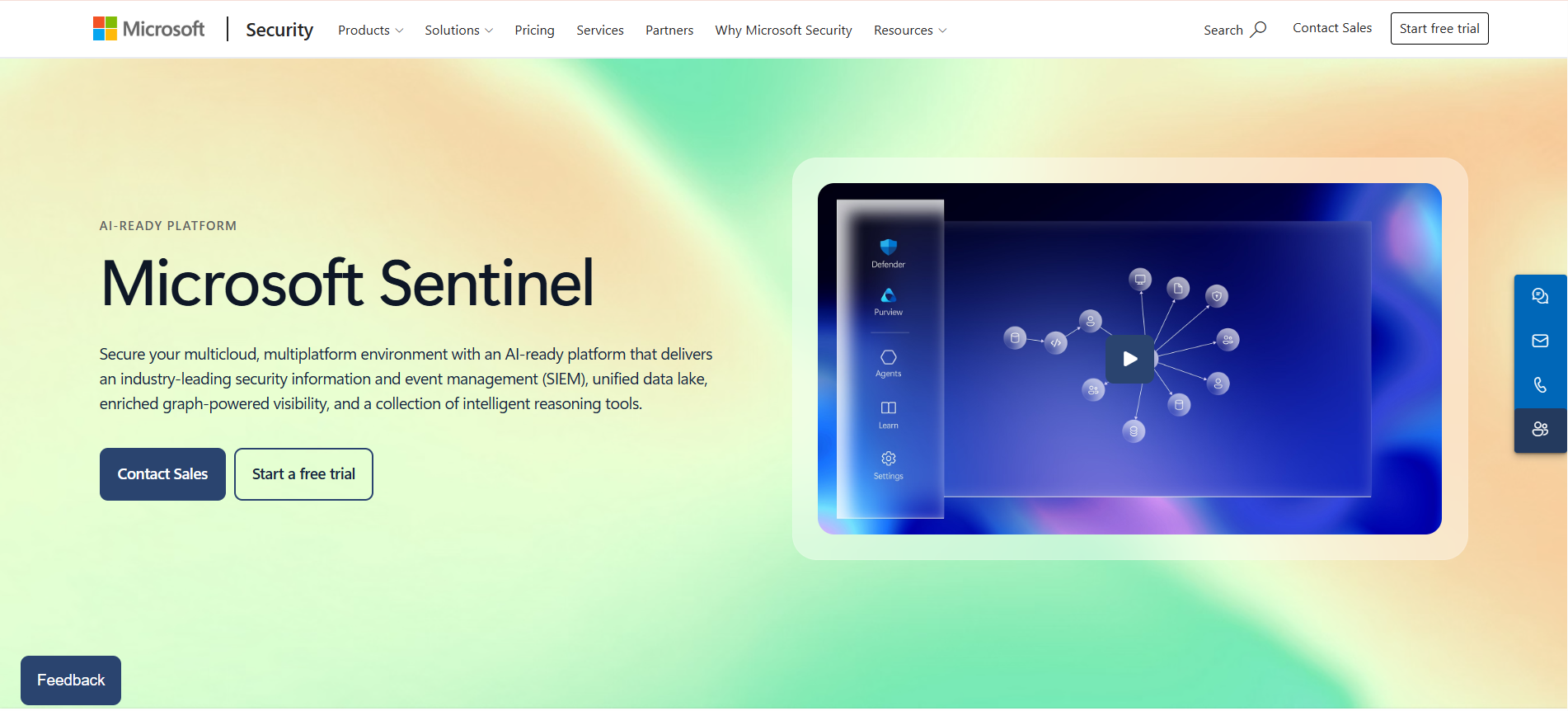
Microsoft Sentinel is a cloud-native SIEM that collects security data from across your IT estate and uses machine learning to correlate events, detect anomalies, and prioritize alerts. For organizations already using Microsoft 365 and Azure, it is the most naturally integrated option available.
Microsoft Security Copilot, combined with Sentinel, creates one of the most capable environments to automate security operations. It generates incident summaries, suggests investigation steps, and automates triage tasks that previously consumed hours of analyst time.
Pricing: Pay-per-use based on data ingestion. Approximately $2.46 per GB ingested.
Good fit for: Organizations heavily invested in the Microsoft ecosystem and security teams wanting AI-assisted investigation across Microsoft 365 and Azure.
Where it falls short: Cost grows quickly with high data volumes. Maximum value requires Microsoft stack investment.
5. Palo Alto Cortex XSIAM — The AI-Driven SOC Platform
Cortex XSIAM unifies SIEM, SOAR, endpoint detection, and threat intelligence into a single platform designed to automate security operations at enterprise scale. It ingests telemetry from endpoints, networks, the cloud, and third-party tools — applying AI to correlate alerts into prioritized incidents automatically.
SOC teams using Cortex XSIAM report an 80 percent reduction in alerts requiring human review. For enterprise security teams trying to do more with fewer analysts, this level of automation directly addresses the talent shortage facing the industry.
Pricing: Custom enterprise pricing. Entry-level deployments typically cost $20,000 to $50,000 per year.
Good fit for: Large enterprises wanting a unified AI SOC platform, security teams struggling with alert fatigue across fragmented tools, and organizations that want to automate security operations at scale.
Where it falls short: High cost makes it inaccessible for smaller organizations. Requires significant deployment investment. Most valuable for existing Palo Alto customers.
6. Snyk — Software Composition Analysis for Developers
Snyk is the leading tool for developer security — specifically software composition analysis that finds vulnerabilities in open-source dependencies, container images, and infrastructure as code before code reaches production.
The AI risk prioritization evaluates each finding by exploitability, reachability, and business impact rather than just severity score. Developers get a short, prioritized list of what genuinely needs fixing. Snyk integrates into IDEs, Git repositories, CI/CD pipelines, and Kubernetes. Customers report a 78% reduction in critical vulnerabilities and 40% faster mean time to fix after implementing Snyk as part of their application security programs.
Pricing: Free tier available. Team plan at $25 per month. Enterprise with custom pricing.
Good fit for: Development teams wanting software composition analysis built into their workflow and organizations building application security programs from the ground up.
Where it falls short: Free tier limited for large codebases. Focused on code-level vulnerabilities — you need separate tools for endpoint and network protection.
7. Proofpoint — The AI Leader for Phishing Detection
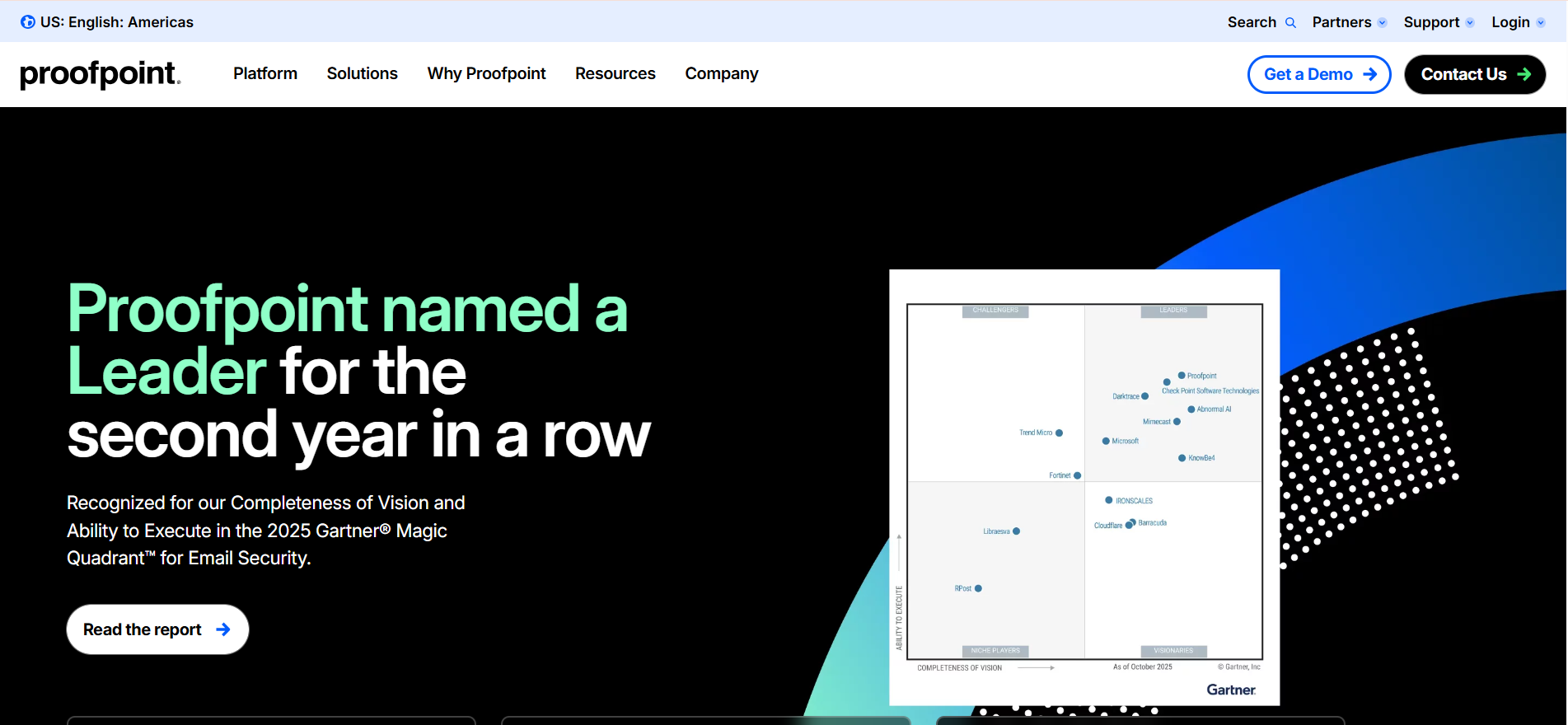
Email remains the most common cyberattack entry point in 2026, and Proofpoint is the most capable tool for phishing detection and email-based threat prevention. Its AI models analyze billions of email signals daily to identify phishing attempts, business email compromise, malicious attachments, and impersonation attacks.
The AI evaluates intent, context, and behavioural patterns rather than matching known malicious indicators — catching sophisticated phishing attacks that have never been seen before.
Pricing: Custom pricing based on the number of users and modules.
Good fit for: Enterprises facing sophisticated email attacks, financial services and legal firms targeted by BEC attacks, and any organization where a single successful phishing attempt could cause significant damage.
Where it falls short: Custom pricing makes cost estimation difficult without a sales conversation. Primarily email-focused — not a complete cybersecurity solution alone.
8. IBM QRadar — AI SIEM for Regulated Industries
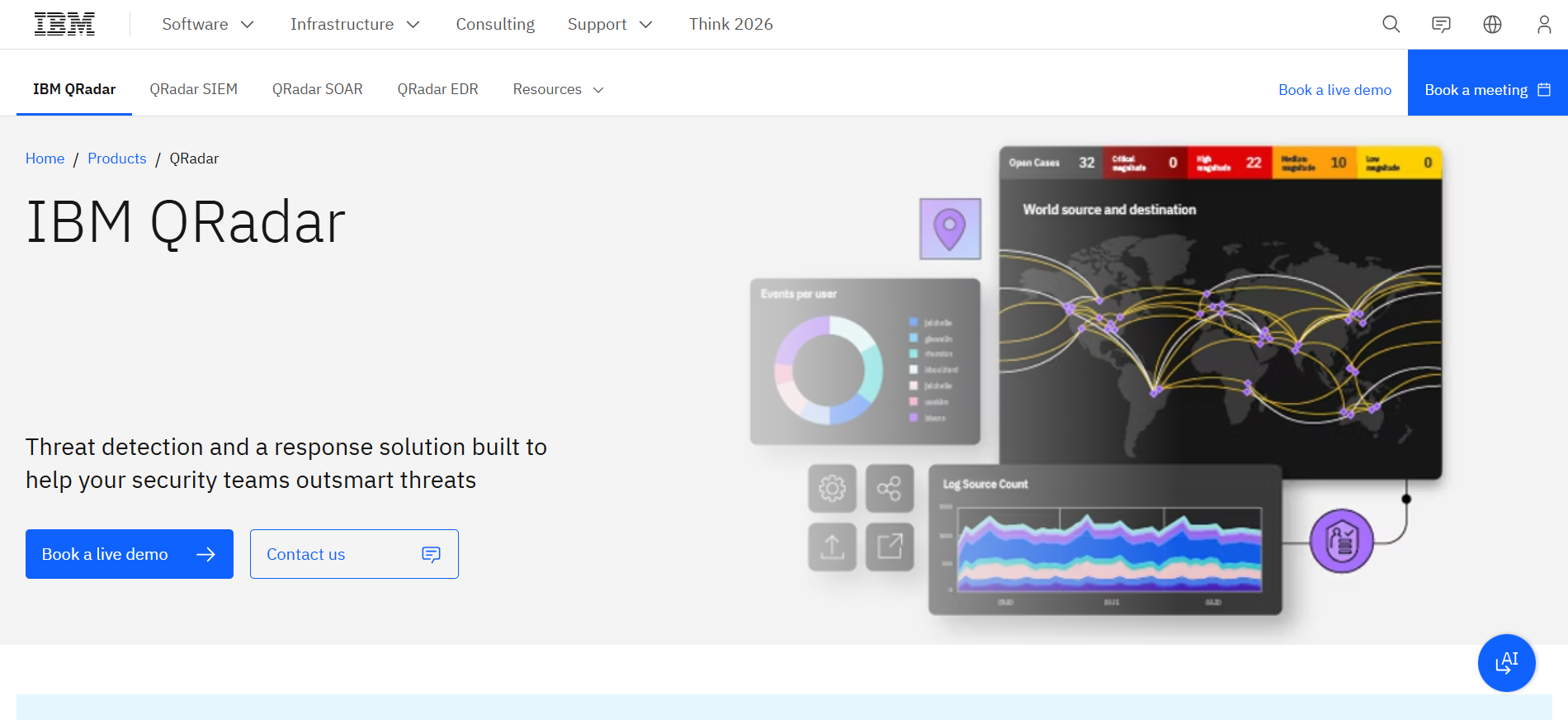
IBM QRadar is one of the most trusted SIEM platforms in enterprise security, with AI capabilities that make it particularly strong for regulated industries.
QRadar’s AI layer correlates events across logs, flows, vulnerabilities, and threat feeds to surface high-priority incidents. The UEBA module detects insider threats by identifying behavioural patterns that deviate from baselines. For compliance-heavy industries, QRadar’s audit trails are industry-leading.
Pricing: Free Community Edition available. Enterprise pricing is typically $20,000 to $50,000 per year.
Good fit for: Large enterprises and regulated industries needing comprehensive SIEM, and organizations with strict compliance audit requirements.
Where it falls short: Complex to deploy without experienced security engineers. Expensive for smaller organizations.
9. Vectra AI — Network Detection and Response
Vectra AI specializes in network security through AI-powered network detection and response. It watches what happens on your network — lateral movement, data exfiltration, command-and-control activity — between initial compromise and final impact.
The platform groups related alerts into unified attack campaigns with a single prioritized score, cutting through noise effectively. For hybrid and multi-cloud environments where attackers move laterally, Vectra provides visibility that endpoint tools cannot.
Pricing: Custom pricing based on environment size.
Good fit for: Mid-market to enterprise organizations with complex network security requirements, teams protecting hybrid cloud environments, and SOC teams dealing with alert overload.
Where it falls short: Network-focused only — requires complementary endpoint and SIEM tools. Higher pricing for smaller teams.
10. Wiz — Cloud and Application Security Programs
Wiz provides full-stack visibility across cloud infrastructure — identifying misconfigurations, vulnerabilities, exposed secrets, and excessive permissions across AWS, Azure, and Google Cloud simultaneously.
The AI risk engine connects individual findings into attack paths, showing which combinations of misconfigurations an attacker could actually exploit. For teams building application security programs for cloud-native environments, this prioritization is far more actionable than a raw findings list. Agentless deployment achieves full coverage in hours.
Pricing: Custom pricing based on cloud spend. No free tier.
Good fit for: Cloud-first organizations needing multi-cloud coverage and teams building application security programs for cloud-native applications.
Where it falls short: Cloud-focused only — not designed for on-premises or endpoint security.
How to Build Cyber Resilience With the Right Tools
Real security is not about having a perfect defense. It is about recovering quickly and limiting damage. Cyber resilience requires layering tools that cover your most significant exposure areas.
Start with the layer that creates your biggest risk. If endpoint compromise is your primary concern, start with CrowdStrike or SentinelOne. If phishing detection is your most frequent incident type, Proofpoint addresses this specifically. If cloud misconfiguration is your biggest exposure, Wiz provides full cloud visibility. If you need to automate security operations for an overloaded SOC team, Cortex XSIAM or Microsoft Sentinel reduces manual work dramatically. If developers need software composition analysis before vulnerabilities reach production, Snyk is the right starting point.
Most enterprise organizations run four or five of these tools covering different layers. Start with your highest-priority risk.
Final Thoughts
Attackers have AI. Defenders need AI too. The AI cybersecurity tools in this guide are what serious security teams use today — not future technology.
No single tool covers everything. Phishing detection tools do not watch your network. Software composition analysis does not monitor endpoints. Building genuine cyber resilience means layering tools across your most significant exposure areas.
Start with the tool that addresses your highest-priority risk. Most offer demos or trials. Run one in your actual environment for 30 days. What you discover about your current security posture may surprise you.