
AI tools for cloud computing are changing how businesses run in 2026. A few years ago, running a cloud workload meant manually provisioning servers, watching dashboards, and praying nothing crashed at 3 AM. Today? AI handles most of that work before you even notice.
Cloud infrastructure now thinks for itself. Modern AI tools for cloud computing predict capacity needs, auto-scale resources, detect security threats, optimize costs, and deploy machine learning models across global regions in minutes. What once required a team of cloud engineers now happens while you sleep.
But with every provider claiming “AI-powered cloud,” how do you pick what’s actually worth using? This guide breaks down the 10 best AI tools for cloud computing in 2026 — what they do, who they’re really built for, pricing, and where each one falls short. No marketing hype. Just honest picks from hands-on research across AWS, Azure, Google Cloud, and independent platforms.
What Are AI Tools for Cloud Computing?
AI tools for cloud computing are platforms and services that use artificial intelligence to automate, optimize, and scale cloud infrastructure. They cover everything from training ML models on cloud GPUs to predicting server failures, managing costs, and securing workloads automatically.
Traditional cloud services gave you raw infrastructure — compute, storage, networking. You built everything on top. Modern AI cloud services do more of the heavy lifting. They recommend optimal configurations, detect anomalies, write infrastructure code, and balance workloads across regions automatically.
Here’s the key shift in 2026: cloud computing with AI isn’t a feature anymore — it’s the product. The best AI cloud platforms now combine infrastructure and intelligence in a single layer, making advanced capabilities accessible even to small teams without DevOps specialists.
Quick Comparison Table
|
Tool |
Best For | Free Plan |
Starts At |
|
AWS SageMaker |
End-to-end ML on AWS | Free tier | Pay-as-you-go |
|
Google Vertex AI |
AI/ML on GCP | $300 credits | Pay-as-you-go |
|
Microsoft Azure AI |
Enterprise AI + OpenAI | Free tier |
Pay-as-you-go |
| IBM Watsonx | Regulated industries | Trial |
Custom pricing |
| Databricks | Unified data + AI | 14-day trial |
Usage-based |
|
DigitalOcean GradientAI |
Budget-friendly GPUs | $200 credits |
$1.42/hr (GPU) |
|
Hugging Face |
Open-source model hosting | Yes | $9/month (Pro) |
|
Oracle Cloud AI |
Enterprise + databases | Free tier |
Pay-as-you-go |
|
Lambda Labs |
GPU-first ML workloads | No |
$1.29/hr (GPU) |
| CloudHealth by VMware | AI-powered cost optimization | Demo only |
Custom pricing |
Top 10 AI Tools for Cloud Computing Reviewed
Let’s break down each tool in detail.
1. AWS SageMaker — The AWS Machine Learning Engine
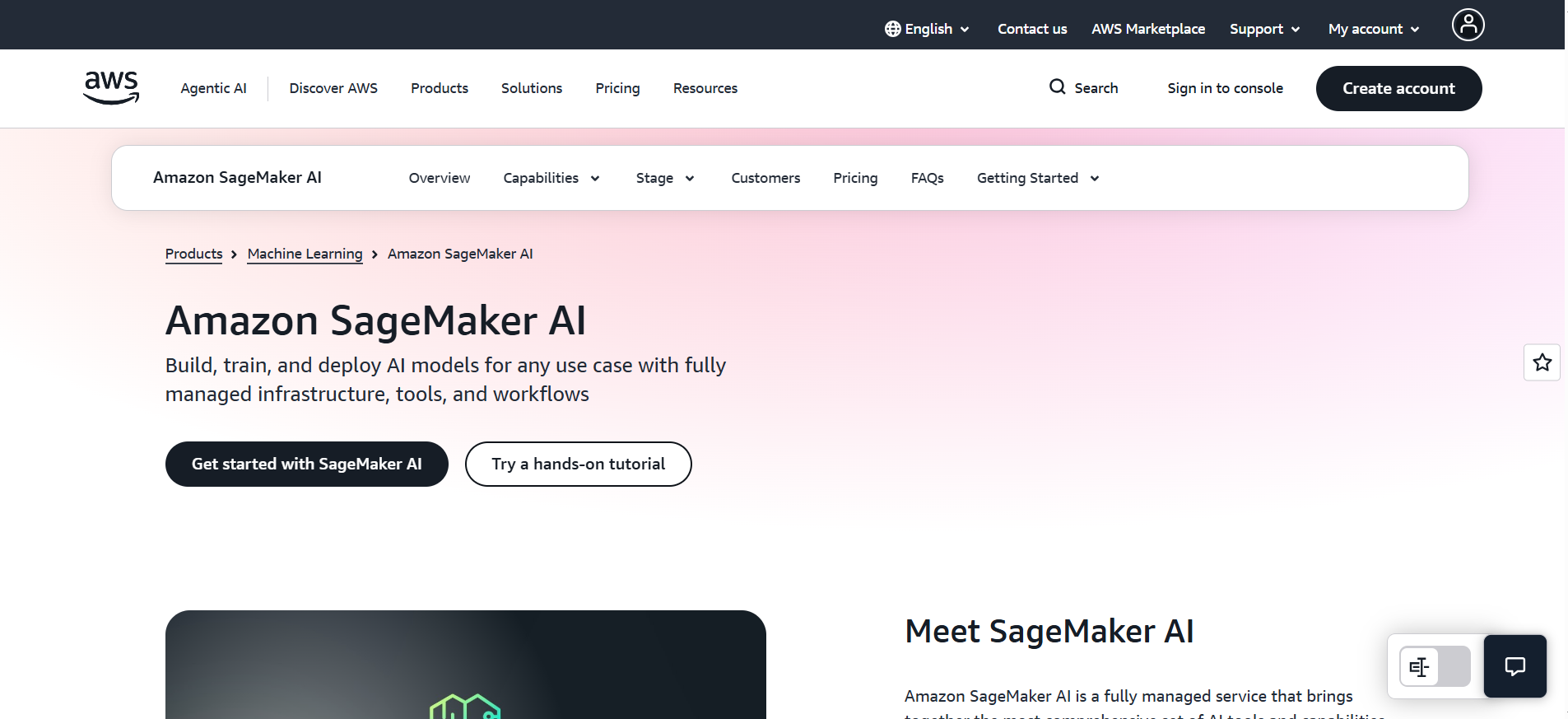
AWS SageMaker is the most complete ML platform for teams running on AWS. It handles the full machine learning lifecycle — data labeling, training, tuning, deployment, and monitoring — inside Amazon’s ecosystem.
Why people love it: It covers everything. SageMaker Studio gives you integrated notebooks, JumpStart offers pre-trained foundation models, Canvas enables no-code ML, and Autopilot handles AutoML. For organizations using AWS AI services at scale, nothing matches its depth.
Top features:
- End-to-end ML platform across 1000+ AWS regions
- Foundation model access via AWS Bedrock
- Autopilot for automated model building
- Ground Truth for data labeling
- Built-in MLOps and model monitoring
Pricing: AWS Free Tier includes SageMaker for 2 months. Pay-as-you-go after, based on compute and storage.
Best for: Companies on AWS, enterprise ML teams, and data scientists deploying production models.
Honest downside: Tight AWS lock-in. Pricing spans multiple AWS services and scales quickly without careful monitoring.
2. Google Vertex AI — The Unified ML Platform
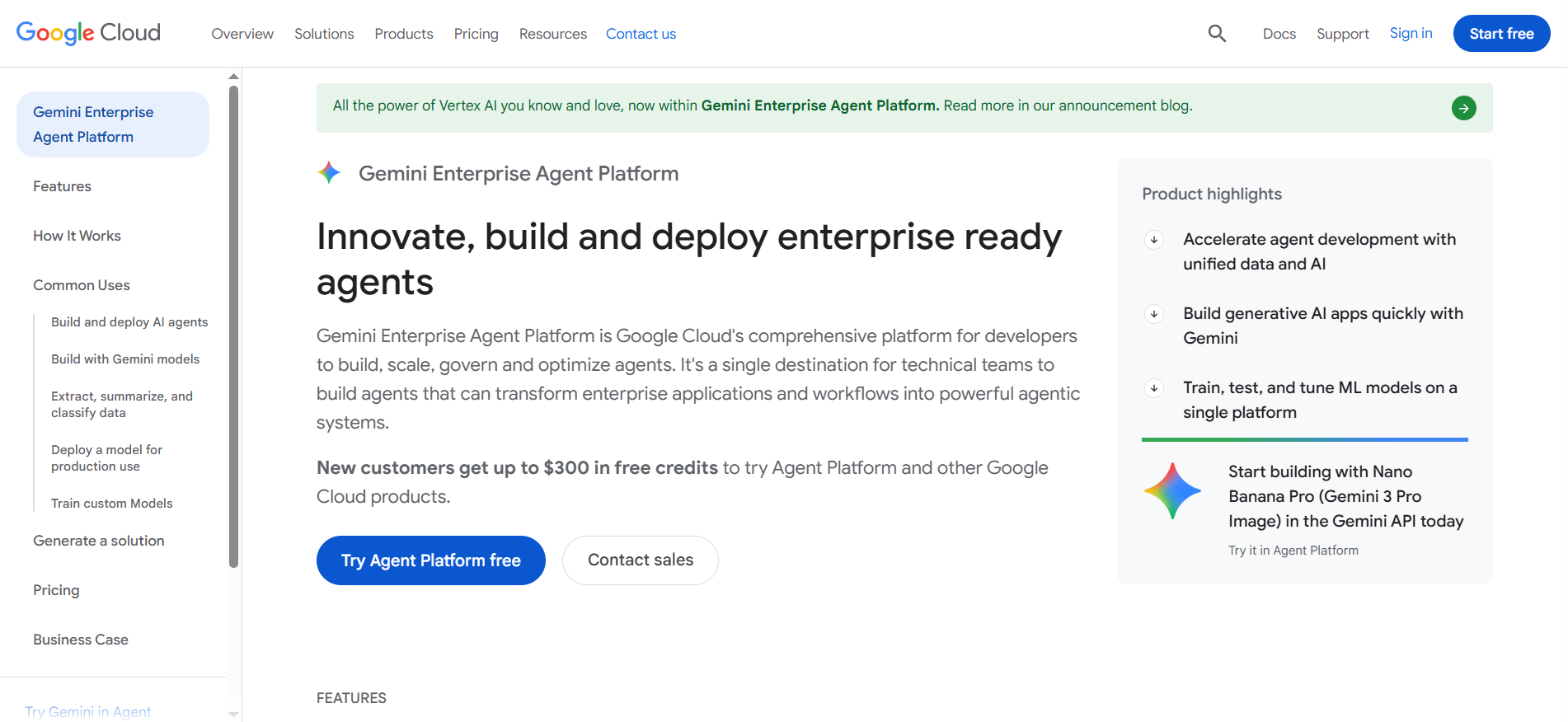
Google Vertex AI combines Google’s AI research heritage with Google Cloud’s infrastructure. In 2026, it’s one of the most developer-friendly cloud AI tools on the market.
Why people love it: Access to Google’s TPUs gives Vertex AI a real speed advantage for training large models. It ships with Gemini models, AutoML features, and native BigQuery integration for AI-on-data workflows.
Top features:
- TPU v5p and v6 for massive model training
- Pre-trained Gemini and PaLM models
- AutoML for non-technical users
- Vertex AI Agent Builder for AI agents
- Native BigQuery integration
Pricing: $300 free credits for new users. Pay-as-you-go after.
Best for: Teams on GCP, researchers training large models, and developers building AI agents.
Honest downside: GCP ecosystem lock-in. Pricing is complex — predicting costs before scaling is tough.
3. Microsoft Azure AI — The Enterprise Powerhouse
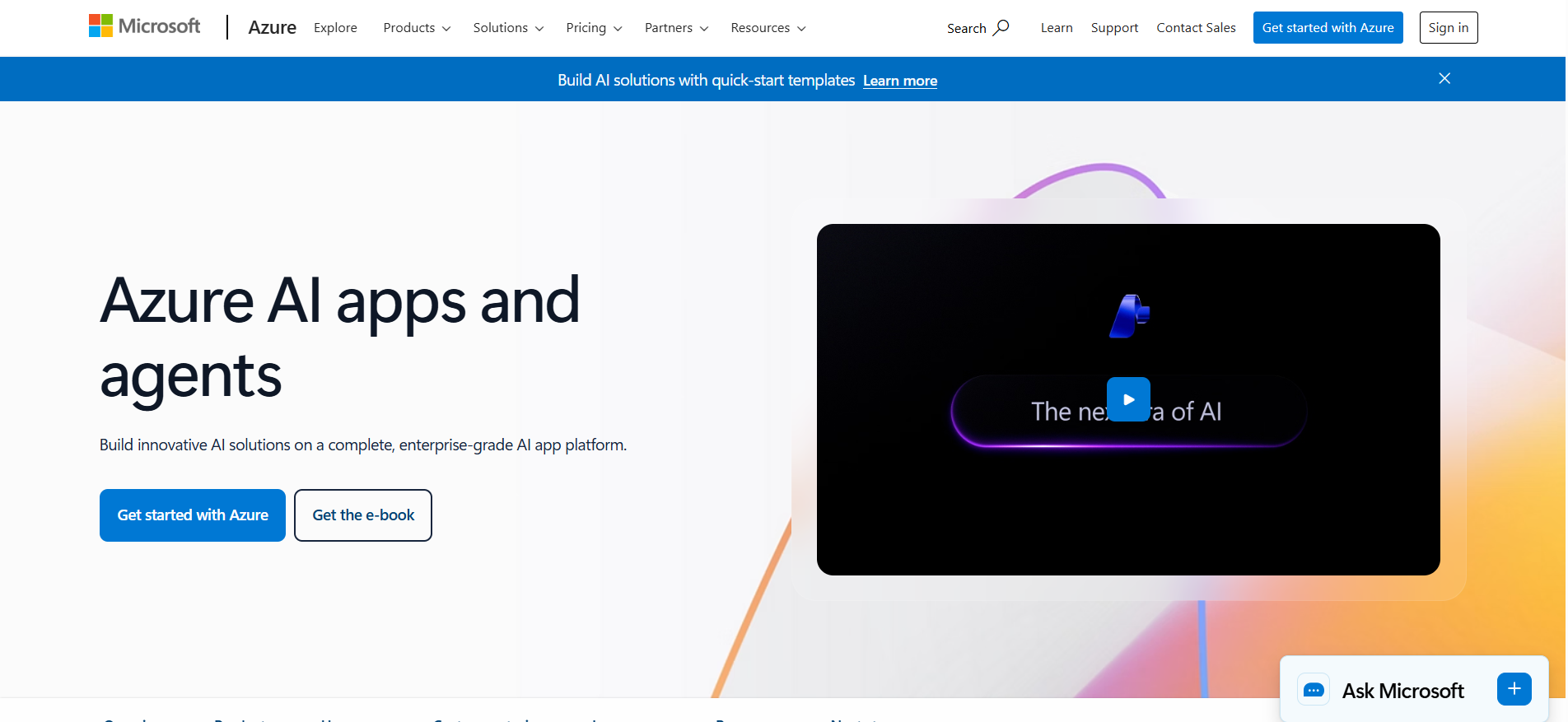
Microsoft Azure AI is the unified AI platform from Microsoft, and its exclusive partnership with OpenAI gives it a unique edge — GPT-5, DALL-E, and Whisper models are all available with enterprise-grade compliance.
Why people love it: If your organization runs on Microsoft 365, Azure AI fits seamlessly. Azure OpenAI Service gives you GPT-5 access with data privacy guarantees, while Azure AI Foundry enables custom AI apps inside the Microsoft ecosystem.
Top features:
- Azure OpenAI Service (exclusive GPT access)
- Azure AI Foundry for custom AI apps
- Azure Machine Learning for full ML lifecycle
- Content Safety for responsible AI
- Deep Microsoft 365 integration
Pricing: Azure Free Tier available. Pay-as-you-go with service-specific pricing.
Best for: Enterprises on Microsoft stack, organizations needing compliance-ready OpenAI access, and teams building AI into existing Microsoft apps.
Honest downside: Heavy Microsoft ecosystem lock-in. Documentation can overwhelm newcomers.
4. IBM Watsonx — The Regulated Industries Specialist
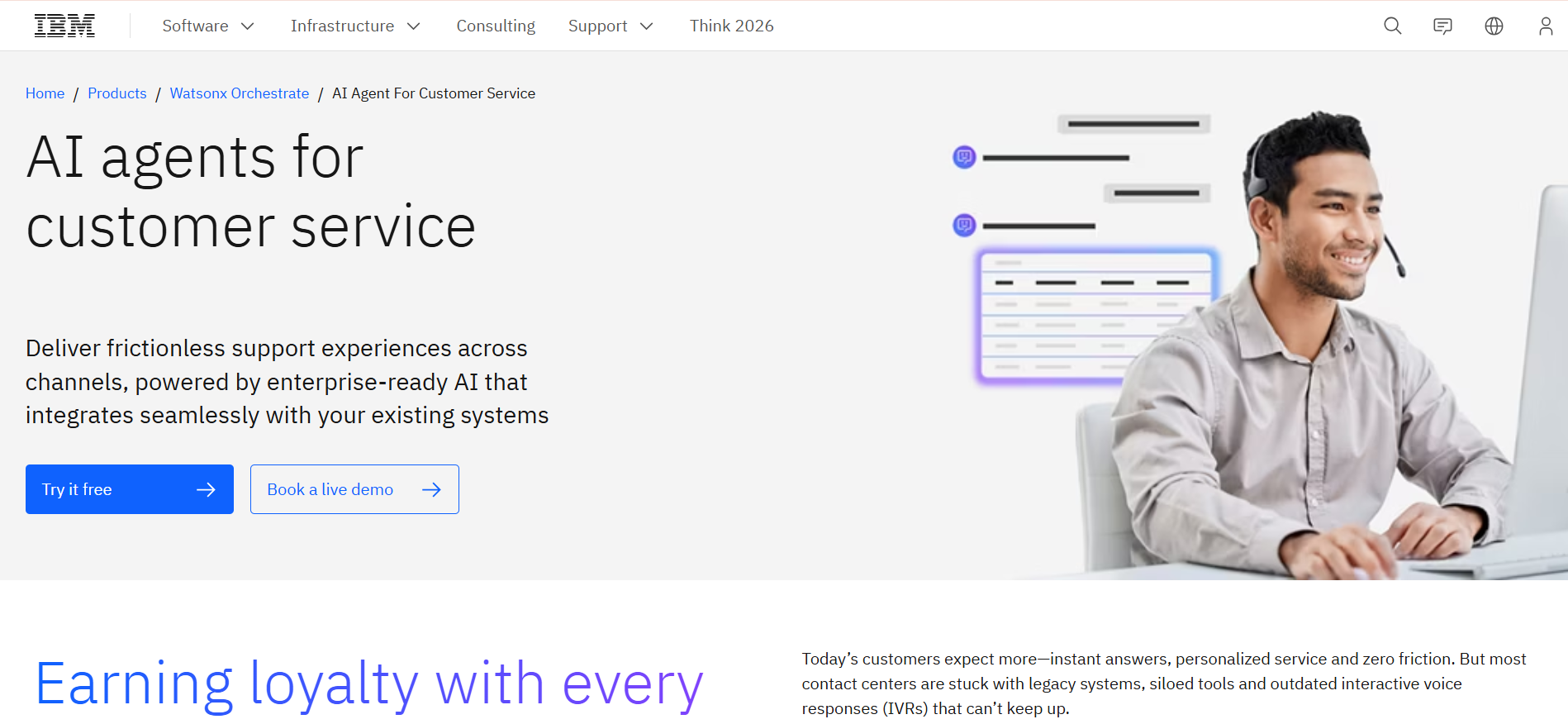
IBM Watsonx is built for organizations that can’t compromise on governance — finance, healthcare, government, and regulated sectors where every AI decision must be explainable and compliant.
Why people love it: Unlike platforms chasing flashy features, Watsonx focuses on trust. It tracks model lineage, detects bias, maintains audit trails, and ensures compliance with GDPR, HIPAA, and emerging AI regulations.
Top features:
- Watsonx.ai for model training and deployment
- Watsonx.data for unified data fabric
- Watsonx.governance for compliance automation
- Pre-built industry models
- Hybrid and on-premises deployment
Pricing: Trial available. Custom enterprise pricing after.
Best for: Banks, hospitals, insurance firms, government agencies, and any business where compliance beats speed.
Honest downside: Expensive. Not built for startups or small teams. Interface feels corporate compared to modern alternatives.
5. Databricks — The Unified Data + AI Platform
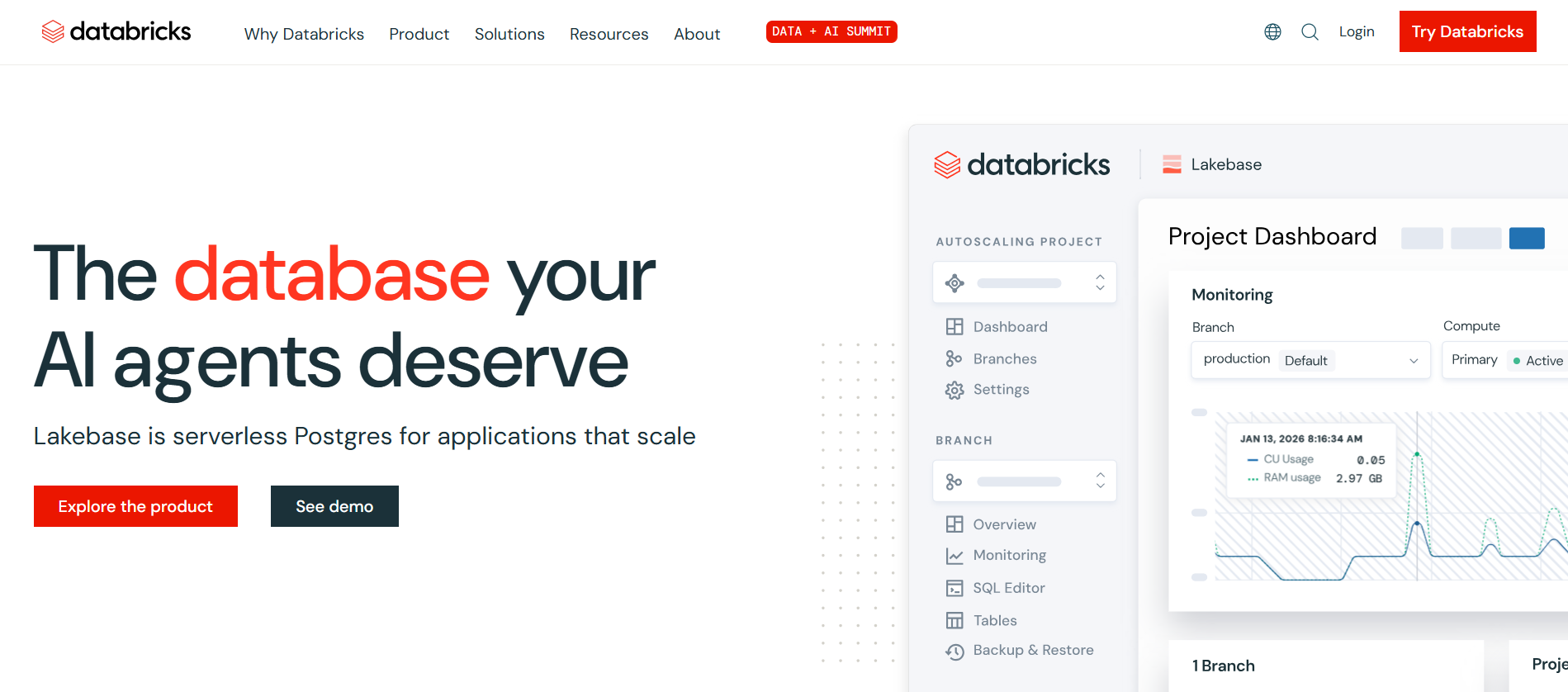
Databricks sits at the intersection of data engineering and AI. Built on Apache Spark, it handles everything from ETL pipelines to training large language models on petabyte-scale datasets.
Why people love it: One platform handles data engineering, analytics, and AI. Databricks Assistant writes code and debugs Spark errors inline. Mosaic AI adds generative AI capabilities directly on your data.
Top features:
- Unified data + AI platform
- Databricks Assistant for AI-powered coding
- Mosaic AI for generative AI workflows
- MLflow for experiment tracking
- Delta Lake for reliable data pipelines
Pricing: 14-day free trial. Usage-based pricing after.
Best for: Enterprise data teams, ML engineers working with big data, and organizations unifying data + AI workflows.
Honest downside: Steep learning curve. Overkill for small projects. Cloud costs can escalate without governance.
6. DigitalOcean GradientAI — The Developer-Friendly Cloud
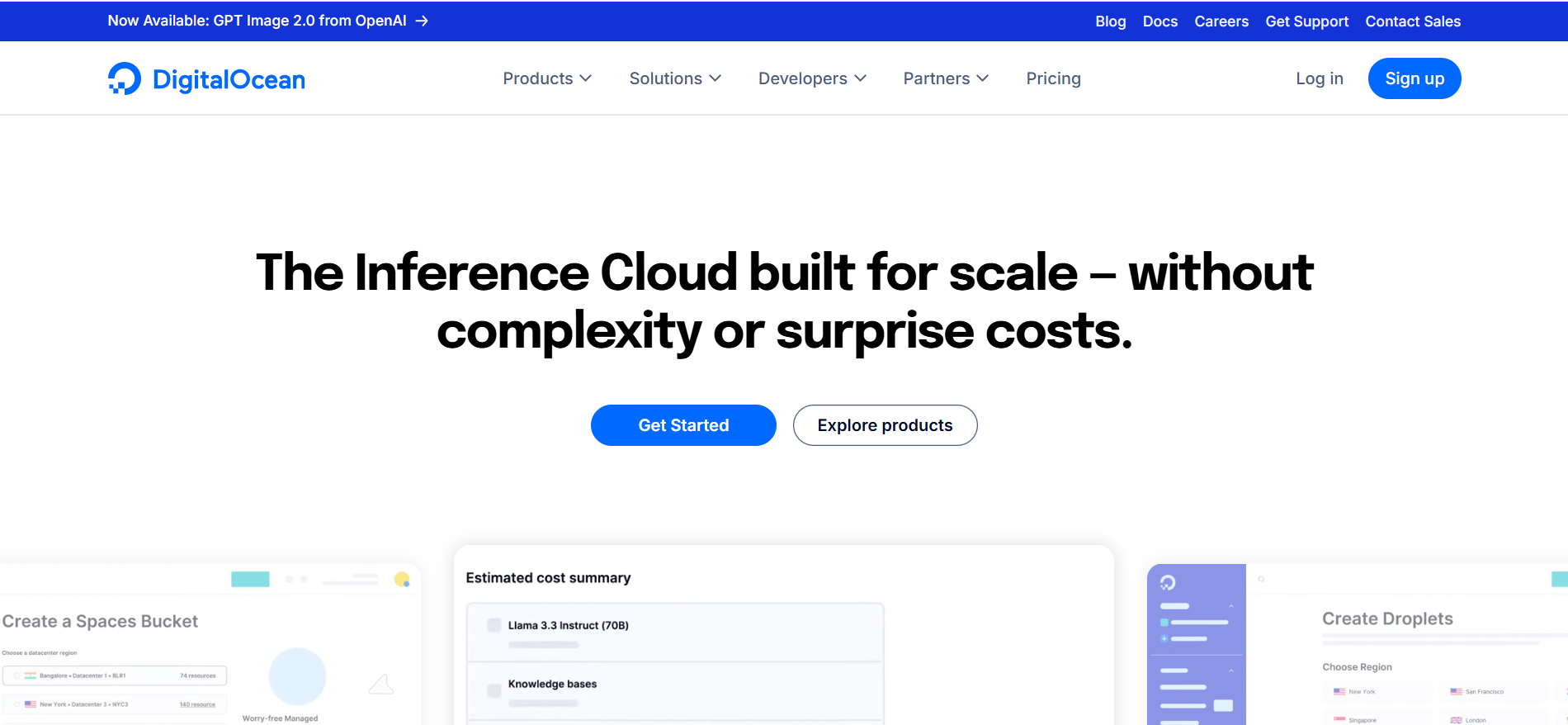
DigitalOcean has always been the cloud for developers who hate AWS’s complexity. GradientAI brings that same simplicity to AI workloads — transparent pricing, clean interfaces, zero enterprise overhead.
Why people love it: Predictable pricing. You know exactly what an H100 GPU costs per hour. No hidden fees, no complicated billing. For indie developers and startups, it’s the cleanest entry into GPU cloud computing with AI.
Top features:
- NVIDIA H100, H200, A100 GPU access
- Flat per-hour GPU pricing
- Managed Kubernetes with GPU support
- Pre-configured AI droplets
- Global data centers in 15+ regions
Pricing: $200 free credits for new users. GPUs from $1.42/hr (A100) to $3.14/hr (H200).
Best for: Indie developers, startups, and AI engineers wanting GPU compute without enterprise cloud complexity.
Honest downside: Smaller ecosystem than AWS/Azure/GCP. Missing some advanced enterprise features.
7. Hugging Face — The Open-Source Model Hub
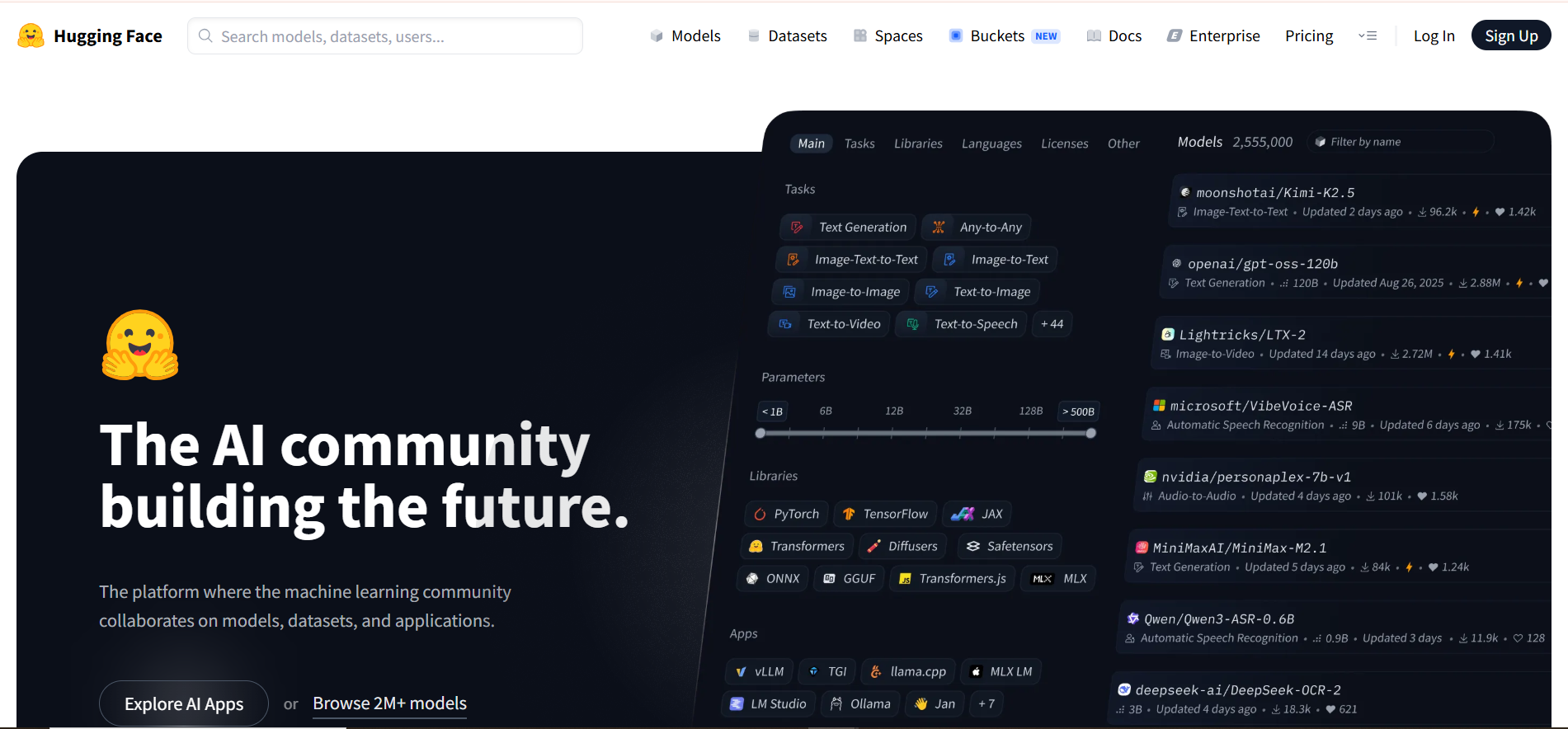
Hugging Face is the GitHub of machine learning. It hosts over 1 million open-source models, datasets, and AI applications — most free to use.
Why people love it: You can deploy state-of-the-art models to production with a few lines of code. Inference Endpoints host models on optimized infrastructure without managing servers. It’s the backbone of open-source AI in 2026.
Top features:
- 1M+ pre-trained open-source models
- Inference Endpoints for easy deployment
- Spaces for hosting AI demos
- Transformers library (industry standard)
- AutoTrain for no-code fine-tuning
Pricing: Free for basic use. Pro at $9/month. Enterprise custom pricing.
Best for: ML engineers, NLP practitioners, and teams building with open-source AI models.
Honest downside: Quality of free models varies. Not a full cloud infrastructure platform — pair with compute providers.
8. Oracle Cloud AI — The Database-Native AI Platform
Oracle Cloud Infrastructure (OCI) often gets overlooked, but its AI services are genuinely competitive — especially for enterprise database workloads and hybrid deployments.
Why people love it: If you run Oracle databases, OCI’s AI services integrate deeply. Their generative AI service offers Cohere and Meta Llama models with enterprise controls, and their compute pricing often undercuts AWS for similar workloads.
Top features:
- Oracle Generative AI Service (Cohere + Llama)
- Oracle AI Vector Search in databases
- AI Document Understanding
- Autonomous Database with AI
- Competitive GPU pricing
Pricing: Free tier with always-free resources. Pay-as-you-go after.
Best for: Enterprises with Oracle infrastructure, hybrid cloud deployments, and database-heavy AI workloads.
Honest downside: Smaller market share means smaller community and ecosystem. Less third-party tooling.
9. Lambda Labs — The GPU Specialist
Lambda Labs focuses on one thing — giving AI researchers and ML engineers raw GPU compute at the best prices. No frills, no unnecessary services, just high-performance GPU cloud infrastructure.
Why people love it: Dedicated GPU instances at competitive hourly rates. 1-Click Clusters spin up multi-GPU setups instantly for training large models. For teams focused purely on ML research, it’s pure signal.
Top features:
- NVIDIA H100, A100, GH200 GPUs
- 1-Click Clusters for distributed training
- Pre-configured ML images
- SSH-based developer access
- Simple hourly pricing
Pricing: H100 from $2.49/hr, A100 from $1.29/hr. No free tier.
Best for: ML researchers, AI startups training models, and teams needing raw GPU power without cloud overhead.
Honest downside: Limited to GPU compute — no managed AI services or data tools. You’ll need additional tools for a full stack.
10. CloudHealth by VMware — The AI-Powered Cost Optimizer
CloudHealth isn’t a cloud provider — it’s an AI layer that sits on top of AWS, Azure, GCP, and other clouds to optimize your spending. In 2026, as enterprise cloud bills hit record highs, it’s become essential infrastructure.
Why people love it: It analyzes your cloud usage across providers and uses AI to recommend rightsizing, reserved instances, and automation opportunities. Enterprises routinely save 20-40% on cloud costs after deploying it.
Top features:
- Multi-cloud cost visibility (AWS, Azure, GCP)
- AI-powered rightsizing recommendations
- Automated policy enforcement
- Budget alerts and forecasting
- Governance at scale
Pricing: Custom enterprise pricing. Demo available.
Best for: Enterprises managing multi-cloud deployments, finance teams tracking cloud spend, and organizations with rapidly growing cloud bills.
Honest downside: Not designed for small teams or startups. Enterprise pricing and complexity make it overkill below a certain scale.
Which AI Cloud Tool Should You Actually Choose?
No single platform does everything well. The best teams combine tools based on their needs.
Here’s how to think about it based on your situation:
If you’re already on AWS: AWS SageMaker + Hugging Face for open-source models. Everything integrates natively with AWS AI services.
If you’re on Google Cloud: Google Vertex AI is your default. Use BigQuery for data and Vertex AI for ML — the integration is unbeatable.
If you’re a Microsoft shop: Azure AI + Azure OpenAI Service. Enterprise-grade GPT access with existing Microsoft security controls.
If you’re in a regulated industry (finance/healthcare): IBM Watsonx or Azure AI. Both prioritize governance, audit trails, and compliance.
If you’re a startup or indie developer: DigitalOcean GradientAI or Lambda Labs. Transparent pricing, fast onboarding, zero enterprise complexity.
If you’re a researcher training large models: Lambda Labs for raw GPU power + Hugging Face for open-source models.
If your cloud bill is out of control: CloudHealth or similar FinOps tools. AI-driven cost optimization often pays for itself within months.
If you want unified data + AI: Databricks. Costs more, but saves time across the entire data + ML workflow.
How AI Is Changing Cloud Automation in 2026
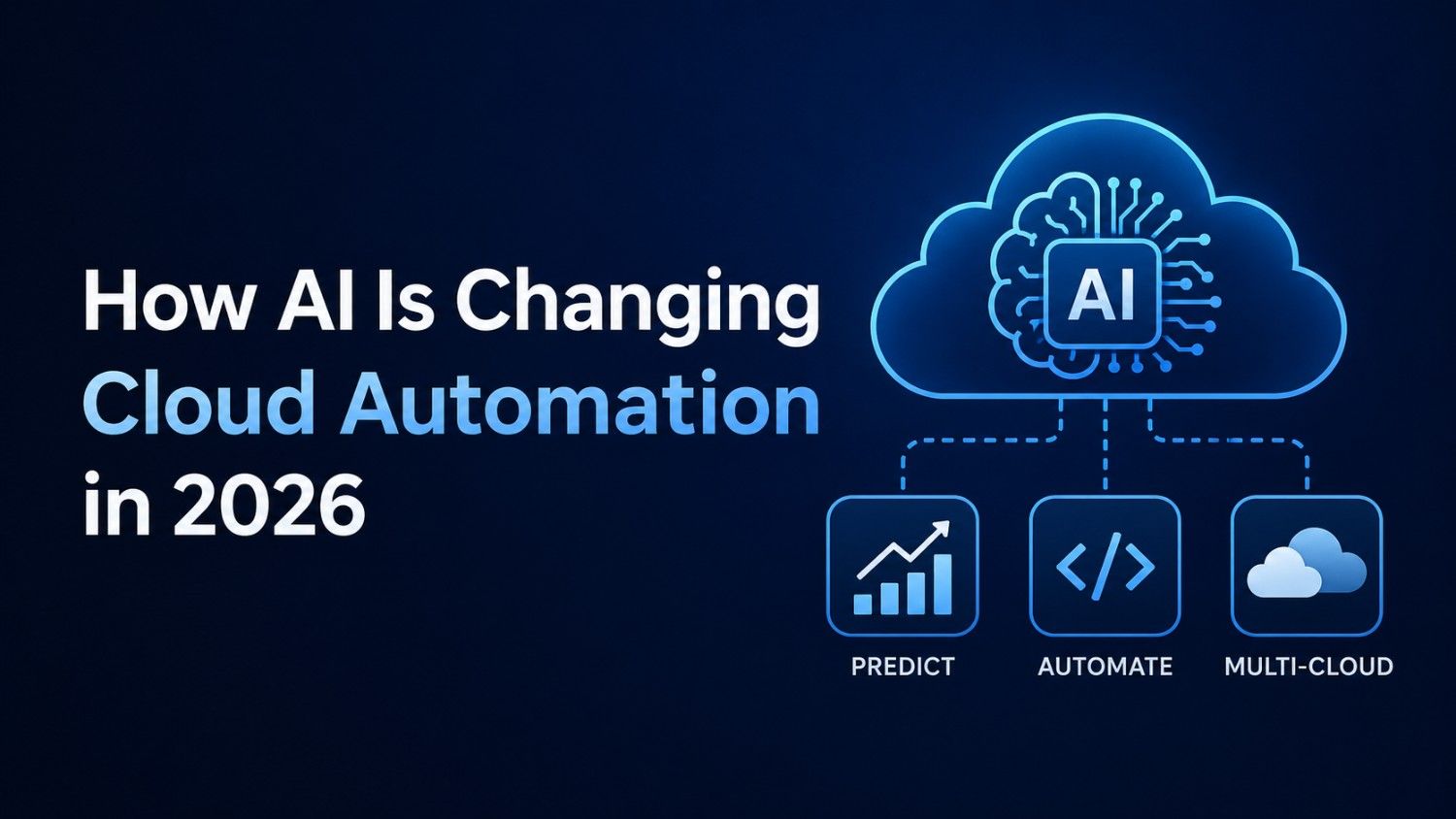
Cloud automation has evolved dramatically. Three shifts are reshaping how teams use AI cloud platforms today:
1. Predictive scaling replaces manual rules. Instead of setting static scaling thresholds, modern AI cloud services analyze traffic patterns and predict capacity needs hours in advance.
2. AI writes infrastructure code. Tools like AWS CodeWhisperer, Azure Copilot, and Google Duet AI now generate Terraform, CloudFormation, and Kubernetes manifests from plain-English descriptions.
3. Multi-cloud is the new normal. According to Flexera’s 2026 State of the Cloud Report, 89% of enterprises now use two or more cloud providers, making cross-cloud AI tools essential for governance and cost control.
These shifts mean the definition of “cloud expertise” itself is changing. Understanding ai and cloud computing together is now more valuable than deep knowledge of any single provider.
Looking for the best AI tools for your cloud projects?
With so many AI tools out there for cloud computing, it can be hard to pick the right one. Don’t simply pick the one with the most features; pick the one that meets your current cloud environment and project needs. If you already have an organization using AWS, you can easily plug in SageMaker.
If you work in a Microsoft environment, you might get more benefits from Azure AI, while Google Vertex AI is a great alternative for data-driven machine learning projects. Simple pricing and fast deployment are often important factors for startups and independent developers, so platforms like DigitalOcean GradientAI or Lambda Labs are attractive.
Evaluate these five factors: compatibility with your cloud provider, pricing model, scalability, security and compliance features, and documentation or community support, and make your pick. A simple-to-learn, workflow-integrated tool is more valuable than one loaded with sophisticated features you’ll never use. Today, selecting the right platform also enables easier scaling of your AI capabilities as your cloud infrastructure grows.
Final Thoughts
Cloud computing with AI isn’t optional anymore — it’s how modern infrastructure runs. Every major provider is racing to embed AI into their services, and the gap between “cloud with AI” and “just cloud” is widening fast.
But tools alone won’t transform your organization. SageMaker won’t fix bad data. Vertex AI won’t write a smart ML strategy. Azure OpenAI won’t replace engineering judgment. What these AI cloud platforms actually do is remove friction — giving skilled teams the ability to move faster and scale further than ever before.
Don’t try to evaluate all 10. Pick the one that matches your existing cloud setup and invest deeply in it. Add specialized tools as real needs emerge—a GPU-heavy workload might need Lambda Labs, a runaway bill might need CloudHealth, and an open-source project might pull in Hugging Face.
And remember — in the world of AI tools for cloud computing, the smartest teams aren’t the ones using the most services. They’re the ones who understand which problems require AI and which don’t. That clarity separates good cloud architecture from expensive chaos.
Pick your primary cloud. Pick one AI service inside it. Build something real this month. That’s how you actually learn AI cloud platforms in 2026.