

Banks and financial firms are no longer just places for spreadsheets and paperwork. Today, they run on cloud technology. Everything from real-time fraud detection to customer apps to trading platforms is powered by the cloud. And the people who build, manage, and secure this infrastructure? They are among the best-paid professionals in the entire tech world.
If you have ever thought about a career that sits right at the crossroads of technology and finance, this is it. Let us break down exactly what these jobs look like, what they pay, and how you can get your foot in the door.
Why Banks Are Hiring Cloud Professionals So Fast
Financial institutions used to run everything on their own hardware in their own buildings. Slowly but surely, that model has changed. Cloud platforms like AWS, Microsoft Azure, and Google Cloud now handle massive amounts of sensitive financial data—and banks need people who know how to run that infrastructure safely and efficiently.
The numbers tell the story. If you want to know where cloud professionals get paid the most, finance and insurance is your answer. The average sits between $122,000 and $128,000 a year—and that is before you factor in bonuses. Banks and investment firms rely on secure, scalable cloud infrastructure for their core operations, which is exactly why they pay a premium for skilled people.
This is not a small trend. Almost all financial services companies now use cloud computing in some form, which means cloud security expertise is no longer optional for these organizations—it is essential.
The Cloud Jobs That Finance Actually Hires For
Not all cloud jobs are the same. Here are the roles that banking and finance companies actively look for, along with honest salary data.
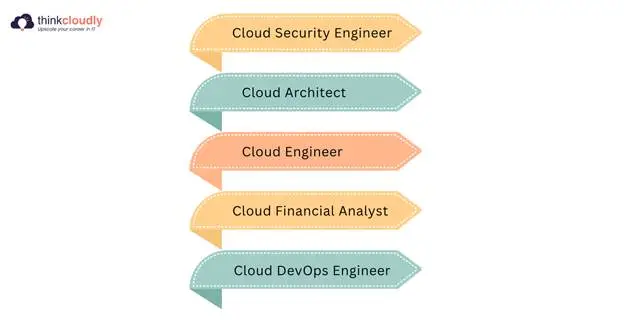
1. Cloud Security Engineer
This is the crown jewel of cloud jobs in finance. Banks are sitting on mountains of sensitive data. They have regulators breathing down their necks and hackers looking for any gap they can find. A person who genuinely knows how to build and run a secure cloud setup? Every major bank is looking for one.
In the US, this role pays between $145,000 and $200,000 a year. That is not a typo. In the UK, London-based security architects who have five or more years of real experience earn between £105,000 and £130,000—comfortably above what most tech roles in the country offer.
One serious breach at a bank does not just cost money. It kills customer trust overnight, triggers regulatory fines, and lands executives in front of a regulatory hearing. A cloud security engineer who can stop that from happening is worth every penny of that salary.
2. Cloud Architect
Before a single server gets configured, someone has to draw the whole picture. That is the cloud architect. They decide what the cloud environment looks like, which tools the business runs on, how data travels between systems, and what happens when something breaks.
Finance pays cloud architects around $115,000 on average—noticeably more than the $102,500 national average across all sectors. Work your way to a senior title or land in a major financial hub like New York or London, and you are looking at well above that.
3. Cloud Engineer
Cloud engineers keep the lights on. They build the systems, fix what breaks, and make sure nothing goes down at 2am on a Friday. In the UK, financial employers pay them between £55,000 and £77,250—and if you know Azure specifically, you are landing closer to that upper number.
Starting in the US, you are looking at $70,000 to $90,000. Stay in the field, pick up experience across multiple cloud platforms, and senior roles push past $185,000. The jump between junior and senior is genuinely one of the biggest in tech.
4. Cloud Financial Analyst (FinOps)
FinOps barely existed as a job title a few years back. Now, banks cannot get enough of it. When you are spending millions every month on cloud infrastructure, someone has to figure out where the money is actually going—and stop the waste before it compounds.
The average pay for a Cloud Financial Analyst in the US is around $88,000. New York pushes that closer to $96,000. Get a FinOps certification and genuinely understand how cloud billing works alongside financial planning, and $95,000 to $130,000 is achievable—sometimes faster than people expect.
5. Cloud DevOps Engineer
DevOps engineers in finance work on automating how software gets built and deployed on cloud platforms. They are the reason a banking app update can go live smoothly without taking down the system.
This role blends cloud knowledge with software development practices. Salaries vary widely depending on the bank and location, but the market is strong, and demand is growing steadily year after year.
Salary Review
|
Role |
US Salary Range |
UK Salary Range |
|
Cloud Security Engineer |
$145,000 – $200,000 |
£80,000 – £130,000 |
|
Cloud Architect (Finance) |
$115,000 – $150,000 |
£90,000 – £120,000 |
|
Cloud Engineer (Senior) |
$120,000 – $185,000+ |
£55,000 – £77,250 |
|
Cloud Financial Analyst |
$70,000 – $117,500 |
£50,000 – £75,000 |
|
Cloud DevOps Engineer |
$110,000 – $160,000 |
£60,000 – £95,000 |
How to Actually Break Into This Field
Here is where most people get stuck. The jobs look great on paper, but getting hired in a competitive market like banking feels overwhelming. The good news? There is a clear path, and you do not need a computer science degree to start.
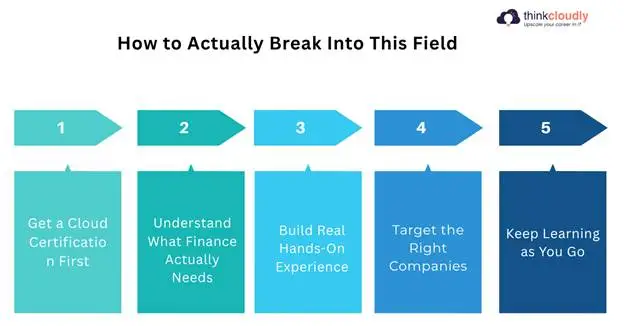
Step 1: Get a Cloud Certification First
Certifications are the single fastest way to prove your skills to a hiring manager. Banks look for people who have verified knowledge, not just claims of interest. The most respected ones to start with are:
-
AWS Certified Cloud Practitioner—a solid entry-level credential that opens doors
-
Microsoft Azure Fundamentals (AZ-900)—especially useful since financial companies frequently use Azure
-
Google Associate Cloud Engineer—good for those targeting fintech firms
When it comes to which cloud platform banks actually run on, AWS comes up more than anything else. Getting certified on AWS is not just smart—in this industry, it is almost expected.
Once you have the basics, move toward more advanced certifications. For security-focused roles, the AWS Security Specialty certification is worth it. People holding this certification in banking are pulling in around $138,000 a year on average—a number that reflects just how hard this skill set is to find.
Step 2: Understand What Finance Actually Needs
A cloud role at a bank and a cloud role at a startup are two completely different jobs. The bank version comes with compliance requirements, audit trails, and zero tolerance for downtime. If you already come from a finance background, the FinOps Certified Practitioner certification makes a lot of sense. It speaks both languages—cloud infrastructure and financial planning—which is exactly the gap most banks are trying to close.
Step 3: Build Real Hands-On Experience
Certifications get you the interview. Hands-on experience gets you the job.
Set up a free AWS or Azure account and build real things. Host a database. Set up a monitoring tool. Configure access permissions. Even small personal projects show hiring managers that you have done the work, not just read about it.
If you have a background in traditional banking or finance, that is actually an advantage. A bank does not just need someone who can configure cloud environments. The best cloud hires at banks think about risk, cost, and regulation first—the technology is just how they solve for it. A person who knows how a trading desk works AND can manage cloud infrastructure is far more valuable than someone who only knows one side.
Step 4: Target the Right Companies
A global bank like Deutsche Bank or Wells Fargo runs a structured hiring process with defined job levels and months-long timelines. A fintech firm hiring for the same skillset might move in two weeks and care far more about what you have shipped than how many years you have been doing it. Both are worth targeting—just for different reasons depending on where you are in your career.
Skip the generic search. Go to company career pages directly and search “cloud infrastructure,” “FinOps analyst,” or “cloud platform engineer.” You will cut through the noise and find roles that actually match your level instead of wading through hundreds of irrelevant postings.
Step 5: Keep Learning as You Go
AWS drops new services. Azure updates its compliance tools. Google Cloud shifts its pricing. The platforms shift, the tools change, and what worked two years ago might already be outdated. Banks cannot afford to hire someone who has stopped learning. The good news is you do not have to quit your job to stay current. Certification programs and practice labs fit around a full working week. Plenty of people have picked up their first AWS certification while working full-time and walked into a new role with a 30% pay increase within twelve months.
What Skills Make You Stand Out
Certifications prove you studied. What actually gets you hired is a combination that most candidates only have half of:
On the technical side—real hands-on experience with at least one major cloud platform, a working understanding of security fundamentals, and practical knowledge of tools like Terraform and Kubernetes. Not just awareness of them. Actual use.
On the finance side, you do not need to be a qualified accountant. The candidates who stand out are the ones who can sit in a technical meeting and then walk into a boardroom and explain the same thing without losing anyone. That crossover skill is genuinely hard to find.
And then there is the thing nobody talks about enough—being able to sit with a security team in the morning and a finance director in the afternoon and make sense to both of them. That skill is genuinely rare in this space. Banks will pay well for it.
Most large banks are not on a single cloud platform anymore. They run across AWS, Azure, and Google Cloud simultaneously. Engineers who can only handle one of them are useful. Engineers who can handle all three and manage the complexity between them are the ones getting the senior titles and the bigger offers.
A Note for Career Changers
If you are currently working in finance, accounting, or banking operations, you are closer to these roles than you think. You already understand the business logic. You know the regulatory pressure. You understand why data accuracy matters.
The technical side can be learned. Structured online programs in cloud computing are accessible, time-flexible, and increasingly respected by employers. Former teachers, healthcare workers, and ex-military—people from all sorts of backgrounds—have made this switch work. The idea that cloud careers are only for people who studied computer science is outdated. What matters is whether you are willing to put in the learning time. The global cloud market was worth around $156 billion in 2020. By 2025, it had reached nearly $913 billion. That is not a gradual climb—that is an industry in full sprint, and the hiring demand inside banking reflects every bit of it. That kind of growth means the demand for cloud professionals in finance is not slowing down anytime soon. The opportunity is very much still open.
Final Thoughts
Cloud jobs in banking and finance offer some of the best pay in the tech world, a stable career path, and growing demand year after year. The combination of technical skills and financial industry knowledge is rare, which is exactly why it is rewarded so well.
You do not need a perfect background to get started. You need a plan, the right certifications, some hands-on practice, and the willingness to keep learning. The door is open. The question is whether you are ready to walk through it.
Sources & Further Reading
The data and statistics in this article are drawn from the following sources:
- ZipRecruiter — Cloud Financial Analyst Salary, April 2026—Average salary for a Cloud Financial Analyst in the US is around $88,000 per year, with top earners making close to $117,000.
- ZipRecruiter — Cloud Financial Analyst Salary in New York, November 2025 — In major cities like New York, the average climbs to around $96,000.
- CCI Training — Cloud Computing Salaries: A 2026 Guide, February 2026 — The finance and insurance sector pays cloud professionals between $122,000 and $128,000 per year on average; banks and investment firms pay a premium for cloud talent due to their reliance on secure, scalable infrastructure.
- Shoolini Online — Cloud Engineer Salary Guide 2026—UK cloud engineer salary range £55,000–£77,250; cloud security engineer earning $145,000–$200,000 per year in the US; multi-cloud salary premium data.
- ZipRecruiter — Cloud Architect Salary Data, 2026 — Cloud architects working in the finance industry earn around $115,000 per year on average.
- NextLevelJobs EU — Cloud Security Architect Salaries in Europe, March 2026 — Senior security architects in London with five or more years of experience can earn between £105,000 and £130,000 annually.
- Redbud Cyber — Top Cybersecurity Certifications for Banking Professionals 2026, January 2026 — AWS Security certified professionals earn approximately $138,053 on average; 98% of financial services firms use cloud computing.
- Glassdoor — Cloud Computing Professional Salary, February 2026—Financial companies frequently use IBM or AWS platforms; median total pay of $140,000 for cloud professionals in the US.
- TechTarget — Top 13 Cloud Certifications for 2025—FinOps Certified Practitioner details and its relevance for financial professionals managing cloud costs.
- Research.com — How to Get Into Cloud Computing, January 2026—Within a year of earning a first AWS certification, many professionals report landing roles with salary increases of 30% or more; global cloud market growth figures from $156 billion in 2020 to nearly $913 billion in 2025.
- CloudDevOpsJobs — How to Transition to a Cloud Computing Career in 2025, December 2025—Entry-level cloud professionals earn $70,000–$90,000, with senior roles exceeding $150,000; career changers from diverse non-tech backgrounds successfully enter the field.
- CertMage — In-Demand Cloud and IT Certifications 2025 — FinOps certified professionals earning $95,000–$130,000 annually depending on experience and region.
All salary data referenced in this article reflects figures reported for the US and UK markets as of 2025–2026. Actual compensation may vary by employer, location, experience level, and specific certifications held.