

A few years ago, if you said you wanted to be an ethical hacker, most people pictured you working at a software company or a cybersecurity firm. That picture has completely changed.
Today, the hospitals that store your health records, the banks that hold your savings, the retailers you shop from, and the government agencies that manage public services — all of them are actively hiring people who know how to find security weaknesses before criminals do. Ethical hacking is no longer a niche tech job. It has become something every industry needs, and the demand is growing faster than the supply of trained people.
If you are exploring a career in cybersecurity, this is one of the most important things to understand right now. The opportunity is not just inside Silicon Valley. It is everywhere.
What Ethical Hacking Actually Means
Before getting into why the demand is growing, it helps to be clear on what ethical hacking actually is—because the term still confuses people.
An ethical hacker is someone hired by an organization to try to break into their own systems. The goal is to find weaknesses before a real attacker does. Sometimes this is called penetration testing, or “pen testing.” Sometimes it is called red teaming, vulnerability assessment, or security auditing. The job titles vary, but the core idea is the same: you think like a criminal, act like one within agreed boundaries, and report everything you find so it can be fixed.
The “ethical” part matters because everything is done with permission, within a defined scope, and to make the organization safer, not causing harm.
Why Every Industry Now Has a Cybersecurity Problem
The reason ethical hacking jobs are appearing everywhere is simple: every industry has moved online, and with that move comes risk.
A decade ago, a small regional hospital might have kept patient records in filing cabinets. Today, that same hospital runs on networked systems—electronic health records, connected medical devices, online appointment booking, and digital billing. Every one of those systems is a potential entry point for an attacker.
The same shift has happened in banking, retail, education, logistics, energy, and government. Everything is connected. Everything is digital. And attackers have noticed.
Cybercrime is now one of the most financially damaging problems businesses face globally. A single data breach costs companies millions of dollars on average — and that is before accounting for legal penalties, reputational damage, and customer loss. Ransomware attacks have shut down hospital networks, disrupted city government operations, and forced major retailers to take systems offline for days.
Organizations cannot afford to wait until something goes wrong. They need people who will find the problems first.
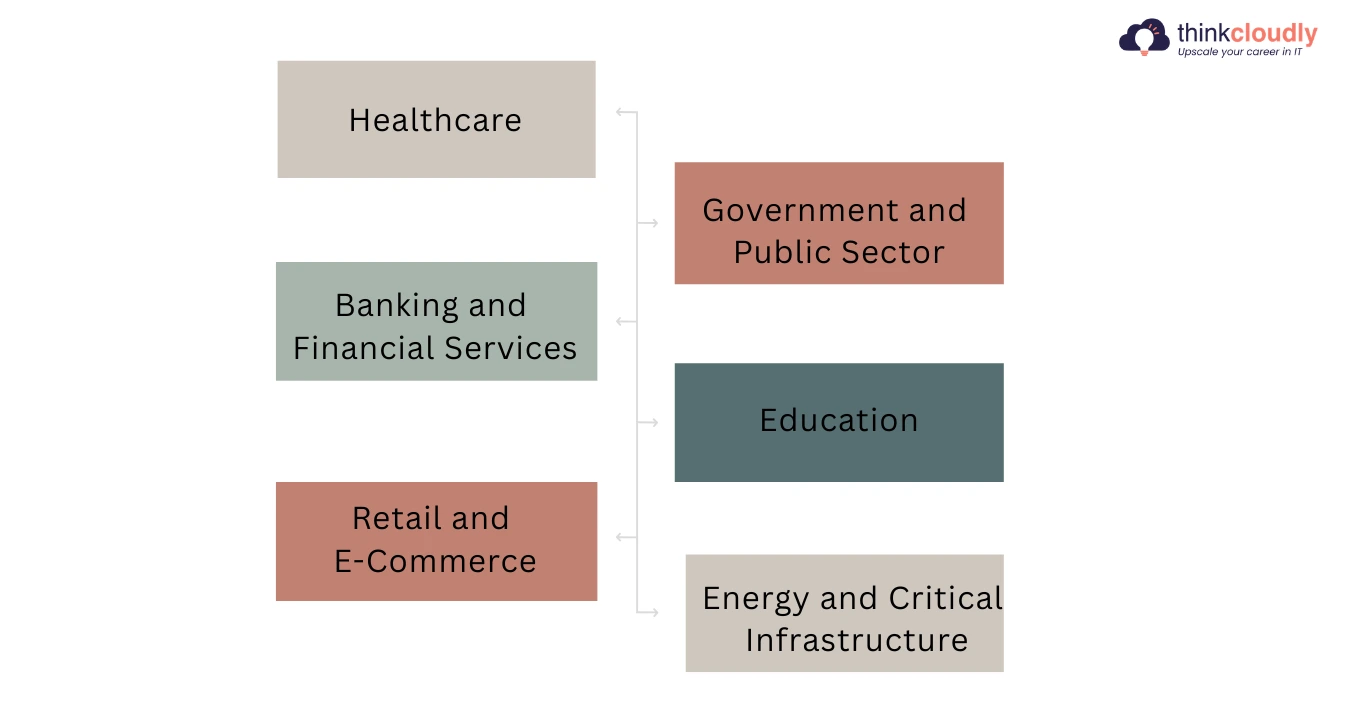
The Industries Hiring Ethical Hackers Right Now
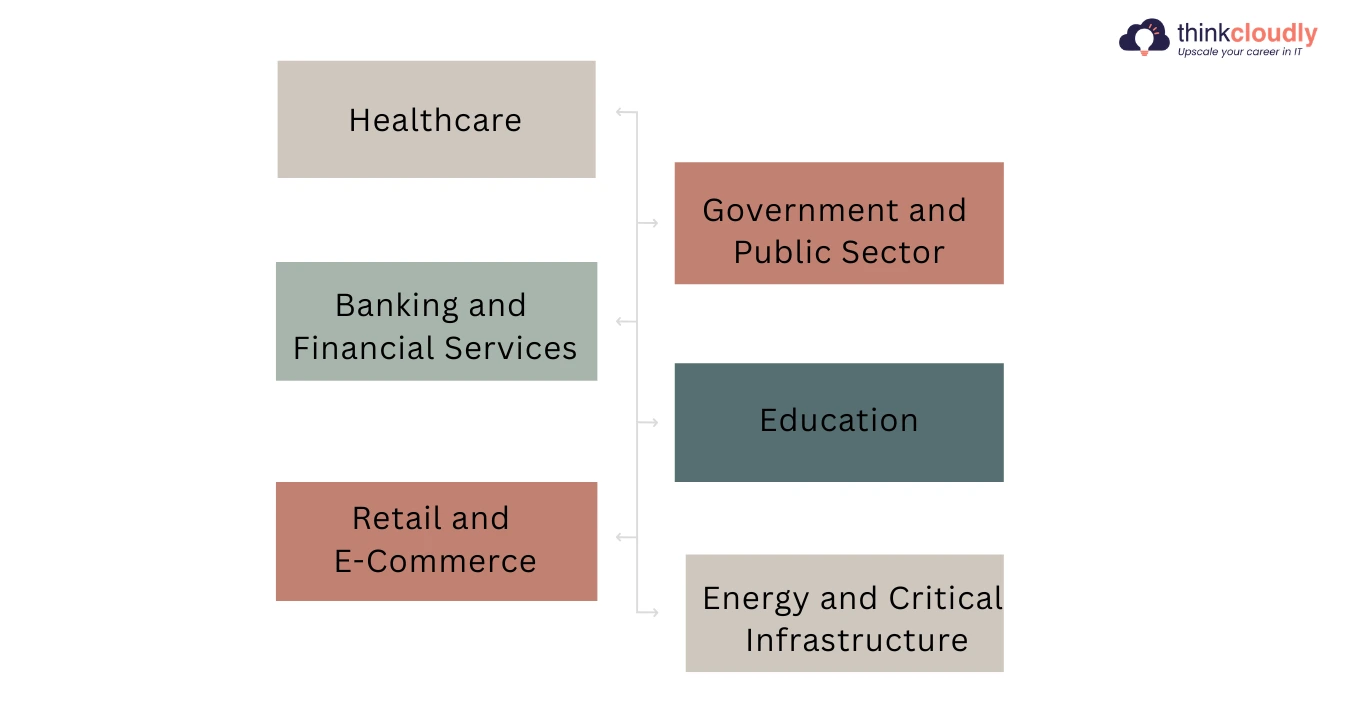
Healthcare
Healthcare has become one of the top targets for cybercriminals. Patient records contain names, addresses, insurance details, and social security numbers — exactly the kind of data that sells on the dark web. Hospitals and health networks are now investing heavily in security teams, and ethical hackers are a central part of that.
Medical device security is also becoming a significant area. Pacemakers, insulin pumps, and hospital monitoring systems that connect to networks all need to be tested for vulnerabilities. This is a growing specialization with very few trained professionals in it.
Banking and Financial Services
Banks have always taken security seriously, but the threat level has increased sharply. Online banking fraud, mobile payment vulnerabilities, and attacks on trading platforms mean financial institutions need continuous security testing — not just annual audits.
Regulatory requirements in most countries now require financial firms to demonstrate that their systems have been tested against real-world attack scenarios. Ethical hackers fill that role directly.
Retail and E-Commerce
Every time a customer enters their card details on a website, that data needs to be protected. Retail businesses — especially those that have scaled up their online operations — are frequent targets for payment data theft.
Large retail chains now run internal red teams. Smaller businesses hire external penetration testers. Either way, the work requires trained ethical hackers who understand web application security, API testing, and point-of-sale system vulnerabilities.
Government and Public Sector
National governments, local councils, defense agencies, and public utilities all handle sensitive data and critical infrastructure. Attacks on government systems can disrupt public services, compromise national security, or expose citizen data.
Government agencies in the US, UK, Australia, Canada, and across Europe are actively building out their cybersecurity teams — and ethical hackers are high on the hiring list. Many government roles also offer strong job stability and long-term career progression.
Education
Universities and schools store huge amounts of student data — personal details, financial aid information, and research data. They also tend to have older, less secure systems because technology budgets in education are often limited.
Higher education institutions are increasingly bringing in ethical hackers to audit their networks, test their remote learning platforms, and assess the security of their student information systems.
Energy and Critical Infrastructure
Power grids, water treatment facilities, and telecommunications networks are high-value targets. A successful attack on critical infrastructure can affect thousands or millions of people. Governments and private operators in these sectors have significantly increased their investment in offensive security testing over the past few years.
Ethical Hacking Roles Across Industries
|
Industry |
Common Role |
Key Focus Area |
|
Healthcare |
Security Analyst / Pen Tester |
Medical devices, patient data systems |
|
Banking & Finance |
Red Team Analyst |
Fraud systems, mobile banking, APIs |
|
Retail & E-Commerce |
Application Security Tester |
Payment systems, web apps |
|
Government |
Cybersecurity Specialist |
Infrastructure, citizen data, networks |
|
Education |
Security Auditor |
Student data, remote learning platforms |
|
Energy & Utilities |
ICS/OT Security Tester |
Industrial control systems, SCADA |
What This Means for Your Career
If you are thinking about cybersecurity as a career path, the non-tech expansion of ethical hacking changes your options significantly.
You are no longer competing for a small number of jobs at big tech companies or specialized security firms. You are looking at an open market across dozens of industries, each of which needs trained people and is struggling to find them.
The cybersecurity skills gap is real and well-documented. There are significantly more open cybersecurity positions globally than there are qualified people to fill them. That gap is not closing quickly, which means the hiring conditions are favorable for people entering the field right now.
Salaries reflect this, too. Ethical hackers and penetration testers consistently rank among the higher-paid roles in IT, and that holds across industries — not just in tech. Government roles often come with additional benefits. Financial services pay competitively. Healthcare institutions are offering strong packages to attract talent they struggle to find.
The Skills That Get You Hired
Ethical hacking is a practical skill set. Employers want people who can actually do the work, not just talk about it. The skills that come up most consistently across job descriptions include:
Network security
Understanding how traffic flows, how to intercept it, and how to spot weaknesses in how systems communicate.
Web application testing
Knowing how to find and exploit common vulnerabilities in websites and APIs, following frameworks like OWASP.
Operating systems knowledge
Being comfortable on Linux and Windows, since both appear in real-world environments.
Scripting and automation
Being able to write simple scripts in Python or Bash to automate repetitive testing tasks.
Reporting
This one surprises some beginners, but the ability to write a clear, structured report that explains what you found, how serious it is, and how to fix it is a core job skill. Non-technical managers and board members need to understand your findings, too.
Certifications help signal these skills to employers. The CEH (Certified Ethical Hacker), CompTIA Security+, CompTIA PenTest+, and OSCP (Offensive Security Certified Professional) are all recognized across industries. The OSCP, in particular, is highly respected because it requires you to actually compromise systems in a controlled lab environment — you cannot pass it by memorizing answers.
Why 2026 Is a Good Time to Get In
Several things are happening right now that make ethical hacking a particularly strong career entry point.
Regulations are tightening. In the US, Europe, and Australia, regulators are requiring organizations to demonstrate active security testing as part of compliance. That requirement creates consistent, ongoing demand for ethical hackers — not just one-time hires.
AI is changing the threat landscape. Attackers are using AI to find vulnerabilities and write malware faster than ever before. Defenders — including ethical hackers — are also using AI tools to work more efficiently. But this is accelerating the need for skilled humans who understand what they are looking at and can make judgment calls that automated tools cannot.
Remote work has permanently changed the attack surface. When employees connect from home, cafes, and personal devices, the number of potential entry points into a corporate network grows dramatically. Organizations need ongoing testing to keep up with that expanding surface.
For anyone considering a career shift or starting in tech, these conditions add up to a market that is actively looking for trained people — not just in tech companies, but across the full economy.
How to Start Learning Ethical Hacking
The learning path is more accessible than it used to be. You do not need a computer science degree to get started. Many working penetration testers came from non-technical backgrounds and built their skills through structured training programs and hands-on practice.
The key is finding a program that teaches practical skills — not just theory. You need to actually break into systems in a legal lab environment, practice writing reports, and understand the full lifecycle of a penetration test from scoping through reporting.
Look for programs that include certifications in their curriculum and that have mentors or instructors with real industry experience. A good training program will help you build a portfolio of labs and projects you can show to employers — something that matters just as much as the certification itself.
Consistency beats intensity. Studying for an hour each day over several months will take you further than cramming for a week. Ethical hacking requires you to build mental models for how systems work, and that takes time and repetition.
Sources & Further Reading
The data and statistics in this article are drawn from the following sources:
- IBM Security — Cost of a Data Breach Report 2024 — Average financial cost of a data breach to organizations globally.
- (ISC)² Cybersecurity Workforce Study — Global cybersecurity skills gap and number of unfilled positions worldwide.
- CompTIA Security+ and PenTest+ Certification Overviews — Certification pathway information cited in the skills and career section.
- Offensive Security — OSCP Certification — Description of the OSCP as a hands-on, practical certification requiring real system compromise.
- EC-Council — CEH (Certified Ethical Hacker) — CEH certification details mentioned in the skills and hiring section.
- OWASP — Open Web Application Security Project — The OWASP framework is referenced in the web application testing skills section.
- US Bureau of Labor Statistics — Information Security Analysts Outlook — Job growth projections and salary context for cybersecurity roles.
All sources reflect global data and industry research current as of 2024–2026. Job market figures, salary ranges, and certification details may be updated by their respective organizations over time.