
Did you know that a single ServiceNow badge can push your paycheck past six figures before you even finish your first year on the platform? According to Glassdoor’s 2026 compensation data, the average ServiceNow administrator in the United States now earns $119,428 a year, with top performers crossing $184,000.
That is not a typo, and it is not an outlier. It is what happens when a piece of software becomes so deeply embedded in how the world’s biggest companies run their IT, HR, and customer service departments that trained professionals become impossible to replace. This is exactly why so many career switchers, help desk analysts, and IT graduates are now searching for the right ServiceNow certification training to open that door.
In this guide, I will walk you through what the certification actually covers, what the exams look like in 2026, how much you can realistically expect to earn, and — because I have personally sat through this process — what nobody tells you before you start.
Why ServiceNow Certification Training Matters in 2026
The IT service management space has never been busier. Mordor Intelligence pegs the global ITSM market at USD 14.95 billion in 2026, growing at a compound annual rate of over 16% through 2031. Much of that growth is being pulled by AI-driven automation, cloud migration, and the simple fact that companies cannot run modern IT departments on spreadsheets anymore.
ServiceNow sits at the center of that shift, which is why enrolling in proper ServiceNow certification training has stopped being a “nice to have” and become something closer to a baseline requirement for IT operations roles. I remember when I first looked into this field, the sheer number of course providers made my head spin.
Everyone claimed to offer the “best” program, but very few explained what the certification body actually tests or how the exam blueprint changes with every new ServiceNow platform release. That confusion is exactly what pushed me to write this piece — a plain-language breakdown for people who are not already steeped in enterprise software jargon.
What Does ServiceNow Training Actually Cover?
Good ServiceNow training does not start with certification exam dumps. It starts with the fundamentals: navigating the platform, understanding tables and records, building workflows, and configuring the Service Catalog. Most structured programs, including ServiceNow’s own official learning paths, require three to six months of hands-on platform exposure before a candidate is even ready to sit the entrance exam, according to Global Knowledge’s prep guide.
A well-rounded ServiceNow training curriculum typically includes:
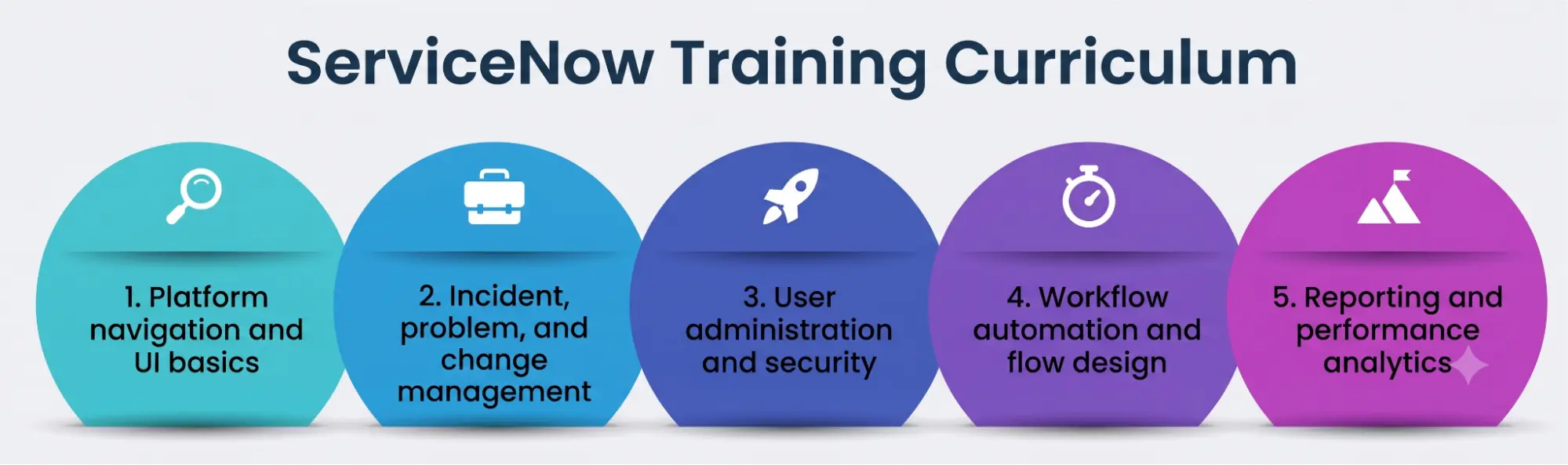
- Platform navigation and UI basics — learning the workspace, lists, forms, and the Now Platform’s core architecture.
- Incident, problem, and change management—the backbone of any ITSM certification, since these modules mirror real IT Infrastructure Library (ITIL) processes.
- User administration and security — roles, groups, access control lists, and data policies.
- Workflow automation and flow design — building the automated processes that make ServiceNow genuinely useful to large organizations.
- Reporting and performance analytics — turning raw ticket data into dashboards that leadership actually reads.
Every one of these areas eventually feeds into the Certified System Administrator exam, so skipping straight to practice questions without understanding the “why” behind each module tends to backfire during the real test.
The CSA Certification: Your Starting Point
If you are new to the ecosystem, the CSA certification is where almost everyone begins. It is ServiceNow’s foundational credential, and passing it proves you can configure, implement, and maintain a live ServiceNow instance. As of the current exam blueprint, the test consists of 60 multiple-choice and multiple-select questions, and it is updated with every ServiceNow release cycle, most recently refreshed in January 2026 to reflect new platform capabilities around data replication and AI-assisted workflows.
Passing the CSA certification is more than a resume line. It is the prerequisite gateway to nearly every advanced credential ServiceNow offers, from the Certified Implementation Specialist tracks to the Certified Application Developer path. Skip this step, and none of the higher-paying specializations are even open to you.
What Does an ITSM Certification Actually Signal to Employers?
Here is something a lot of course marketing pages gloss over: an ITSM certification is not just about knowing where buttons are in a piece of software. It signals that you understand how incidents, problems, changes, and service requests flow through an organization — the same processes described in the ITIL framework that most enterprise IT departments already run on.
When a hiring manager sees this credential, they are not just checking a technical box; they are confirming you can speak the same operational language as the rest of the department from day one, without months of ramp-up time. Recruiters scanning resumes for an ITSM certification are usually looking for exactly this kind of process fluency, not just software familiarity.
This is also where ServiceNow certification training earns its value over generic online courses. Programs built specifically around the current exam blueprint keep pace with quarterly platform releases, so what you learn in month one still applies when you sit the exam in month four — something generic tutorials from years-old video playlists simply cannot guarantee.
Becoming a Certified Administrator: Salary and Demand Snapshot
Numbers tend to convince people faster than promises, so here is what the 2026 job market actually looks like for a certified administrator in the United States, based on Glassdoor and ZipRecruiter salary data pulled this year.
|
Role Level |
Average Annual Salary (2026, USD) |
Typical Pay Range |
|
Entry-level ServiceNow Administrator |
$95,846 – $119,428 |
25th–median percentile |
|
Senior ServiceNow Administrator |
$109,273 – $167,826 |
25th–75th percentile |
|
ServiceNow Administrator, New York City |
$107,576 – $170,870 |
25th–75th percentile |
|
Top 10% earners nationally |
Up to $184,082 |
90th percentile |
|
ZipRecruiter national average |
$95,500 – $136,000 |
25th–75th percentile |
What jumps out immediately is the range. A certified administrator fresh out of training can reasonably expect somewhere in the $95,000 to $120,000 band in the US, while a few years of experience combined with an advanced credential can push that figure past $170,000. Location matters too — the same Glassdoor dataset shows administrators in New York City earning roughly 7% above the national average.
How to Choose the Right ServiceNow Certification Training Program?
Not every course labeled “certification prep” is built the same way, and picking the wrong one wastes both time and money for anyone hoping to become a certified administrator quickly. Since so many ServiceNow training providers exist online today, a few things worth checking before you enroll are listed below.
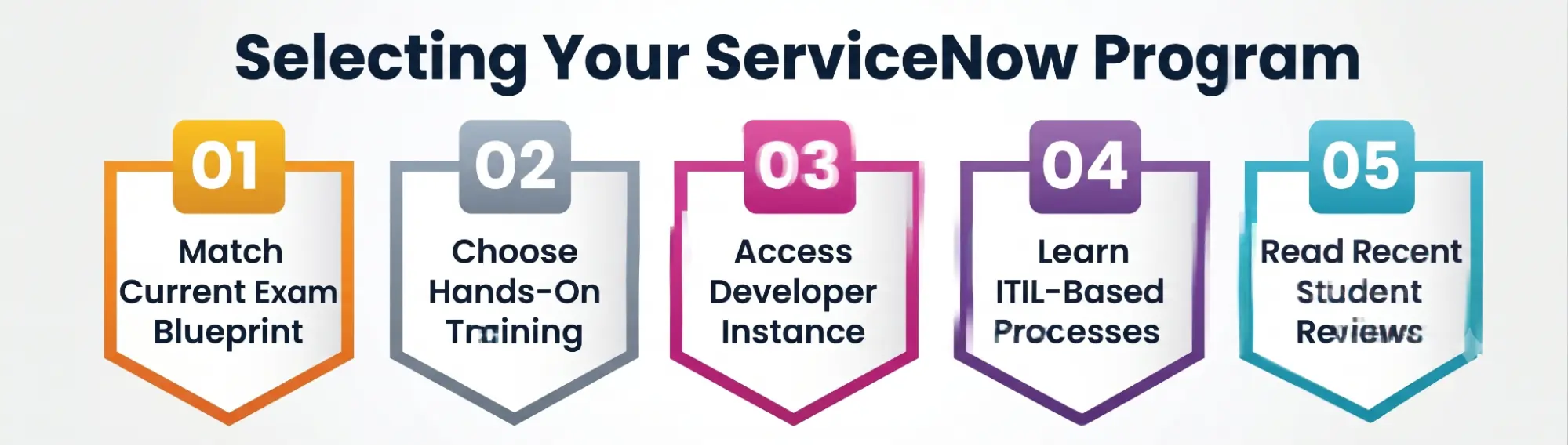
- Confirm the course aligns with the current exam blueprint, not one from two platform releases ago.
- Look for programs that include genuine hands-on training in a live sandbox, not just recorded video lectures.
- Check whether the provider gives you access to a developer instance, since ServiceNow’s own guidance states that outside materials are not officially endorsed for exam prep.
- Ask whether the course covers ITIL-aligned processes in depth, since these form the backbone of any ITSM certification.
- Read reviews from people who actually sat the exam recently—the ServiceNow Community forums are a genuinely useful place to check this, since candidates post real exam experiences there throughout the year.
Why Hands-On Training Beats Passive Video Courses
I will be blunt about this part because it comes from personal frustration. When I started preparing for my own certification, I first tried a video-only course that walked through slides for hours without ever letting me touch a live instance. I passed a few practice quizzes, felt confident, and then completely froze during a scenario-based question on the real exam because I had never actually built a workflow myself—only watched someone else do it on screen.
I switched to a program built around hands-on training labs and spent two weekends actually configuring incident rules and approval workflows in a developer instance, and the difference in my confidence going into the real exam was night and day. If there is one piece of advice I would give anyone starting their ServiceNow certification training today, it is this: do not let a course get away with being 90% lecture and 10% practice. Insist on hands-on training from week one.
Hands-on training also matters because ServiceNow updates its platform multiple times a year. Static screenshots in a textbook go stale fast; a live sandbox does not.
Career Paths After Certification
Once you hold the CSA credential, doors open toward more specialized and better-paid roles. Common next steps include:
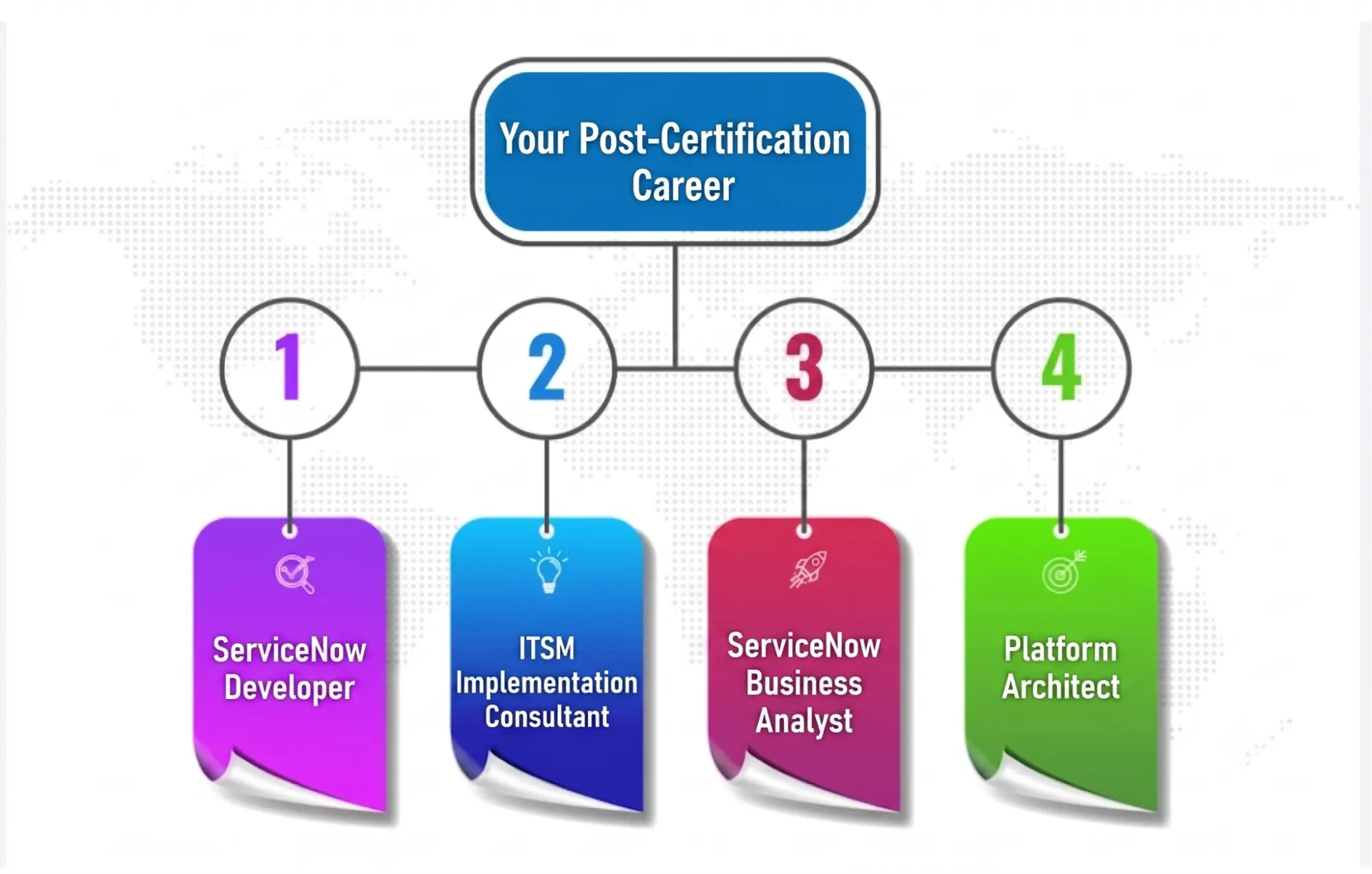
- ServiceNow Developer — building custom applications on the Now Platform.
- ITSM Implementation Consultant — leading configuration projects for enterprise clients, often requiring an ITSM certification as a baseline qualification.
- ServiceNow Business Analyst — translating business requirements into platform configurations.
- Platform Architect — designing large-scale, multi-instance ServiceNow environments, one of the highest-paying tracks in the ecosystem.
Each of these builds directly on the fundamentals taught in solid ServiceNow certification training, so the initial investment keeps paying dividends well beyond the first certificate.
Final Thoughts
Enterprise software is not going anywhere, and neither is the demand for people who genuinely know how to run it. If the salary figures, market growth data, and career pathways outlined above tell you anything, it is that investing in proper ServiceNow certification training in 2026 is one of the more grounded career bets you can make in the current IT job market. Start with the fundamentals, take the CSA exam seriously, insist on real hands-on training rather than passive video lectures, and treat the first certificate as the beginning of a longer specialization path rather than a finish line. The data backs it up, and so does the experience of everyone — myself included — who has gone through the process and come out the other side with a credential that actually opens doors.