
Here is a number worth sitting with: the world is still short by roughly 4.8 million cybersecurity professionals, even as 87% of organizations reported facing an AI-driven cyberattack in the past year. If you have ever wondered whether now is a strange or a smart time to become a SOC analyst, that single statistic answers the question.
Security teams everywhere are stretched thin, budgets are tight, and the professionals who can prove their security monitoring skills through the right credentials are the ones getting hired first. This guide walks through the certifications actually worth your time and money this year, what they cost, what they pay, and how to pick one that fits where you are in your career right now.
Why SOC Analyst Certifications Matter More in 2026
The role has changed a lot in the last few years. AI tools now handle a growing share of repetitive alert triage, which means employers expect newcomers to arrive with sharper judgment rather than just checklist knowledge. Gartner has projected that more than half of Tier 1 analyst tasks could be automated by 2028, and that shift is already reshaping hiring.
A well-chosen certification signals that you understand security operations at a practical level, not just in theory, and these professionals strengthen an organization’s cyber defense every single day, which is exactly why hiring managers use certifications as a fast, trustworthy filter when they are drowning in applications.
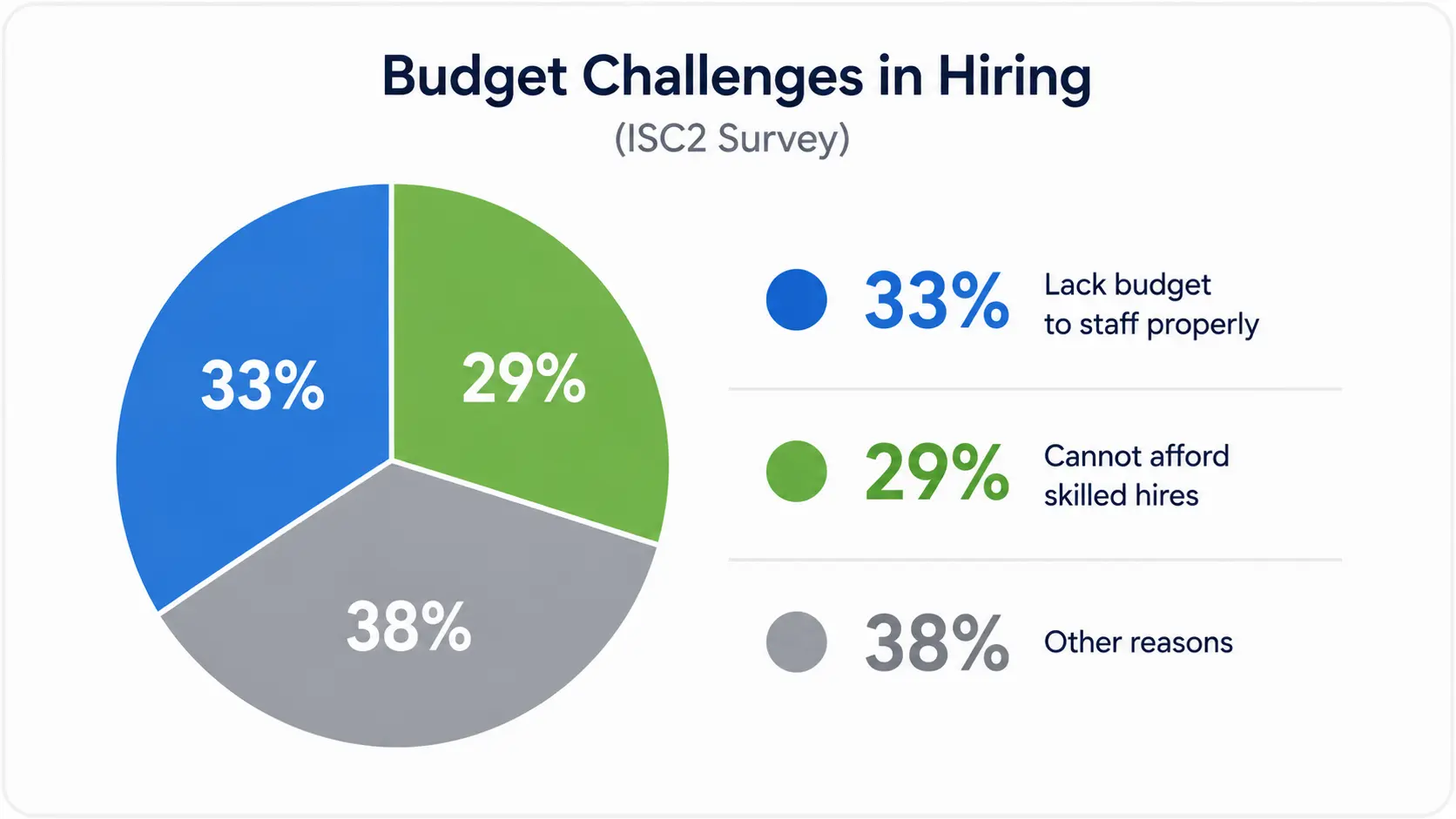
Budget pressure adds another layer. The ISC2 survey found that 33% of organizations say they simply lack the budget to staff their teams properly, and 29% cannot afford the skilled hires they actually want. That means every open seat matters more, and certified candidates who can demonstrate threat detection, malware analysis, and log analysis skills from day one have a real edge over those who cannot.
The SOC Job Market in 2026: What the Data Shows
Numbers tell the story better than adjectives do. Here is a snapshot of where things stand this year, pulled from recent labor and industry data, and the demand across cyber defense teams keeps climbing regardless of budget headlines.
|
Metric |
2026 Data Point |
Source |
|
US median salary, information security analysts |
$124,910 (90th percentile above $186,420) | |
|
Projected US job growth through 2034 |
29% (much faster than average) | |
|
Global cybersecurity workforce gap |
~4.8 million unfilled roles | |
|
US cybersecurity job postings (12 months) |
514,359, up 12% year-over-year | |
|
Organizations reporting at least one skills gap |
95% | |
|
CompTIA Security+ voucher price |
$439 (as of June 2026) |
The takeaway is simple: demand for skilled security monitoring talent has not slowed down, even though hiring budgets have. Employers increasingly test candidates on practical threat detection skills before extending an offer, and certifications are one of the clearest, cheapest ways to prove you can meet that bar.
Top SOC Analyst Certifications to Pursue in 2026
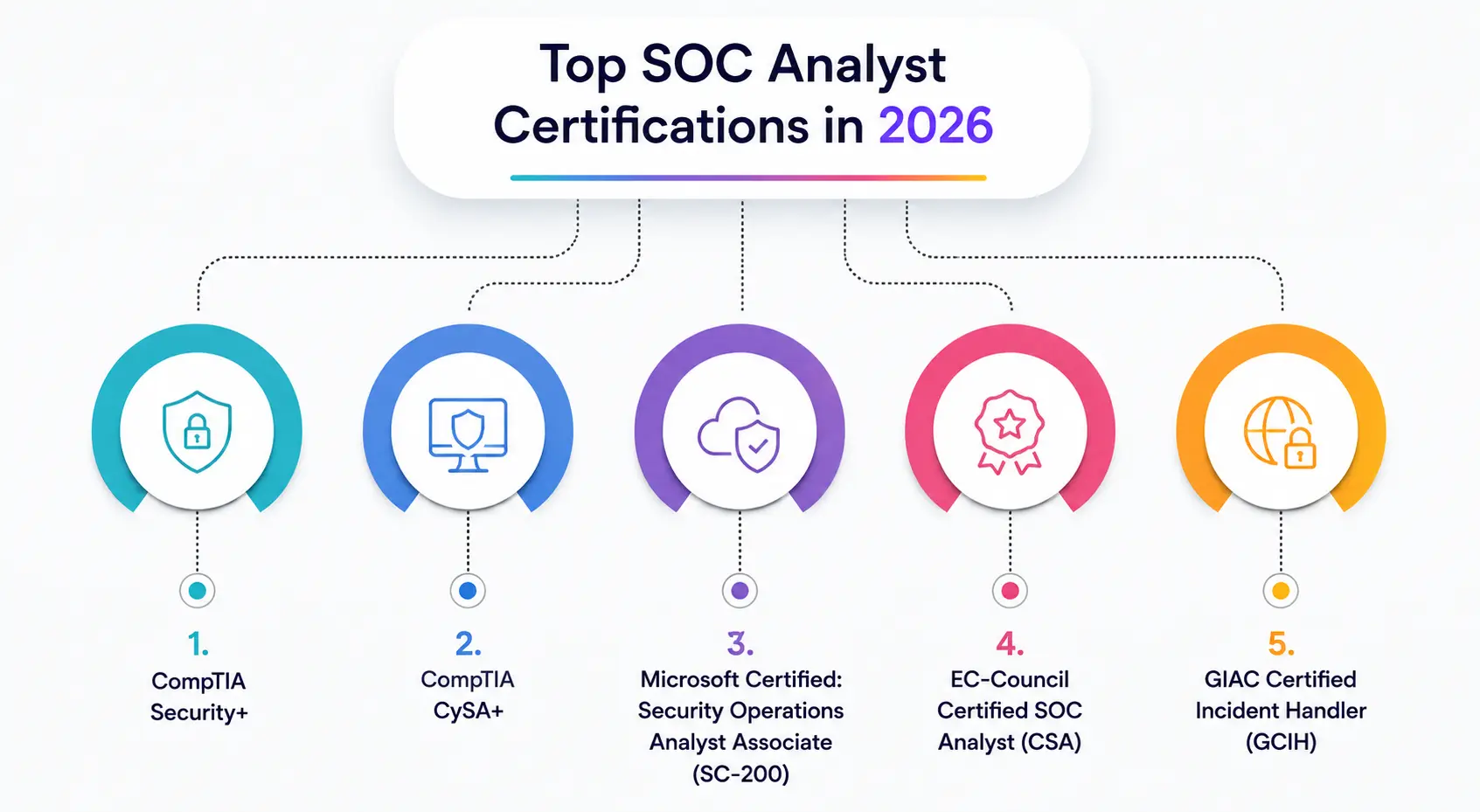
Not every certification carries the same weight, and picking the wrong one can waste months of study time. Below are the certifications that consistently show up in real job postings and actually map to daily SOC work.
1. CompTIA Security+
This remains the most common entry point into a career in security operations. It covers foundational topics such as network security, risk management, and basic incident response, and it satisfies U.S. Department of Defense 8570 requirements, which opens the door to government and contractor roles. The exam voucher costs $439, first-attempt pass rates hover around 70%, and most candidates need two to four months of steady study, as per CompTIA’s own guidance.
2. CompTIA CySA+
Once you have foundational knowledge, CySA+ pushes you into more advanced territory: identifying indicators of compromise, interpreting log analysis output, applying advanced threat detection techniques, and carrying out structured incident response work. Many employers now list it alongside Security+ for mid-level roles. The exam costs around $425, and it pairs naturally with hands-on SIEM practice.
3. Microsoft Certified: Security Operations Analyst Associate (SC-200)
This certification focuses on real tools used inside modern SOCs, which depend heavily on cloud-native security monitoring platforms such as Microsoft Sentinel and Microsoft Defender XDR. It tests your ability to investigate threats, sharpen your threat detection instincts, automate responses, and support cyber defense operations across cloud and hybrid environments, which matters more every year as organizations shift workloads off-premises.
4. EC-Council Certified SOC Analyst (CSA)
Built specifically around the SOC analyst job description, this credential covers SIEM deployment, centralized log analysis, and the full incident response lifecycle from detection to reporting. It is a strong option for anyone who wants training mapped directly to the tasks a Tier 1 or Tier 2 analyst performs every shift.
5. GIAC Certified Incident Handler (GCIH)
For analysts who want to specialize further in malware analysis, GIAC’s GCIH is widely respected among senior practitioners. It also sharpens log analysis and malware analysis skills used in deep investigations. It is pricier and more technical than the entry-level options, but it carries real weight when applying for incident response or threat-hunting roles later in a career.
Skills Every Security Analyst Needs Beyond Certification
A certificate opens doors, but employers still expect practical ability once you are in the seat. Based on current job postings and hiring guidance, these are the core security operations skills — from malware analysis to alert triage — that come up again and again:
- Comfort with SIEM platforms for security monitoring, correlating alerts, and spotting anomalies across large volumes of data
- Working knowledge of network protocols, so you can trace suspicious traffic back to its source
- Basic malware analysis skills, such as recognizing suspicious binaries, scripts, or unusual process behavior
- Familiarity with the incident response lifecycle, from initial detection through containment and lessons learned
- Broad awareness of cyber defense frameworks and reporting standards used across mature security teams
- The judgment to separate a genuine threat from routine noise, since alert fatigue is one of the biggest reasons analysts burn out
My Experience Working as a SOC Analyst
I want to be honest about something the certification brochures rarely mention: my first few months in a security operations role were humbling. I had passed Security+ with a comfortable score and walked in feeling ready. Within a week I realized the exam had taught me vocabulary, not instinct.
Reading a real firewall log at 2 a.m. and deciding whether a spike in outbound traffic was a false alarm or the start of a genuine incident required a kind of pattern recognition that only comes from repetition. What actually helped me grow was pairing my certification with a home lab, where I built small detection scenarios, ran log analysis drills against sample datasets, and put together simple security monitoring dashboards to track alert volume over time.
Six months in, when I sat for CySA+, the material clicked in a completely different way because I had already lived through the problems it was describing. If you are studying right now, my honest advice is to treat the certification as a floor, not a ceiling, and get your hands on real tools as early as you can.
How to Choose the Right Certification for Your Career Stage?
If you are brand new to the field, start with Security+. It is affordable relative to its return, widely recognized, and builds the vocabulary you will need everywhere else. If you already hold Security+ or have a year or two of IT experience, CySA+ or the EC-Council CSA will push you toward genuine competency for the SOC analyst role.
If your organization runs on Microsoft’s stack, the SC-200 is worth prioritizing regardless of your level, since it teaches tools you will likely touch daily for threat detection and cyber defense work. And if you are aiming for incident response or threat-hunting roles down the line or simply want deeper malware analysis expertise, GIAC’s GCIH is a strong long-term investment once the fundamentals are solid.
What Do These Certifications Actually Cost in 2026?
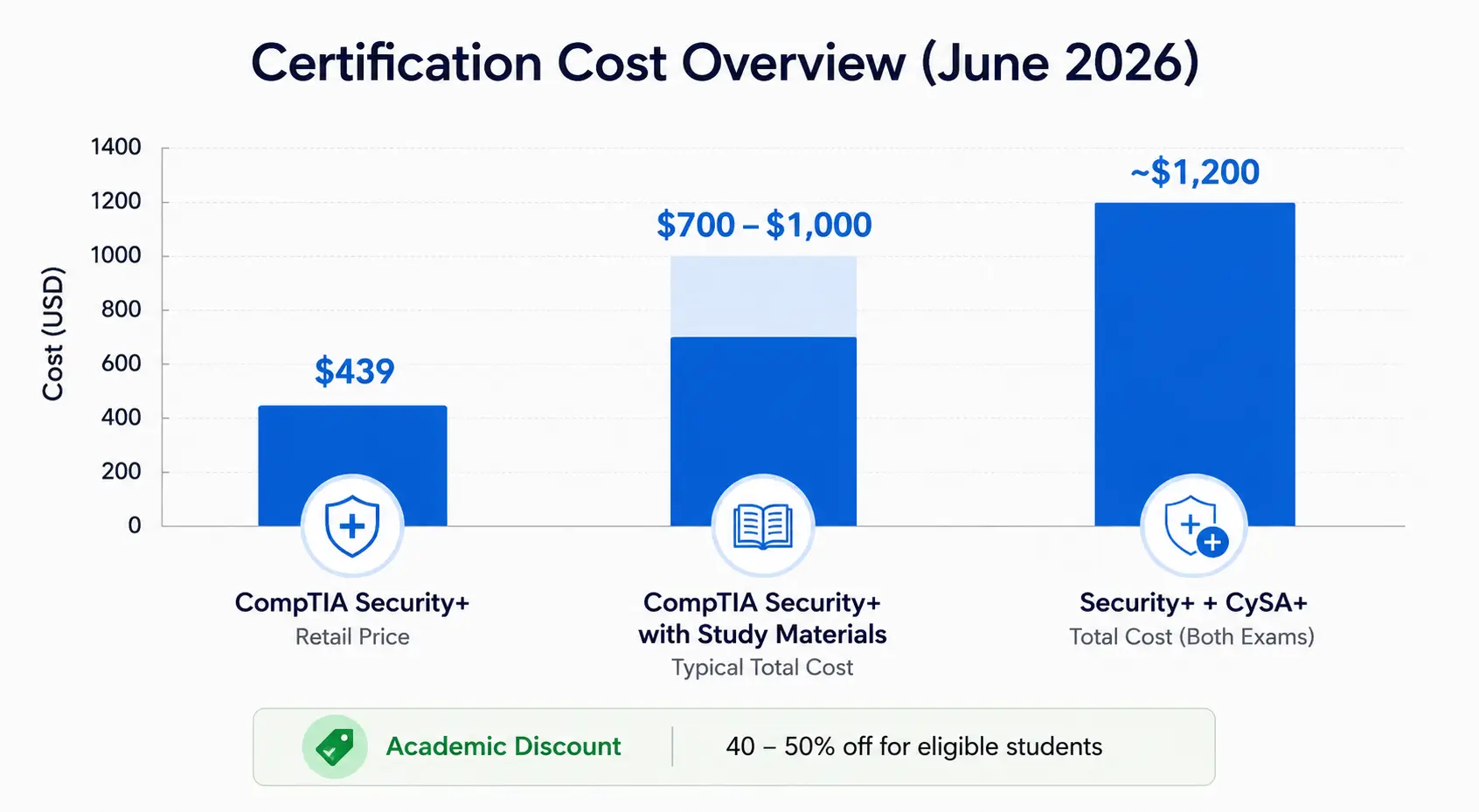
Price is often the deciding factor, so here is the real math. CompTIA Security+ retails for $439 as of June 2026, and most candidates end up spending $700 to $1,000 once study materials are included, though academic discounts of 40 to 50 percent are available for eligible students. CySA+ runs roughly $425 per attempt, and pairing it with Security+ typically pushes total spend toward $1,200 when both exams are counted together.
Microsoft’s SC-200 costs $165, making it one of the more affordable options relative to the tools it teaches. GIAC’s GCIH sits at the higher end, often exceeding $2,000 once official training is factored in, which is one reason most professionals pursue it only after a year or two on the job rather than as a first credential.
None of these certifications are permanent purchases, either. CompTIA credentials expire after three years unless you complete continuing education units or pass a higher-level exam, so it is worth budgeting for renewal as part of the true cost of staying credentialed rather than treating the first exam as the finish line.
Conclusion
The certifications above will not guarantee a job on their own, but they remove one of the biggest barriers standing between you and an interview for a security analyst position. With the global talent gap still sitting near 4.8 million unfilled positions and salaries for cyber defense roles continuing to climb, 2026 remains a genuinely good year to invest in becoming a certified SOC analyst.
Pick the credential that matches your current experience, sharpen your security monitoring instincts along the way, and treat the exam as the beginning of your learning rather than the end of it.