
Same job title. Same city. Same years of experience. But they are taking home twice what you are. It feels unfair—and sometimes it is. Most of the time, though, there is a real explanation, and understanding it is one of the most useful things you can do for your career.
The job title on your contract tells almost nothing about what you will actually earn. What matters is the company behind it, the industry it sits in, the specific skills attached to the role, and a handful of other factors that most people never think to ask about when they are job hunting.
Let us go through each one.
IT Salary: By the Numbers
| Statistic | 2026 Data |
|---|---|
| Average US IT Professional Salary | $104K (BLS) |
| Pay Gap Between Big Tech & Small Companies | 2x Difference |
| AI Expertise Salary Premium | 18% Higher Pay (Dice 2025 Tech Salary Report) |
| Projected IT Salary Growth | 8–10% Growth for In-Demand Skills |
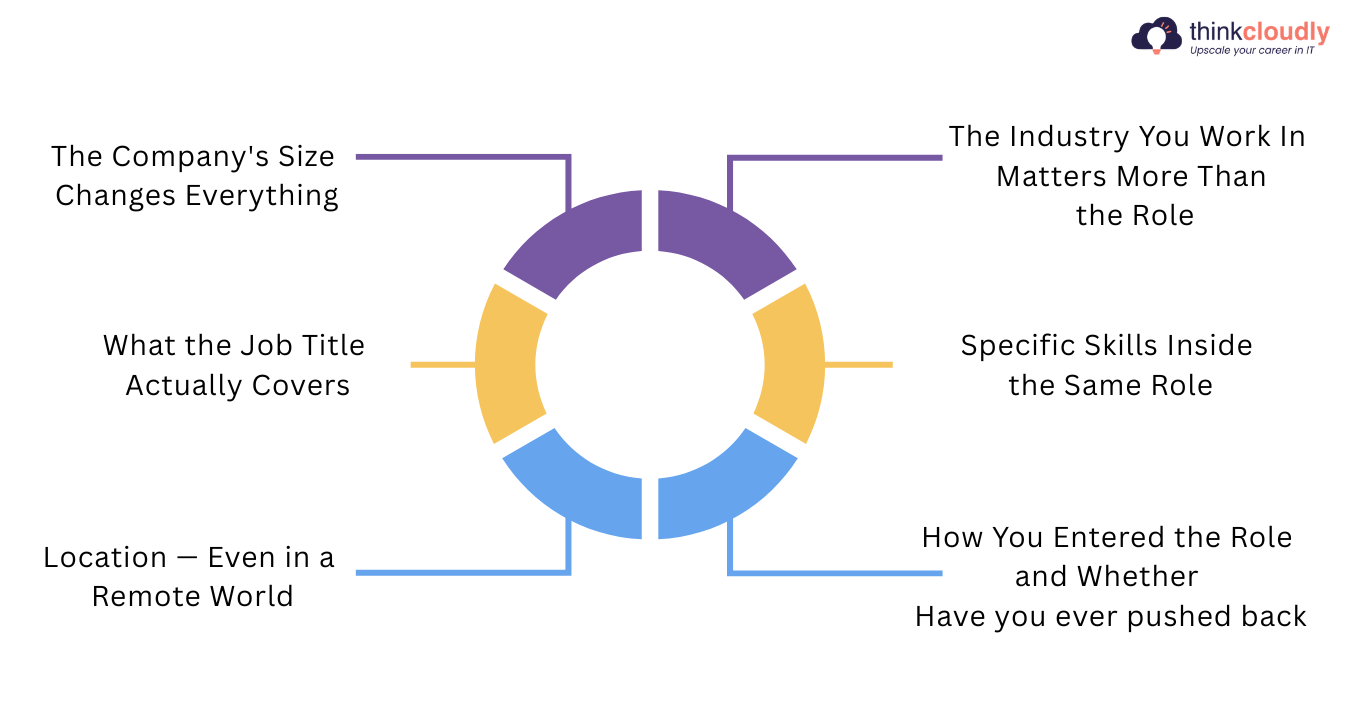
Reason 1: The Company’s Size Changes Everything
This is the biggest factor and the one that catches people off guard the most. A mid-level software engineer at a large Fortune 500 company or a major tech platform can earn around $175,000. The same engineer, with the same skills and the same experience level, at a 50-person startup might earn $140,000. That is a $35,000 gap—and it compounds every year.
Large companies pay more for several reasons. They generate more revenue per engineer, which means the math of paying someone well simply works out differently. They also use defined compensation bands that get benchmarked against market data regularly, and they are competing head-to-head with other large companies for the same pool of talent. That competition pushes salaries up.
Smaller companies often cannot match that on base salary. What they offer instead is equity—stock options or company shares that could be worth a lot if the business grows. The problem is that equity is a bet on the future, and most startups do not reach the point where that equity pays off significantly. So on paper, you are taking a lower salary with the promise of upside that may or may not arrive.
Neither path is wrong. But they are genuinely different, and you need to go in knowing which one you are choosing.
Reason 2: The Industry You Work In Matters More Than the Role
A data analyst at a financial services firm gets paid differently from a data analyst doing the same kind of work at a retail company. The title is the same. The difference is where the output of that work goes.
In finance, a sharp data analyst can directly influence investment decisions. That output is worth a lot of money, and companies in that sector pay to reflect it. The same logic applies in tech companies, where data sits at the centre of nearly every product decision. In retail or non-profit sectors, the same analyst role pays noticeably less—not because the work is easier, but because the business impact is harder to quantify and the margins are thinner.
This pattern shows up across almost every IT role. A cybersecurity professional protecting a bank or a healthcare system is sitting on data that, if breached, could cost the company tens of millions of dollars. A product manager in fintech earns significantly more than one doing the same work in a traditional manufacturing company. The skill is the same. The risk attached to the role is different, and salary tends to track risk more closely than most people expect.
Reason 3: What the Job Title Actually Covers
This one gets overlooked because people assume a shared title means a shared role. It does not. Job titles in tech are some of the loosest labels in any industry.
One company’s “software engineer” might be someone maintaining legacy systems that have not changed in five years. Another company’s “software engineer” might be building AI infrastructure from scratch, working with machine learning pipelines, and shipping code that touches millions of users. Same title. Completely different scope, complexity, and market value.
The same happens with cybersecurity analysts. At one company, the role might mean monitoring dashboards and flagging alerts. At another, it means active threat hunting, building detection systems, and holding a security clearance. The second version pays anywhere from $30,000 to $50,000 more—not because of the title but because of what the work actually involves.
Before you compare your salary to anyone else’s, make sure you are actually comparing the same thing. The job title is the starting point, not the full picture.
Reason 4: Specific Skills Inside the Same Role
Two people can both be software engineers or cybersecurity analysts and still command very different salaries based on which specific skills they have built on top of that foundation.
AI and machine learning skills are the clearest example right now. In 2026, AI expertise commands a salary premium of close to 18 percent over generalist engineering positions at the same level, according to the Dice 2025 Tech Salary Report—the widest skill-based pay gap the industry has tracked in a decade. That is the widest skill-based pay gap the tech industry has seen in a decade. An engineer who can build and maintain machine learning systems is not just doing a harder version of regular engineering—they are in a category that companies are actively competing for and often cannot find.
The same thing applies in cybersecurity. Someone with a CISSP certification can earn around $20,000 more than someone in the same role without it. Cloud security specialists, identity and access management experts, and DevSecOps engineers all pull higher pay than generalist security analysts—even within the same company, sometimes even on the same team.
Certifications matter. Specializations matter. The specific tools you know matter. Two people with the same job title but different skill depth are not really in the same market.
Reason 5: Location—Even in a Remote World
Geography still moves salaries significantly, even now that remote work is widespread. The same financial analyst role might pay between $85,000 and $120,000 in San Francisco versus $65,000 and $95,000 in a lower cost-of-living city. That is a 20 to 50 percent difference tied purely to location.
Remote work has blurred some of this. Companies that hire globally or across different cities have had to decide how they handle location-based pay—some adjust salaries by location, some do not. But the pattern still holds in most cases, especially for roles that require office presence or that sit inside companies headquartered in expensive cities.
If you are applying to fully remote roles, it is worth knowing where the company is based. Many still anchor their pay bands to their headquarters city, even for remote hires, which can work in your favour or against you depending on where you are.
Reason 6: How You Entered the Role and Whether You Ever Pushed Back
This is the uncomfortable one, but it is real. A significant portion of salary gaps between people in the same role at the same company comes down to what was negotiated when they joined—and whether they have pushed for increases since.
Someone who negotiated their starting offer, stayed current on market rates, and asked for raises at review time is often earning noticeably more than someone who accepted the first number offered and never revisited it. Companies do not automatically move people to the market rate. They move people who ask or who signal they know what they are worth.
Pay transparency laws are now covering over 50% of US workers, which means more people have access to salary range data than ever before. That information is useful—but only if you actually use it.
What Drives IT Pay Differences: At a Glance
|
Factor |
Pay Impact |
Example |
|
Company Size |
Very High |
Fortune 500 vs. 50-person startup: up to $35K gap |
|
Industry Sector |
Very High |
Finance/tech pays 20–40% more than retail for same role |
|
Actual Job Scope |
Very High |
Legacy maintenance vs. AI infrastructure—same title, $50K gap |
|
Skill Specialization |
Very High |
AI/ML premium: 20–40% above generalist engineers |
|
Certifications |
High |
CISSP adds ~$20K over uncertified peers in same role |
|
Location |
High |
Same role: $120K in San Francisco vs. $65K–$95K elsewhere |
|
Negotiation History |
Significant |
People who negotiate offers consistently earn more over time |
What You Can Actually Do With This Information
Knowing why the gap exists is only useful if it changes how you approach your own career. Here is how to use what you have just read.
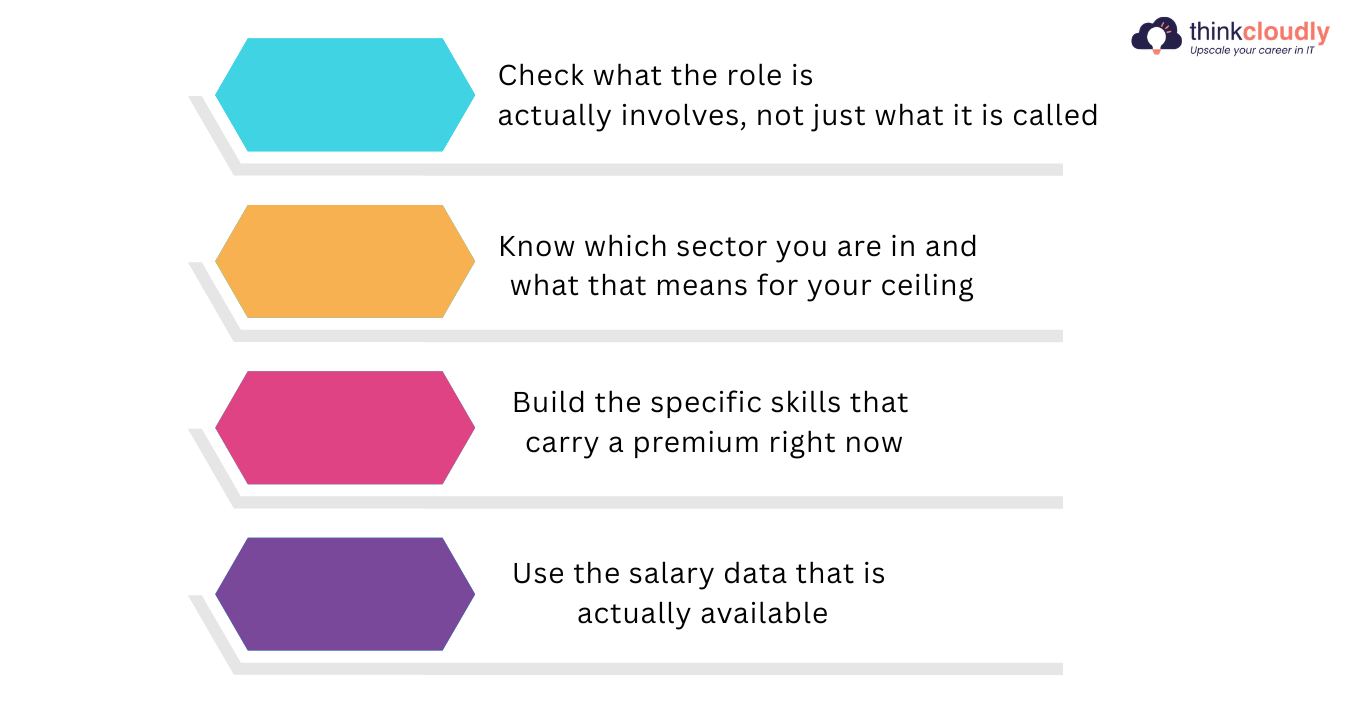
Check what the role actually involves, not just what it is called
Before you compare your salary to anyone else’s, look at what both of you are actually doing day to day. Pull the job description they interviewed for, not just the title on their badge. What systems are they responsible for? What is the size of the codebase, the team, and the infrastructure? Two people carrying the same title who are doing genuinely different levels of work are not in the same salary conversation, and treating them as if they are leads to frustration in both directions.
Know which sector you are in and what that means for your ceiling
If you are a data analyst or a cybersecurity professional who wants to earn more, the fastest route is often not upward—it is sideways into a higher-paying sector. Finance and technology companies pay more for the same roles, not because they are generous but because the work connects directly to revenue. Moving the same skills from a retail environment into a financial services or tech company can close a $20,000 to $30,000 gap without requiring any additional qualifications. That is worth knowing before you spend months chasing a promotion.
Build the specific skills that carry a premium right now
In 2026, three specializations are pulling salaries up faster than anything else: AI and ML engineering, cloud security, and DevSecOps. These are not niche areas anymore. They are where the demand is concentrated and where the talent shortage is sharpest. Adding one of them to an existing background in software development, data, or general security changes what employers are willing to offer. It is not about starting over—it is about making your current experience more specific and harder to replace.
Use the salary data that is actually available
Pay transparency laws cover over 40 percent of US workers, and tools from sources like Robert Half, the BLS, and Splunk publish detailed salary ranges by role, sector, and city. There is no reason to walk into a performance review or a job offer without knowing what the market looks like. The person sitting across from you almost certainly knows. Walk in with the same information, reference it specifically, and the conversation changes entirely.
The Pay Gap Is a System—Here’s How to Work It
The salary gap in IT is not random—it is a system, and once you understand how it works, you can navigate it. Company size, industry, actual job scope, specialized skills, location, and negotiation history are the six levers that move the number on your paycheck. Most people only focus on the title and the years of experience, which is exactly why they stay stuck. In 2026, with AI expertise commanding an 18% premium, pay transparency laws covering more than half of US workers, and remote work reshaping where talent gets paid, the information you need to close that gap is more accessible than ever.
The question is whether you use it. Start by knowing what your role is actually worth—not just what you were told when you joined—and go from there.
Sources & References
- Bureau of Labor Statistics — Computer and Information Technology Occupations — IT salary benchmarks and employment outlook data, 2026
- Dice — 2025 Tech Salary Report — AI/ML salary premium (~18% above generalist engineers) and tech compensation trends by role and skill
- Levels.fyi — Salary Explorer—Location-based tech compensation data by city, role, and experience level
- Paycor — 2026 Pay Transparency Laws by State — Coverage data on pay transparency legislation (50%+ of US workers covered as of 2026)
- Robert Half — 2026 Tech and IT Salary Guide—Skills-based pay premiums, company size pay gaps, and industry salary projections
- Splunk — 2026 IT and Technology Salary Guide—Industry sector pay comparisons and top-paying IT specialisations
- Auxis — IT Salary Trends 2026 — Citing Addison Group’s 2026 Workforce Planning Guide: 8–10% salary growth projection for in-demand tech roles