
Only 23% of organizations report having a fully mature governance, risk, and compliance program, according to a 2025 survey by Gartner. That gap between where most organizations are and where regulators, boards, and customers expect them to be is precisely why GRC certifications have become one of the most strategically valuable credentials a professional can hold in 2026.
Whether you are working in audit, finance, information security, legal, or operations, the ability to demonstrate that you understand how governance, risk management, and regulatory compliance interact and how to manage them effectively is increasingly what separates candidates who advance from those who plateau. This guide walks through the most recognized GRC certifications available in 2026, compares them honestly, and helps you identify which one aligns with your career goals and background.
GRC Certifications in 2026: Why They Matter More Than Ever
Anyone working in regulatory compliance right now will tell you the same thing: the job has not gotten easier. The EU AI Act introduced a new category of regulatory obligation that most organizations are still figuring out how to operationalize. SEC cybersecurity disclosure rules are forcing publicly traded companies to document and report incidents with a level of transparency that did not exist two years ago. GDPR enforcement has matured from theoretical risk to consistent financial penalty. And ESG reporting requirements are expanding into territory that compliance teams were not originally built to handle.
The workload is real, and it is growing. Thomson Reuters’ 2025 State of the Compliance Market report found that 78% of compliance professionals expect their responsibilities to increase significantly over the next two years. That is not a perception issue. It reflects a regulatory landscape that keeps adding layers faster than most organizations can build the internal capability to manage them. Regulatory compliance obligations are not slowing down—they are accelerating, and the organizations that cannot keep pace face penalties, reputational damage, and operational disruption faster than most organizations can build the internal capability to manage them.
Here is the part that matters for your career. ISACA’s 2025 workforce data shows that risk and compliance roles remain consistently among the hardest positions for organizations to fill globally. Demand keeps rising, and the pool of qualified candidates is not keeping up. For professionals with recognized credentials in this space, that imbalance works directly in your favour.
A GRC certification does something specific in that environment—it tells a hiring manager that you understand how a GRC framework operates end-to-end, not just one piece of it; that you can work within complex regulatory requirements without needing to be trained from scratch; and that you bring a standard of knowledge the role genuinely requires. In a market where that combination is genuinely scarce, a well-chosen certification is not a credential you collect. It is a competitive advantage you carry into every application and every conversation.
The Top GRC Certifications to Consider in 2026
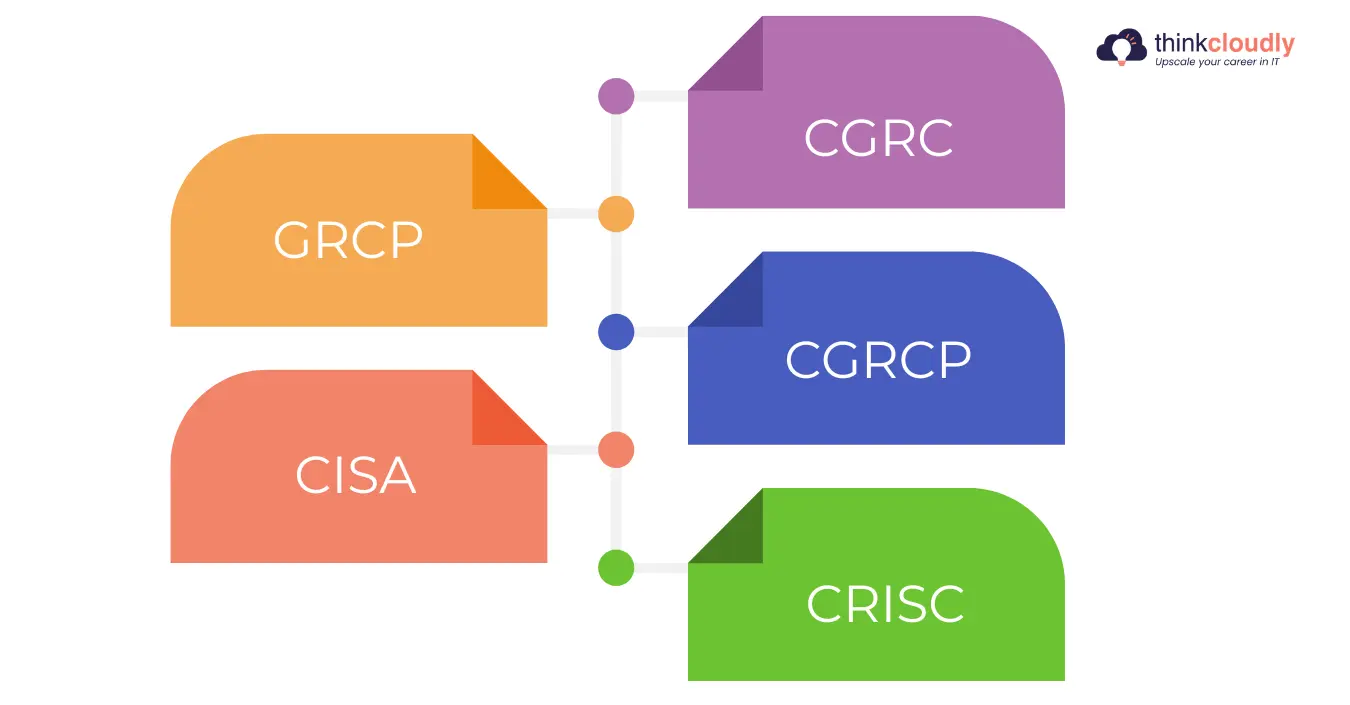
CGRC — Certified in Governance, Risk, and Compliance (ISC2)
Formerly called the CAP certification, the CGRC from ISC2 sits where information security meets governance, risk, and compliance. The exam covers seven domains, including risk management, security authorization, and continuous monitoring, with 125 questions and a scaled passing score of 700 out of 1,000. Two years of relevant work experience is required.
It is particularly well-suited for professionals in federal contracting, healthcare, and financial services, where regulatory compliance and security obligations overlap heavily—particularly in federal contracting and healthcare environments. ISC2’s global presence gives it strong recognition across multiple regions.
The exam cost is $599, with a $125 annual maintenance fee and 90 CPE credits required every three years.
GRCP — GRC Professional Certification (OCEG)
OCEG, the organization that literally wrote the framework most enterprise GRC programs are built on, issues this certification. If you have ever seen the term “Principled Performance Framework” in a job description or a company’s risk documentation, that is OCEG’s work.
The GRCP validates your understanding across governance, risk management, compliance management, and internal controls. It is an open-book, 100-question exam, which makes it genuinely accessible without being superficial.
The cost runs between $395 and $495 depending on membership status. No mandatory training is required, and the certification never expires, which makes it one of the most straightforward investments in this space.
CGRCP — Certified GRC Professional (MetricStream)
MetricStream runs one of the most widely used GRC software platforms in the enterprise market, and their CGRCP certification reflects that real-world position. It is vendor-backed, which means it combines GRC framework knowledge with practical competency on a platform that large organizations actually use to manage their risk and compliance programs day to day.
If your organization already runs MetricStream or is in the process of evaluating enterprise GRC platforms, this certification carries a practical credibility that purely framework-based credentials cannot replicate. It signals that you can do the work, not just describe how it should be done.
CISA — Certified Information Systems Auditor (ISACA)
The CISA has been the benchmark credential for IT audit and assurance professionals for decades, and it has not lost that position in 2026. For GRC professionals whose work touches information systems audit, control, or compliance assurance, it appears on job postings with a consistency that few other credentials match.
What makes it worth mentioning specifically in a GRC context is the salary data. ISACA’s 2025 Global Salary Survey puts the median US salary for CISA holders at $132,000. That figure reflects what the market consistently pays for professionals who can demonstrate verified audit and risk competence rather than just claim it.
CRISC — Certified in Risk and Information Systems Control (ISACA)
The CRISC is ISACA’s dedicated risk management certification and is among the highest-compensated credentials in the entire GRC space. It focuses specifically on IT risk identification, assessment, response, and monitoring, making it the strongest credential for professionals whose primary function is risk management within a technology governance context.
Organizations building or maturing an enterprise risk management program consistently list CRISC as their preferred credential for the professionals leading that work. For professionals whose daily responsibilities centre on risk management—identifying exposures, assessing controls, and reporting to leadership—CRISC is the most direct path to both recognition and compensation.
According to ISACA’s 2025 salary data, CRISC holders earn a median salary of $151,000 in the United States, the highest median salary of any ISACA credential. The exam requires passing a 150-question assessment and a minimum of three years of cumulative work experience in at least two of the four CRISC domains.
GRC Certifications Comparison
|
Certification |
Issuing Body | Focus Area | Exam Questions | Cost | Experience Required |
Expiry |
|
CGRC |
ISC2 | IT governance and risk | 125 | $599 | 2 years |
3-year renewal |
|
GRCP |
OCEG | GRC framework broadly | 100 | $395 to $495 | None mandatory |
No expiry |
|
CRISC |
ISACA | IT risk management | 150 | $575 members | 3 years in 2 domains |
3-year renewal |
|
CISA |
ISACA | IT audit and assurance | 150 | $575 members | 5 years |
3-year renewal |
|
CGRCP |
MetricStream | Enterprise GRC platforms | Varies | Contact provider | Varies |
Annual renewal |
|
CISM |
ISACA | Information security management | 150 | $575 members | 5 years in security |
3-year renewal |
How to Choose the Right GRC Certification for Your Career
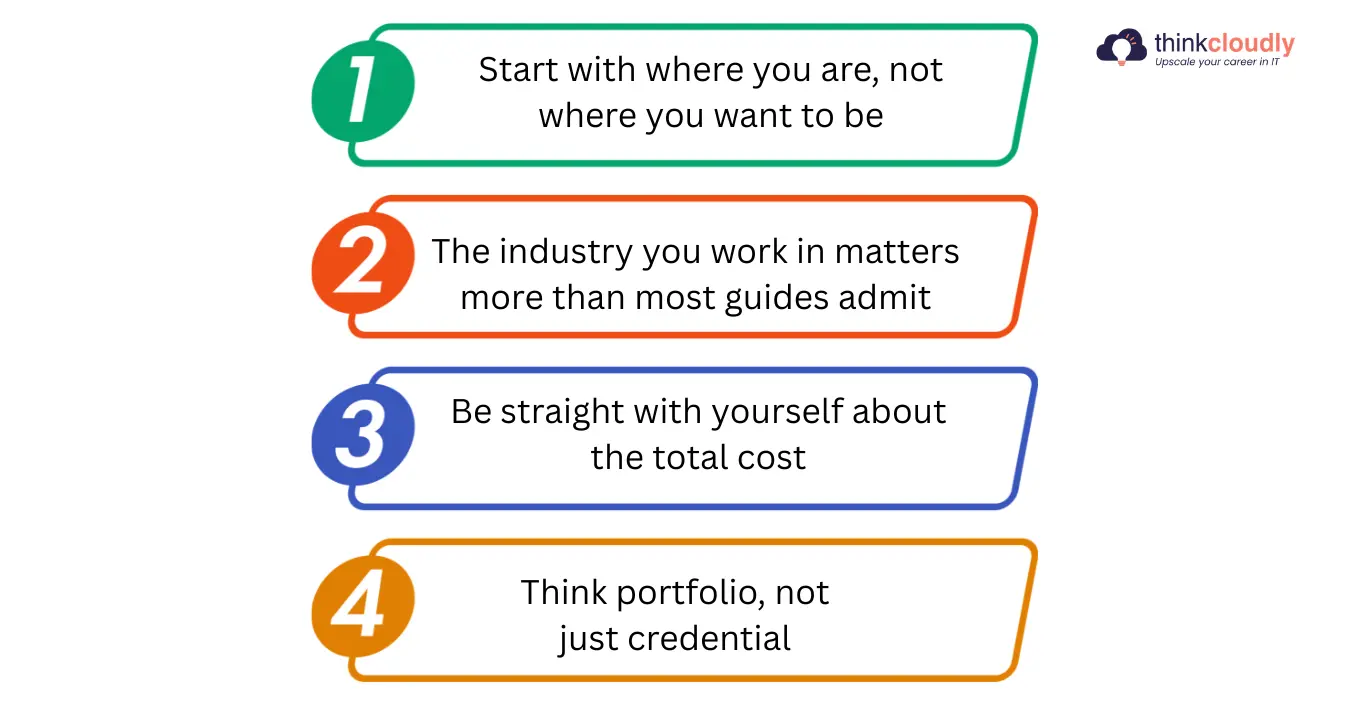
Start with where you are, not where you want to be
Every GRC framework has three layers — governance, risk, and compliance — and the certification you choose should match the layer where you spend most of your working time. Before looking at any certification page, be honest about your current role and what you are actually doing day to day. If your current role involves risk management activities—even informally—your certification choice should reflect that specialization directly. If your work lives inside information security, IT audit, or technology risk, the ISACA pathway through CISA or CRISC puts you on the most direct track toward the roles that are most likely to hire you next. If your work is broader, spanning governance, legal, operational risk, and compliance management across multiple business functions, GRCP from OCEG gives you a framework-wide foundation that holds up across a wider range of role types and industries.
The industry you work in matters more than most guides admit
Not all certifications carry equal weight in every sector. In banking, healthcare, and government, ISACA credentials have decades of recognition baked into how hiring managers and regulators think about professional qualifications. CISA shows up repeatedly as a preferred requirement in financial services audit and compliance roles. CRISC appears consistently in enterprise risk management postings across banking, insurance, and energy. If your target industry has a clear preference, match your certification to that reality rather than choosing based on general reputation alone.
Be straight with yourself about the total cost
The sticker price on an exam is rarely the full picture. GRCP from OCEG sits between $395 and $495 with no renewal obligation, making it the most financially straightforward option in the space. CRISC and CISA from ISACA cost more upfront and require ongoing CPE maintenance every three years, but the salary data is clear about the return they deliver. If you are paying for this yourself, run the numbers honestly before committing. A certification that stretches your budget uncomfortably is one you may not prepare for adequately.
Think portfolio, not just credentials.
The professionals sitting at the top of the GRC compensation range in 2026 almost never got there on a single certification. The most effective sequencing tends to start with GRCP as a foundational framework credential, move into CRISC for dedicated risk depth, and then add either CISA or CGRC depending on whether the audit or security governance track is more relevant to where you are heading. Each additional credential builds a more complete enterprise risk management profile — which is exactly what hiring managers evaluate when they are filling senior GRC roles. It signals a level of deliberate investment in the discipline that hiring managers at the senior level genuinely notice and value.
What GRC Professionals Actually Do: Beyond the Exam Content
GRC work is fundamentally about helping organizations pursue their goals without getting derailed by risk or regulatory failure. In practice, that means compliance management — translating regulatory requirements into documented processes, testing those processes regularly, and demonstrating to auditors and regulators that controls are working. Governance, risk management, and regulatory compliance are not three separate jobs. They are three lenses on the same underlying challenge, and professionals who understand how they interact are consistently more effective than those who know only one.
According to the 2025 Compliance Week benchmark report, hiring managers most frequently seek risk assessment, regulatory change management, data privacy compliance, and enterprise risk management framework implementation. Designing, documenting, and testing internal controls is equally central to the role—it is the mechanism through which governance and compliance policies become operational reality Those capabilities come from experience and continuous learning, not certification study alone.
The Salary Reality for GRC Professionals in 2026
The compensation picture here deserves a direct conversation rather than a footnote.
Based on 2025 data from Glassdoor, LinkedIn Salary Insights, and ISACA’s Global Salary Survey, entry-level GRC analysts in the US typically earn between $75,000 and $95,000. Mid-level professionals with two to five years of experience and at least one recognized certification earn between $110,000 and $140,000. Senior GRC directors and chief compliance officers reach $160,000 to $220,000 or beyond at larger organizations.
The certification premium holds up under scrutiny. CRISC holders—whose work centres on dedicated risk management responsibilities—median at $151,000, the highest of any ISACA credential. CISA holders follow at $132,000. Both consistently outperform non-certified peers by 20 to 30%.
Financial services, healthcare, and technology lead on compensation. Government and energy are closing the gap quickly as regulatory demands in both sectors keep intensifying.
Conclusion
The GRC certifications market in 2026 gives professionals at every stage a credible, well-recognized way to demonstrate that they can do this work seriously. GRCP is the most accessible entry point for those newer to formal GRC roles. CRISC delivers the strongest salary premium for established risk management professionals. CISA remains the benchmark for IT audit and compliance management in regulated industries. CGRC bridges security and compliance effectively for technology-heavy environments.
What connects all of them is a simple truth: organizations that build and maintain a mature GRC framework consistently outperform those that manage governance, risk, and compliance as separate disconnected functions, and the people who help them do it are among the most valued professionals in the market.
Regulatory compliance is not going to get simpler—the professionals who invest now in the right credentials will be the ones organizations turn to when the next wave of obligations arrives. That combination is what the market actually rewards.
Sources and References
- Gartner. GRC Program Maturity Benchmark Survey 2025.
- ISACA. Global Salary Survey 2025: GRC, Risk, and Audit Compensation Data.
- ISACA. CRISC Certification: Official Exam Requirements and Salary Data 2026.
- ISC2. CGRC Certification: Official Exam Structure and Requirements 2026.
- OCEG GRC Professional Certification: GRCP Requirements and Framework Overview 2025.
- Thomson Reuters. State of the Compliance Market 2025: Workload, Regulation, and Talent Trends.
- Compliance Week. GRC Skills Benchmark Report 2025: What Hiring Managers Want.
- Burning Glass Technologies. Labour Market Analytics: GRC Certification Frequency in Job Postings 2025.
- Glassdoor. GRC Professional Salary Report by Role and Certification Level 2025.
- Forbes. Most Valuable Risk and Compliance Certifications for Career Growth in 2025.
- CompTIA. IT Industry Outlook 2026: Governance, Risk, and Compliance Workforce Trends.