

If you have been working in tech for a few years, you have probably noticed something. The job postings that used to say “DevOps Engineer” are now saying something slightly different. They say “DevSecOps.” And they come with a noticeably higher salary.
This is not just a buzzword swap. Something real is happening in how companies build software and it is creating one of the fastest-growing, highest-paying roles in the tech industry right now.
This article breaks down what DevSecOps actually is, why it is pushing DevOps aside, what it pays at every career level, and what you would need to learn to move into it.
First — What Is DevOps, in Plain English?
Before getting into DevSecOps, it helps to understand what DevOps was solving in the first place.
Traditionally, software teams were split into two separate groups. Developers wrote the code. Operations teams managed the servers and kept everything running. The problem? These two groups rarely talked to each other, and whenever something went wrong after a release, the finger-pointing began.
DevOps was the solution. It brought those two groups closer together — same goals, shared tools, continuous communication. The result was software that got built faster, released more often, and broken less frequently.
That model worked well. But it had a gap. Security.
So, What Is DevSecOps?
DevSecOps is DevOps with security included from the start rather than added at the end. Security checks would take place close to the end of development in a conventional structure.
A team would build something for months, then hand it to a security team to review before launch. Problems found at that stage were expensive and slow to fix.
DevSecOps flips that approach. Security is not a final checkpoint. It is embedded into every step of the process from the moment a developer writes a line of code to the moment it goes live in production.
Think of it this way: in a restaurant, a traditional approach is to taste every dish right before it leaves the kitchen. DevSecOps is more like making sure every ingredient is fresh before it ever gets cooked.
The result is software that is faster to build and safer to use. For companies handling customer data, financial transactions, or healthcare records, that combination is no longer optional.
Why DevSecOps Is Replacing DevOps
The short answer is cyberattacks. The longer answer involves regulation, cost, and public trust.
Data breaches have become a routine headline. Companies that suffer them face regulatory fines, lawsuits, lost customers, and long-lasting damage to their reputation. The average cost of a US data breach reached $4.88 million in 2025, according to IBM’s annual Cost of a Data Breach Report.
Governments have responded with tighter rules. Europe has GDPR. The US has sector-specific regulations across healthcare, finance, and government contracting. Compliance is no longer optional — and it requires security to be embedded in how software is built, not bolted on afterward.
The result is that companies are no longer looking for someone who can simply deploy code fast. They want someone who can deploy it fast and make sure it is secure. That is the DevSecOps engineer.
Job postings reflect this clearly. Over the course of the year ending in April 2026, DevSecOps job listings in the UK increased steadily, with demand growing in key towns outside of London, according to IT Jobs Watch.
What is the role of a DevSecOps Engineer
In practical terms, a DevSecOps engineer sits at the intersection of three disciplines:
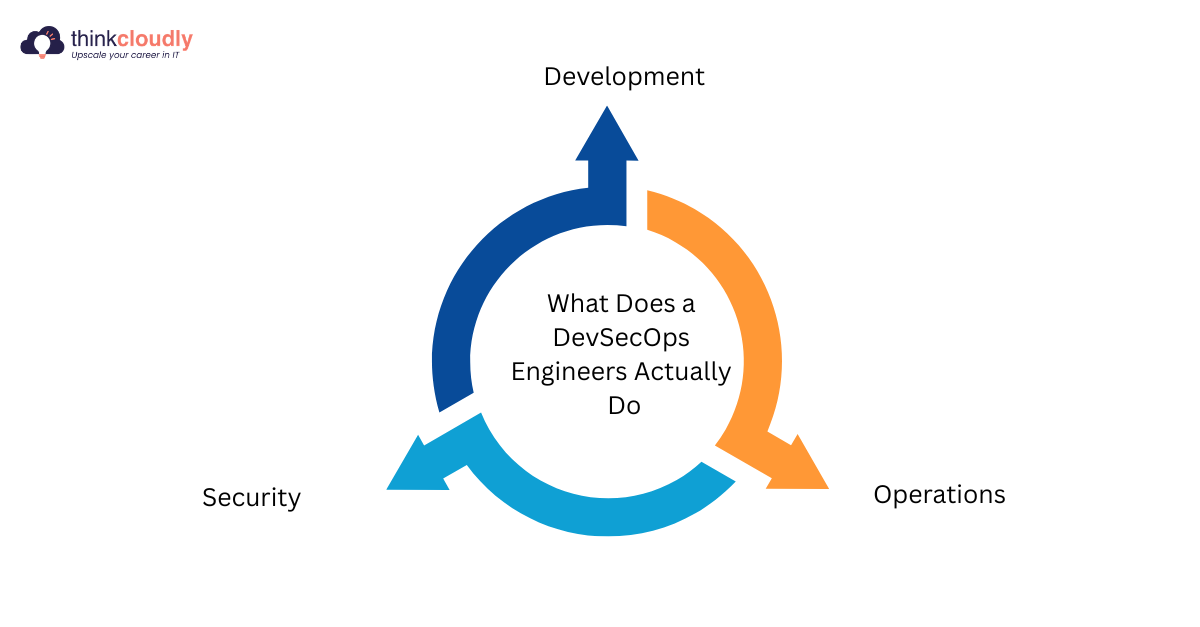
Development —Day-to-day work includes understanding how software is written and how it flows through a build pipeline.
Security — Day-to-day work includes knowing where vulnerabilities typically appear, how to scan for them automatically, and how to fix them before they become problems.
Operations — Day-to-day work includes managing the infrastructure that software runs on, including cloud platforms, containers, and deployment automation.
Day-to-day practices and work might include:
- Setting up automated security scans that run every time a developer submits new code
- Reviewing cloud configurations to make sure nothing is accidentally left open to the internet
- Responding to vulnerabilities flagged in third-party tools and libraries
- Working with development teams to fix security issues without slowing down delivery
- Ensuring the company meets compliance requirements for regulations like GDPR or SOC 2
It is a broad role. And that breadth is exactly why it pays well.
DevSecOps Salary: What You Can Realistically Expect
Here is where things get interesting for anyone considering this career path.
Salary at a Glance
|
Level |
US (Annual) |
UK (Annual) |
|
Entry-level (0–3 years) |
$90,000 – $115,000 |
£45,000 – £55,000 |
|
Mid-level (3–7 years) |
$130,000 – $150,000 |
£58,000 – £75,000 |
|
Senior (7+ years) |
$165,000 – $200,000+ |
£75,000 – £100,000+ |
|
Lead / Architect |
$195,000 – $270,000+ |
£90,000 – £120,000+ |
Sources: Glassdoor (2025–2026), Talent.com, SalaryExpert, Practical DevSecOps
These numbers tell a clear story. Even at the entry level, DevSecOps pays above what most pure DevOps or software engineering roles offered just a few years ago. At the senior and lead levels, the figures are comparable to engineering management roles — without leaving technical work behind.
In the US, cities like San Francisco, Seattle, and New York consistently show the highest figures, with senior roles in those markets reaching well above $200,000 when bonuses and stock are included. In the UK, London leads, though demand is growing in cities like Manchester, Bristol, and Edinburgh as well.
A Real-World Scenario
Disclaimer: The following scenario is common and created for illustrative purposes only. The name, salary figures, and circumstances are representative of common career transitions in this field and do not represent any real individual for privacy concerns.
James, a 29-year-old DevOps engineer working at a mid-sized software company in Austin, Texas, had been in his role for four years. He was good at his job — pipelines, deployments, cloud infrastructure — but his salary had plateaued around $105,000, and the job titles above him were either management or more of the same.
He started reading about DevSecOps after his company brought in a third-party security audit and spent three weeks confused by the obvious problems. That scramble cost the company time, money, and a delayed product launch.
James spent six months studying cloud security and completing a DevSecOps certification. He did not quit his job. He learned on evenings and weekends, applied what he could at work, and rebuilt his resume around security-aware infrastructure skills.
He applied for a mid-level DevSecOps role at a fintech company. The offer came in at $148,000 — a $43,000 increase with a similar commute and more interesting work.
The transition was not instant. But it was achievable with structured effort and the right learning path.
DevOps vs. DevSecOps: Key Differences
If you already work in DevOps, the gap between where you are and where DevSecOps begins is smaller than you might think. The foundation — automation, CI/CD pipelines, cloud platforms, infrastructure as code — is shared. What DevSecOps adds is a security layer on top of that foundation.
The additional skills that matter most:
- Understanding common vulnerability types (OWASP Top 10 is a good starting point)
- Familiarity with security scanning tools like Snyk, SonarQube, or Trivy
- Knowledge of how to configure cloud environments securely (AWS, Azure, or GCP)
- Basics of compliance frameworks relevant to your industry
None of these requires starting over from scratch. For someone already in DevOps, they represent a focused upskilling effort — not a career change.
Is DevSecOps Right for You?
This role tends to suit people who:
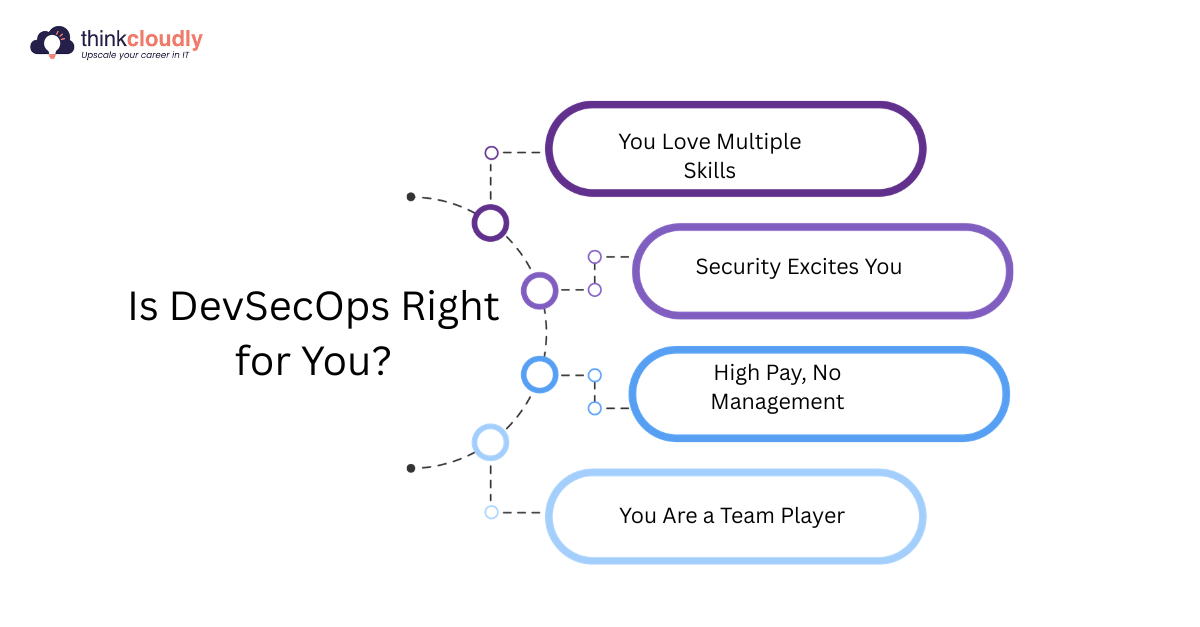
- Enjoy working at the intersection of multiple disciplines rather than specializing deeply in one
- Find security problems interesting to solve rather than annoying to deal with
- Want the earning potential of a senior engineer without moving into management
- Are comfortable working across teams — developers, security, compliance, and leadership
It is worth noting that DevSecOps is not purely a technical role. Communication matters. Explaining a security risk to a non-technical product manager, or convincing a developer why a particular fix cannot wait until next sprint — these are daily realities. The best DevSecOps professionals combine technical depth with the ability to translate between audiences.
What to Learn First
If you are starting from a non-technical background, the learning path takes longer — but it is not closed. Many successful DevSecOps professionals came from adjacent fields like IT support, QA testing, or systems administration.
A structured learning path covers 6 points:
- Linux and basic scripting (Python or Bash)
- Cloud fundamentals: most employers want AWS, Azure, or GCP
- Containers and orchestration (Docker, Kubernetes)
- CI/CD pipeline basics
- Security concepts and tools
- Compliance and governance basics
Certifications that carry genuine weight in the job market include the Certified DevSecOps Professional (CDP), AWS Certified Security Specialty, and CompTIA Security+. Employers use these as a shorthand signal that you understand the field — particularly useful if you are transitioning from a different background.
Conclusion
The shift from DevOps to DevSecOps is not a trend. It is a structural change in how software teams operate, driven by the very real cost of building insecure systems. The companies that have not made this shift yet are either planning to or will be forced to.
That creates a significant window for professionals who move early. The salary data is clear, the demand is real, and the skills — while broad — are learnable with the right structure and commitment.
If you are already in tech and wondering where the next meaningful move is, DevSecOps is one of the most financially rewarding answers available in 2025-2026.
Sources and References
- IBM Security — Cost of a Data Breach Report 2024
- Glassdoor — DevSecOps Engineer Salary, United Kingdom (March 2026)
- Glassdoor — DevSecOps Lead Salary, United States (August 2025)
- Practical DevSecOps — DevSecOps Engineer Salary in 2025
- SalaryExpert (ERI) — DevSecOps Engineer Salary in the United Kingdom (2026)
- IT Jobs Watch — DevSecOps Job Trends and Salary Data, UK (April 2026) —