


Stop guessing. Start knowing. The job market has changed dramatically—and your paycheck should reflect that.
If you’ve ever walked out of a salary negotiation and thought, “Did I just leave money on the table?”—you’re not alone. Millions of professionals, from entry-level candidates to senior engineers eyeing a career switch, go through their entire careers without ever truly knowing their real market value.
And the problem isn’t laziness — it’s that reliable, role-specific, location-aware salary data is genuinely hard to find. Generic job boards show national medians. Salary databases are updated once a year. Your LinkedIn network gives you anecdotes, not benchmarks.
→ Try the Free AI Salary Calculator Now. Takes under 2 minutes. Enter your role, location, and skills to get your personalized range.
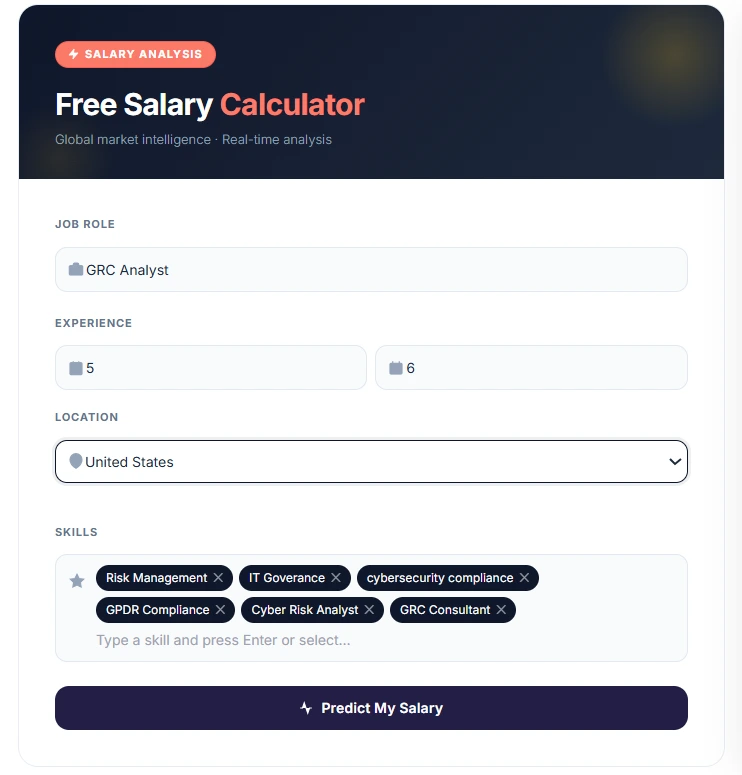
In this guide, we’ll break down what the 2026 tech salary market actually looks like, which roles and skills are commanding real premiums right now, and how to compare your worth across global markets.
Why You Probably Don’t Know Your Real Market Value
Here’s an uncomfortable truth: most professionals set their salary expectations based on what a colleague mentioned, a number they saw on LinkedIn, or simply what their last employer paid them. None of these are reliable indicators.
Salary data is highly dynamic. A cloud engineer in Austin earns very differently from one in Berlin or Toronto — not just because of geography, but because of certification level, years of hands-on experience, the specific cloud platform they know, and what skills are in demand at that moment.
According to the 2026 Tech Salary Guide by Robert Half, AI/ML engineers saw a 4.4% salary growth while overall tech salary growth held steady at just 1.6%. That means being in the right role—with the right skills—isn’t just a career preference; it’s a six-figure financial decision.
Without a proper salary predictor, you’re essentially negotiating blindfolded. Most employers have a defined salary band in mind—even if you don’t.
What Makes This Free AI Salary Calculator Different
There are plenty of generic salary databases out there — Glassdoor, Levels.fyi, Payscale—but most of them show you national medians that don’t account for your specific profile. This free salary estimator tool takes a more personalized approach.
Here’s what makes it stand out:
- It factors in your actual profile, not just your job title. Enter your role, years of experience, country, and the specific skills you bring to the table, and the tool generates a salary range that reflects real market intelligence, not just averages.
- It’s truly free. No account required, no credit card, no premium paywall. The salary calculator is built as a resource for anyone — entry-level professionals, mid-career practitioners, or senior leaders exploring a switch.
- It covers global markets. Whether you’re based in the US, the UK, the UAE, Canada, or anywhere in between, the job salary calculator provides location-adjusted estimates. As we’ll see below, location can literally double or triple your earning potential for the same role.
- It gives you a personalized estimate, not a generic average. Most salary lookup tools take your job title and return a national median. This AI salary calculator works differently: it takes your complete profile — role, experience level, location, and specific skill set — and cross-references those inputs against compiled market data to return a salary range tailored to you. That’s a meaningfully different result from Googling “DevOps engineer salary.”
“Note: Like any salary tool, estimates are based on available market data and are intended as a benchmark for informed decision-making—not a guaranteed offer figure.”
2026 Tech Salary Trends: What the Data Actually Shows
Before you use any free salary checker, it helps to understand the broader market context. The 2026 salary landscape in tech is not uniform—it’s deeply divided between generalist and specialist roles.
A quick note on sources: Some of the workforce research cited below—including the Cisco AI Workforce Consortium study and the Global Knowledge skills report—was published in 2025 and analyzed job market data through mid-2025. These studies directly informed the 2026 salary projections released by Robert Half and Motion Recruitment, which are built on verified placement data and forward-looking employer surveys.
The Specialist Premium Is Real
Motion Recruitment’s 2026 Tech Salary Guide found that while average tech salaries remained broadly flat year-over-year, specialized roles saw sharp increases. Mid-level AI engineers saw salary growth of 9.2%, and LLM (Large Language Model) developers reached average base compensation of $209,000. Meanwhile, entry-level and generalist positions faced slowdowns as AI began automating routine tasks.
The message is clear: specialization pays. The professionals winning in 2026 are those with demonstrable expertise in AI, cloud architecture, cybersecurity, or data engineering — not just general IT knowledge.
AI and Cloud Skills Command Premium Compensation
The 2025 AI Workforce Consortium report led by Cisco — which analyzed 50 ICT roles across G7 countries using job posting data from July 2024 to June 2025 — found that 78% of ICT roles now include AI technical skills as a requirement. Seven of the ten fastest-growing ICT roles are AI-related, including AI/ML engineers, NLP engineers, and AI risk and governance specialists.
On the cloud side, AI and GenAI workloads now drive 30–40% of total cloud demand, making cloud skills inseparable from AI career growth. Professionals with certifications in AWS, Azure, or GCP continue to see significant salary premiums — with AWS Certified Solutions Architect professionals averaging an $18,000 salary lift in the US alone.
Tech Salary by Role — US Market 2026
|
Role |
Projected 2026 Salary (US Midpoint) | YoY Growth |
|
AI/ML Engineer |
$170,750 |
+4.4% |
| Data Scientist | $153,750 |
+4.1% |
|
Cybersecurity Engineer |
$144,000 | +4.0% |
| DevOps Engineer | $145,750 |
+3.0% |
|
ERP Developer |
$143,500 | +3.2% |
| Data Analyst | $117,250 |
+3.3% |
Source: Robert Half 2026 Salary Guide | BLS Computer and IT Occupations
These aren’t just numbers — they’re negotiating ammunition. If you’re a DevOps engineer in the US being offered $120K, you’re being underpaid by a significant margin. A free AI salary calculator helps you walk into that negotiation knowing exactly that.
Compare Tech Salaries Globally: Why Location Still Matters in 2026
One of the most powerful ways to use the calculator is to run it for different countries and directly compare what the same role pays across global markets. This matters enormously for professionals exploring relocation, remote work, or international opportunities.
Here’s a snapshot of what cloud engineering roles pay across major markets in 2026, all figures converted to USD:
|
Country |
Cloud Engineer Avg. Annual Salary (USD) | Key Notes |
|
United States |
$130,000 – $151,000 |
Highest nominal salary globally |
| UAE (Dubai/Abu Dhabi) | $60,000 – $90,000 |
Tax-free take-home often exceeds UK gross |
|
United Kingdom |
$65,000 – $85,000 | Strong enterprise demand; moderate tax |
|
Germany |
$70,000 – $90,000 |
Growing tech hub; high quality of life |
| Australia | $55,000 – $75,000 |
~AUD 90K–110K; accessible visa pathways |
|
Canada |
$80,000 – $100,000 | Urban tech hubs; PR-friendly immigration |
| Singapore | $85,000 – $105,000 |
Asia-Pacific leader; competitive market |
Data aggregated from Glassdoor, Robert Half, Motion Recruitment, and regional salary surveys (2025–2026). All figures in USD.
A few things jump out from this data. The UAE, often overlooked, offers a compelling proposition: its tax-free structure means a $75,000 package in Dubai frequently delivers higher net income than a $90,000 gross salary in the UK.
The US still leads on nominal pay, but factoring in taxes and cost of living, cities like Austin, Seattle, and New York can feel much closer to Toronto or Berlin than the raw numbers suggest.
This is exactly why a free salary estimator tool that accounts for your location is far more valuable than a simple Google search. Use the salary calculator to run your role across different countries and see the difference instantly.
How to Use a AI Salary Calculator — Step by Step
Using the free AI salary calculator takes under two minutes. Here’s how to get the most out of it:
Step 1 — Enter your job role: Be specific. Don’t just say “developer”—enter “AWS Cloud Engineer” or “Data Scientist” or “DevOps Engineer.” The more precise your title, the more accurate your prediction.

Step 2 — Add your experience: Enter both years and months. The difference between 2 years and 3.5 years of experience can shift a salary band by $10,000–$20,000 in many markets.

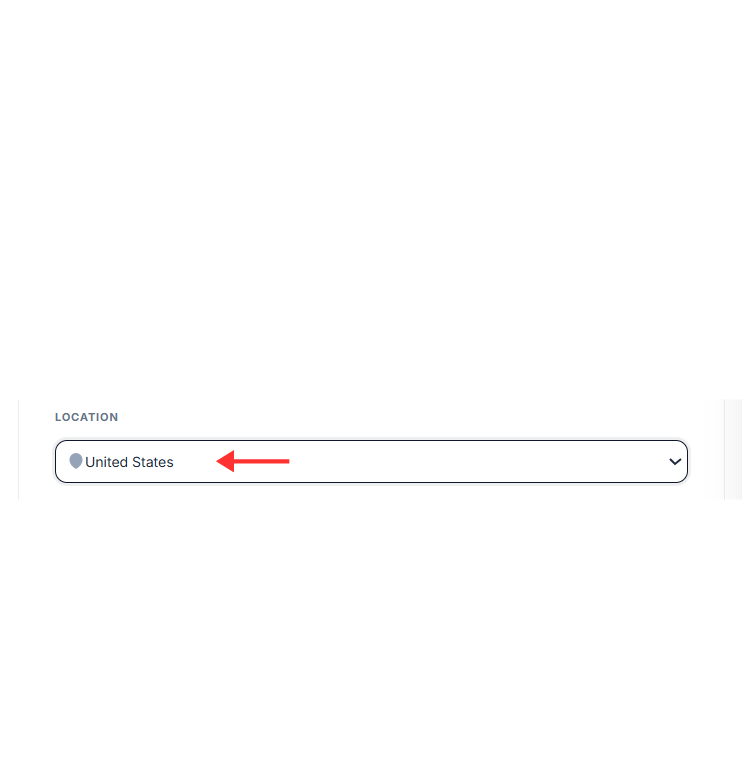
Step 3 — Select your location: The tool covers countries across every major region. If you’re exploring a move, try running the calculator with your target country to see the potential financial upside.
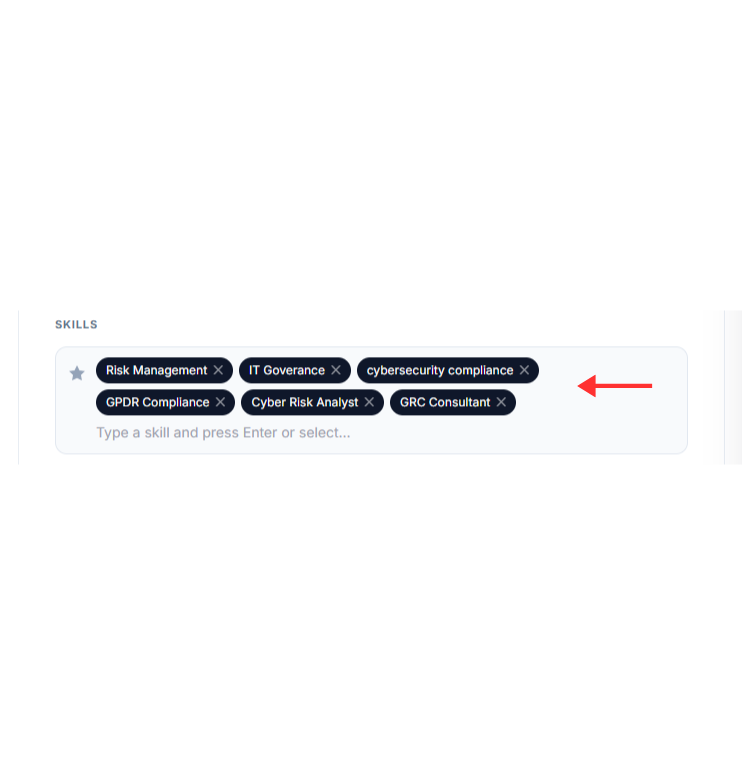
Step 4 — Add your skills: This is where the tool gets personalized. Adding high-demand skills like Kubernetes, Terraform, Python, or specific cloud certifications directly affects your predicted salary range. Think of it as seeing the return on your learning investment in real time.
Step 5 — Click Predict My Salary: You’ll get an instant, personalized salary range based on your complete profile.

How to Actually Increase Your IT Salary Using These Insights
Getting a salary prediction is only the first step. The real value comes from using that data to close the gap between where you are and where you should be.
Identify Your High-Value Skill Gaps
If the calculator shows a significant range spread — say, $90K at the low end and $140K at the high end — that gap usually comes down to skills. In most tech roles in 2026, the skills commanding the highest premiums include generative AI, cloud security, infrastructure-as-code (Terraform and Ansible), and multi-cloud architecture.
Professionals with both AWS and Azure certifications earn 10–20% more than single-cloud specialists, according to the Global Knowledge IT Skills and Salary Report. That’s a meaningful return on a few months of study.
If you’re looking to close that gap, our AWS certification training and DevOps courses are built specifically to get you job-ready — not just exam-ready.
Negotiate with Data, Not Gut Feel
When you walk into a salary conversation with concrete, market-backed numbers—not just “I feel I deserve more”—the entire dynamic shifts. Hiring managers are accustomed to candidates guessing. When you arrive knowing the 25th, 50th, and 75th percentile salary for your role in your city, you command the conversation.
Use the salary range from the job salary calculator as your anchor. Start at the top of the range. The worst they can say is no.
Understand the Real ROI of IT Certifications
The data are consistent across multiple global salary surveys—certifications meaningfully move the needle. According to the Global Knowledge IT Skills and Salary Report, here’s what specific certifications have consistently added to base salaries in the US market:
- AWS Certified Solutions Architect – Professional: +$18,000
- Google Cloud Professional Cloud Architect: +$16,000
- Certified Kubernetes Administrator (CKA): +$15,000
- CISSP — Cybersecurity Certification: +$18,000
Add or remove these from your skills field in the salary predictor to instantly see the salary difference—and if you’re ready to act, our cybersecurity certification programs are a direct path to those premium salary bands.
Explore the Location Arbitrage Opportunity
This one is underutilized. Many professionals are eligible for remote roles with US or European companies that pay significantly above their local market rates. A developer working remotely for a US firm can often earn 40–60% above what a comparable local position offers—simply by tapping into international demand.
Run the salary calculator for different countries to understand what the same role pays across markets. Then ask yourself, is your current setup optimized for your earning potential?
Who Should Be Using This Free Salary Calculator Right Now
- Entry-level professionals and new graduates: Don’t walk into your first job offer without knowing the market rate. The gap between an uninformed and informed first salary can compound for years—because every future raise and offer is typically anchored to what you currently earn. Check your market value here.
- Mid-career professionals: If you haven’t benchmarked your salary in the last 12 months, you’re likely underearning. Markets shift fast. The salary that felt competitive in 2023 may be 15–20% below market in 2026, particularly in AI and cloud roles.
- Career switchers: If you’re moving from traditional IT support to cloud engineering, the salary predictor helps you understand the realistic range for your target role at different experience levels—so you can plan your transition timeline with financial clarity.
- Managers and team leads: Retention starts with competitive compensation. Using an AI salary calculator helps you benchmark your team’s salaries against the market and make the case internally for adjustments before your best people start taking calls from recruiters.
- Anyone considering relocation: Whether it’s a domestic city-to-city move or an international relocation, understanding the salary delta before you make the leap is essential planning — not optional. The BLS Computer and IT Occupations data and our calculator together give you a complete picture.
The Pay Gap Is a System—Here Is How to Work It
The tech salary market in 2026 is not uniform, not predictable from a single number, and not something you can navigate effectively without data. Specialized roles are accelerating away from generalist roles in terms of compensation. Location still matters enormously—but it’s increasingly nuanced with remote work expanding the addressable opportunity set. And the skills you invest in today directly translate into salary outcomes you can model and plan for.
This free AI salary calculator puts all of that intelligence in your hands, for free, in under two minutes. Whether you’re negotiating your first offer, preparing for a review conversation, or simply trying to understand where you stand in the global market—this is the benchmark you’ve been looking for.
Your market value exists whether or not you know it. It’s time to find out.