A decade ago, someone told you to get AWS certified. They were right.
In 2026, that advice needs an update.
Google Cloud job postings grew 47% year over year in 2025, more than double the growth rate of AWS postings over the same period, according to LinkedIn Economic Graph analysis backed by Synergy Research Group market data. That gap is not a statistical blip. It is a hiring signal that reflects real enterprise adoption, real AI investment, and real demand for professionals who saw this coming before everyone else did.
What Is Actually Driving Google Cloud’s Growth?
Google Cloud’s growth story has one central character: AI that enterprise customers can finally measure in revenue and results.
Vertex AI became the platform large organizations reached for when they needed to build and deploy AI applications in a managed environment. Gemini gave enterprise customers a practical reason to move infrastructure to Google Cloud that had nothing to do with pricing comparisons. Google Cloud revenue hit $11.96 billion in Q4 2025, growing 28% year over year, the fastest the division has ever grown.
The mechanism is elegant. Organisations already living inside Google Workspace are extending that relationship into cloud and AI. Familiarity accelerates adoption. Adoption accelerates hiring.
The Job Market Data in Plain Language
Skip the analysis. Look at the numbers.
Google Cloud job postings grew 47% between Q1 2025 and Q1 2026, per LinkedIn Economic Graph data. AWS managed 21%; Azure hit 31%. Google Cloud growing at more than double the AWS rate is not a minor variation. It is a reversal of a pattern that held consistently for most of the past decade.
The growth clusters around specific roles. AI and ML engineering jumped 89%. Data engineering climbed 61%. Security roles rose 54%. General cloud operations grew 38%.
AI is the engine. Everything else is following its lead.
Google Cloud vs AWS vs Azure: Where the Jobs Are in 2026
|
Platform |
Job Posting Growth 2025-2026 | Avg. Entry Salary (US) | Fastest Growing Role |
Key Certification |
|
Google Cloud |
+47% | $95,000 – $130,000 | AI/ML Engineer (+89%) | Google Cloud Professional Cloud Architect |
| Microsoft Azure | +31% | $90,000 – $125,000 | Azure AI Engineer (+72%) |
Microsoft Azure Administrator (AZ-104) |
|
AWS |
+21% | $92,000 – $128,000 | AWS ML Specialty (+58%) | AWS Solutions Architect Associate |
| Multi-Cloud | +63% | $105,000 – $145,000 | Cloud FinOps Specialist |
FinOps Certified Practitioner |
The multi-cloud row is worth paying attention to. Organizations are increasingly running workloads across multiple cloud providers simultaneously, and professionals who can work across all three platforms command the highest salaries and face the least competition.
Google Cloud proficiency is increasingly the differentiating skill in multi-cloud roles because it is the platform most professionals have the least experience with, which makes people who do have it relatively scarce.
Why Google Cloud Specifically? Why Now?
The timing of this growth is not accidental. Several things converged in 2024 and 2025 that created the conditions for Google Cloud to accelerate past its competitors in hiring growth.
Four things drove this shift, and each one reinforces the others in ways that make the growth self-sustaining rather than temporary.
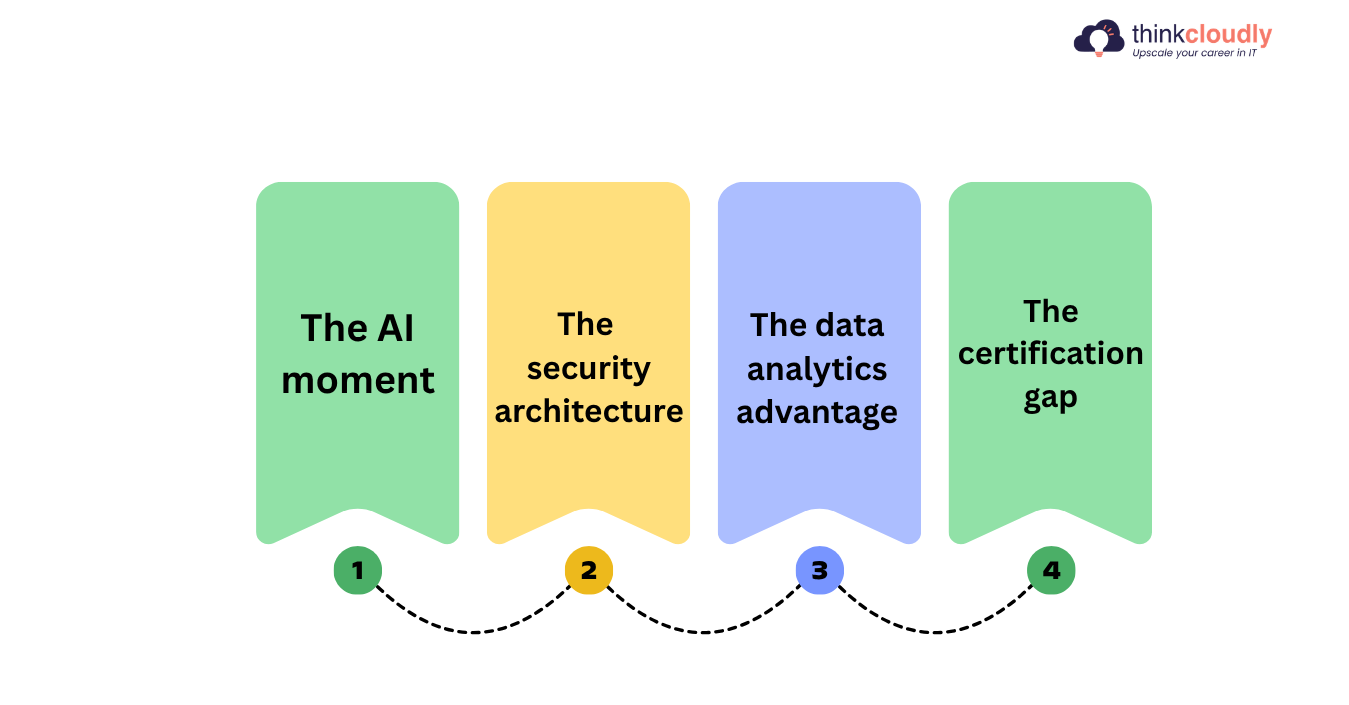
The AI moment
Gemini and Vertex AI gave organizations a practical reason to choose Google Cloud that had nothing to do with pricing or service comparisons. When a company decides to build AI applications seriously, it tends to move infrastructure toward the platform where the AI tools it wants to use actually live. In 2025, that platform was increasingly Google Cloud. Gartner’s cloud market analysis found that AI-driven workloads were the single largest driver of new Google Cloud enterprise contracts for the year.
The security architecture
A zero-trust architecture built in from the beginning is a different thing from security features added to an existing platform. For regulated industries where security posture is something regulators actually examine and auditors actually test, the architectural difference matters. ISC2’s Cybersecurity Workforce Study 2024 noted increased Google Cloud adoption rates among regulated industry organizations, a trend that is translating into sustained hiring demand for security specialists with platform-specific expertise.
The data analytics advantage
Google Cloud’s data warehouse product, BigQuery, has earned a strong reputation for capability and performance, and as organizations have shifted from talking about data-driven decisions to actually making them, the professionals who know BigQuery well have become genuinely valuable in ways that show up directly in job postings and salary offers. CompTIA’s State of the Tech Workforce 2026 named BigQuery proficiency one of the fastest-rising skill requirements in data job postings globally. That kind of recognition in a major workforce report reflects real hiring patterns, not aspirational ones. For data engineers considering where to specialize, BigQuery expertise is one of the clearest signals in the current market.
The certification gap
The market has far more AWS certified professionals than Google Cloud-certified ones. Supply shortfalls drive compensation up, and in this case they have driven it up significantly. Global Knowledge’s IT Skills and Salary Report 2025 found that a Google Cloud Professional Cloud Architect certification commands a median salary of $175,000, placing it among the top-compensating technology certifications available. For someone making a deliberate decision about where to invest their learning time, that figure is worth sitting with for a moment.
What This Means for Someone Considering a Cloud Career
AWS still makes sense. Nobody is suggesting otherwise.
The question is where the better opportunity sits right now, and in 2026 the data points toward Google Cloud. Faster job posting growth. A certification that demand has outrun supply. AI and data analytics skills that organizations are actively short of.
If you already know AWS, adding Google Cloud is the fastest route to the multi-cloud premium. Robert Half’s 2026 Technology Salary Guide puts multi-cloud professionals 18 to 26 percent ahead of single-platform peers on salary.
The Associate Cloud Engineer certification takes two to three months to obtain.
The Roles Growing Fastest on Google Cloud in 2026
Four roles are pulling most of the hiring growth on Google Cloud right now, and they are worth understanding individually because they attract different kinds of people and reward different combinations of skills.
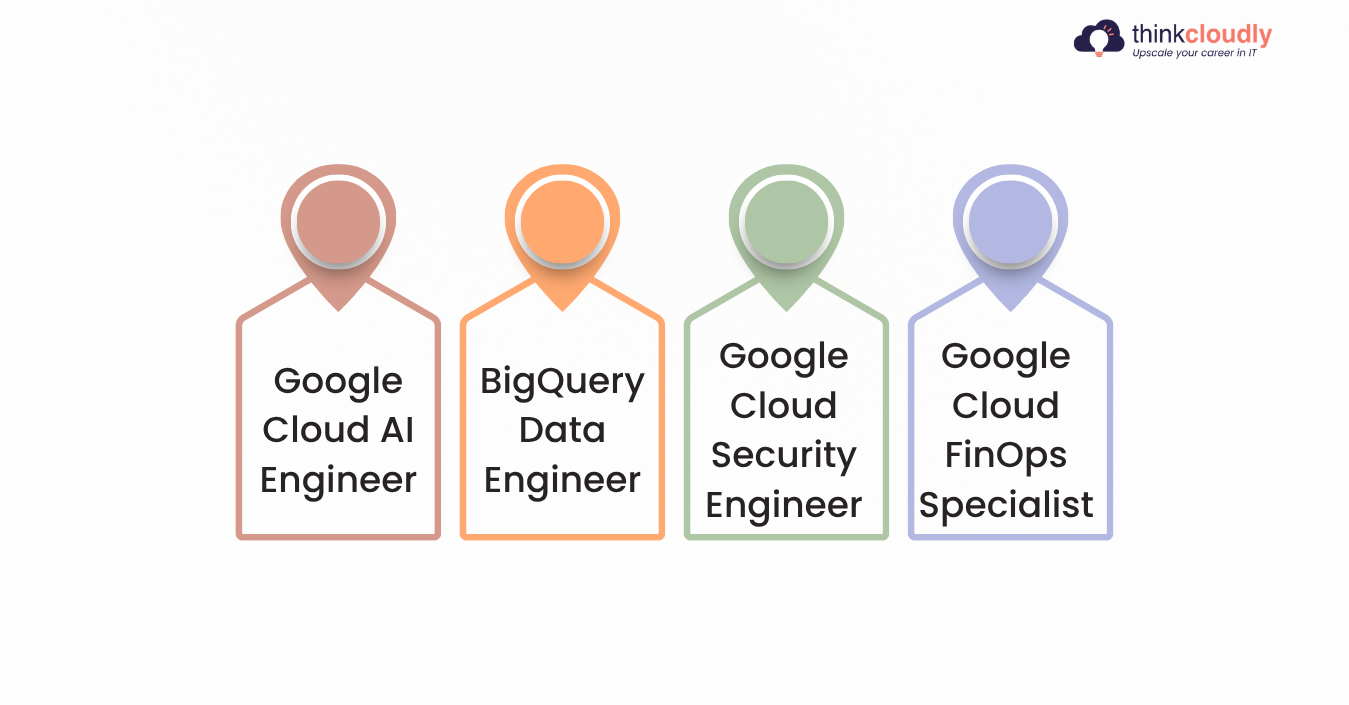
Google Cloud AI Engineer
It is where the most dramatic growth is happening. These are the professionals building and deploying real AI applications using Vertex AI, integrating Gemini models into business systems, and managing the ML pipelines that keep those applications running reliably once they are live. The role is technical at its core. Python proficiency, hands-on model deployment experience, and working knowledge of Google Cloud’s AI-specific services are the consistent requirements across job postings. What makes it particularly valuable in the current market is the combination of platform specificity and AI depth. Both are in short supply simultaneously, which is why compensation for this role has risen sharply.
BigQuery Data Engineer
It is the analytics specialist that growing organizations need as soon as they get serious about making data-driven decisions rather than just talking about them. The job centres on building and maintaining the data pipelines that feed Google Cloud’s analytics capabilities and designing architectures that are both technically sound and cost-effective to run at scale. The accessible entry point here is genuine. Professionals with solid SQL foundations and general data engineering experience can move into BigQuery specialization without starting from scratch. The platform has its own conventions and quirks worth learning, but the foundational skills transfer well.
Google Cloud Security Engineer
It is the specialist responsible for keeping Google Cloud environments secure in practice, not just on paper. The role demands a working understanding of Google Cloud’s security architecture, solid experience with Identity and Access Management, and familiarity with the compliance frameworks that apply to the specific industry the organisation operates in. A security engineer working with a bank faces different regulatory requirements than one working with a healthcare provider or a government agency. The platform knowledge and the industry-specific compliance knowledge need to develop together, which is part of what makes genuinely experienced Google Cloud security professionals difficult to find.
Google Cloud FinOps Specialist
It is arguably the most accessible of the four for people coming from outside traditional technology careers. The role manages cloud spending on Google Cloud, ensuring that infrastructure costs stay proportionate to the value being delivered as organizations scale their deployments. Financial literacy matters as much as technical knowledge here, sometimes more. Someone who understands how to read a budget, identify waste, and communicate financial implications clearly to both engineering teams and finance leadership has a genuine head start. For finance professionals, operations managers, and business analysts who want a path into cloud careers, this is one of the cleaner entry points currently available.
A Note on What This Does Not Mean
Growth comparisons can create misleading impressions if they are not contextualized properly.
Google Cloud growing faster than AWS in job postings does not mean AWS jobs are disappearing. The AWS job market is still significantly larger in absolute terms. AWS is still the first choice of most startups, most small and medium businesses, and a significant proportion of enterprise customers. AWS certifications are still among the most recognised and respected in the industry.
What the growth data reflects is momentum and opportunity at the margin. Google Cloud is the platform where the fastest growth is happening right now, where the certification supply is most undersupplied relative to demand, and where AI-driven hiring is most concentrated. For someone making a deliberate career decision about where to focus their learning, those factors matter.
The safest long-term position is multi-cloud competence with a primary platform specialization. The data suggests that primary specialisation in Google Cloud in 2026 offers better near-term opportunity than it has at any previous point in the platform’s history.
Sources and References
- Synergy Research Group: Cloud Market Share Analysis Q4 2025
- Google Q4 2025 Earnings Call: Google Cloud Revenue Report
- LinkedIn Economic Graph: Jobs on the Rise 2026
- World Economic Forum: Future of Jobs Report 2025
- Gartner: Cloud Market Analysis and AI Workload Trends Q1 2026
- CompTIA: State of the Tech Workforce 2026
- ISC2: Cybersecurity Workforce Study 2024
- Global Knowledge: IT Skills and Salary Report 2025
- Robert Half: 2026 Technology Salary Guide
- FinOps Foundation: State of FinOps 2026
- Burning Glass Technologies: Labor Insight Cloud Skills Report 2026
- Google Cloud Skills Boost: Certification Learning Paths 2026