Candidates applying for tech jobs in 2026 now face odds of roughly 1 in 33 of ever reaching an interview, compared to 1 in 7 a decade ago. For anyone sending out application after application and hearing nothing back, that statistic confirms what already feels true—the funnel has genuinely narrowed.
So how are candidates still landing offers in a market like this? Many have started turning to a dedicated AI interview tool to sharpen their answers before ever sitting in front of a hiring manager. This is exactly where ThinkGPT, built by Thinkcloudly, steps in.
Why Has an AI Interview Tool Become Essential in 2026?
The technology hiring market in 2026 is a strange mix of opportunity and pressure. According to the CompTia blog net tech employment in the United States is projected to grow by 1.9%, adding close to 185,000 jobs this year, and more than three-quarters of technology leaders say they plan to increase permanent headcount in the second half of the year.
Yet at the very same time, 65% of technology hiring managers admit that finding skilled talent has become harder than it was twelve months ago, and 71% say skills shortages have already caused project delays. In other words, jobs exist, but the screening process guarding them has become tighter, faster, and heavily automated.
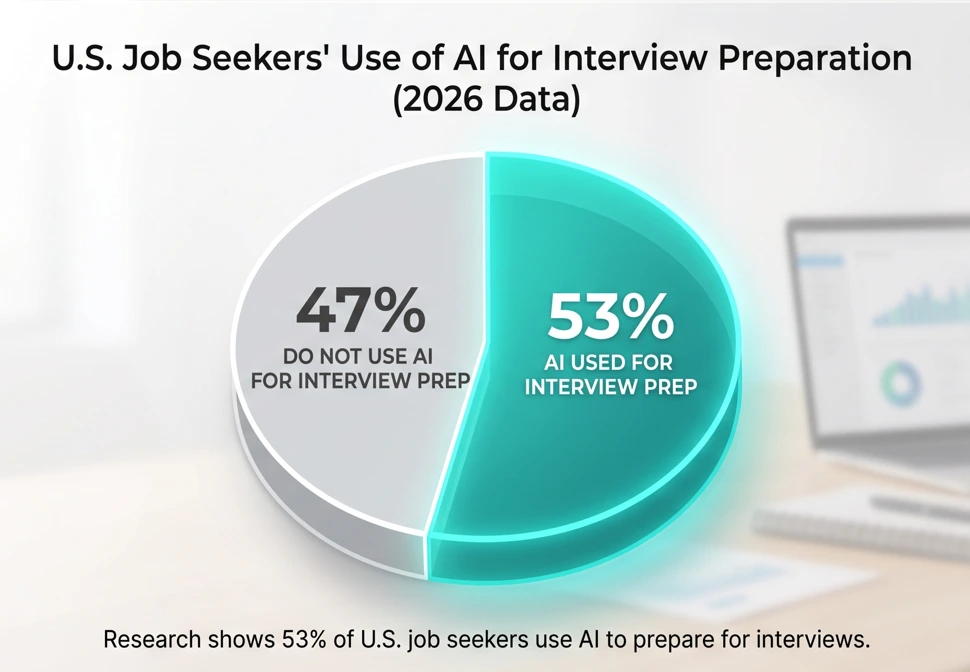
This is precisely why job seekers have started reaching for their own automation. Research published in 2026 found that 74% of U.S. job seekers now use some form of AI during their job search, with 53% specifically using it to prepare for interviews. Separate research on hiring trends found that AI use in interview preparation has become close to standard practice rather than a fringe habit. When both sides of the hiring table are using AI, showing up without any interview prep AI on your side puts you at a real disadvantage.
What Makes ThinkGPT Different From a Generic Chatbot?
Most job seekers already know they can open a general-purpose chatbot and ask it to quiz them on interview questions. But that approach tends to be scattered — a candidate copy-pastes a job description, gets a handful of generic questions back, and is then left hunting across five different browser tabs for anything role-specific.
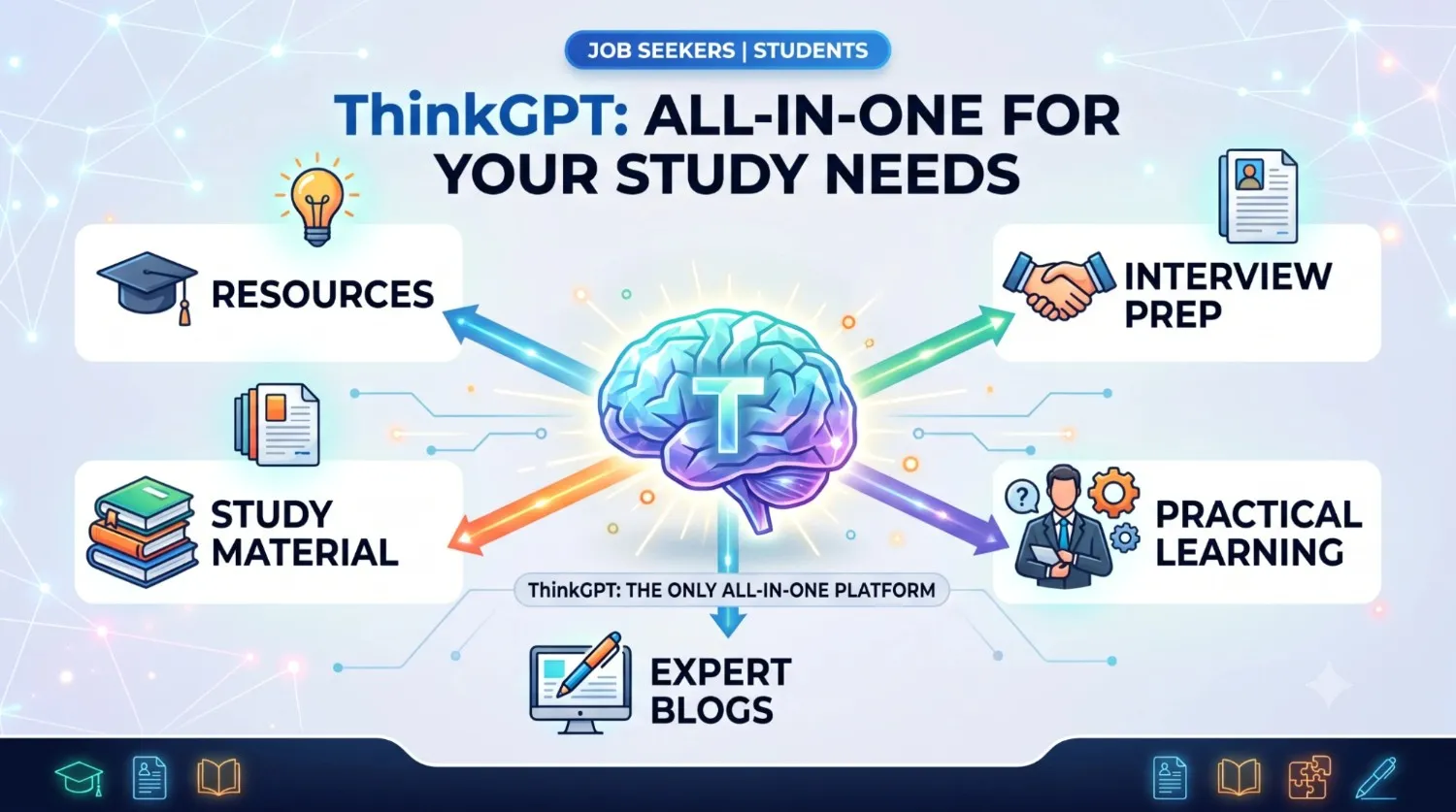
ThinkGPT was created by Thinkcloudly to solve that exact problem. It is not a generic assistant bolted onto a chatbot; it is a purpose-built AI interview tool where blogs, curated interview questions, structured notes, and scenario-based learning material for IT careers all sit in one place.
The mechanics are simple by design. A student or job seeker pastes the job description they are preparing for directly into ThinkGPT, and the platform pulls together the blogs, interview questions, notes, and scenario-based exercises that match that role, all in a single click. There is no need to search separately for “network engineer interview questions” in one tab and “how to answer behavioral questions” in another.
In a hiring cycle where 65% of tech leaders already say they need to upskill current teams just to keep pace, candidates don’t have spare hours to waste hunting for scattered interview guidance across the internet. This is really what good interview prep AI should do: fewer tabs, less guesswork, one dependable place to prepare.
Free Interview Practice: Lowering the Barrier to Entry
One of the more encouraging shifts in 2026’s hiring data is how normalized AI-assisted preparation has become. Demand for AI skills is accelerating so fast that AI-related terms now rank among the fastest-growing skills in job postings, and that same fluency expectation is spilling into how candidates get ready for interviews, not just how they list skills on a resume. ThinkGPT leans into this shift by offering free interview practice to their students and 5 free credits for the new users for trial, so a candidate doesn’t need to commit financially before knowing whether the tool actually fits their preparation style.
This matters more than it might seem. Job searching is already documented as an emotionally draining experience — recent survey data found that roughly half of job seekers say the process has negatively affected their mental health, largely due to silence, ghosting, and unclear feedback. Being able to rehearse answers, get structured feedback, and build muscle memory through free interview practice removes one layer of that anxiety before the stakes get higher.
IT Interview Questions and IT Project Manager Interview Questions, Organized by Role
Generic interview advice (“just be confident,” “tell me about yourself”) doesn’t hold up in a technical interview. IT hiring has moved toward specific, scenario-based questioning, and candidates need practice material that reflects that. This is where a role-based library of IT interview questions makes a measurable difference, because a network administrator, a data analyst, and a DevOps engineer are being evaluated on entirely different rubrics.
ThinkGPT organizes its question bank by career track rather than dumping everything into one generic list. A few examples of what candidates typically work through:
- Technical support and systems roles: troubleshooting scenarios, ticketing workflow logic, and hands-on questions about networks and hardware.
- Software and QA roles: debugging walkthroughs, code review discussions, and questions about testing frameworks and version control.
- Cloud and DevOps roles: questions on deployment pipelines, infrastructure-as-code, and incident response under pressure.
- Data and analytics roles: SQL scenario questions, data-cleaning logic, and how to explain a finding to a non-technical stakeholder.
- IT leadership and coordination roles: This is where IT project manager interview questions come in, covering stakeholder communication, budget and timeline trade-offs, risk management, and how to handle a project that’s falling behind schedule.
That last category deserves its own mention. Demand for IT project managers has stayed consistently strong through 2026, with Robert Half naming it among the roles seeing the steadiest above-average growth in job postings this year. Yet project manager interviews are notoriously behavioral and situational, which makes them hard to prepare for using generic question banks. Practicing IT project manager interview questions ahead of time—the “tell me about a time a stakeholder disagreed with your timeline” style prompts—is often what separates a candidate who freezes from one who tells a clear, structured story.
A Quick Comparison: Scattered Prep vs. a Single AI Interview Tool
|
Preparation Method |
Time to Find Relevant Material | Role-Specific Questions | Cost to Start |
Feedback and Notes |
|
Random web searches and forums |
High (hours across tabs) | Inconsistent | Free, but time-costly |
None |
|
General-purpose chatbot |
Medium | It depends on prompting skill | Often free |
Basic, not IT-specific |
|
Paid interview coaching |
Low | High, but expensive | $50 to $300+ per session |
Strong, but limited sessions |
|
ThinkGPT AI interview tool |
Low, one JD paste | High, organized by IT role | Free for students; 5 free credits for new users |
Structured notes, role-based |
How do students and working professionals use ThinkGPT?
ThinkGPT was originally designed for Thinkcloudly’s own students, which is why it remains free for anyone enrolled in a Thinkcloudly course. That group can log in and immediately pull blogs, interview questions, notes, and scenario-based learning content tied to whatever role they are targeting. For everyone else, the five free credits given to new users work as genuine free interview practice rather than a locked demo, letting a candidate paste a real job description and see the platform’s output before committing further.
Beyond the free tier, candidates who want deeper, ongoing interview guidance can enroll in Thinkcloudly’s courses, which unlock the full range of ThinkGPT’s material alongside structured lessons. This path suits anyone who wants more than a single trial run — someone preparing for multiple interview cycles, switching specializations within IT, or wanting every blog, question, and note in one account rather than piecing together free content over time.
Interview Guidance That Goes Beyond Just Questions
Questions alone don’t win interviews — structure does. Hiring panels in 2026 are increasingly trained to score answers against a rubric, which means two candidates can answer the same question with the same knowledge and get different scores purely based on delivery and structure. This is why interview guidance matters as much as the raw question list. ThinkGPT pairs its question banks with guidance on structuring answers, common follow-up traps to expect, and how to translate technical work into language a non-technical interviewer can follow.
This kind of preparation support is particularly valuable given how interviews themselves are evolving. Engineering leaders surveyed by Karat reported that AI is making it harder to judge a candidate’s real technical depth, which has pushed many companies to ask more layered, follow-up-heavy questions instead of relying on a single canned prompt. A candidate who has only memorized answers, rather than practiced explaining their reasoning, tends to struggle the moment an interviewer asks “why” a second or third time.
How to Actually Use an AI Interview Tool Effectively?
Having access to a strong AI interview tool doesn’t automatically translate into a job offer — how it gets used does. A few practical habits make the biggest difference for students and job seekers alike:
- Paste the actual job description being targeted rather than a generic role title, since ThinkGPT tailors its output to the JD itself.
- Rotate through different IT interview questions each session instead of memorizing the same five answers.
- Time practice sessions to work on pacing under pressure, not just the content of the answers.
- Revisit IT project manager interview questions even when applying for a technical role, since many technical positions now include a project-coordination component.
- Treat any interview prep AI in use, including ThinkGPT, as a rehearsal partner rather than a script to memorize word-for-word.
Conclusion
The 2026 hiring market rewards preparation more than it ever has. With AI now sitting on both sides of the interview table—screening resumes on one end, helping candidates rehearse on the other—showing up unprepared is no longer a small risk; it is a real disadvantage. ThinkGPT, built by Thinkcloudly, brings blogs, curated IT interview questions, IT project manager interview questions, notes, scenario-based learning, and structured interview guidance into a single place, free for Thinkcloudly students and backed by free interview practice credits for everyone else. Those who want the full library on an ongoing basis can enroll in or purchase Thinkcloudly’s courses to get everything in one account. For anyone serious about landing an IT role in 2026, pairing solid preparation habits with a dependable AI interview tool like ThinkGPT is one of the more practical steps available.