
If you work in IT and haven’t seen a raise lately, 2026 may be the year that changes, but only if you’re in the right role. AI engineers are seeing 9% raises. Help desk workers? Less than 1%. Here’s what’s driving the gap.
After two quiet years where most IT workers saw little to no salary growth, 2026 is telling a different story — at least for certain professionals.
Some IT professionals are getting 8 to 10 percent salary increases this year. That’s not small. On a $120,000 salary, that’s an extra $10,000 or more per year. But before you get too excited — or too worried — it’s worth knowing the full picture, because this growth is far from happening for everyone.
This blog will walk you through what’s happening, why it’s happening, and what it means.
Understanding the IT Landscape
IT is a huge industry, one going through one of the biggest transformations in a long time.
IT professionals are those who create and manage the digital systems that we all depend on, such as corporate software, hospital databases, mobile apps, online banking systems, and websites.
Some IT workers write code. Others protect companies from hackers. Some manage large systems stored in the cloud, remote servers that store and process data over the internet. Others analyze data to help businesses make smarter decisions.
So Why Are Salaries Going Up?
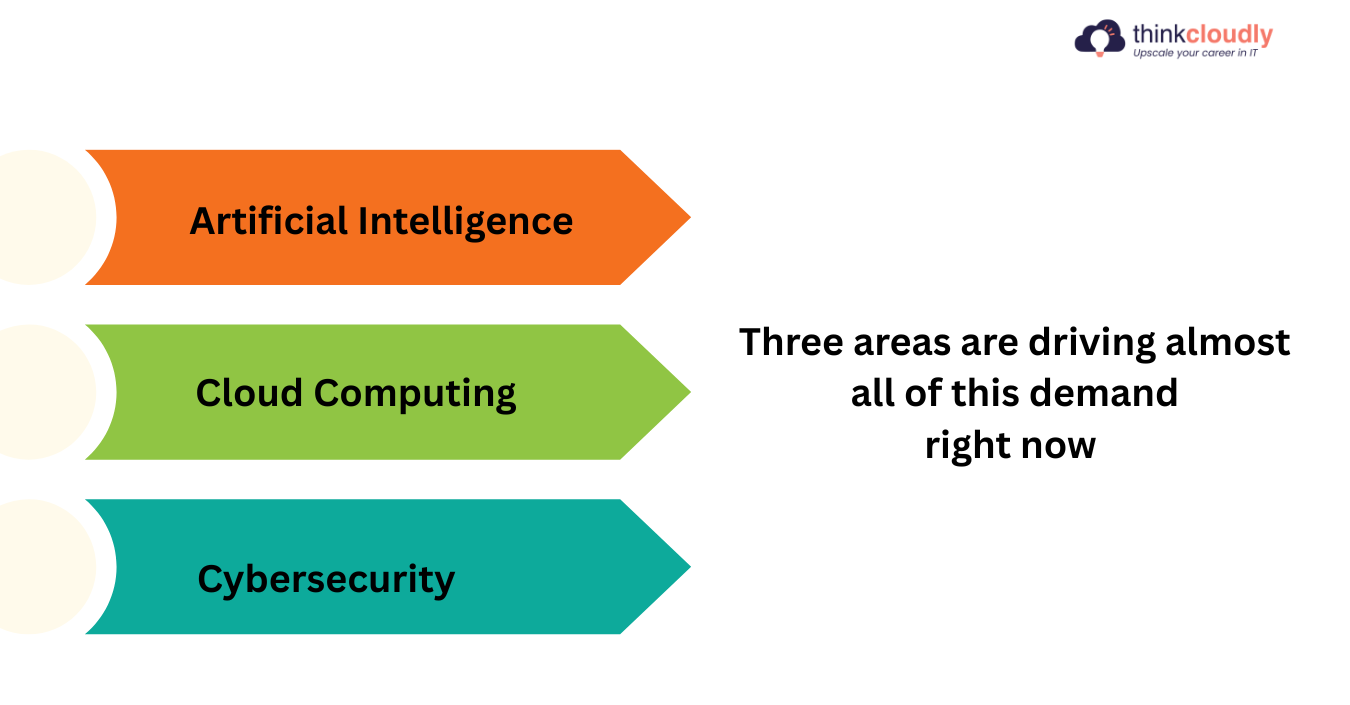
Three areas are driving almost all of this demand right now—Artificial Intelligence (AI), Cloud Computing, and Cybersecurity. Businesses everywhere are trying to adopt AI tools, move their systems to the cloud, and protect themselves from rising cyberattacks. But finding experienced professionals in these fields is genuinely difficult. That shortage pushes salaries up fast.
A Quick Look at the Numbers (IT salary growth by Role, 2026)
Here’s a table showing which IT roles are getting the biggest pay increases in 2026 — and which ones are not:
|
IT Role |
Typical Salary (US) |
Pay Growth in 2026 |
Demand |
|
AI / Machine Learning Engineer |
$167,000 – $180,000+ |
+9.2% |
Very high |
|
Cybersecurity Engineer |
$140,000 – $160,000 |
+4% to +10% |
Very high |
|
Cloud Engineer / Architect |
$117,000 – $188,000 |
+5% to +8% |
Very high |
|
Data Scientist |
$153,750 |
+4.1% |
High |
|
DevOps Engineer |
$145,750 |
+3.0% |
Moderate |
|
Senior Data Warehouse Developer |
$130,000+ |
+5.8% |
Moderate |
|
IT Support / Help Desk |
$70,000 – $90,000 |
+0.5% to +1% |
Slowing |
|
General Systems Administrator |
$85,000 – $105,000 |
+0.8% to +1.6% |
Flat |
The contrast is hard to miss. An AI engineer can expect a raise of nearly 10 percent this year. Someone in IT support? Barely 1 percent. Same industry, very different reality.
Why These Three Areas in Particular?
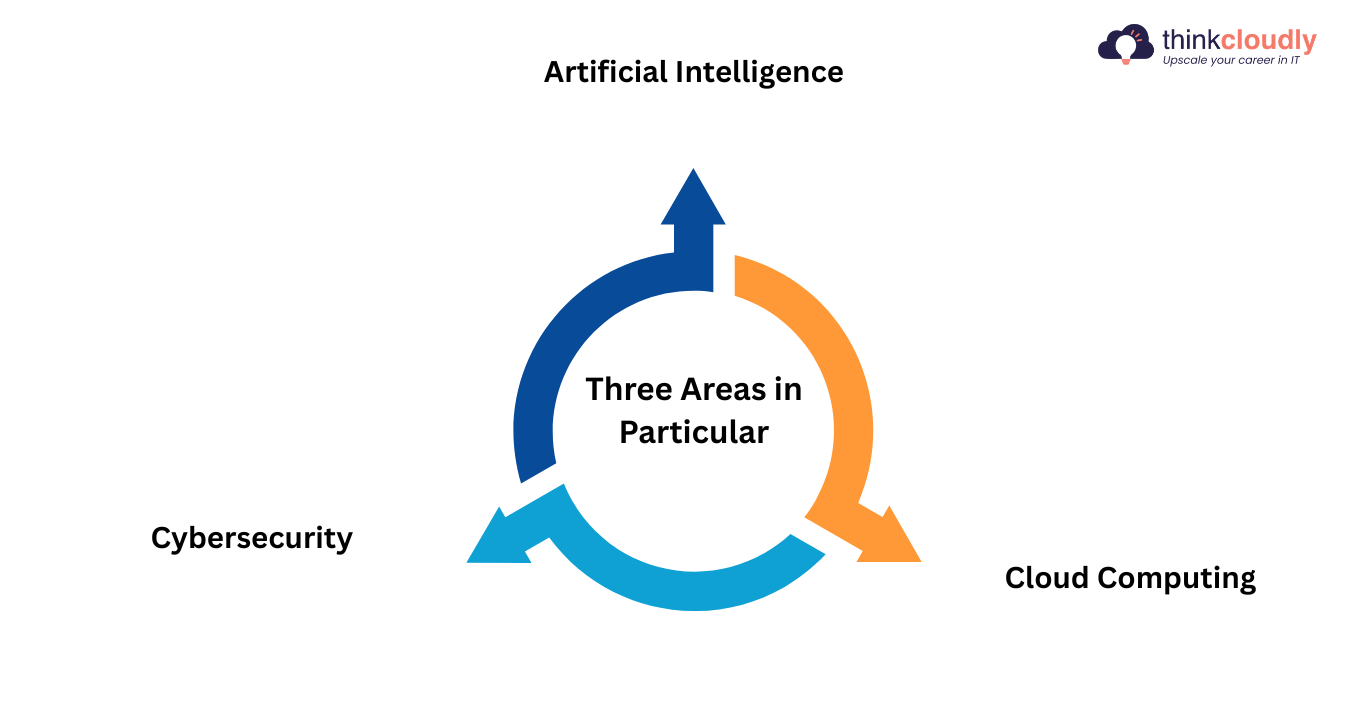
Artificial Intelligence
AI has gone from a buzzword to a business necessity. Companies are investing billions into Artificial intelligence, but they also need skilled engineers to build, monitor, and maintain AI systems. Demand for AI-related job roles grew by 49% in 2025. (Kelly Services, 2026) There aren’t enough people trained in AI yet; this is the reason why salaries are rising so fast in this area.
Cybersecurity
In 2025, the average cost of a data breach in the United States reached $10.22 million — the highest in the world. (IBM Cost of a Data Breach Report, 2025). Despite this, over 750,000 cybersecurity positions remain unfilled across the US.
Cloud Computing
Rather than storing data on physical office computers, businesses now run systems on remote servers operated by companies like Amazon, Google, or Microsoft, a shift commonly called “moving to the cloud.” Businesses are moving to the cloud at scale, and they need experts to manage that transition securely.
That demand makes cloud engineers some of the most sought-after professionals in tech right now.
A Composite Example: From Help Desk Worker to Cloud Engineer
Note: The following scenario is illustrative, based on real salary data and career transitions reported in industry surveys.
Daniel spent four years in an IT support role at a mid-sized retail company. He helped staff reset passwords, fix printer issues, and troubleshoot software. Good, steady work. But his salary had barely moved in three years, sitting at around $74,000.
One evening, Daniel read about the demand for cloud engineers. He spent the next six months studying after work, passing his AWS certification. He didn’t quit his job. He just kept learning.
By early 2026, he had transitioned into a junior cloud role at a healthcare technology company. His new salary? $116,000. His employer made a competitive offer — two other firms were already competing for him.
Who Is Not Seeing These Raises?
The reality is, a large portion of IT workers are not seeing meaningful salary increases in 2026.
Entry-level workers in software testing, general IT support, and legacy system maintenance are seeing flat pay — between 0.8% and 1.6% overall. As AI automates tasks that previously required human labour, some people are losing their jobs. Employers are also becoming more selective about what they will pay for. Years of experience no longer guarantee a big raise. Today, employers prioritize specific skills, which include cybersecurity knowledge, cloud certifications, and AI fluency — over years of general experience alone.
Two years ago, AI engineers earned roughly 30% more than IT support staff. Today, that gap has nearly doubled. That’s not a trend — it’s a structural split in the profession.
Want to Upskill? Here’s What Actually Works
The good news is that you don’t need to go back to university to move into these higher-paying roles. Most of the in-demand skills—cloud, AI, and cybersecurity—can be picked up through structured online programs and industry certifications that you can complete while still working your current job.
Start with one free resource: the AWS Free Tier for cloud, Google Cloud Skills Boost for AI, or TryHackMe for cybersecurity. In month two, build one small project and document it on GitHub. That single portfolio item is what most hiring managers say tips their decision.
The professionals seeing the biggest career leaps are those who combined structured learning with hands-on practice, building expertise in one focused area at a time.
What Does All of This Mean If You’re Not in IT?
You might be reading this thinking, “This has nothing to do with me.” But it touches everyone.
Every business — retail, healthcare, education, finance — now depends on technology. When companies struggle to hire cybersecurity experts, your personal data is more at risk. When healthcare providers can’t find skilled cloud engineers, hospital systems become slower and less reliable.
If you’re a manager or run a business, this is also a practical heads-up: hiring IT talent in specialist areas is getting more expensive, not less. Budgeting for that, or investing in upskilling your existing team, is becoming a real business priority.
The Bigger Picture
The average IT professional in the US now earns $104,420 per year, according to the US Bureau of Labour Statistics. The tech job market is projected to add around 356,000 new roles by 2033.
IT is not declining. It is reshaping. The roles that matter most have changed, the skills employers value have shifted, and the pay gap between specialists and generalists is getting wider every year. The best thing anyone in — or interested in — tech can do right now is pay attention to where the demand is going and move toward it.
Sources & References
- Robert Half — 2026 Salary Guide: Technology and IT National salary benchmarks and hiring trends based on actual job placements and third-party market data across the US.
- Auxis — IT Salary Trends CIOs Need to Know in 2026. Analysis of AI, cloud, and cybersecurity salary movements, including IBM breach cost data and workforce gap statistics.
- IEEE-USA InSight — 2026 Tech Salary Trends Outlook: Expert commentary from Payscale and Robert Half on overall tech salary growth rates and economic drivers.
- Motion Recruitment / Kelly Services — 2026 Tech Salary Guide. Analysis of 100+ tech roles based on verified job placements and real-time labour market data; includes AI role demand growth of 49%.
- Addison Group — 2026 IT & Technology Workforce Planning Guide: Skills-based hiring trends, cybersecurity salary premiums, and long-term job growth projections (356,000 new roles by 2033).
- Lorien — 2026 Tech Salary Guide: Digital & Technology Salary Survey. Salary benchmarks for 150+ tech roles across the US, built from 3.1 million verified paychecks.
- Splunk — Your 2026 IT and Technology Salary Guide. Overview of dual IT market trends—legacy role slowdowns versus premium salaries in AI and cloud specializations.
- Robert Half — 2026 Technology Salary Trends: Skills and Roles Driving Growth. Role-by-role salary growth data, including AI/ML engineer (+4.4%), data scientist (+4.1%), and cybersecurity engineer (+4.0%) projections.