Everyone is talking about cloud careers like they are a guaranteed golden ticket. Sign up for a certification course, pass an exam, and watch the six-figure offers roll in. The internet is full of that version of the story. But spend any time actually working in or hiring for this industry, and a more complicated picture emerges. One where the opportunity is genuinely real but where the gap between what people expect and what they actually experience is wider than most career content will ever admit. This blog is not here to scare you off cloud careers. The opportunity is enormous and very real. It is here to give you the full picture so you can make smart decisions instead of expensive mistakes.
The Competition is as Real as The Demand
Start with the good news, because it is legitimately good. The cloud computing market is growing at a pace that most industries would envy. Global cloud spending is projected to exceed $1 trillion by 2028, driven by enterprise migration, AI infrastructure, and the ongoing shift away from on-premise systems. Employers across healthcare, finance, logistics, retail, and government are all racing to build cloud capability into their operations.
The US Bureau of Labor Statistics projects that employment in computer and information technology roles will grow by 15% through 2031, significantly faster than the average across all occupations. Cloud-specific roles sit at the higher end of that growth curve. So the demand is real. What is also real is the supply of people chasing it.
Over the past four years, cloud certification programs have exploded. AWS, Google Cloud, and Microsoft Azure collectively have millions of certified professionals worldwide. The entry-level certification that felt like a differentiator in 2020 now appears on hundreds of applications for the same junior role.
Competition for entry-level cloud positions in major cities has become genuinely fierce, and candidates who expected a certification alone to open doors are often caught off guard when it does not. The brutal truth here is simple: certifications are a floor, not a ceiling. They prove you did the coursework. They do not prove you can solve real problems in a production environment.
What Employers Actually Want That Nobody Mentions
Ask a hiring manager at a mid-sized company what they are really looking for in a cloud hire, and the answer is rarely about certification badges.
What they describe is closer to this: someone who can look at a broken or inefficient infrastructure, understand what is wrong, and fix it without causing a bigger problem. Someone who has worked under pressure when something goes down at two in the morning. Someone who understands that the tools are only as good as the judgment of the person using them.
This is sometimes called cloud fluency, and it is different from cloud knowledge. Knowledge is what you gain from a course. Fluency is what you develop from doing the work in a real environment, making mistakes, dealing with the consequences, and learning what actually matters versus what looks good on a slide deck.
The professionals who are landing the best cloud roles in 2026 are not necessarily the ones with the most certifications. They are the ones who can demonstrate hands-on experience, show a portfolio of real projects, speak confidently about decisions they made and why, and communicate clearly with both technical and non-technical stakeholders.
That last skill, the ability to explain complex cloud concepts to a business leader who does not care about the technical details, is valued enormously and is in surprisingly short supply.
The Certification Treadmill Nobody Warned You About
Here is something the certification industry has a strong financial incentive not to tell you.
Cloud certifications expire. AWS certifications are valid for three years. Microsoft Azure certifications require renewal. Google Cloud certifications expire after two years. And because the underlying platforms change constantly, even a certificate that is technically still valid can represent knowledge that is already partially outdated.
This creates what many cloud professionals describe as a certification treadmill. You study, you pass, you work, the platform evolves, your certification edges toward expiry, and you need to study and recertify again. This is not a one-time investment. It is an ongoing commitment of time and money that stretches across your entire career.
For professionals who enjoy learning and stay genuinely curious about the technology, this is fine. For those who viewed certifications as a finish line rather than a waypoint, it can feel like a rude awakening. The practical implication is this: before entering a cloud career, be honest with yourself about whether you find this technology genuinely interesting. The people who thrive long-term in cloud roles are not the ones who grind through courses because they heard the salaries are good. They are the ones who would be reading about cloud architecture in their spare time whether or not they were paid to.
The Salary Reality
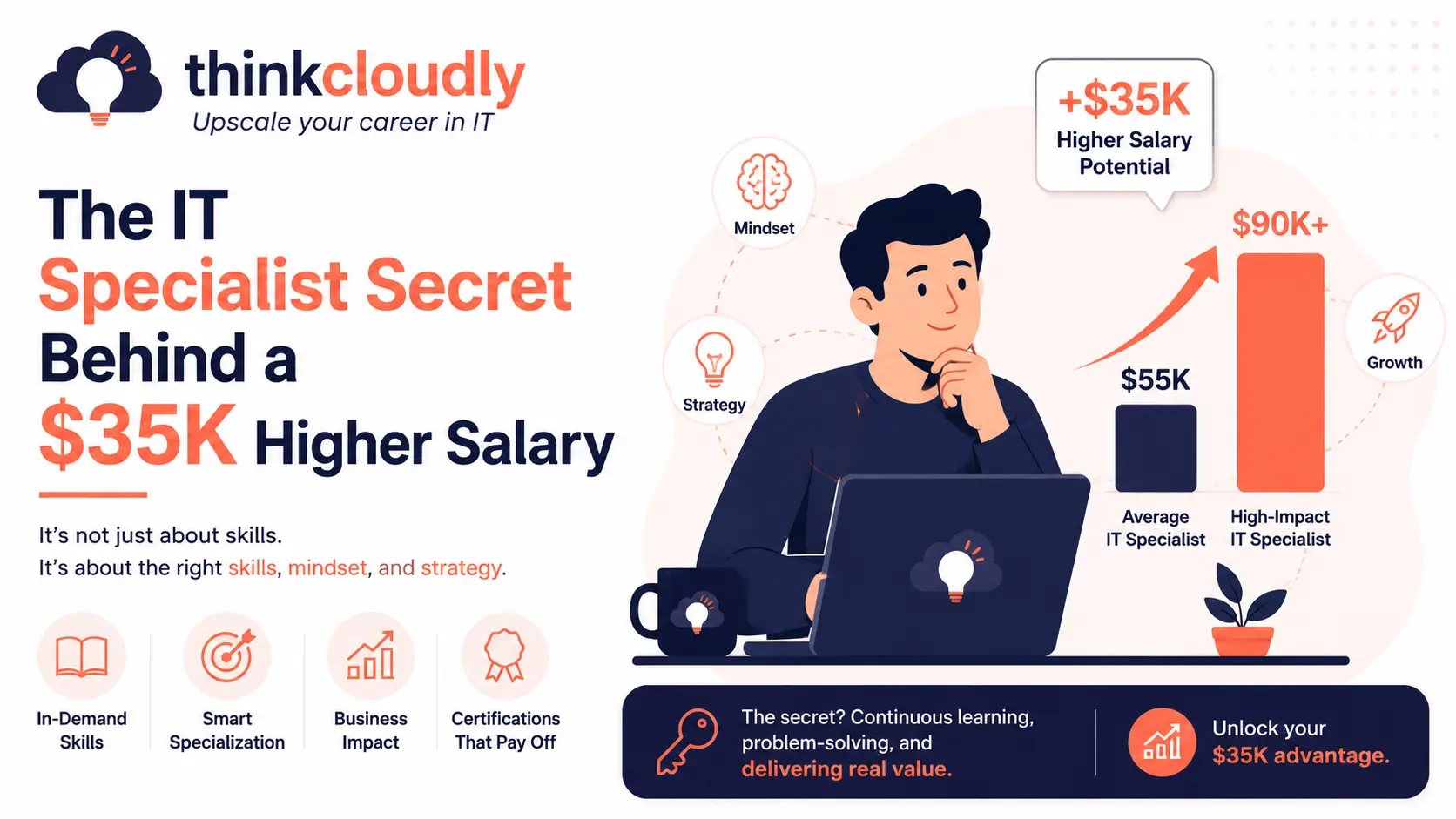
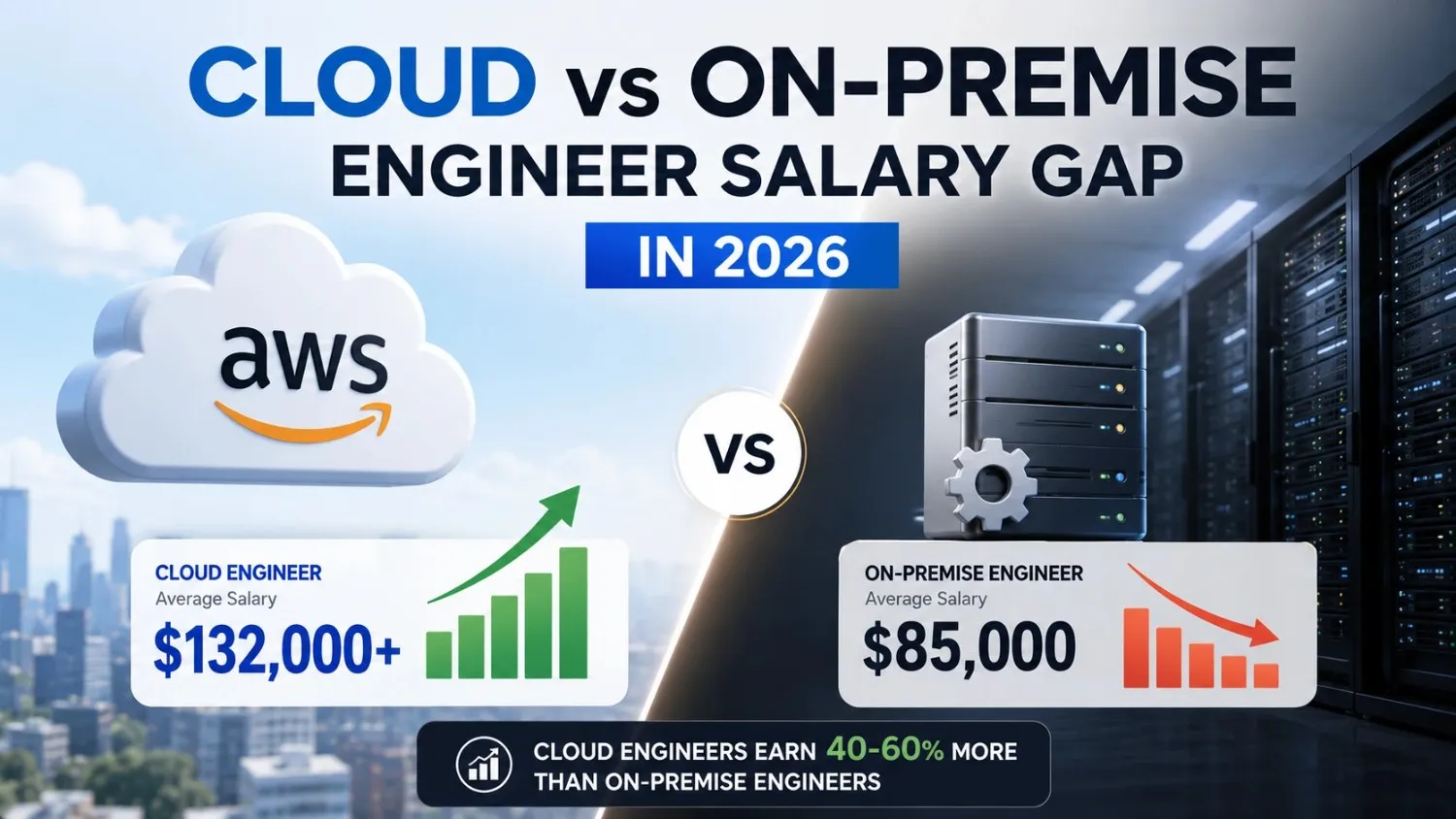
The salary figures quoted in cloud career content are real, but they require important context that is almost always omitted.
Cloud Career Salaries by Level and Role (US, 2026)
|
Role |
Entry Level | Mid Level | Senior Level |
Notes |
|
Cloud Support Engineer |
$55,000 to $75,000 | $80,000
to $105,000 |
$110,000 to $130,000 | High volume of applicants at entry level |
| Cloud Administrator | $65,000 to $85,000 | $90,000 to $115,000 | $120,000 to $145,000 |
Strong demand in healthcare and finance |
|
Cloud DevOps Engineer |
$85,000 to $110,000 | $115,000 to $145,000 | $150,000 to $180,000 |
Requires scripting and CI/CD knowledge |
|
Cloud Security Engineer |
$95,000 to $120,000 | $125,000 to $155,000 | $160,000 to $195,000 |
Fastest growing specialism in cloud |
|
Cloud Architect |
$120,000 to $150,000 | $155,000 to $185,000 | $190,000 to $230,000 |
Typically requires 5 to 8 years of experience |
|
Cloud Data Engineer |
$90,000 to $115,000 | $120,000 to $150,000 | $155,000 to $185,000 |
High demand with AI and analytics growth |
|
FinOps Specialist |
$85,000 to $110,000 | $115,000 to $140,000 | $145,000 to $170,000 |
Emerging role, growing rapidly |
The figures at the senior end of the table are the ones that make headlines and attract people to cloud careers. What the headlines leave out is that reaching senior level typically takes five to eight years of genuine hands-on experience. Entry-level roles pay well compared to many fields but are rarely the dramatic income jumps that career content implies.
The roles with the highest ceilings also tend to require specialization in areas like security, architecture, or data engineering, not just general cloud familiarity. A generalist cloud certification gets you in the door. Deep expertise in a specific area is what gets you to the top of the salary range.
The Roles That Are Actually Growing Right Now
Not all cloud roles are growing at the same pace, and knowing which ones are accelerating is genuinely useful for anyone planning their career trajectory.
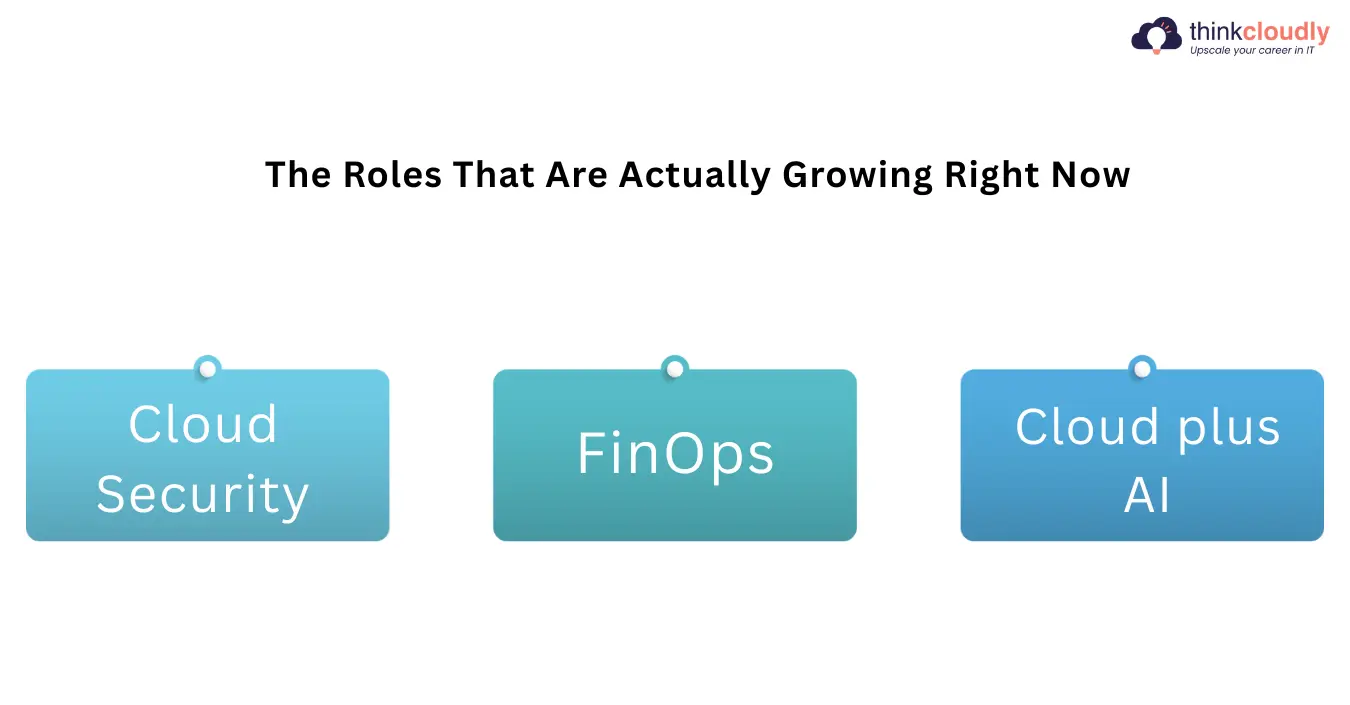
Cloud Security is the standout. As cloud adoption has grown, so has the attack surface, and organizations are under increasing regulatory pressure to demonstrate robust security posture. Cloud security engineers and architects are in demand that consistently outpaces supply, and compensation reflects that imbalance.
FinOps is newer but growing fast. As companies moved to the cloud, many discovered their bills were far higher than expected because nobody was managing cloud spend strategically. FinOps specialists, professionals who optimize cloud costs without sacrificing performance, have become valuable in ways that were not anticipated five years ago.
Cloud plus AI is the most forward-looking combination. As enterprises build AI infrastructure, the underlying cloud architecture that supports it has become a specialism in its own right. Professionals who understand both cloud platforms and AI workloads are positioned at the intersection of two of the highest-demand areas in the entire industry.
What the Bad Days Actually Look Like
Career content almost never talks about the hard parts, so here they are.
Cloud infrastructure problems do not keep business hours. When something breaks in a production environment, someone has to fix it, and that someone might be you at eleven at night or three in the morning. On-call rotations are a reality in most cloud operations roles, especially at mid-level and above.
The complexity is genuinely demanding. Modern cloud environments involve dozens of services interacting with each other, security policies layered across multiple accounts, compliance requirements that vary by region, and cost considerations that affect every architectural decision. Keeping all of that in your head while also communicating clearly with non-technical stakeholders and meeting project deadlines is not easy.
Imposter syndrome is widespread and openly discussed in cloud communities. The field moves so fast that even highly experienced professionals regularly encounter tools, services, and architectural patterns they have never seen before. Learning to be comfortable with not knowing everything, while still being confident in the value you bring, is a skill that takes time to develop and that nobody teaches you directly.
How to Actually Build a Cloud Career That Lasts
The professionals who build durable, well-compensated cloud careers in 2026 tend to share a few habits. They build in public. Personal projects deployed on real cloud accounts, GitHub repositories showing actual infrastructure code, and LinkedIn posts explaining technical decisions all serve as tangible evidence of capability that no certification can replicate.
They specialize deliberately. Rather than collecting a broad range of certifications, they identify one area, whether that is security, DevOps, data, or cost optimization, and go deep. Depth of knowledge in one area is more valuable and more defensible than surface-level breadth across many.
They stay connected to the community. Cloud communities on platforms like Reddit, Discord, and LinkedIn, as well as events like AWS re:Invent and Google Cloud Next, are where real-world knowledge circulates. The practitioners who stay plugged in to these communities know what skills are actually being hired for before that information shows up in job descriptions.
And they treat soft skills as seriously as technical ones. The cloud professionals who advance fastest are rarely the most technically brilliant people in the room. They are the ones who can translate technical realities into business decisions, who can manage a conversation during an incident without losing composure, and who make their teammates better by sharing what they know.
Sources & Further Reading
The data and statistics in this article are drawn from the following sources:
Gartner — Forecast: Public Cloud Services, Worldwide, 2026 — Market size projections and global cloud spending data
Bureau of Labor Statistics — Occupational Outlook Handbook: Computer and Information Technology Occupations— Employment growth projections for technology roles through 2031
Synergy Research Group — Cloud Market Share Report Q1 2026: AWS, Azure, Google Cloud — Cloud platform market share percentages and competitive landscape
LinkedIn — 2026 Jobs on the Rise: Cloud and AI Roles Dominating the US Market— Fastest-growing cloud job titles and hiring trend data
Glassdoor — Cloud Engineer and Architect Salary Trends 2026— Salary ranges by role and experience level across cloud career tracks
ZipRecruiter — Cloud Computing Salary Guide 2026— Entry-level, mid-level, and senior salary benchmarks for cloud professionals
CompTIA — State of the Tech Workforce 2026: Skills, Salaries, and Hiring Trends— Certification landscape, employer expectations, and workforce demand analysis
FinOps Foundation — State of FinOps Report 2026: Cloud Cost Management Trends— Growth of the FinOps specialism and cloud cost optimisation demand
McKinsey Global Institute — The Cloud Imperative: Why Enterprise Migration Is Accelerating in 2026— Enterprise cloud adoption drivers and strategic migration trends
AWS Training and Certification — Certification Validity and Renewal Requirements— AWS certification expiry periods and recertification obligations
Microsoft Learn — Azure Certification Renewal Policy and Schedule— Microsoft Azure certification renewal timelines and requirements
Stack Overflow — Developer Survey 2025: Cloud Platforms, Skills, and Career Paths— Real-world developer insights on cloud tool usage, learning habits, and career trajectories
All salary figures and market data referenced in this article reflect United States-based research published between 2025 and 2026. Figures mayvary by region, employer size, and individual experience level.