

You’ve probably heard someone say, “Learn cloud computing — it’s the future.” But is that still true in 2026? Or has the hype finally faded?
The short answer: cloud computing isn’t just worth it — it’s becoming impossible to ignore. Here’s what the data actually shows and what it means for you—whether you’re a job seeker, a small business owner, or simply someone trying to understand where the world is heading.
First, What Even Is Cloud Computing?
Think of cloud computing like renting electricity instead of building your own power plant.
Instead of a company buying and maintaining rows of expensive computers in a room somewhere, they simply rent computing power, storage, and software over the internet—from providers like Amazon, Microsoft, or Google. They pay for what they use, scale up when they need to, and never have to fix a server at 2 a.m.
That’s it. That’s the cloud. Every time you use Netflix, Spotify, Gmail, or Zoom, you’re using the cloud.
The Numbers Don’t Lie: Cloud Is Bigger Than Ever
If you thought cloud computing might be slowing down, the data says otherwise.
According to Gartner’s latest forecast, public cloud services are growing at 21.3% in 2026, and the total cloud market is on track to cross $1 trillion by the late 2020s. End-user spending on public cloud alone is projected to hit $850–900 billion in 2026, up from $723 billion in 2025.
And it’s not just big tech companies. 94% of businesses worldwide are now using cloud services in some form — from hospitals storing patient records to small shops running their billing software online. Public cloud now accounts for 45% of all enterprise IT spending in 2026, up from just 17% back in 2021.
That’s not a trend. That’s a transformation.
What Does This Mean for Jobs?
Here’s where it gets really interesting.
Cloud computing has quietly become one of the most in-demand skill sets in the world—and the numbers back that up.
|
Cloud Role |
Average annual salary |
|
Cloud Engineer |
$130,802 |
|
Cloud Architect |
$147,236 |
|
Cloud Security Specialist |
$155,000+ |
|
Cloud Data / ML Engineer |
$176,611 |
|
Senior Cloud Engineer |
$175,000–$183,000 |
The U.S. Bureau of Labour Statistics projects 17% job growth for software and cloud roles through 2033 — far faster than most other fields. There are currently 317,700 cloud-related job openings annually in the United States alone.
But here’s the thing that surprises most people: over 90% of companies say they can’t find enough qualified cloud professionals. The talent shortage is so severe that it’s slowing down digital projects across entire industries.
That means if you have cloud skills, you have real leverage.
A Real-Life Story: From IT Support to Remote Cloud Engineer
Meet Alex—a systems administrator in his early 30s who felt stuck in a mid-level IT role with limited growth ahead.
He started learning AWS basics on weekends while working full-time. Within two years, he earned a cloud certification and landed a cloud engineer role at an international company — fully remote. His salary went up by nearly 60%. But what surprised him most wasn’t the money. It was the freedom. He could work from anywhere, his skills were recognized globally, and he finally felt confident about where his career was heading.
Alex’s story isn’t unusual. Cloud skills are genuinely portable — a cloud professional in one country can often work for companies in another, which pushes salaries up and opens doors that simply didn’t exist a decade ago.
Is AI Killing Cloud, or Feeding It?
A common concern: “Won’t AI replace cloud jobs?”
The reality is actually the opposite. AI is making cloud computing more important — not less.
AI models need massive computing power to run. That power lives in the cloud. In 2026, AI-related cloud spending makes up 19% of all cloud spending — up from just 8% in 2023. GPU-as-a-Service (basically renting AI computing power) is now a $12 billion market on its own.
Gartner estimates that 65% of all AI model training runs on public cloud infrastructure. Simply put: AI doesn’t compete with the cloud—it runs on the cloud.
This also means that cloud professionals who understand AI tools and workflows are especially in demand right now.
Which Cloud Platform Should You Pay Attention To?
Not all cloud providers are equal.
Here’s a quick breakdown of where things stand in 2026:
|
Cloud provider |
Global market share |
Known for |
|
Amazon Web Services (AWS) |
31% |
Widest range of services, most job listings |
|
Microsoft Azure |
25% |
Enterprise and corporate adoption |
|
Google Cloud |
12% |
AI, data analytics, startup-friendly |
Together, these three control about 68% of all cloud spending worldwide, according to Synergy Research Group. If you’re learning cloud skills, starting with any of these three is a smart move—employers recognize them everywhere.
So, is Cloud Computing “Worth It” for Businesses?
Yes—and here’s a stat that makes it concrete:
Businesses that migrate to the cloud get back $3.86 for every $1 they spend, according to the Flexera State of the Cloud Report 2026. On top of that, moving to the cloud reduces energy consumption by up to 65% and can cut carbon emissions from applications by up to 98%.
For small and mid-sized businesses (SMBs), the picture is equally clear. 63% of SMB workloads are now running in the cloud, and 56% of SMBs say cost savings are their main reason for switching.
What Are the Challenges?
No technology is perfect, and cloud computing has real challenges:
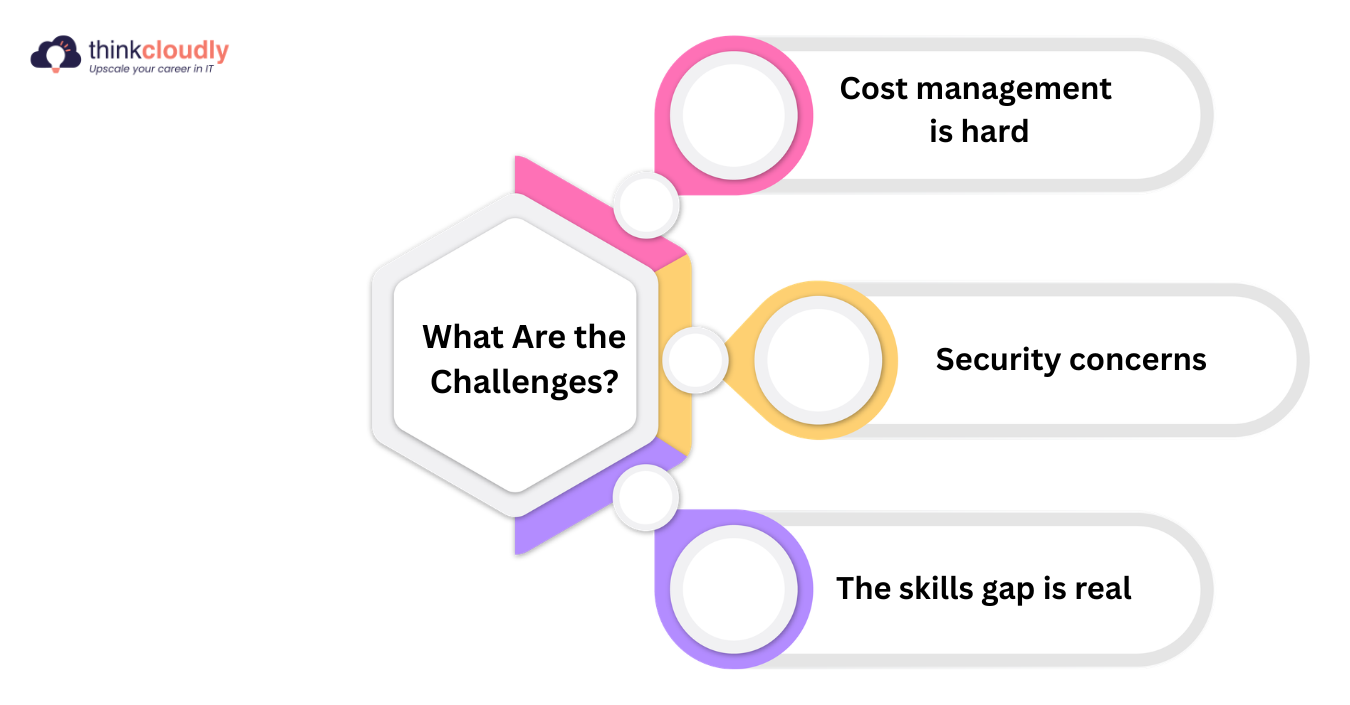
- Cost management is hard: The #1 challenge cited by cloud decision-makers is managing cloud spend. Around 32% of cloud spending is wasted due to inefficient usage.
- Security concerns: Even though 94% of businesses report improved security after moving to the cloud, misconfigurations and human errors are still the leading cause of breaches.
- The skills gap is real: Finding qualified cloud talent takes companies an average of six months — which is why those who upskill now have a serious advantage.
The Verdict: Is Cloud Computing Still Worth It in 2026?
Absolutely — and arguably more than ever.
Whether you’re thinking about it from a career perspective or a business one, the data points in the same direction. The cloud market is growing at over 20% annually. Companies can’t hire cloud professionals fast enough. Salaries are well above average. And AI — far from replacing cloud—is actually accelerating its growth.
Cloud computing isn’t a trend that has peaked. It’s becoming the default infrastructure for the entire digital world.
The question isn’t really “Is cloud worth it?” anymore. It’s “How long can you afford to wait?”
Sources & References
- Gartner — Forecast: Public Cloud Services, Worldwide, 3Q25 Update
- Gartner—Worldwide IT Spending Forecast 2026
- Gartner—Worldwide Sovereign Cloud IaaS Spending 2026
- Synergy Research Group—Hyperscaler & Cloud Market Share Data
- Flexera—State of the Cloud Report 2026
- U.S. Bureau of Labor Statistics — Software Developers & Cloud Role Projections
- ZipRecruiter—Cloud Engineer Salary Data 2026
- Eurostat (DESI 2026) — Cloud Adoption Across Enterprises
- FinOps Foundation — Annual Cloud Cost & Waste Report
- IDC—Worldwide Public Cloud Services Tracker 2026