

Every 39 seconds, somewhere in the world, a cyberattack begins. That statistic alone should make you pause — but here’s the harder question: if your organization got hit right now, would the person watching the monitor actually know what to do? That question is exactly why blue team certifications have become one of the most talked-about topics in cybersecurity hiring circles this year.
I still remember sitting for my own SOC analyst exam years ago, hands cold, wondering if a piece of paper could really prove I belonged in front of a SIEM dashboard at 2 a.m. It can, if you pick the right one. In 2026, the average cost of a data breach has climbed past $5.4 million, and companies are no longer willing to gamble on unproven defenders.
This guide breaks down the real differences between today’s leading credentials so you can choose with confidence instead of guesswork.
Why Blue Team Certifications Matter More Than Ever in 2026
The shortage of skilled defenders is not a rumor — it is a measurable crisis. According to ISC2’s 2026 workforce research, the global cybersecurity talent gap has now crossed five million unfilled roles. Meanwhile, attackers are using AI to write phishing emails, clone voices, and probe networks faster than most teams can react.
This mismatch is exactly why organizations now treat these credentials as a baseline requirement for anyone serious about security operations. Hiring managers use these credentials as a quick filter, and for good reason: certified professionals typically earn twenty to forty percent more than uncertified peers doing similar work, and they tend to ramp up faster once they join a dedicated threat detection team.
It also helps to understand what these credentials actually test. Unlike offensive or “red team” certifications that focus on breaking into systems, they validate your ability to monitor, detect, and respond to threats already inside — or trying to get inside — a network.
That includes log analysis, SIEM operations, threat intelligence, and structured incident response training, all skills a modern SOC analyst uses every single shift.
Cyber Defense Threats Driving the 2026 Certification Boom
Three trends are pushing demand for cyber defense talent higher than at any point in the last decade:
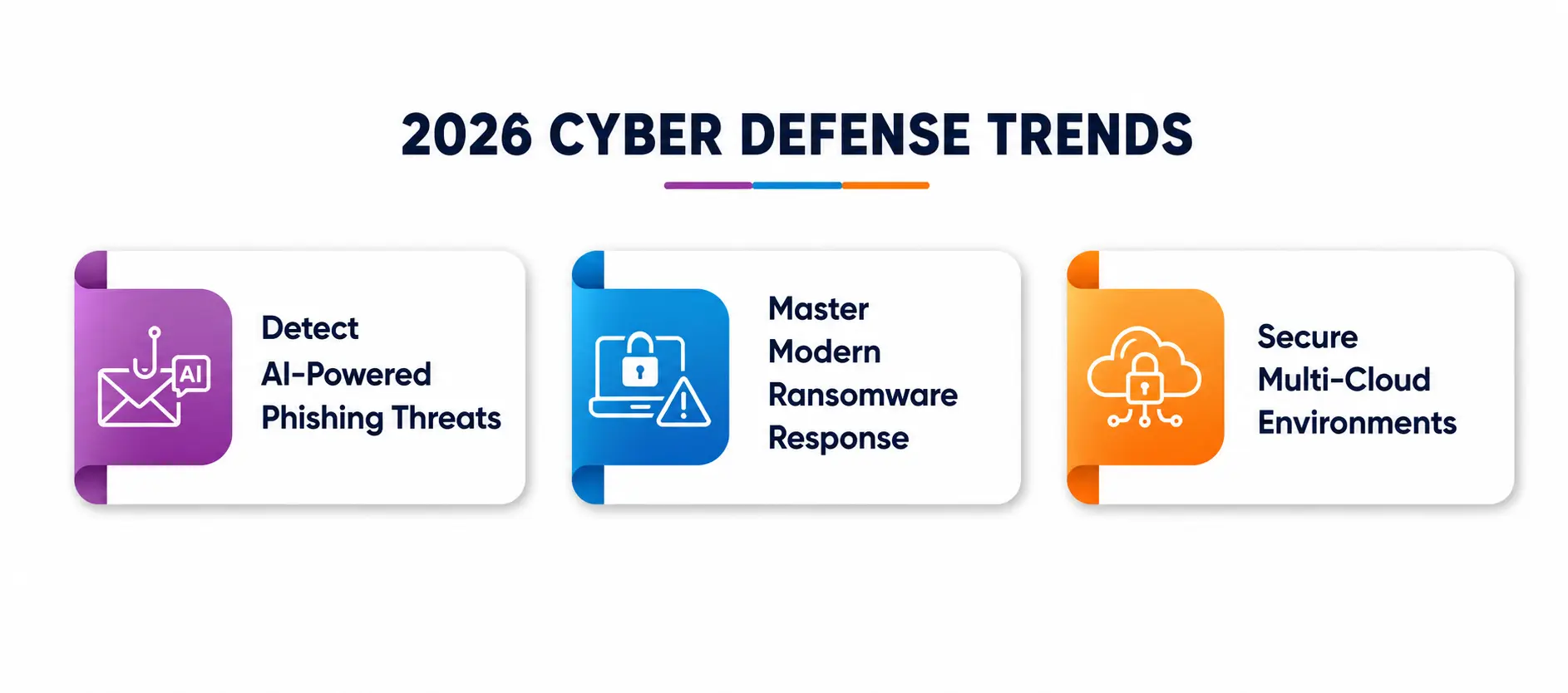
- AI-generated phishing and deepfake voice scams are bypassing traditional filters, forcing analysts to rely on behavioral threat detection rather than static rules.
- Ransomware groups are shifting toward double and triple extortion, which means incident response training now has to cover legal, PR, and recovery workflows, not just technical containment.
- Multi-cloud and hybrid work environments have multiplied the attack surface, so security operations teams need certifications that cover cloud-native logging alongside traditional network defense.
None of this is theoretical. It shows up in job postings every week, where employers specifically ask for candidates who hold current cyber certifications tied to SIEM tools, cloud platforms, and incident handling frameworks like NIST and MITRE ATT&CK. In fact, a recently dated SOC analyst certification is now one of the first things applicant-tracking software searches for before a human recruiter even opens the resume.
Comparing the Leading Blue Team Certifications
Choosing among today’s crowded field of cyber certifications gets easier once you see them side by side. The table below compares six credentials that consistently show up in soc analyst certification job requirements for 2026.
|
Certification |
Issuing Body | Approx. Exam Cost (USD) | Format |
Best For |
|
CompTIA CySA+ (CS0-003) |
CompTIA | $404–$425 | Multiple-choice + performance-based |
Analysts wanting a vendor-neutral, widely recognized SOC credential |
|
GIAC Certified Incident Handler (GCIH) |
GIAC / SANS | Around $949 (often bundled with SANS training) | Proctored exam |
Professionals focused on formal incident response training |
|
Blue Team Level 1 (BTL1) |
Security Blue Team | Roughly $400–$500 | 100% practical, scenario-based |
Career changers who want hands-on proof over theory |
|
Splunk Certified Cybersecurity Defense Analyst |
Splunk | Around $130 | Online proctored exam |
Analysts working daily inside Splunk-based security operations |
|
ISC2 Certified in Cybersecurity (CC) |
ISC2 | Free (limited-time exam voucher) | Multiple-choice |
Complete beginners entering cyber defense from another field |
|
Certified CyberDefender (CCD) |
CyberDefenders | Around $400 | 48-hour practical exam |
Working analysts wanting forensic and DFIR-heavy validation |
Notice the spread here. Some blue team certifications, like BTL1 and CCD, test you inside a simulated SOC where you investigate real artifacts under time pressure. Others, like CySA+, lean more toward structured multiple-choice and scenario questions.
Neither approach is wrong — it depends on whether you learn better by doing or by studying frameworks first, and both ultimately sharpen the same core threat detection instincts employers are paying for.
If you only remember one thing from this comparison, remember that the strongest blue team certifications are the ones matched to how you actually work and learn, not the ones with the fanciest logo on the certificate.
How to Pick the Right Certification for Your Career Stage?
There is no single “best” answer here, but there is a best answer for you, depending on where you currently stand.
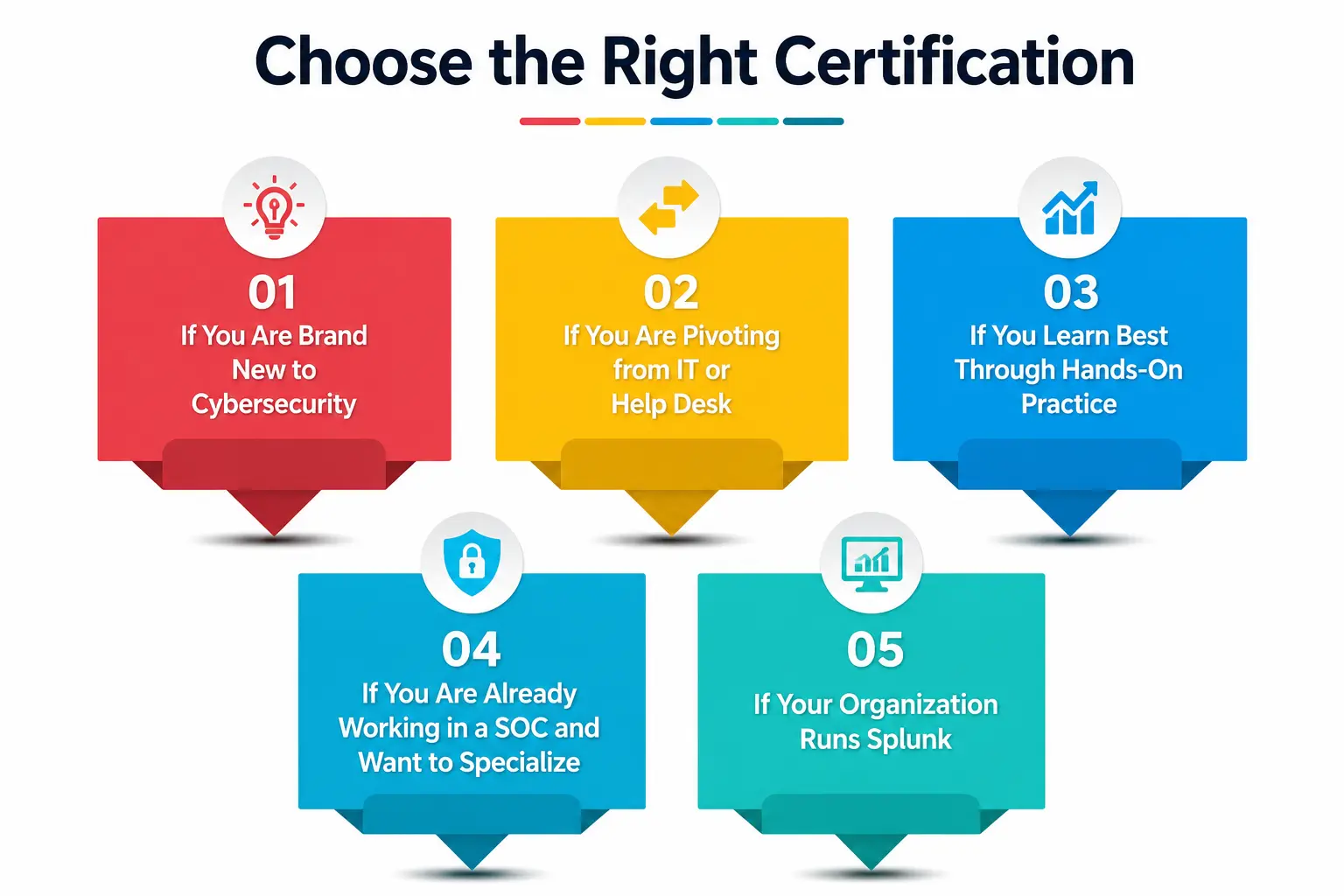
1. If You Are Brand New to Cybersecurity
Start with something foundational before committing money to a specialized exam. The ISC² Certified in Cybersecurity is free during promotional periods and gives you enough vocabulary to understand what a SOC actually does day to day.
2. If You Are Pivoting from IT or Help Desk
CompTIA CySA+ is usually the strongest next step. It is vendor-neutral, widely requested in job listings, and pairs well with prior Security+ knowledge without demanding years of specialized experience.
3. If You Learn Best Through Hands-On Practice
BTL1 or the Certified CyberDefender credential will suit you better than a multiple-choice exam. Both simulate real scenarios, forensic artifacts, and log analysis under realistic time pressure.
4. If You Are Already Working in a SOC and Want to Specialize
GIAC’s GCIH remains a gold standard for formal training in this area, especially if your employer is funding the accompanying SANS SEC450 course. It carries serious weight with hiring managers in regulated industries.
5. If Your Organization Runs Splunk
The Splunk Certified Cybersecurity Defense Analyst credential is inexpensive and directly tied to the tool you likely already use daily, making it a quick, practical addition to your resume.
What Do Employers Actually Look For in 2026?
Employers rarely hire based on a single badge. What they want is evidence that you can walk into a live environment and function immediately. That is why job postings increasingly pair a named credential with phrases like “hands-on SIEM experience” or “documented response experience.”
A certification proves baseline knowledge; a home lab, a blog write-up, or a practice-platform portfolio proves you can apply it. Combining a recognized credential with visible, practical work consistently outperforms a resume listing five cyber certifications and nothing else.
Salary data from HackTheBox’s 2026 report backs this up. Entry-level SOC analysts in the United States earn roughly $100,000 on average, with a typical range between $75,000 and $140,000, while incident response specialists average around $108,000.
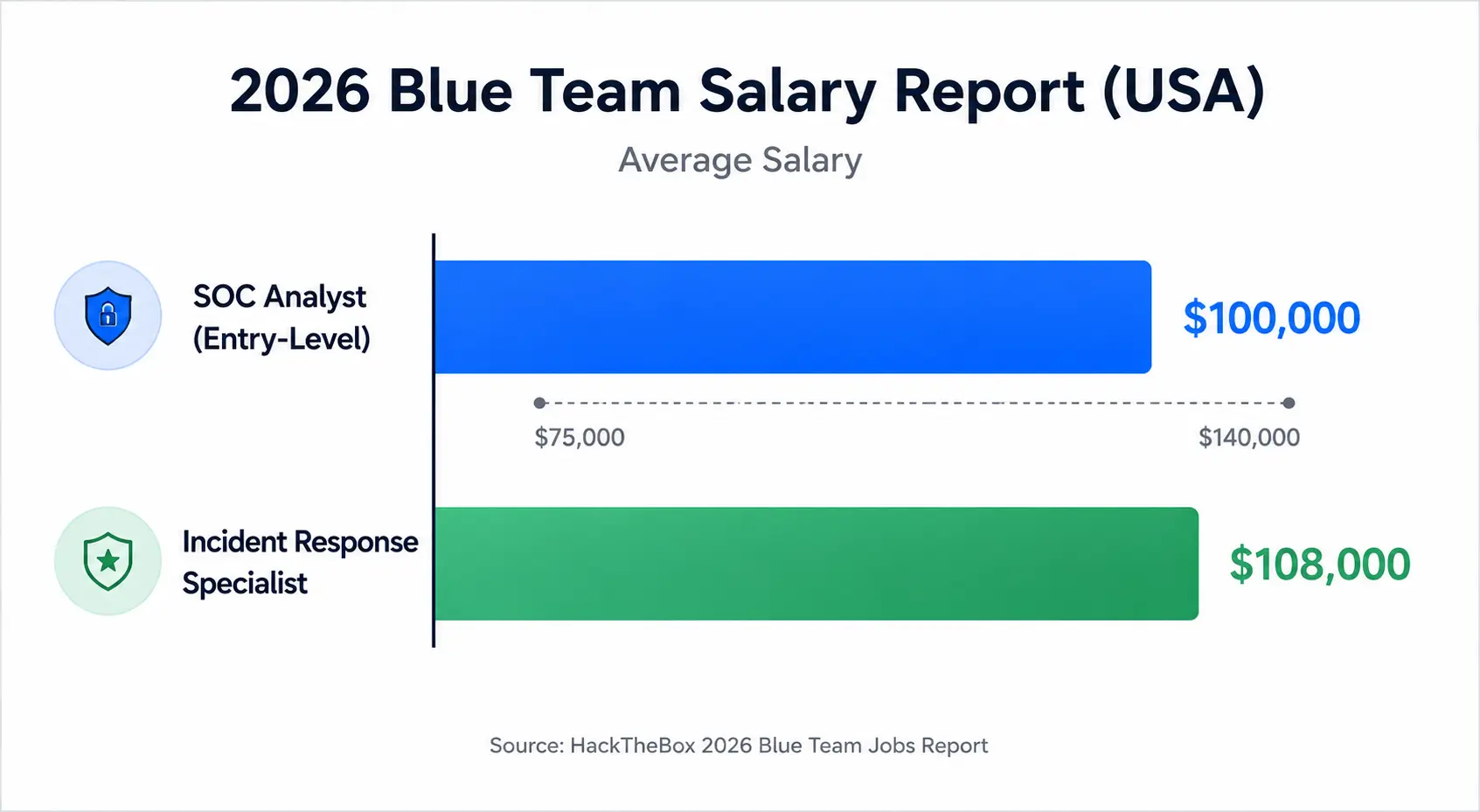
Threat intelligence analysts, who rely heavily on advanced detection skills, often clear $148,000. None of these figures are guaranteed by a certificate alone—they reflect certified professionals who also built real, demonstrable skill.
Employers filling security operations seats often list a soc analyst certification as the minimum bar, then look for genuine threat detection instincts and completed incident response training layered on top before they extend an offer.
Building Real Skills to Back Your Certification
A single soc analyst certification looks good on paper, but hiring managers in 2026 want proof you can apply it under pressure. Set up a free-tier SIEM such as Splunk or Elastic and practice basic threat detection: hunting failed logins, unusual outbound traffic, and privilege escalation attempts in sample data sets.
Volunteer for shadow shifts inside a security operations center if your current employer has one, even informally, so the workflow feels familiar before your first real shift alone. Document what you learn in a public blog post or a small repository of write-ups — this single habit does more for your credibility than a stack of unused cyber certifications ever could.
Pairing structured incident response training with a home lab built around realistic cyber defense scenarios shows employers you understand both the theory and the pressure of the job, not just the vocabulary.
This is also where some of the strongest blue team certifications distinguish themselves: BTL1 and the CyberDefenders Certified CyberDefender program bake hands-on problem-solving directly into the exam itself, so preparation and genuine skill-building happen at the same time rather than in separate stages.
A Quick Personal Note
When I first moved from a general IT support role into a security operations team, I made the mistake of chasing every acronym I could find, thinking more letters after my name would fix my confidence gap. What actually got me hired was pairing one solid, practical credential with a home lab where I documented real exercises and shared them publicly.
The certification opened the interview door; the visible practice closed it. If you take one thing from my own path into this field, let it be this: pick one certification that matches how you learn, then spend just as much energy proving you can use it.
Conclusion
Choosing among today’s blue team certifications does not have to feel overwhelming once you match the credential to your actual career stage rather than chasing prestige. Beginners benefit from free or low-cost foundational exams, career switchers gain the most from CompTIA CySA+, hands-on learners thrive with BTL1 or CCD, and working analysts aiming for specialization should look toward GIAC’s advanced path.
Whichever route you choose, remember that unlike some cyber certifications that end up gathering dust in a drawer, this one works best as a starting point, not a finish line—pair it with real lab work, and you will stand out in a field where demand for skilled defenders still far outpaces supply.