What if getting ready for a technical interview took one click instead of one weekend?
In 2026, candidates applying for tech roles face odds of roughly 1 in 33 of ever reaching an interview stage, compared to 1 in 7 a decade ago, which means the candidates who do land an interview can’t afford to walk in underprepared. This is exactly the gap that AI interview prep is built to close.
Instead of digging through outdated PDFs and scattered forum threads, a candidate can now paste the exact job description they are applying for into ThinkGPT, built by Thinkcloudly, and get back the tech interview questions, notes, and preparation material that actually match the role.
Why AI Interview Prep Matters for IT Candidates in 2026
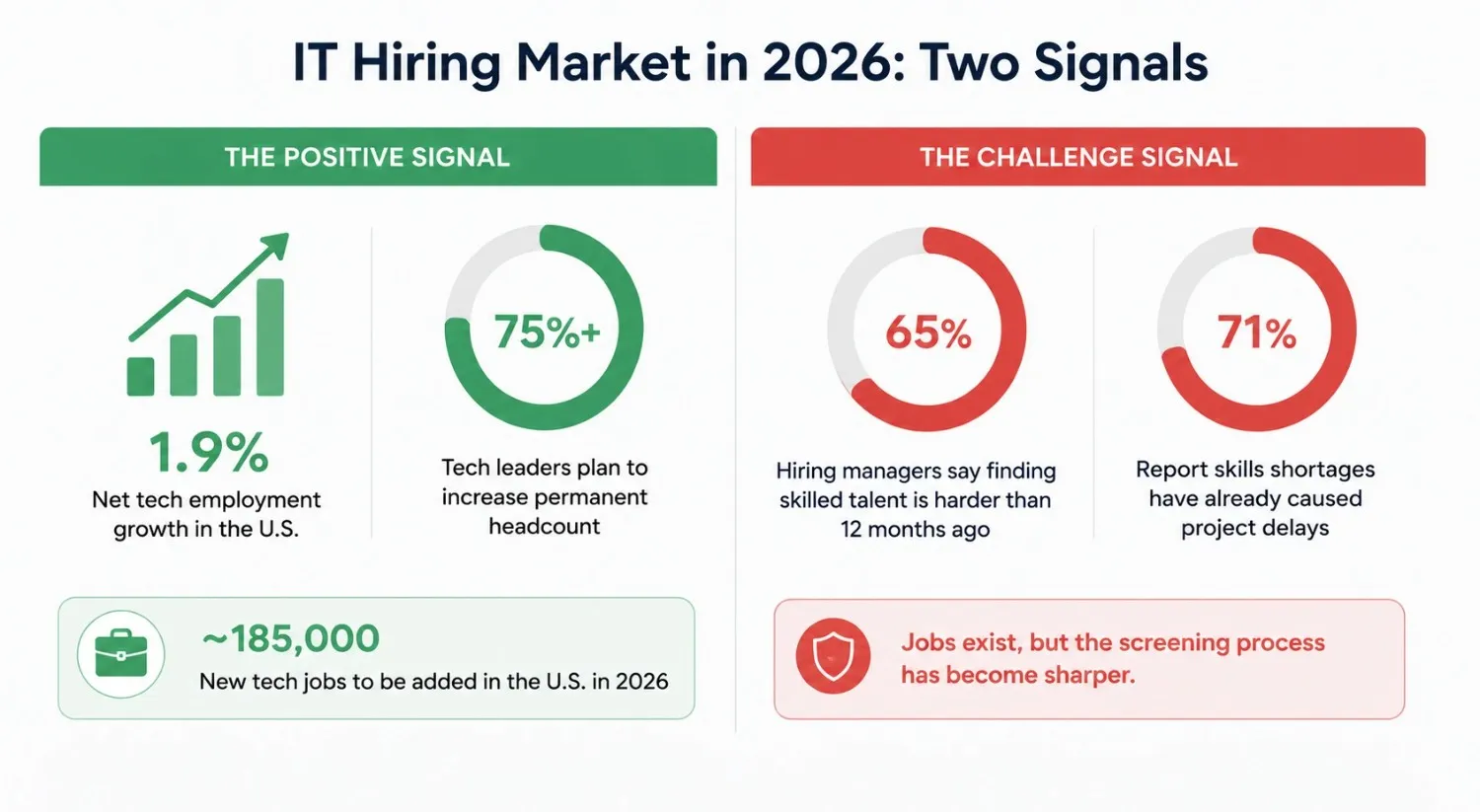
The IT hiring market in 2026 is sending two signals at once. On one hand, net tech employment in the United States is projected to grow by 1.9%, adding close to 185,000 jobs this year, and more than three-quarters of technology leaders plan to increase permanent headcount in the second half of the year.
On the other hand, 65% of technology hiring managers say finding skilled talent has become harder than it was twelve months ago, and 71% report that skills shortages have already caused project delays. Jobs exist, but the screening process guarding them has gotten sharper, and candidates are expected to walk in already fluent in the specifics of the role rather than learning on the spot.
That pressure is exactly why Research reports published in 2026 found that 74% of U.S. job seekers now use some form of AI during their job search, with 53% specifically using it to prepare for interviews. Structured job interview prep has moved from a nice-to-have into something close to standard practice, and candidates who skip it are quietly competing against peers who show up already rehearsed, already familiar with the likely questions, and already comfortable talking through their reasoning out loud.
How Pasting a JD Turns Into a Full Practice Interview?
Most preparation tools ask candidates to describe the role they’re targeting in their own words, which usually produces generic, one-size-fits-all output. ThinkGPT flips that process around. A candidate pastes the actual job description they are applying for, and the platform reads it to pull together the blogs, notes, and questions that match that specific posting—not a generic template for “software developer” or “systems administrator,” but material tied to the exact responsibilities, tools, and technologies named in the JD itself.
Below is an example for the same; you just have to paste the JD and then select your skills, and all the study material will be there on the screen.
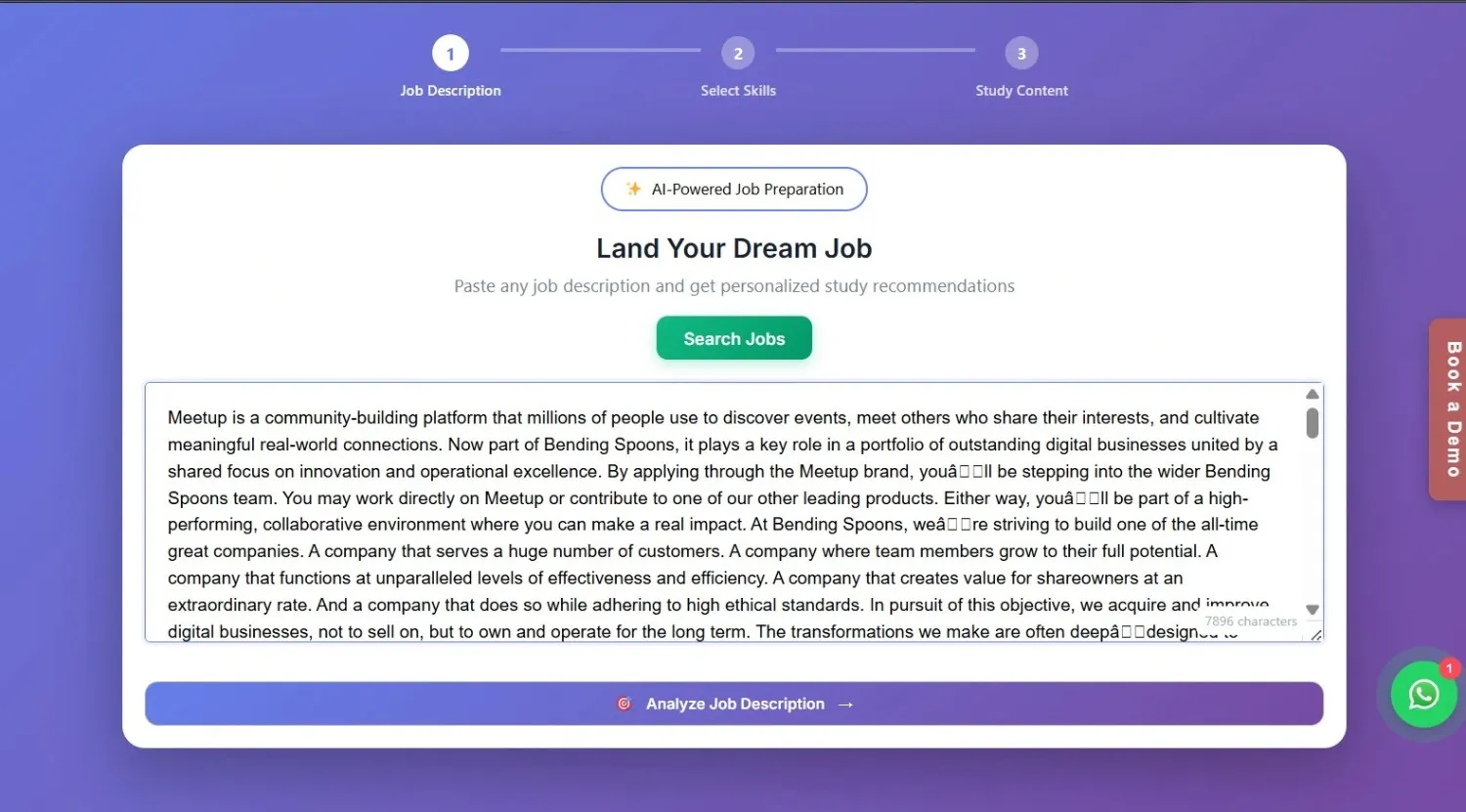
This single step removes most of the manual work candidates usually do before sitting down to prepare. There’s no need to guess which topics might come up or manually search for tech interview questions related to a specific stack or tool mentioned in the posting.
The JD becomes the starting point, and everything ThinkGPT surfaces from there—from IT interview questions to full scenario-based exercises—is shaped around it rather than pulled from a generic bank that fits every role equally poorly.
For candidates who have never used this kind of tool before, the shift can feel almost too simple: paste, wait a moment, and receive a structured set of material instead of a blank search bar and an hour of guesswork. That simplicity is deliberate. Thinkcloudly built ThinkGPT around the idea that preparation shouldn’t require candidates to already know what to look for.
Tech Interview Questions vs. Real Interview Practice Questions
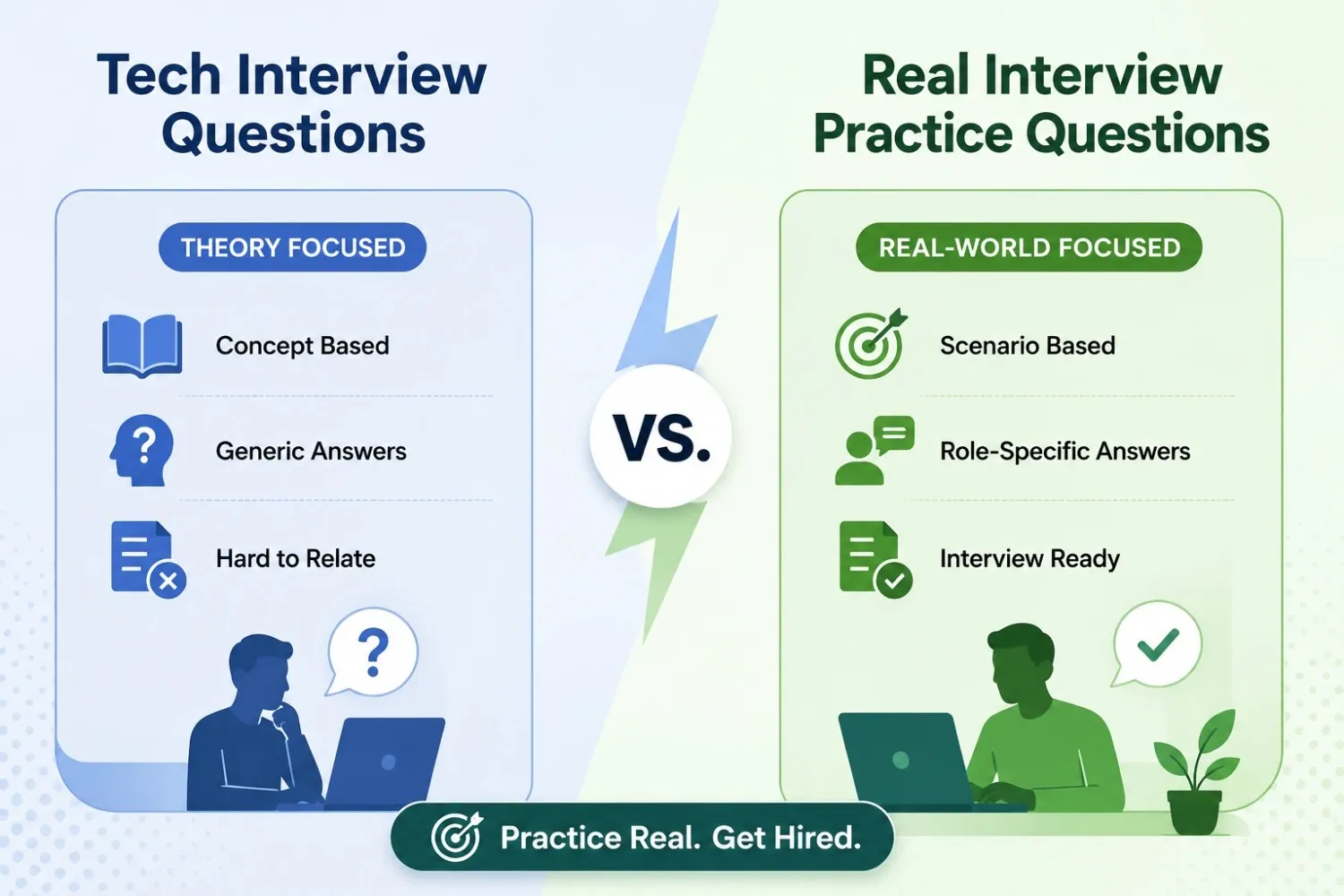
There’s a meaningful difference between a plain list of tech interview questions and genuine interview practice questions that actually build readiness. A list of questions alone only tells a candidate what might get asked. Interview practice questions, by contrast, are structured for rehearsal: they come with context, a sense of what a strong answer includes, and a way to talk through the response out loud before the real conversation happens.
ThinkGPT’s library reflects that distinction by organizing material role by role:
- Technical support and systems roles: troubleshooting scenarios, ticketing workflow logic, and hands-on IT interview questions about networks and hardware.
- Software and QA roles: debugging walkthroughs, code review discussions, and version-control questions that mirror what a hiring panel actually asks.
- Cloud and DevOps roles: deployment pipeline questions, infrastructure-as-code scenarios, and incident-response prompts under simulated pressure.
- Data and analytics roles: SQL scenario questions, data-cleaning logic, and practice explaining a finding to a non-technical stakeholder.
- Help desk and entry-level IT roles: foundational questions on hardware basics, customer communication, and common troubleshooting steps.
Because each set of practice material is generated from the pasted JD rather than pulled from a static bank, a candidate applying for a cloud-focused role doesn’t waste time rehearsing help-desk material, and someone applying for a help-desk role isn’t handed infrastructure-as-code questions they’ll never actually be asked.
Meet the AI Mentor Behind the Practice Interview
Every set of material on ThinkGPT is paired with guidance that functions like an AI mentor sitting alongside the candidate. Rather than just listing questions, the platform explains why a particular question gets asked, what a strong answer typically includes, and how to structure a response so it holds up under a follow-up.
This matters because engineering leaders surveyed by Karat reported that AI is making it harder to judge a candidate’s real technical depth, which has pushed interviewers toward more layered, follow-up-heavy questioning rather than a single canned prompt. Having an AI mentor available before the real interview means a candidate isn’t rehearsing blind.
They can run through a practice interview, notice where their reasoning was thin, and revisit the relevant notes before trying again. This kind of structured job interview prep tends to matter more than raw technical knowledge alone, especially in interviews where a candidate is asked to explain their thinking rather than simply state a fact.
A Quick Comparison: Generic Prep vs. JD-Based AI Interview Prep
|
Preparation Method |
Matches the Actual Job Description | Guidance Beyond a Question List | Cost to Start |
Best For |
|
Random web searches and forums |
No | Rarely | Free, but time-costly |
Very general awareness |
|
General-purpose chatbot |
Only if manually prompted | It depends on prompting skill | Often free |
Basic Q&A practice |
|
Paid interview coaching |
Yes, but manually tailored | Strong, but limited sessions | $50 to $300+ per session |
High-stakes final rounds |
|
ThinkGPT (AI interview prep) |
Yes, directly from the pasted JD | Structured notes and mentor-style guidance | Free for students; 5 free credits for new users |
Role-specific, ongoing prep |
Getting Started With Free Credits and Student Access
ThinkGPT is free for students enrolled through Thinkcloudly, who can log in and immediately pull blogs, notes, and questions tied to any JD they paste in. Anyone outside that group who signs up receives five free credits to trial the platform, which is usually enough to run through one full practice session for a target role before deciding whether to continue.
For candidates who want ongoing preparation rather than a single trial, enrolling in or purchasing one of Thinkcloudly’s courses unlocks the complete library — every blog, every set of practice material, and every scenario-based module — in one account instead of a handful of free credits.
That option tends to suit anyone preparing for multiple interview cycles or moving between IT specializations, where the JD, and therefore the material generated from it, keeps changing from one application to the next.
Making Job Interview Prep Feel Personal Again
Most job interview prep advice online is written for a generic audience, which is part of why it rarely feels useful the night before an interview. Broad tips about eye contact or a firm handshake do little for a candidate who needs to explain a specific troubleshooting decision or defend a database design choice under questioning.
Effective preparation has to be specific, and that specificity is easier to reach when the starting point is the JD itself rather than a general checklist pulled from an old blog post. This is also where quality control matters.
ThinkGPT’s IT interview questions are checked against real hiring patterns rather than generated once and left untouched, so the IT interview questions a candidate sees this month reflect how interviews are actually being run in 2026, not a static archive from years earlier.
Combined with interview practice questions that walk through reasoning rather than just testing recall, job interview prep on ThinkGPT ends up feeling closer to a rehearsal with a knowledgeable colleague than a static worksheet handed over once and forgotten.
A Preparation Pattern Career Coaches Keep Noticing
Career coaches who work with IT candidates often describe the same pattern: candidates who rehearse out loud, using material tied to the actual job posting, walk into interviews noticeably calmer than those who only read generic questions silently the night before.
One systems administrator who tested ThinkGPT ahead of a cloud-support interview pasted the JD, worked through the matched questions twice, and later described the real interview as feeling like “the JD reading itself back” because so much of what came up had already been rehearsed in advance.
That kind of alignment between preparation material and the actual interview is the entire premise behind pasting a JD rather than practicing from a generic bank. It also explains why interest in tailored preparation keeps climbing: candidates increasingly want their prep time spent on the exact role in front of them, not on material that might apply to some other job entirely.
Conclusion
The 2026 hiring market has little patience for generic preparation. With AI already shaping how candidates search for and rehearse interviews, treating AI interview prep as optional is a real disadvantage rather than a small one.
ThinkGPT by Thinkcloudly turns a pasted job description into matched tech interview questions, structured notes, and an AI mentor to guide the practice interview itself—free for Thinkcloudly students and open to everyone else through five free trial credits or full course enrollment. For any IT candidate heading into 2026’s interview season, pasting the JD and letting AI interview prep do the heavy lifting is one of the more practical steps available.