
Nearly 9 in 10 security teams admit they’re missing people who can actually secure cloud environments, not just talk about them. That gap is exactly why cloud security courses have quietly become one of the fastest routes into a genuinely high-paying tech career.
This blog walks through what these courses actually teach, which ones are worth the money in 2026, real salary numbers from current sources, and an honest, no-fluff comparison table so a reader can pick a path without getting lost in marketing noise.
Why Are Cloud Security Courses Worth It in 2026?
The demand story here isn’t hype. According to Fortinet’s 2026 Global Research Report, cloud security remains one of the hardest categories of roles to fill globally, alongside newer pressure points like AI and machine learning security.
A separate breakdown of the research found that two out of three organizations report moderate-to-critical skills gaps, and teams with critical gaps are nearly twice as likely to suffer a serious breach. Meanwhile, the infrastructure these teams are supposed to protect keeps getting more complicated.
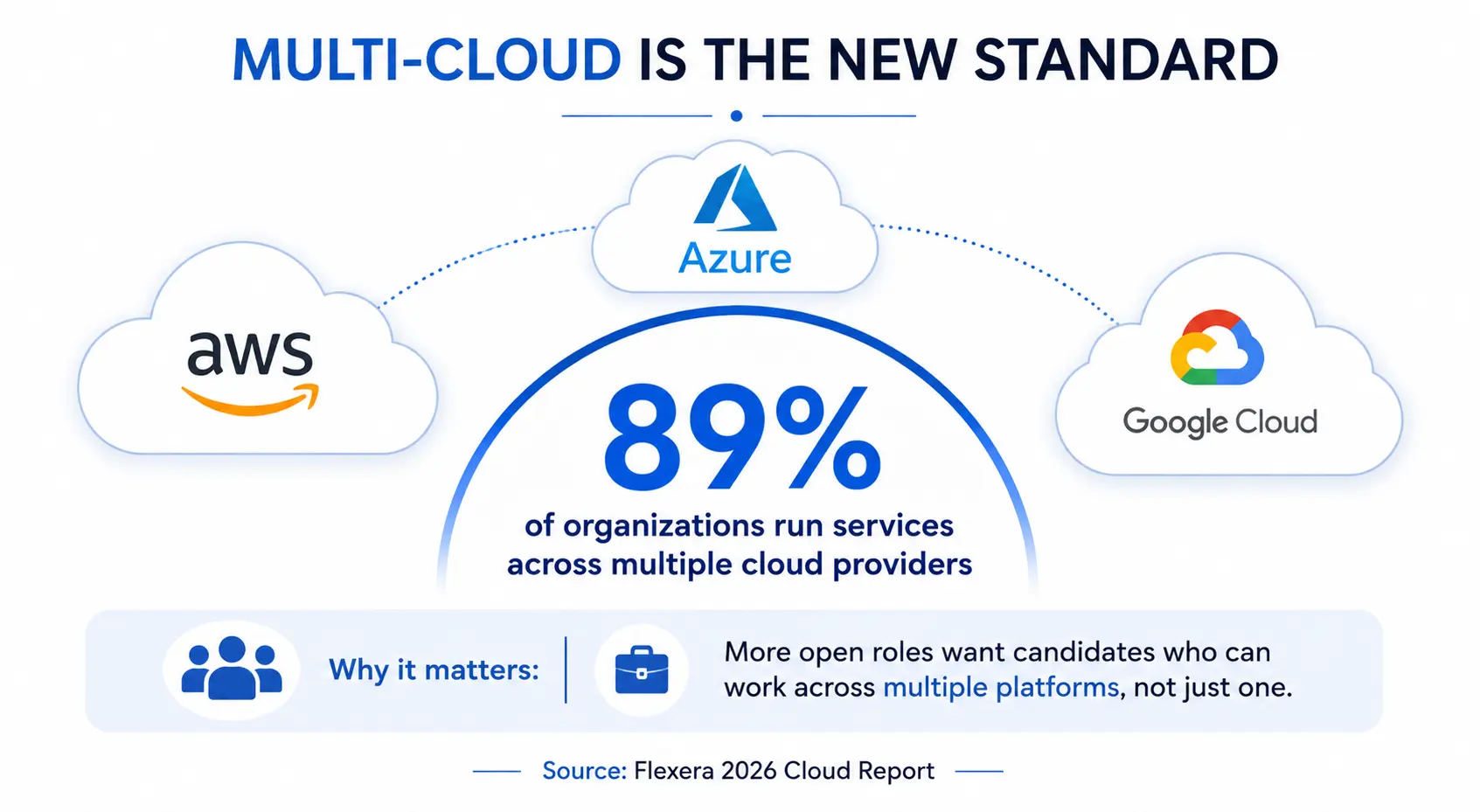
Flexera’s 2026 Cloud Report found that 89 percent of organizations now run services across multiple cloud providers, and that shift toward a multi cloud reality is exactly why so many open roles now specifically want candidates comfortable working across more than one platform, not just one.
There’s also a simple economic argument behind all of this. Companies aren’t short on generic IT staff; they’re short on people who understand identity management, container security, and compliance controls at the same time, across infrastructure that rarely sits still.
That specific, layered skill set is expensive to hire for externally and slow to build internally, which is exactly why structured, well-chosen cloud security courses tend to pay for themselves.
Real Salary Data: What Cloud Security Skills Are Worth Right Now
Numbers matter more than promises, so here’s what current sources are actually reporting in 2026.
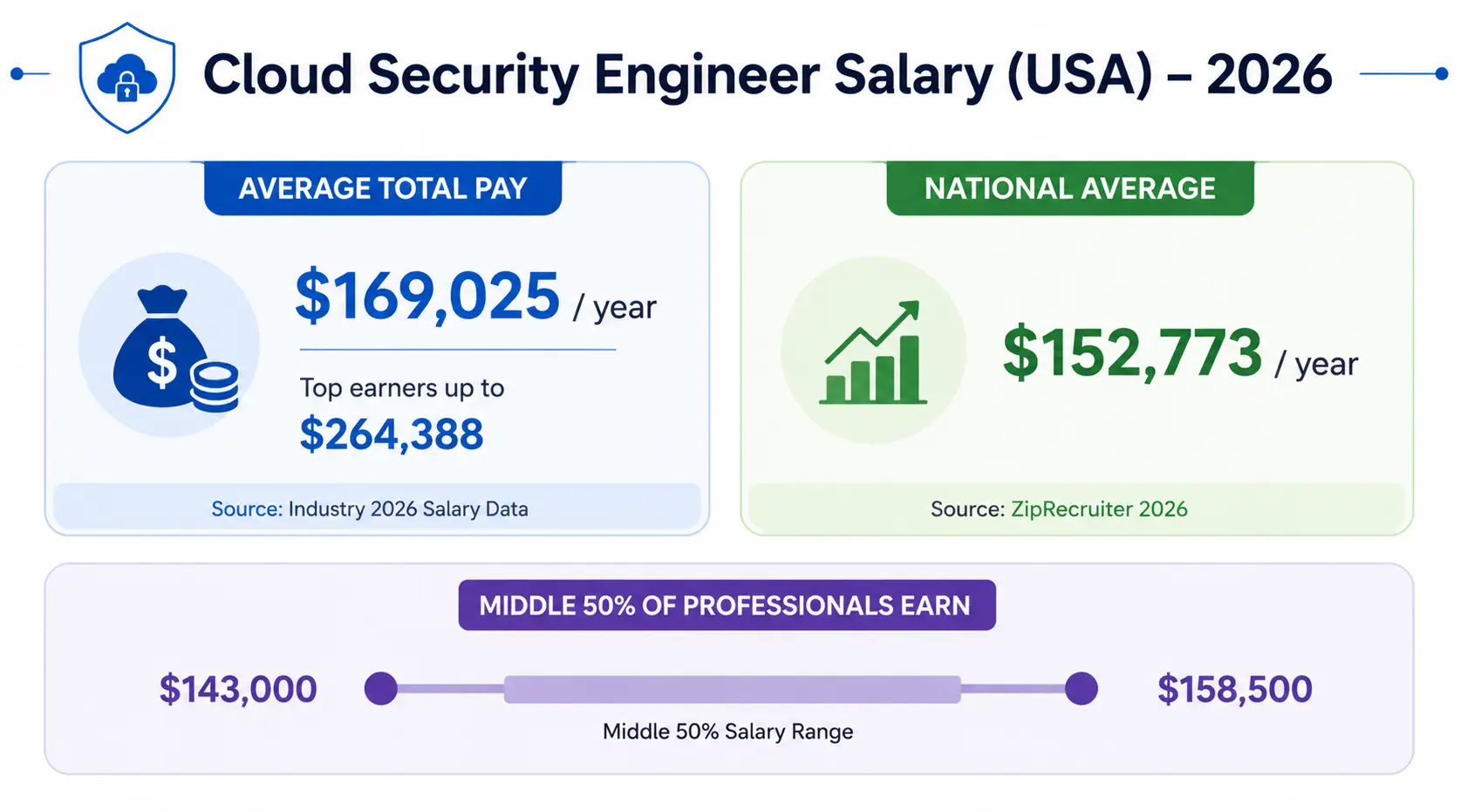
2026 salary data puts the average total pay for a Cloud Security Engineerl in the United States at $169,025 a year, with top earners reporting up to $264,388. ZipRecruiter’s 2026 figures show a national average of $152,773 a year, with the middle 50 percent of professionals earning between $143,000 and $158,500.
Titles matter here too, and it helps to know how they stack up before choosing a study path. A security specialist role often sits slightly below a dedicated engineering position in pay early on, since it tends to focus more on monitoring and response than on system design.
At the top of the range sits the cloud architect role, which demands broader design responsibility across an organization’s environment and, increasingly, fluency in managing a multi-provider footprint rather than a single provider. The pattern across every source is consistent: specialized cloud security skills out-earn generalist IT or security roles, and that gap tends to widen with experience rather than shrink.
Top Certifications and Training Programs Compared
The table below shows the most respected cloud security courses on the market in 2026, along with who each one tends to suit best.
|
Course / Certification |
Best Suited For | Typical Focus Area |
Approx. Time to Complete |
|
CompTIA Cloud+ |
Entry-level learners, career switchers | Foundational cloud infrastructure and security basics |
6–8 weeks |
|
Certificate of Cloud Security Knowledge (CCSK) |
Beginners aiming for a security role | Vendor-neutral cloud security principles |
4–6 weeks |
|
AWS Certified Security – Specialty |
Hands-on infrastructure roles on AWS | Identity, encryption, and incident response on AWS |
8–10 weeks |
|
Microsoft Certified: Azure Security Engineer Associate |
Hands-on infrastructure roles on Azure | Azure-specific identity, network, and data protection |
8–10 weeks |
|
Google Professional Cloud Security Engineer |
Design-focused roles on GCP | Designing secure architecture across GCP services |
10–12 weeks |
|
Certified Cloud Security Professional (CCSP) |
Senior, design, and governance-level roles | Governance, risk, and security architecture across providers |
3–6 months |
This comparison makes one thing obvious: not every course targets the same career stage, so picking one at random rarely pays off the way a deliberate choice does.
From Cloud Courses to a Real Career Path
It helps to think about this world in two broad categories rather than one long list. The first category covers general cloud courses, which build baseline literacy around how cloud platforms actually work, how data moves between services, and how billing and scaling decisions get made.
The second category covers dedicated security courses, which layer on the specific skills needed to protect that infrastructure once it’s already in use, including identity management, threat detection, and compliance auditing.
Someone starting from a general IT background usually benefits from a foundational cloud course before jumping straight into more specialized security courses, since security concepts land much better once the underlying architecture actually makes sense.
Someone already working as a developer or sysadmin, on the other hand, can often skip straight into this more focused training and start applying the material immediately on the job, without needing the introductory groundwork first.
Career Roles This Path Can Lead To
A single stretch of study rarely leads to just one job title. Depending on prior experience and which cloud security courses get completed, the realistic next roles tend to include:
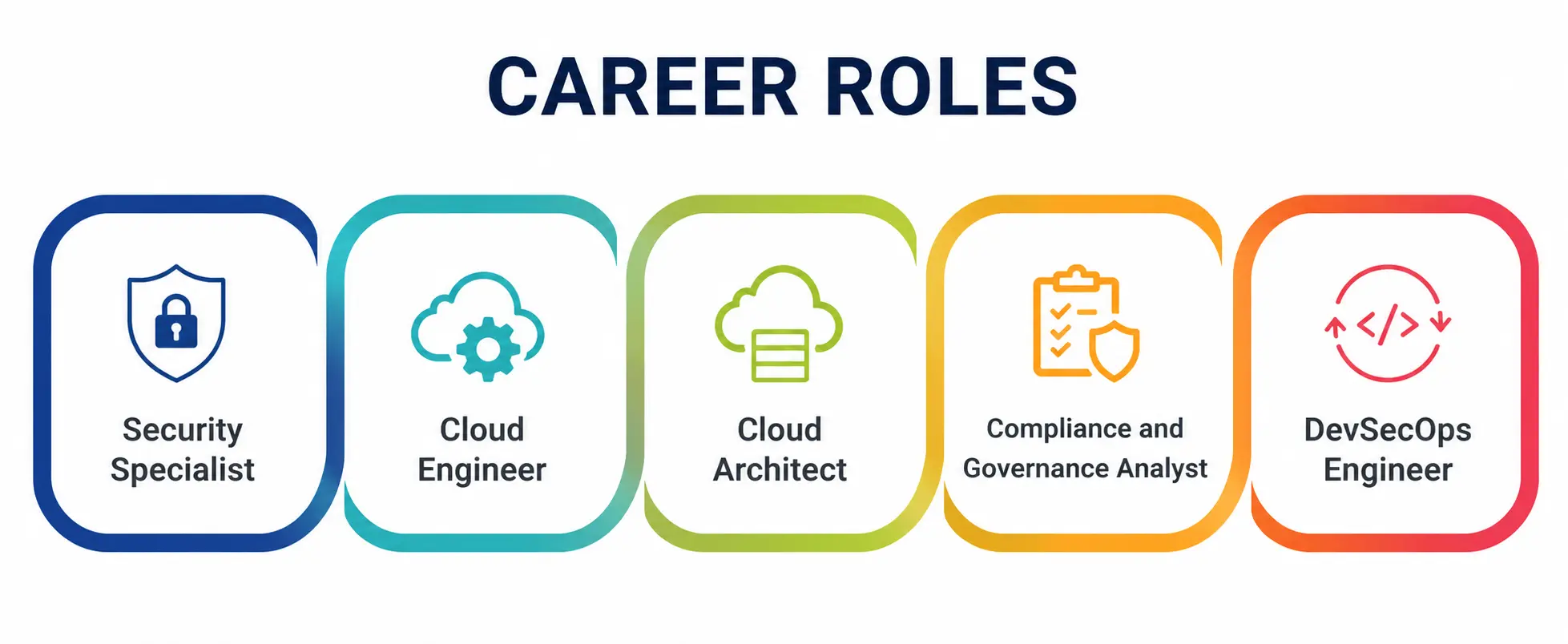
- Security Specialist, focused on monitoring, incident response, and applying security policy across existing systems — a common first stop for people coming out of entry-level security courses.
- Cloud Engineer, responsible for building and maintaining the infrastructure that a security team is expected to protect.
- Cloud Architect, designing the overall structure of an organization’s cloud environment, often across a setup involving two or three providers at once.
- Compliance and Governance Analyst, translating technical security controls into language auditors and regulators actually accept.
- DevSecOps Engineer, embedding security checks directly into the software deployment pipeline rather than bolting them on afterward.
How to Choose the Right Course for a Multi Cloud Career?
A few practical filters make this decision much easier than it first appears:
- Check which cloud provider the target employer or industry actually uses most, since a course built entirely around AWS won’t transfer perfectly to an Azure-heavy job posting.
- Favor courses with hands-on labs over pure video lectures, since this is fundamentally a hands-on discipline that rewards practice over memorization.
- Look for course content that’s been updated within the last year, given how quickly provider-specific security features change.
- If the target role involves a multi cloud environment, look specifically for courses that cover cross-provider identity and governance, not just one platform in isolation.
- Confirm whether the certification is actually recognized in job postings for the specific target role, rather than assuming all vendor badges carry equal weight.
What a Typical Curriculum Actually Covers?
It’s worth knowing what these programs actually spend their time on before signing up for one, since the marketing copy on a course landing page rarely matches the real syllabus underneath it.
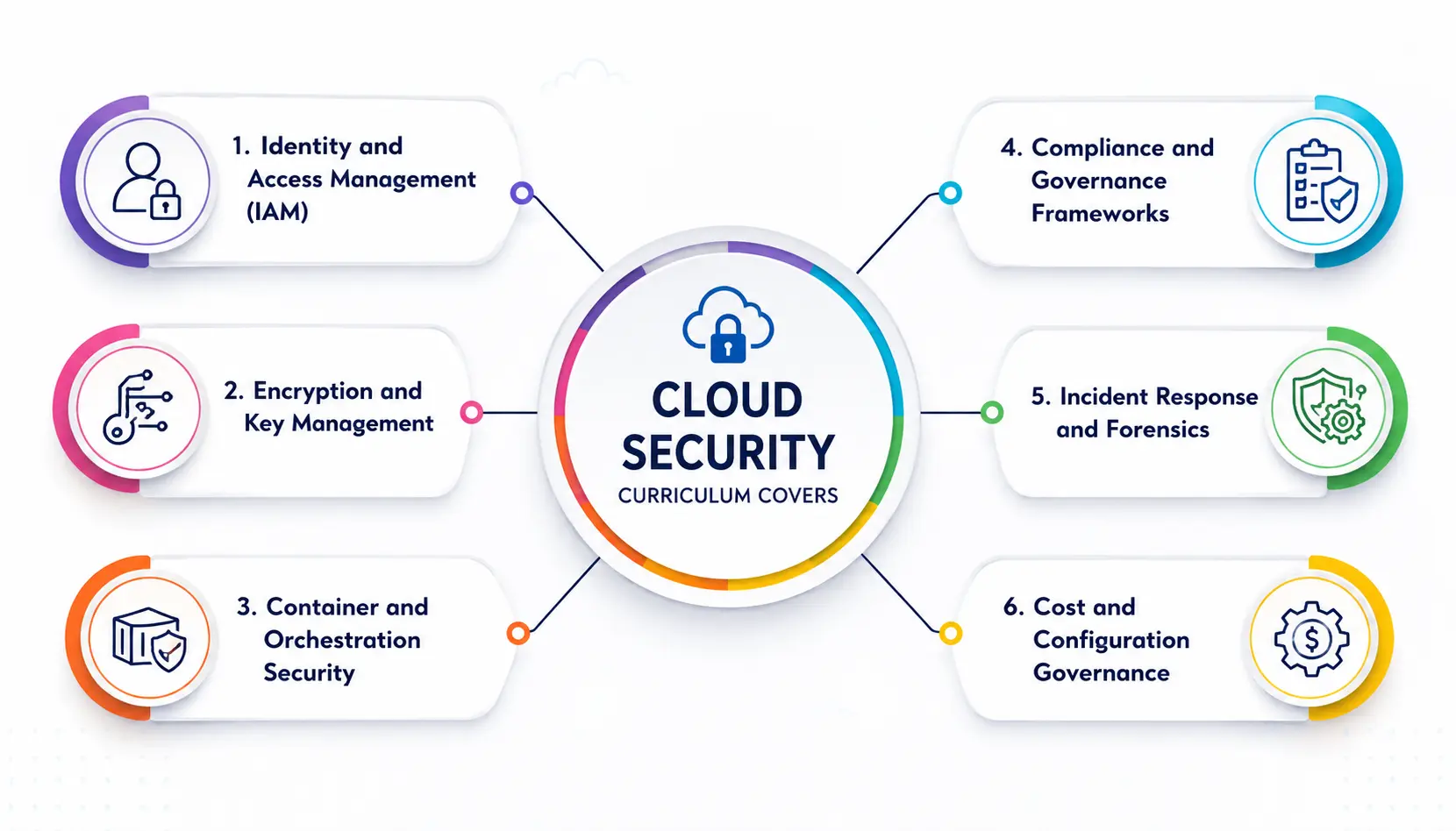
- Identity and access management (IAM): how permissions, roles, and least-privilege policies get configured so that no single compromised account can quietly take over an entire environment.
- Encryption and key management: protecting data at rest and in transit, including how encryption keys themselves get rotated, stored, and audited over time.
- Container and orchestration security: since Kubernetes now runs in production at the vast majority of large organizations, understanding pod-level isolation, image scanning, and runtime protection has become close to mandatory rather than optional.
- Compliance and governance frameworks: translating standards like ISO 27001, SOC 2, or industry-specific regulations into actual technical controls that an auditor can verify rather than take on faith.
- Incident response and forensics: knowing how to detect, contain, and investigate a breach quickly, since the difference between a minor incident and a headline-making disaster often comes down to how fast the first hour is handled.
- Cost and configuration governance: catching misconfigured storage buckets, overly permissive network rules, and other easy-to-miss mistakes before they turn into the kind of silent exposure that shows up in a breach report months later.
None of these topics are especially glamorous on their own, but together they explain why employers pay a premium for people who’ve actually sat through structured, hands-on training rather than picked up fragments of the subject from scattered blog posts and video tutorials over the years.
A well-built curriculum tends to weave all six areas together into realistic scenarios, rather than teaching each one as an isolated checklist item disconnected from how a real breach or audit actually unfolds.
Conclusion
The data is fairly blunt about where things stand: the workforce gap in cloud security isn’t closing on its own, salaries for the right skill set are climbing, and most organizations are now operating across more than one cloud provider at a time.
Investing time in the right cloud security courses, matched sensibly to a person’s current experience level and target role, remains one of the more reliable ways to move into better-paying, more resilient tech work in 2026.
Whether the end goal is a hands-on engineering role or a senior design position managing a company’s entire environment, the path usually starts with picking one solid course and actually finishing it, rather than collecting a stack of half-completed certificates.
A Personal Note From the Author
I’ve watched a fair number of friends and former colleagues make the jump into cloud security over the past couple of years, and the pattern is almost always the same: the ones who succeed pick one course, finish it properly, and build a small hands-on project alongside it, instead of jumping between five different platforms hoping something sticks.
I wrote this guide the way I wish someone had explained cloud security courses to me when I first started looking into this field, without the sales pitch, just the actual numbers and a realistic sense of what each option is good for. If there’s one thing I’d say directly to anyone reading this: pick the course that matches the job you actually want next, not the one with the flashiest name.