

Marketing has never been this demanding. You have to create content every day, manage social media, send emails to thousands of people, track what’s working, and still find time to plan your next campaign. For most small businesses and marketing teams, there simply aren’t enough hours.
That’s exactly why AI tools for marketing have become essential in 2026. These tools handle the repetitive, time-consuming work so you can focus on things that need your creativity and judgment. Whether you run a small business or work in a large marketing team, the right AI tool can save you hours every single week.
This guide covers the 10 best AI tools for marketing in 2026, what each one does, who it’s best for, honest pricing, and where each falls short.
What Are AI Tools for Marketing?
AI marketing tools are software programs that use artificial intelligence to help businesses plan, create, send, and measure marketing. They write blog posts, design visuals, send personalized emails, and track your performance automatically.
The key difference from regular tools? Regular tools wait for you to do the work. AI marketing tools do a large part of it for you. You give them basic information about what you need, and they handle the rest.
In 2026, the best automated marketing platforms go even further — they connect your whole marketing process. Write a blog, turn it into social captions, schedule it, track performance, and adjust strategy based on results. All with minimal manual effort.
Quick Comparison Table
|
Tool |
Best For | Free Plan | Starts At |
|
HubSpot |
All-in-one marketing | Yes | $15/month |
|
Jasper |
AI content writing | 7-day trial | $49/month |
| Mailchimp | AI email marketing | Yes |
$13/month |
| Surfer SEO | Content optimization | No |
$89/month |
| Hootsuite | Social media management | 30-day trial |
$99/month |
|
ChatGPT |
Marketing copy + strategy | Yes | $20/month |
|
Canva AI |
Visual content creation | Yes | $15/month |
|
Semrush |
SEO + marketing research | Limited |
$139/month |
| Gumloop | Workflow automation | Yes |
$97/month |
| Klaviyo | Email + SMS marketing | Yes |
$20/month |
Top 10 AI Tools for Marketing Reviewed
1. HubSpot — The All-In-One Marketing Platform
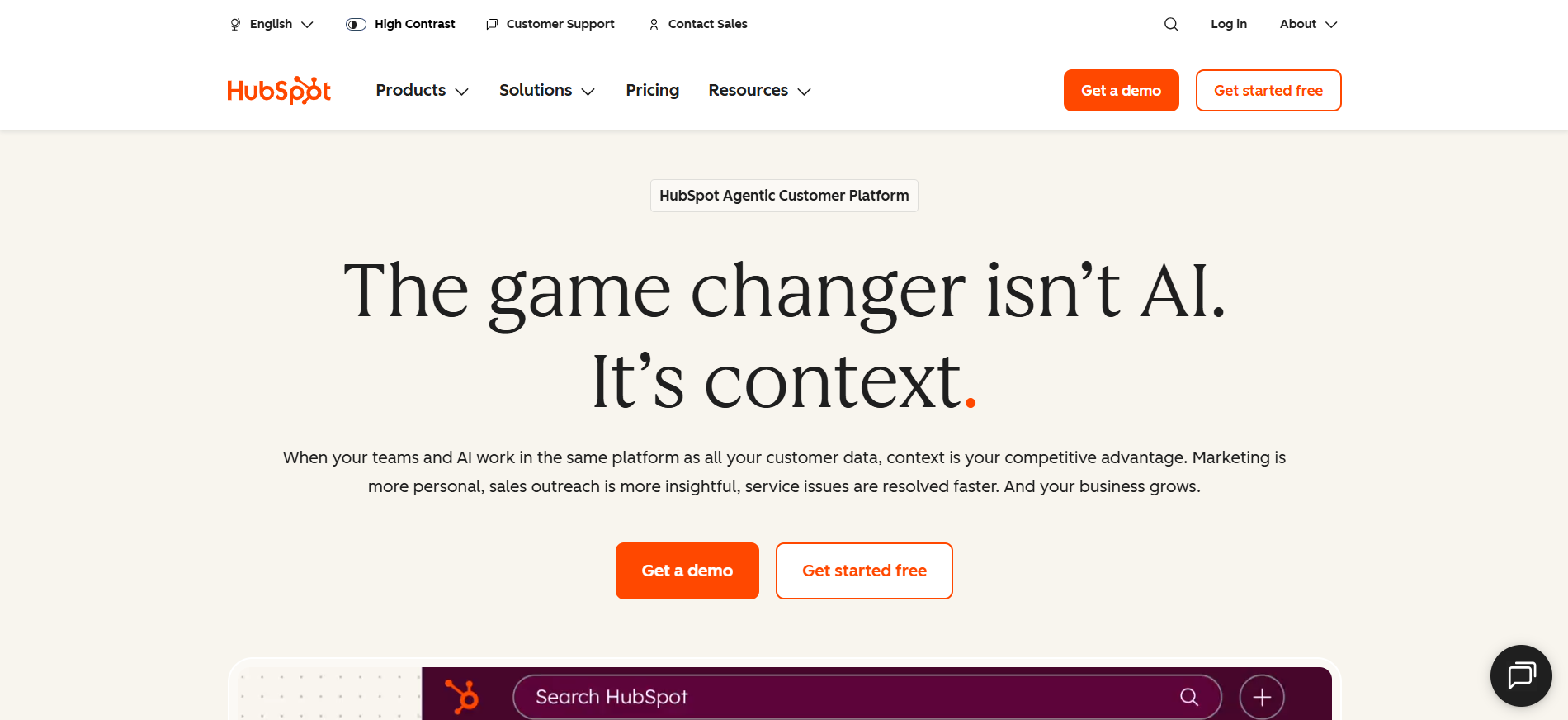
HubSpot started as a simple email and CRM tool. In 2026, it has grown into a complete AI-powered marketing platform where everything — contacts, emails, blog, social media, ads, and analytics — lives in one place.
Why people love it: When someone fills out a form on your website, HubSpot tracks every interaction they’ve had and helps you send the right message at the right time. The AI assistant writes emails, landing pages, and social posts on demand.
Top features:
- AI content assistant for emails, pages, and social posts
- Predictive lead scoring to find who is most likely to buy
- Marketing automation that runs without manual effort
- Built-in CRM connecting marketing directly to sales
- Detailed reports showing exactly what drives results
Pricing: Free plan available. Starter at $15/month. Professional with full AI features at $800/month.
Best for: Growing businesses that want one platform to manage everything and teams tired of switching between multiple tools.
Honest downside: The powerful features sit behind expensive plans. For many small businesses, the Professional plan pricing is hard to justify early on.
2. Jasper — The AI Content Writer
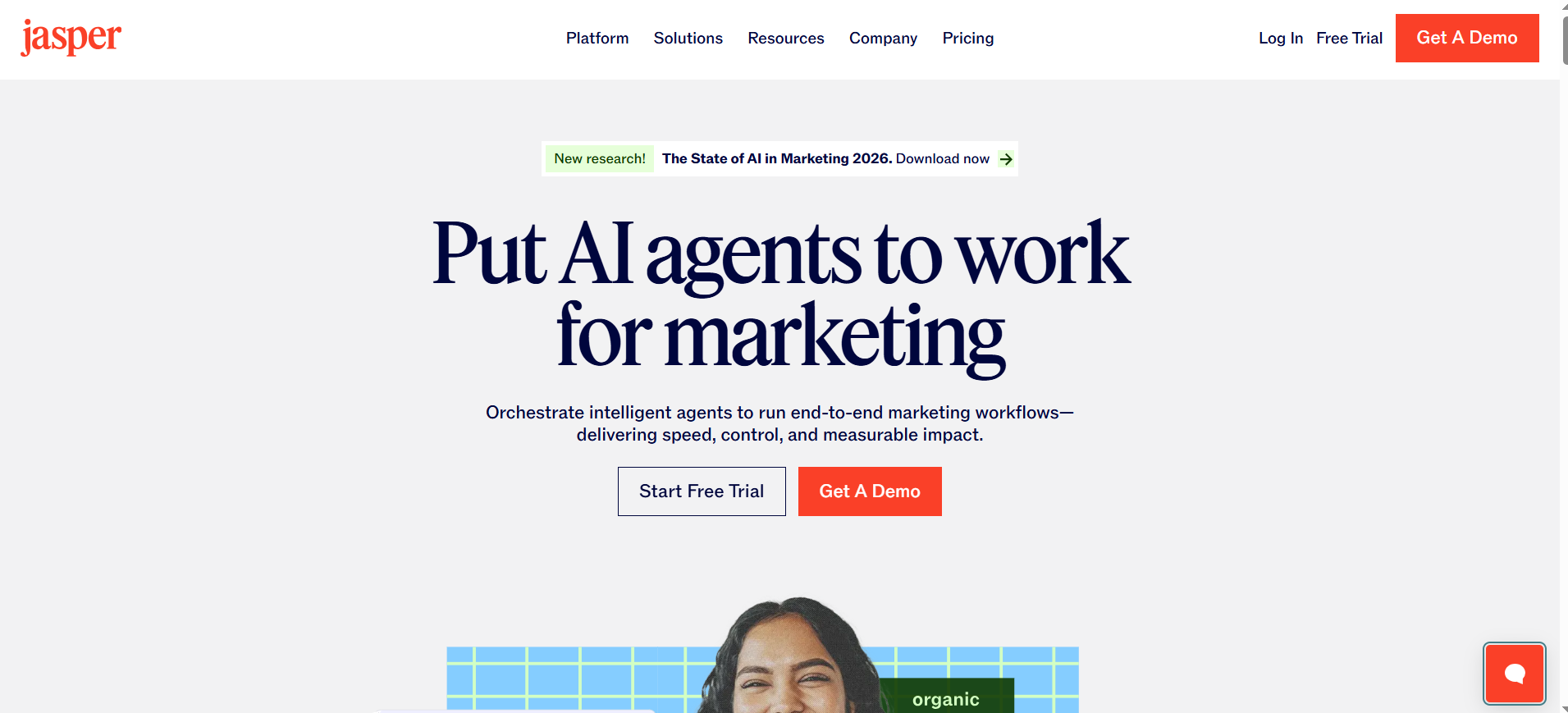
Jasper is built specifically for writing marketing content. Blog posts, product descriptions, social captions, email subject lines, ad copy — it handles all of it faster than any human writer.
Why people love it: Give Jasper a brief description and it creates full drafts in seconds. The Brand Voice feature learns how your company writes, keeping every piece of content consistent across your team.
Top features:
- Brand Voice for consistent writing style
- 50+ templates for every content type
- Marketing Workflow for automating content pipelines
- Surfer SEO integration for optimized blog posts
- Team collaboration tools
Pricing: Creator at $49/month. Pro at $69/month. 7-day trial available.
Best for: Marketing teams that publish regularly and want to improve marketing efficiency without hiring more writers.
Honest downside: Jasper produces solid first drafts, but editing is still required. It’s a starting point, not a finished product.
3. Mailchimp — The AI Email Marketing Tool
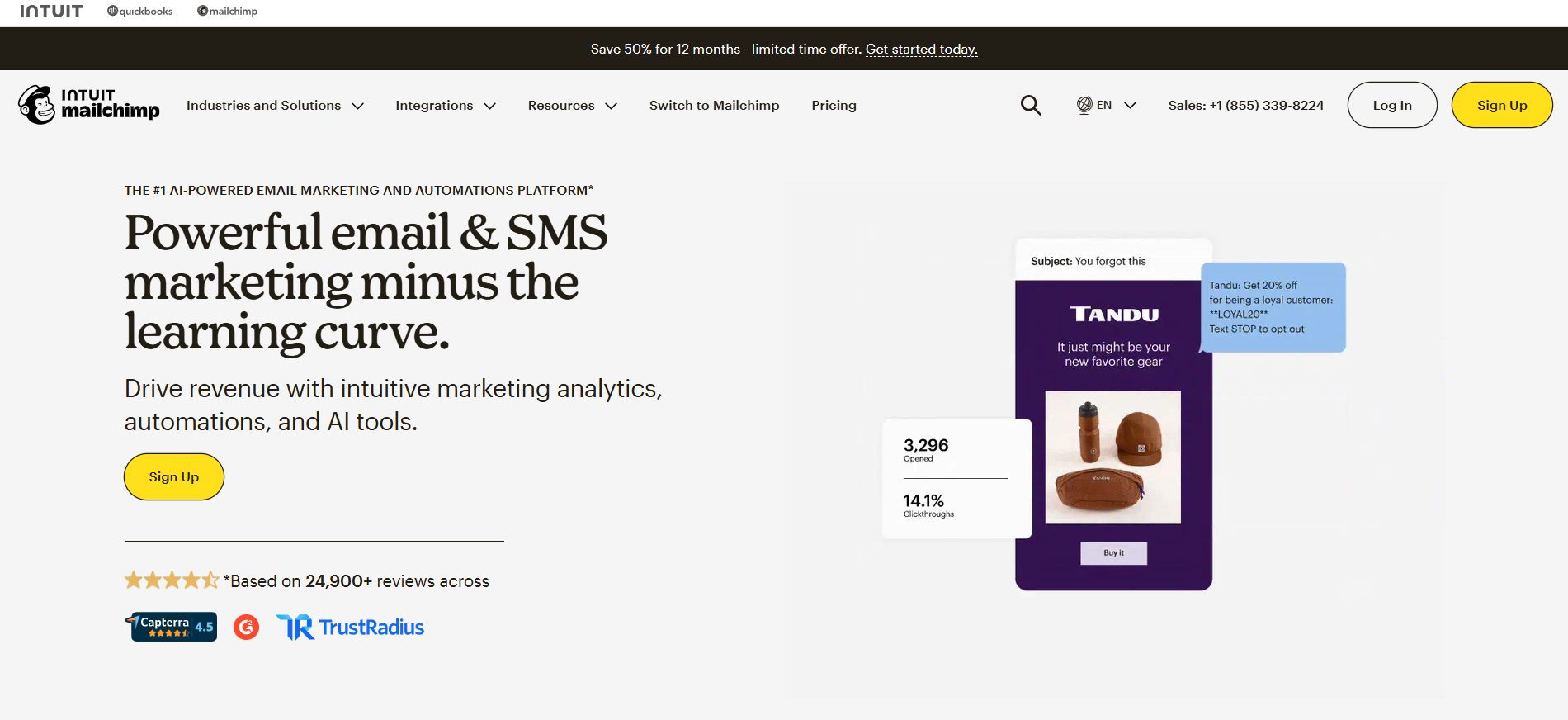
Mailchimp is one of the most widely used AI email marketing tools in the world. In 2026, AI now handles much of what used to be manual work — from choosing send times to writing subject lines.
Why people love it: Mailchimp figures out the best time to send to each individual subscriber, writes subject line suggestions, and recommends content based on what your audience has engaged with before.
Top features:
- AI send-time optimization for each subscriber
- Subject line recommendations based on past performance
- Automated email series for new subscribers
- Smart content suggestions based on audience behavior
- Simple drag-and-drop email builder
Pricing: Free up to 500 contacts. Essentials at $13/month. Standard at $20/month adds full AI features.
Best for: Small businesses and freelancers who want to start email marketing without a steep learning curve.
Honest downside: Costs increase significantly as your list grows. Businesses with complex email needs often outgrow it.
4. Surfer SEO — The Content Ranking Tool
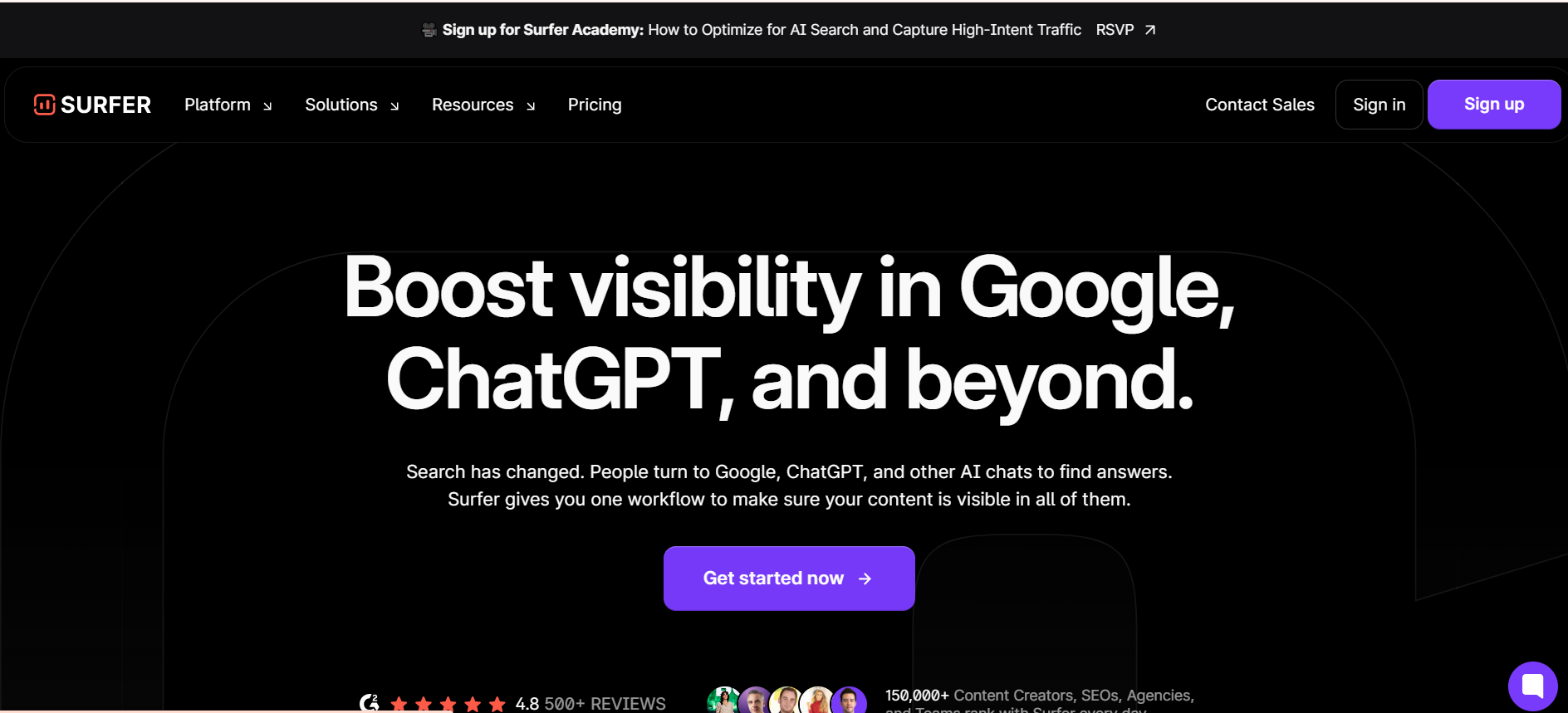
Surfer SEO is for anyone who wants their blog posts to rank on Google. It analyzes the top-ranking pages for any keyword and tells you exactly how to write your content to compete with them.
Why people love it: It removes the guesswork from content marketing. A real-time score shows how your article compares to top-ranking competitors as you write. When the score turns green, you’re ready to publish.
Top features:
- Real-time content score while writing
- Keyword suggestions from top-ranking pages
- AI-generated outlines and introductions
- Google Docs and WordPress integrations
- Competitor content analysis
Pricing: Essential plan at $89/month. No free plan.
Best for: Bloggers, content teams, and businesses building organic traffic through AI tools for digital marketing.
Honest downside: Surfer only handles content optimization. It doesn’t track rankings or analyze backlinks, so you’ll need other tools for full SEO coverage.
5. Hootsuite — The Social Media Manager
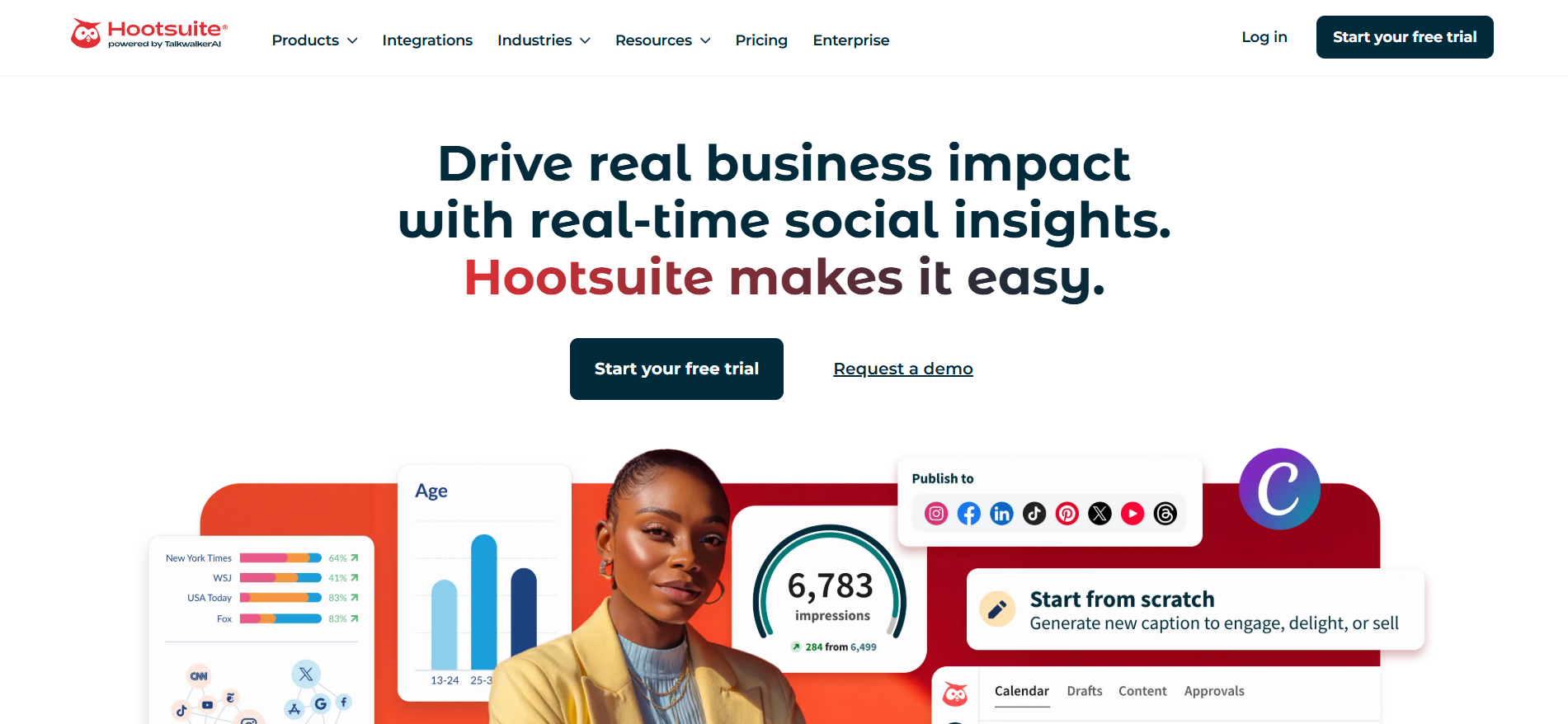
Posting daily across multiple social platforms, replying to comments, and tracking performance is genuinely overwhelming. Hootsuite brings it all into one place.
Why people love it: Schedule all your posts in one calendar, get AI suggestions for the best posting times, and use the AI caption writer to create content quickly. In 2026, Hootsuite also tracks competitor activity so you can spot what’s working in your industry.
Top features:
- Schedule posts across all major social platforms
- AI caption writer for fast content creation
- Best-time-to-post recommendations per platform
- Social listening for brand mentions and trends
- Competitor tracking and benchmarking
Pricing: Professional plan at $99/month. 30-day free trial available.
Best for: Businesses and agencies managing social media across multiple brands or platforms at once.
Honest downside: Expensive for small businesses with simple needs. Simpler free alternatives exist if you only need basic scheduling.
6. ChatGPT — The Marketing Strategy Partner
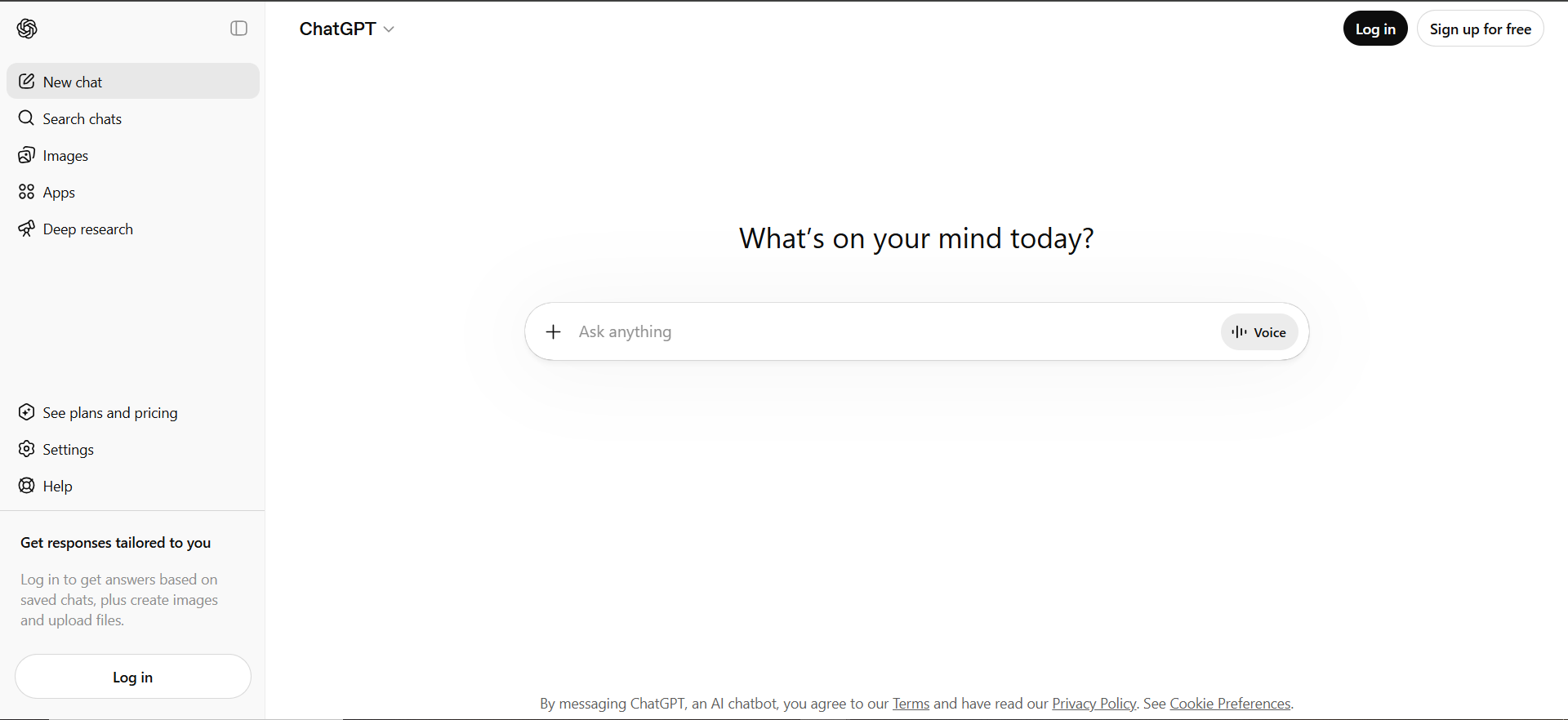
ChatGPT doesn’t look like a traditional marketing tool, but working marketers use it every day. For writing, brainstorming, research, and planning, it fits into almost every marketing workflow naturally.
Why people love it: Ask it to write an email campaign, generate headline ideas, build a month of content, or explain why an ad is underperforming. It handles all of this in seconds. At $20/month, few tools offer more value.
Top features:
- Writes any type of marketing copy on demand
- Generates creative campaign ideas and concepts
- Builds full content calendars and marketing plans
- Research assistant for competitor and audience insights
- Analyzes existing content and suggests improvements
Pricing: Free version for basic use. ChatGPT Plus at $20/month for full access.
Best for: Everyone. It’s one of the most practical AI tools for small business because of its low cost and wide range of uses.
Honest downside: ChatGPT doesn’t schedule posts, connect to analytics, or automate workflows. It’s a writing and thinking tool, not an automation platform.
7. Canva AI — The Visual Content Creator
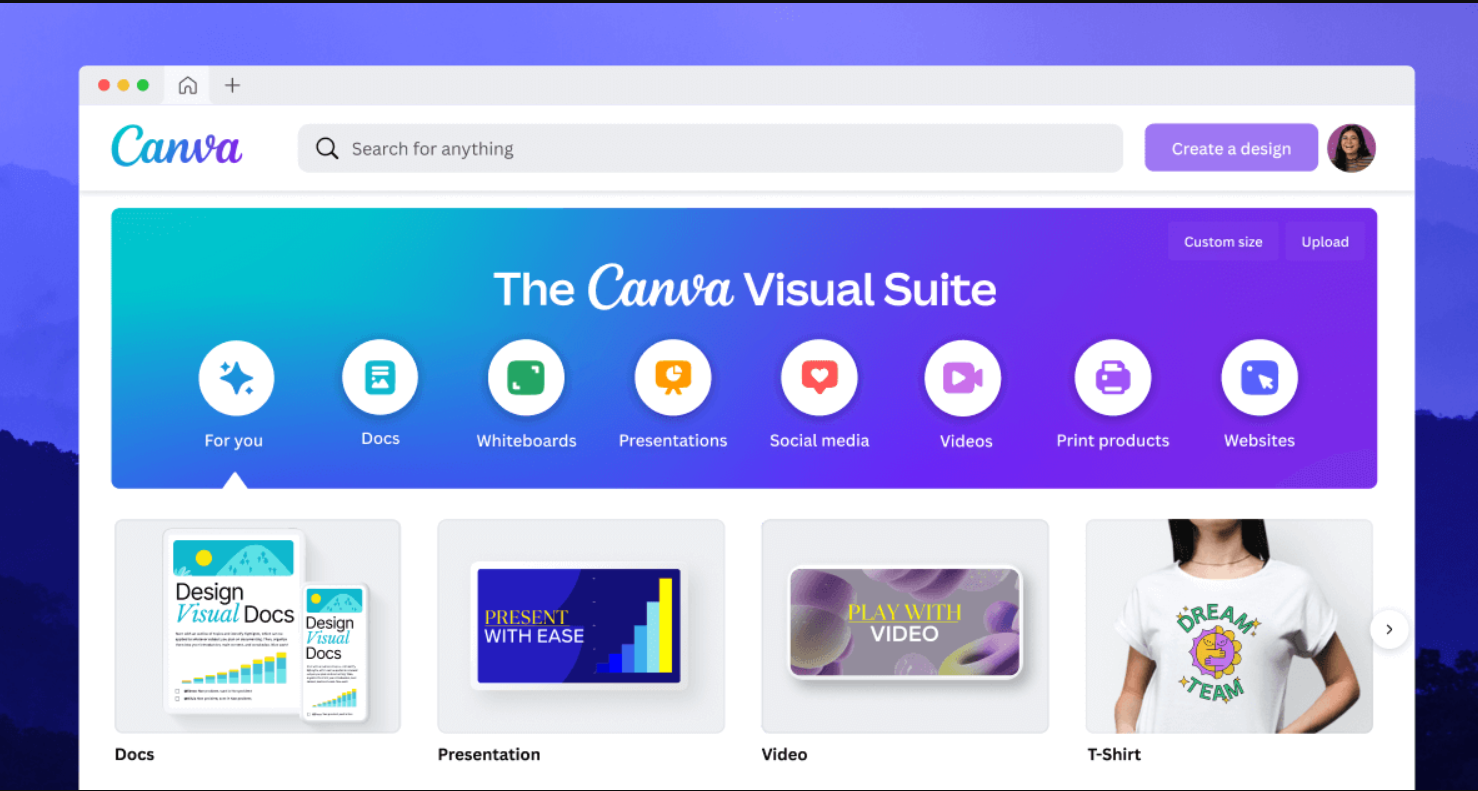
You no longer need design skills to create professional marketing visuals. Canva has always been easy to use, and its 2026 AI features have made visual content creation faster than ever.
Why people love it: Describe what you need — ‘a Facebook ad for a summer sale’ — and Canva generates polished design options in seconds. One-click resizing adjusts any design for every platform automatically.
Top features:
- AI image generator from text descriptions
- One-click resize for any social platform
- Brand Kit to keep colors and fonts consistent
- Background remover for product photography
- Thousands of templates for every marketing format
Pricing: Free version is very useful. Canva Pro at $15/month unlocks AI features and premium content.
Best for: Small businesses, social media managers, and marketers who create visuals regularly without a design background.
Honest downside: For highly customized or complex creative work, a professional designer still produces better results. Canva’s strength is speed, not artistic originality.
8. Semrush — The Marketing Research Tool
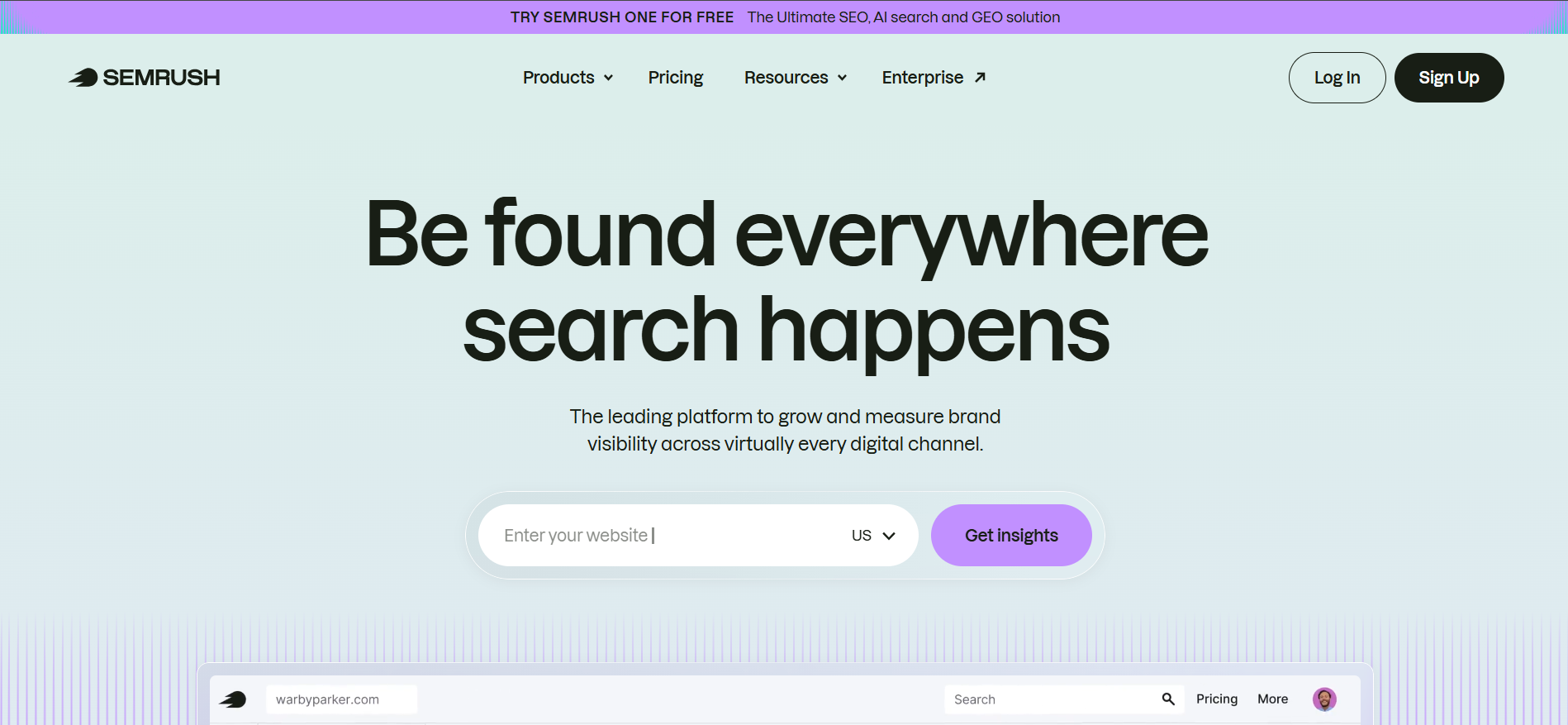
Semrush is what serious marketers use to understand their market. What keywords competitors rank for, where their traffic comes from, which ads they run, and how your content compares — it’s all there.
Why people love it: The depth of data is unmatched. You can find exactly which pages drive the most traffic to a competitor’s site and then create better content on those same topics. For marketing workflows built around data, Semrush provides the intelligence behind every decision.
Top features:
- Keyword research across billions of searches
- Full competitor traffic and keyword analysis
- Site audit to find and fix SEO problems
- ContentShake AI for AI-assisted content creation
- Position tracking for your Google rankings
Pricing: Pro plan at $139.95/month. 7-day trial available.
Best for: Businesses serious about SEO and content teams that want data to guide their strategy.
Honest downside: Expensive, and the volume of data can overwhelm new users. Takes time to learn how to use it effectively.
9. Gumloop — The Workflow Automation Tool
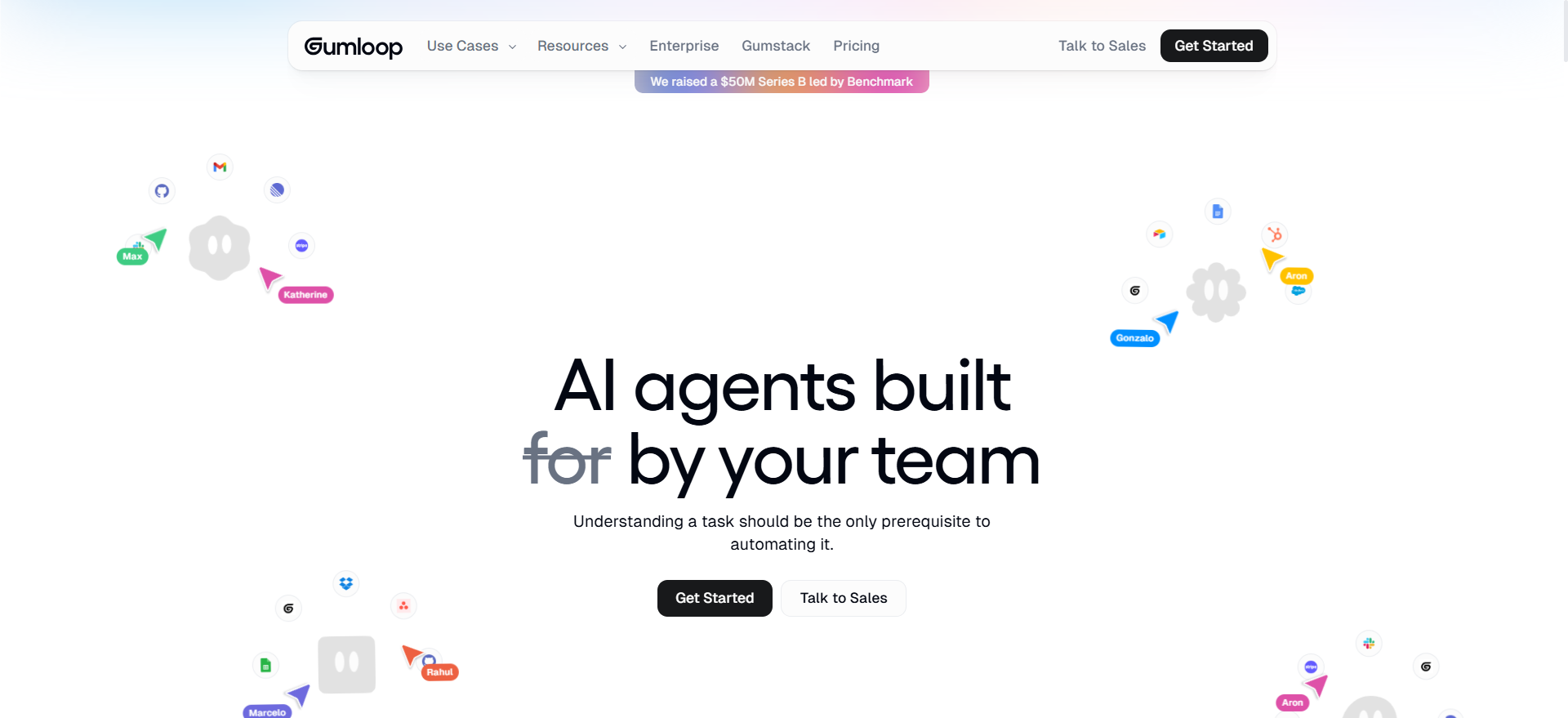
Gumloop is one of the most underrated AI Marketing Tools right now. It connects your marketing tools together and automates complex tasks without any coding needed.
Why people love it: Build automations like ‘when a lead fills out a form, analyze their company, write a personalized email, and send it automatically.’ Manual tasks that used to take hours happen in seconds. Companies like Webflow, Shopify, and Instacart use it internally.
Top features:
- Connect any AI model to your existing marketing tools
- Automate multi-step marketing workflows visually
- No coding — drag-and-drop interface
- Sentiment analysis on customer feedback and reviews
- Pre-built templates for common marketing tasks
Pricing: Free plan available. Growth plan at $97/month.
Best for: Marketing teams that want to automate repetitive tasks and connect multiple platforms without needing a developer.
Honest downside: Setting up complex automations takes time and testing before they run smoothly. There is a learning curve for advanced workflows.
10. Klaviyo — The Ecommerce Email and SMS Tool
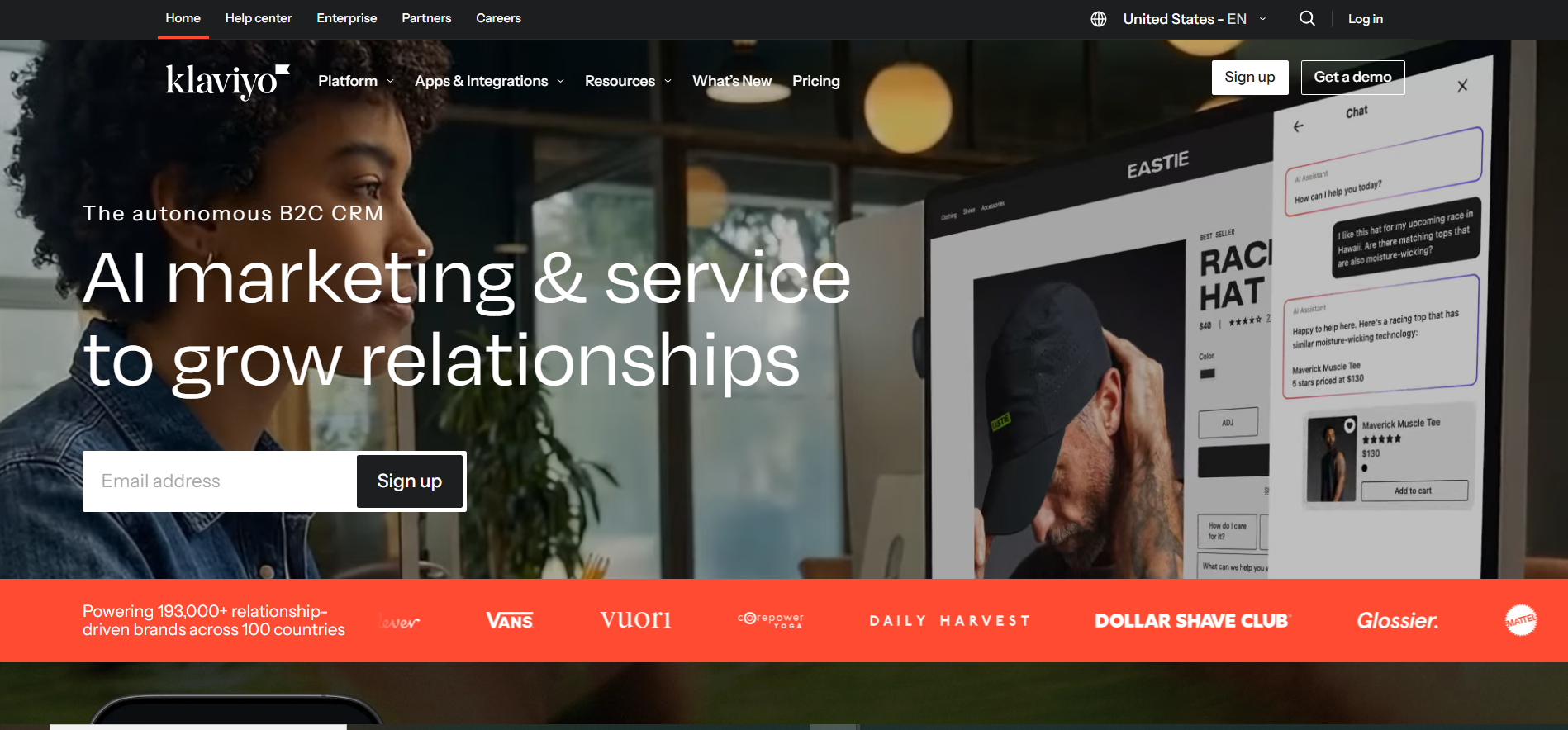
Klaviyo is built specifically for ecommerce businesses. It connects to your online store and uses AI to send personalized messages based on exactly what customers have browsed, bought, or ignored.
Why people love it: Klaviyo knows your customers better than almost any other email marketing tool. Abandoned cart emails, post-purchase follow-ups, win-back campaigns — all running on autopilot once set up.
Top features:
- Deep integration with Shopify, WooCommerce, and similar platforms
- Predictive analytics for customer lifetime value
- Personalized email and SMS based on purchase behavior
- Pre-built automation flows for common ecommerce scenarios
- Revenue attribution showing which campaigns made money
Pricing: Free up to 500 contacts. Email plan starts at $20/month, scaling with list size.
Best for: Ecommerce businesses that want to turn customer data into personalized marketing at scale.
Honest downside: Designed almost entirely for ecommerce. Service businesses and B2B companies will get more value from HubSpot or Mailchimp.
Which AI Marketing Tool Should You Choose?
The right tool depends on your business and your biggest marketing challenge right now.
- Small business with a tight budget: Start with ChatGPT ($20/month) and Canva AI (free). Add Mailchimp’s free plan for email. You can run real marketing for under $25 per month.
- Focused on blog traffic: Surfer SEO plus ChatGPT. Surfer tells you what to write, ChatGPT helps you write it faster.
- Email as your main channel: Klaviyo for ecommerce. Mailchimp for everyone else.
- Want everything in one place: HubSpot handles your contacts, emails, social media, content, and ads in one platform.
- Spending too much time on social media: Hootsuite automates your scheduling and brings all platforms into one calendar.
- Want to automate repetitive tasks: Gumloop connects all your tools and removes the manual work that slows teams down.
Final Thoughts
AI tools for marketing aren’t here to replace marketers. They free you from work that doesn’t need a human touch, so you can focus on strategy, creativity, and building real connections with customers.
The biggest mistake most businesses make is trying all these tools at once. Pick one or two that solve your biggest problem today, learn them properly, and then expand as you grow.
If you’re not sure where to start, try ChatGPT for a week. It’s free, easy to use, and fits into almost every marketing task you already do. Once you see the time it saves, the rest of this list will make a lot more sense.
The businesses growing fastest in 2026 aren’t the ones with the biggest teams. They’re the ones using the right tools to work smarter every day.