

Here’s a number that stopped me mid-scroll while researching this piece: AWS quietly retired its old Machine Learning – Specialty exam and replaced it with a completely restructured credential, and most people chasing an AWS machine learning certification this year still don’t know the exam they’re studying for has changed shape underneath them.
If you’ve been putting off this certification because you weren’t sure it was “worth it” anymore, I get it; the AI job market feels noisy right now. But the data tells a much steadier story than the hype does.
This guide walks through what the AWS machine learning certification actually looks like today, what it pays, how fast the field is genuinely growing, and what a realistic career path looks like once you have the letters after your name.
What Exactly Is This Machine Learning Certification Today?
For years, the AWS machine learning certification most people meant was the AWS Certified Machine Learning – Specialty (MLS-C01), a dense exam built around algorithm selection and mathematical modeling. That exam has been phased out.
In its place sits the AWS Certified Machine Learning Engineer – Associate, a credential AWS itself describes as validating the ability to build, operationalize, deploy, and maintain machine learning solutions and pipelines using the AWS Cloud. It’s a deliberate shift away from pure theory and toward the plumbing: data preparation, model deployment, monitoring, and security.
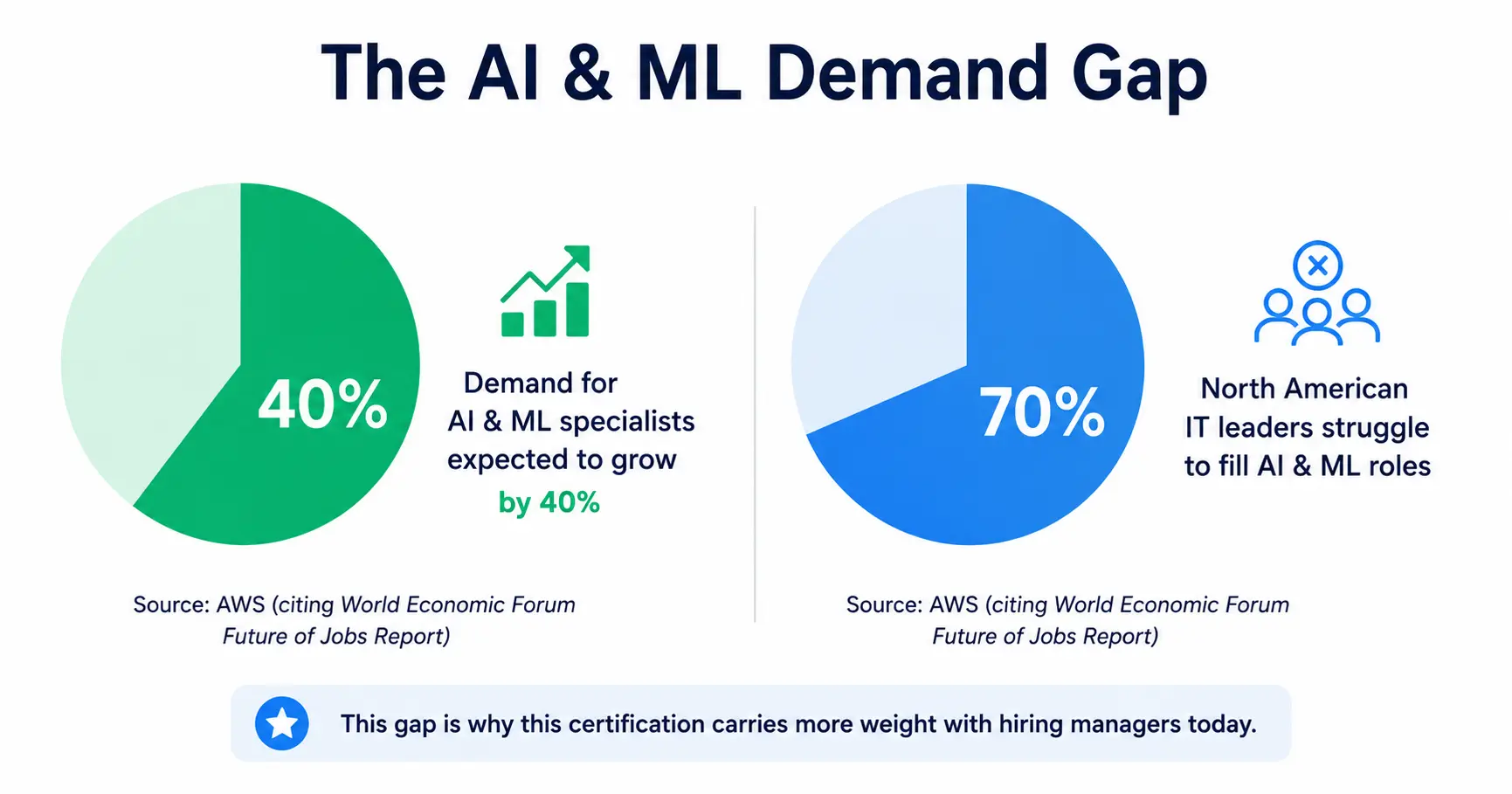
That shift matters more than it sounds. According to AWS’s certification page, which cites the World Economic Forum’s Future of Jobs Report, demand for AI and machine learning specialists is expected to grow by 40 percent, yet 70 percent of North American IT leaders say they struggle to fill AI and ML roles. That gap is exactly why this particular credential carries weight with hiring managers right now, more so than one built around outdated exam objectives would.
And there’s a second wrinkle worth knowing before you register: AWS has already announced the next update. Per the AWS Training blog, the current MLA-C01 exam stays available in English through September 28, 2026, after which a refreshed MLA-C02 version takes over. Anyone planning their study schedule this year should factor that date in.
Why Are Cloud Skills and ML Demand Climbing Together?
It’s tempting to treat “cloud skills” and “machine learning skills” as two separate resume lines, but in practice they’ve merged. Most production ML work today happens on a cloud platform, and AWS still holds a meaningful share of that infrastructure. Broader hiring data backs up just how fast this corner of tech is moving.
365 Data Science’s 2026 job outlook research, based on an analysis of over 1,000 real job postings, found that demand for AI and ML specialists was projected to grow 40 percent between 2023 and 2027, with the average machine learning engineer salary sitting at $133,336 a year in their sample.
Separately, Phaidon International’s 2026 analysis points out that the global machine learning market was valued at $55.8 billion in 2024 and is projected to reach $282.13 billion by 2030, a 30.4 percent compound annual growth rate, with roughly 42 percent of enterprise-scale organizations already using AI in their core operations.
None of that growth happens without engineers who understand both the modeling side and the cloud infrastructure underneath it, which is exactly the combination an AWS machine learning certification is built to prove.
AWS Machine Learning Certification Salary in 2026: What the Numbers Actually Say
Salary data for a single certification is always a little messy, since most sources track either the certification specifically or the job title broadly, and the wider cloud salary conversation tends to blur the two together even further. Here’s a snapshot pulling both angles together, using figures reported through mid-2026.
|
Data Point |
Reported Figure (USD) |
|
AWS Certified Machine Learning Specialist, average annual pay |
$63,781 |
|
AWS Machine Learning Engineer, average annual pay |
$128,769 |
|
AWS Machine Learning – Specialty certification holders, average pay |
$171,725 |
|
Machine learning engineer, average salary (1,000+ postings analyzed) |
$133,336 |
|
AWS Solutions Architect – Professional / DevOps Engineer – Professional, average pay |
Above $155,000 |
The spread here isn’t a contradiction; it reflects the difference between entry-level job title matches and specialized certification-holder surveys, and it’s a good reminder that any single cloud salary figure quoted on its own is usually incomplete.
The majority of AWS Machine Learning Engineer salaries currently range between $101,500 and $155,000, with the top 10 percent of earners making $178,000 or more. Also, other sources put certified machine learning – specialty holders at an average of $171,725, among the highest of any AWS credential.
That AWS salary premium tends to widen further once someone stacks the certification with two or three years of real production experience, and it consistently shows up whenever candidates apply for competitive ML jobs at larger cloud-native companies.
Real Career Growth: From ML Jobs to ML Leadership
One of the more useful things about this credential is how directly it maps to actual job titles rather than a vague “cloud professional” label. It include:
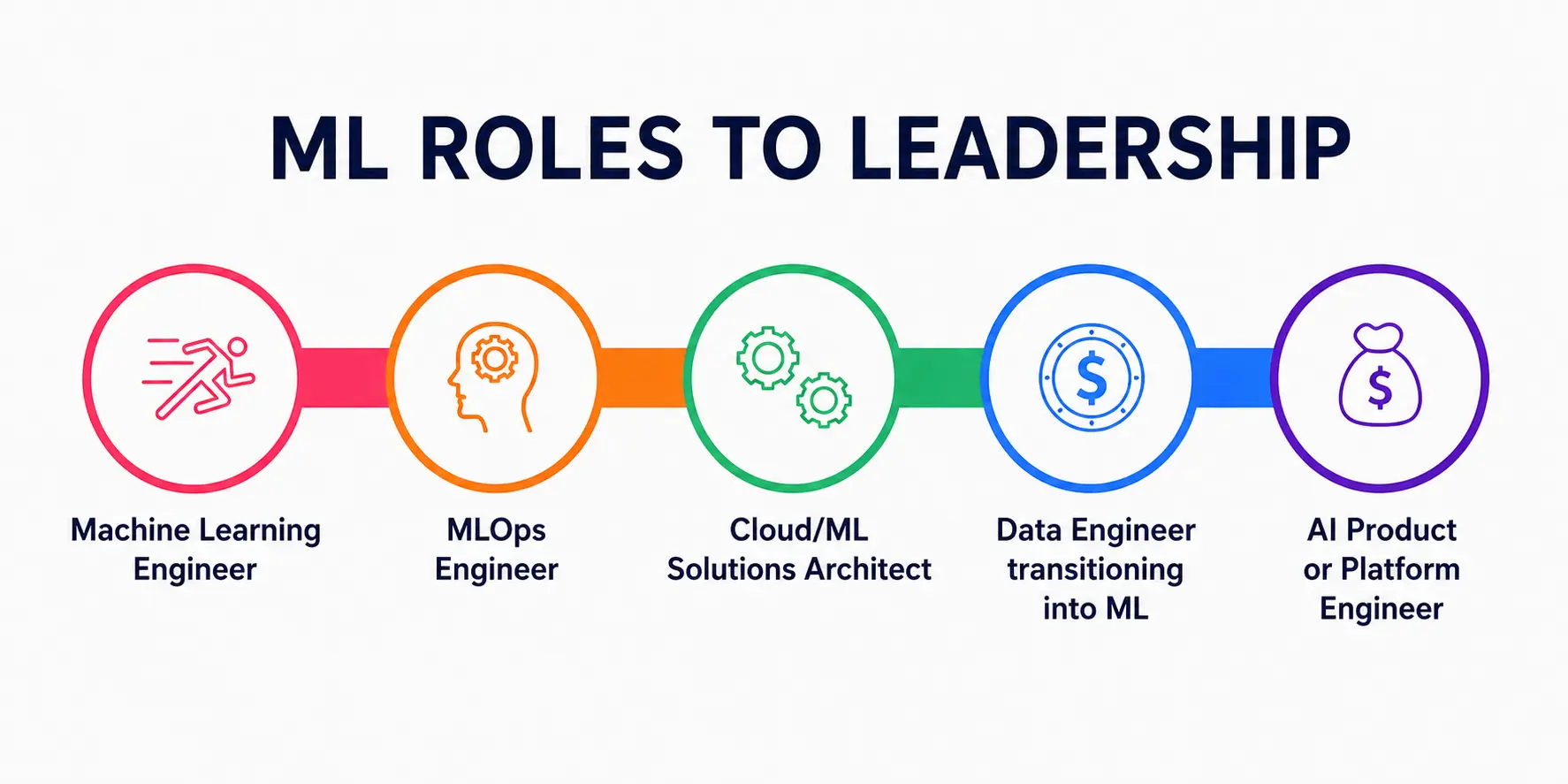
- Machine Learning Engineer — building, training, and deploying models directly within AWS services like SageMaker.
- MLOps Engineer — owning the CI/CD pipelines, monitoring, and infrastructure that keep models running reliably in production.
- Cloud/ML Solutions Architect — designing the broader AWS architecture that ML workloads run inside of.
- Data Engineer transitioning into ML — a common path for professionals who already handle data pipelines and want to move closer to model deployment.
- AI Product or Platform Engineer — increasingly common as companies fold generative AI features into existing products.
The growth trajectory across these machine learning jobs looks strong on paper and in practice. The U.S. Bureau of Labor Statistics projection cited by 365 Data Science puts machine learning engineering job growth at 23 percent from 2022 to 2032, a rate far above the average for all occupations. That’s not a hype-cycle number pulled from a press release; it’s a government labor projection, and it lines up with what recruiters are reporting on the ground in 2026.
How to Actually Prepare for the AWS Machine Learning Certification?
Getting the exam itself right matters less than most study guides suggest and more than most casual candidates assume. A few things worth doing before exam day:
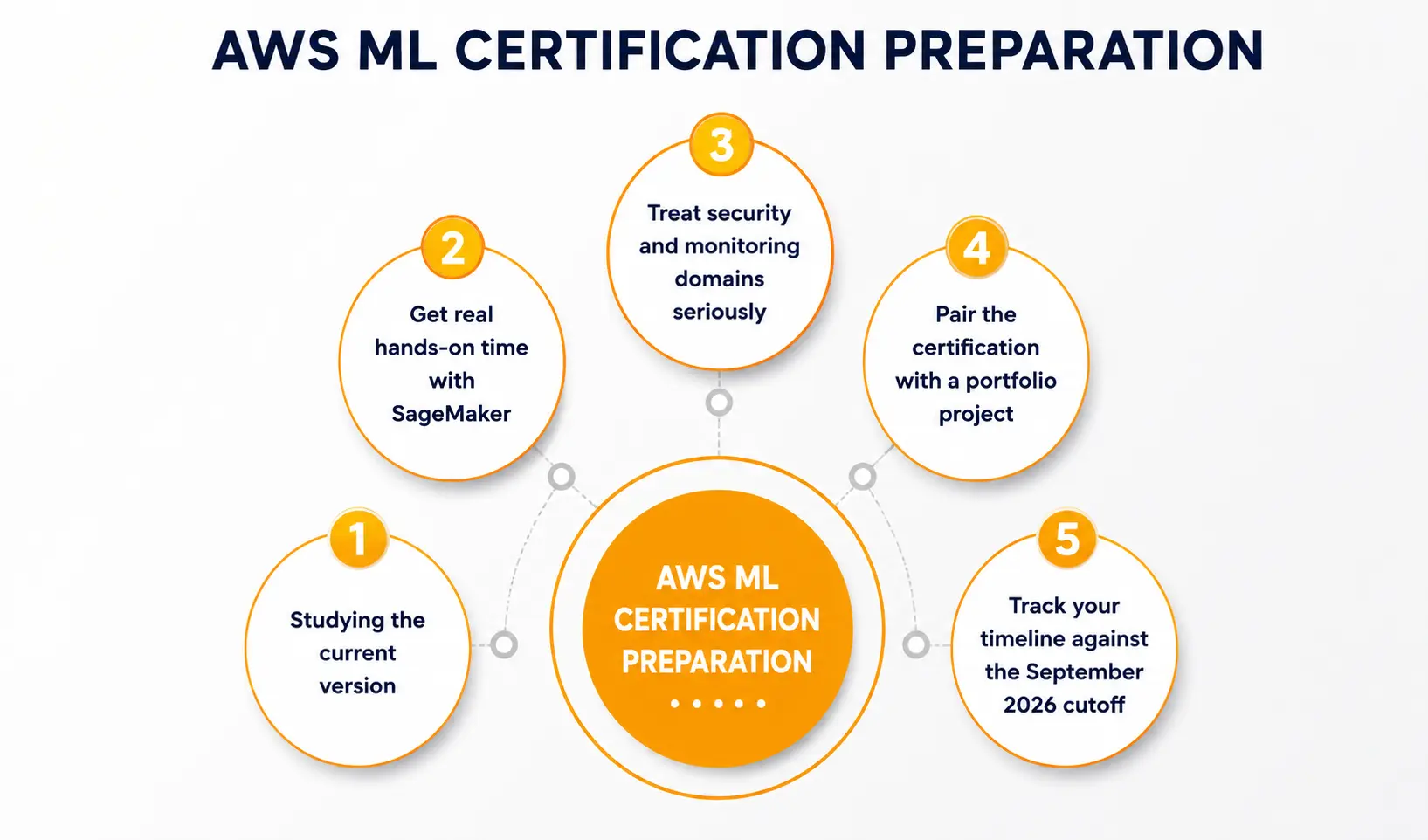
- Confirm you’re studying for the current version. With MLA-C02 replacing MLA-C01 later this year, checking the exact exam code on your registration confirmation avoids wasted study time on outdated content.
- Get real hands-on time with SageMaker. AWS itself recommends at least one year of hands-on experience with SageMaker and related ML engineering services before attempting this exam, and it shows in how scenario-heavy the questions are.
- Treat security and monitoring domains seriously. Unlike the old specialty exam’s heavy algorithm focus, this version weights model monitoring, access controls, and compliance more evenly alongside modeling itself.
- Pair the certification with a portfolio project. A certification proves baseline knowledge; a deployed project, even a small one, proves you can apply it, and hiring managers increasingly ask for both.
- Track your timeline against the September 2026 cutoff. If MLA-C01 fits your current study plan better, registering before the switch to MLA-C02 avoids last-minute syllabus changes.
Is the Investment Still Worth It?
Given the AWS salary figures above and how fast machine learning jobs are multiplying across industries, most professionals evaluating this credential come away with a clear answer: yes, particularly for anyone already working somewhere in the AWS ecosystem.
The certification itself won’t guarantee a six-figure jump overnight, but paired with real project experience, it consistently shows up as one of the stronger signals recruiters look for when screening candidates for cloud and ML-focused roles side by side, and it tends to hold its value even as the broader cloud salary market shifts year to year.
Conclusion
The AWS machine learning certification landscape has genuinely shifted in 2026, not just in exam content but in what the market is willing to pay for it. Between the retirement of the old specialty exam, the arrival of a more production-focused associate credential, and salary data that consistently lands well above general tech averages, this remains one of the more defensible certification investments a cloud professional can make right now.
Anyone weighing whether to pursue an AWS machine learning certification this year should treat the September 2026 exam transition as a planning detail, not a reason to wait, since the underlying demand for these cloud skills isn’t slowing down anytime soon.
A Personal Note
I’ll be honest, I’ve watched a lot of certifications come and go over the years, and most of them age about as well as a phone charger cable. This one has been different from research. Every time I dug into a new data source for this piece, the numbers kept pointing in the same direction: real hiring, real salary movement, and real skill gaps companies are struggling to close.
If you’re on the fence about starting this certification path, my honest advice is to stop treating it like a one-time exam and start treating it like the beginning of a much longer skill-building habit. That mindset shift is usually what separates the people who actually land the offer from the people who just collect the badge.