

Here’s a number that stopped me mid-scroll the first time I saw it: the world is short by roughly 4.8 million cybersecurity professionals, and that gap has kept growing even as tech layoffs hit headlines almost every month.
If you’ve been eyeing a cybersecurity career path but assumed it was reserved for hardcore coders or ex-military intelligence types, that number should change your mind. It hasn’t been that kind of field for a while now. Plenty of people reading this are teachers, retail managers, help desk technicians, or fresh graduates with no technical background at all, and every one of them can realistically build a cybersecurity career path from scratch.
This guide walks through exactly how, without the recycled advice you’ve probably already read three times this week.
Why Does a Cybersecurity Career Path Make Sense Right Now?
I’ll be honest, I used to be skeptical of “hot job market” claims because they usually fall apart the moment you check actual hiring data. This one doesn’t. According to Metaintro’s 2026 cybersecurity jobs report, there are more than 514,000 open cybersecurity positions in the United States alone, and the median salary for the field reached $103,700 in 2026.
The same report cites a 33% job growth in the field through 2034, which is several times faster than the average for all occupations. That kind of growth is rare, and it’s exactly why so many people are quietly switching lanes into this field mid-career instead of staying stuck in roles that feel like dead ends.
Entry-level numbers back this up too. According to July 2026 salary data, the average entry-level analyst role in this field pays around $99,400 a year in the US, with top earners clearing $137,500 even without years of prior experience. Once someone has a couple of years under their belt, 2026 data puts average pay for that same role at roughly $125,264 annually.
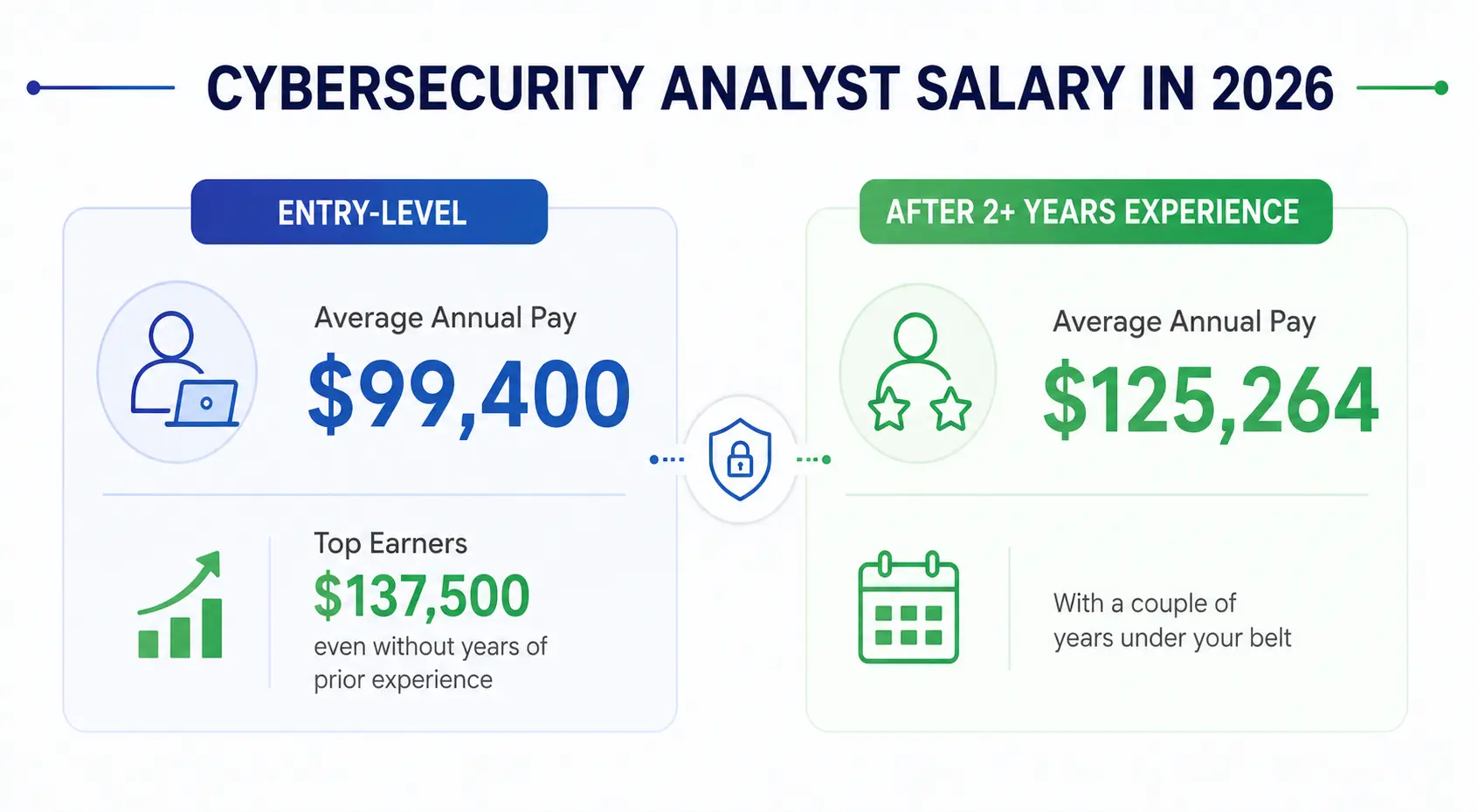
Those aren’t hypothetical “someday” numbers; they’re what’s actually being paid right now for a role that many career switchers land within a year of starting to study, and the trajectory only keeps climbing as responsibilities grow and specialization kicks in.
There’s also a business-level reason this shortage isn’t closing on its own. The World Economic Forum’s Global Cybersecurity Outlook 2026 found an 85% correlation between organizations lacking cyber resilience and those reporting a critical skills gap, framing the shortage as a board-level risk issue rather than just a hiring headache for IT departments.
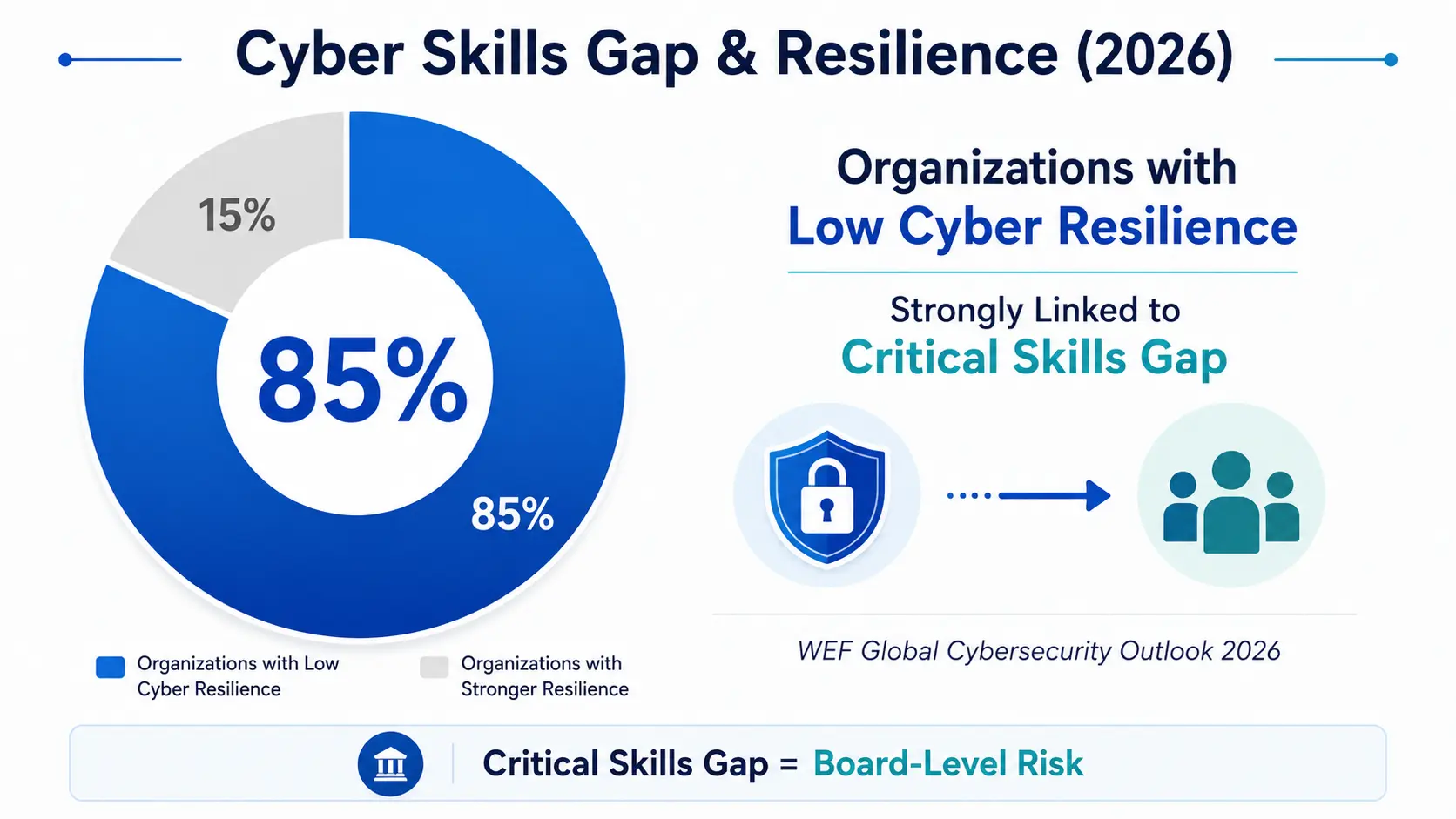
That reframing matters for anyone considering this field, because it means companies aren’t just posting jobs out of habit; they’re treating unfilled security roles as a genuine business vulnerability, which tends to translate into faster hiring decisions and more willingness to train promising beginners on the job.
What a Realistic Cybersecurity Career Path Actually Looks Like?
Most beginners picture this field as one giant blob called “hacking,” which makes the whole thing feel intimidating and vague. In reality, a cybersecurity career path is more like a set of connected on-ramps, and almost nobody starts at the top.
|
Career Stage |
Typical Role | What the Work Involves |
Rough Timeline |
|
Entry Point |
SOC Analyst | Monitoring alerts, triaging incidents, learning security operations tools |
0–1 year |
|
Building Depth |
Information Security Specialist | Managing policies, access controls, and compliance requirements |
1–3 years |
|
Specializing |
Ethical Hacking / Penetration Tester | Simulating attacks to find weaknesses before real attackers do |
2–4 years |
|
Going Proactive |
Threat Hunter | Actively searching networks for hidden or hard-to-detect threats |
3–5 years |
|
Leading |
Security Architect / CISO Track | Designing security strategy across an entire organization |
5+ years |
Most people entering this field start in an entry-level SOC role, working inside a security operations center, often shortened to a SOC. That first role is less about deep hacking skills and more about pattern recognition: watching dashboards, spotting anomalies, and escalating anything suspicious to a senior teammate.
It’s a genuinely good place to learn the rhythm of the industry before specializing, and it teaches habits like clear documentation and calm triage under pressure that carry into every later stage of the field.
From there, the road splits. Some people move deeper into information security policy and governance, which suits anyone who enjoys structure, documentation, and working closely with legal or compliance teams. Others gravitate toward ethical hacking, where the job is to think like an attacker on purpose, with permission, in order to find weaknesses before someone with bad intentions does.
A smaller group moves into threat hunting, which flips the usual reactive model on its head; instead of waiting for an alert to fire, a threat hunter goes looking for attackers who are already inside a network and simply haven’t been noticed yet.
Getting Started Without a Computer Science Degree
Here’s the part that surprises most career switchers: a computer science degree is genuinely not a requirement anymore. Employers care far more about demonstrable skills and certifications than about a specific diploma, which is exactly why so many non-technical professionals successfully pivot into this space.
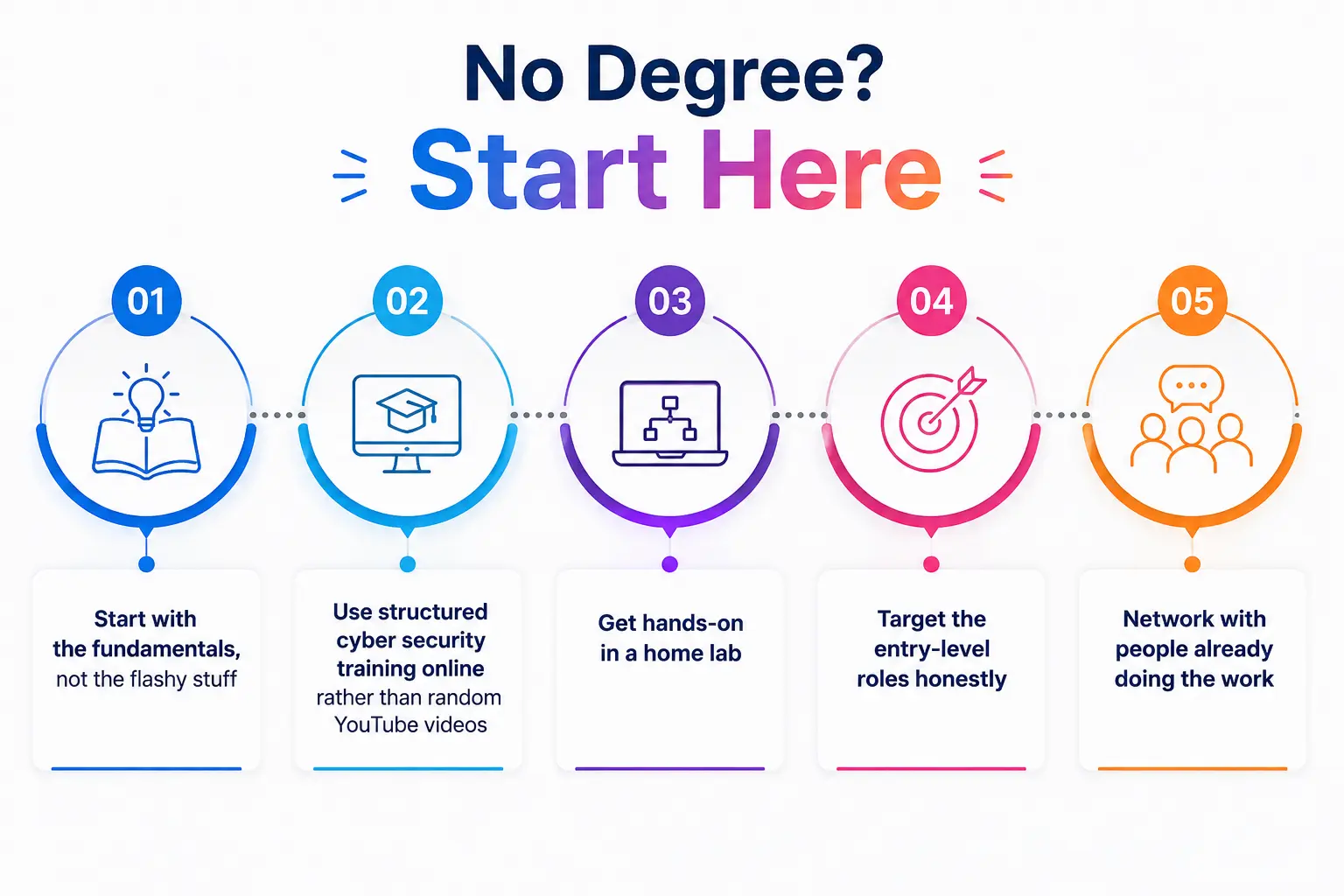
1. Start with the fundamentals, not the flashy stuff
Before touching anything related to offensive security testing, it helps enormously to understand how networks, operating systems, and basic security concepts fit together. CompTIA Security+ remains one of the most widely recognized entry-level certifications for exactly this reason, and skipping straight to advanced attack techniques without this foundation almost always backfires during interviews.
2. Use structured cybersecurity training online rather than random YouTube videos
Guided courses that build skills in order, with labs and practice environments, tend to get beginners job-ready far faster than piecing together scattered tutorials. Reputable cybersecurity training online programs also tend to map directly to certification exams, which gives structure to otherwise overwhelming self-study.
The value of good cyber security training online isn’t just the content itself; it’s the sequencing, since trying to learn everything in random order is exactly what makes so many beginners quit within the first month.
3. Get hands-on in a home lab
Setting up a virtual machine, practicing with free tools like Wireshark, and working through beginner-friendly platforms designed for practicing attack simulations in a legal, contained environment builds real muscle memory that no amount of reading replicates.
4. Target the entry-level roles honestly
Security analyst and SOC analyst openings are usually the most beginner-friendly listings on any job board, and they’re deliberately designed as a training ground rather than a role requiring five years of prior experience.
5. Network with people already doing the work
Local security meetups, online communities, and even commenting thoughtfully on posts from working professionals can open doors that a cold resume submission never will.
Common Mistakes Career Switchers Make
A few patterns show up again and again among people trying to break in, and most of them are avoidable.
- Chasing every certification at once instead of building one strong foundation first
- Skipping hands-on labs and relying only on theory, which shows immediately in interviews
- Assuming offensive security roles are the only “real” cybersecurity jobs, and overlooking equally solid roles in security operations or information security governance
- Waiting to apply until they feel “100% ready,” when most SOC and analyst roles are built to train people on the job
- Underestimating how much soft skills like clear incident reporting and calm communication under pressure matter in this field
Staying Relevant as the Field Evolves
The threat landscape doesn’t hold still, and neither should anyone’s skill set. Cloud security, AI-assisted attacks, and increasingly sophisticated social engineering are reshaping what employers expect year over year.
Someone who builds a cybersecurity career path today should expect to keep learning well past their first certification, whether that means picking up cloud security credentials, deepening threat hunting skills, or eventually moving into architecture and leadership.
The people who do best in this field treat continuous learning as part of the job description, not an optional extra.
Skills That Matter Beyond Certifications
Certifications open doors, but they rarely tell the whole story of who actually thrives in this field once hired. A few underrated skills tend to separate the people who stay and grow from the ones who burn out or plateau quickly.
Curiosity that survives repetition matters more than raw technical brilliance. Most days in an entry-level role involve reviewing alerts that turn out to be nothing, and the people who stick around are the ones who stay methodical anyway, rather than getting sloppy once the novelty wears off.
Clear written communication is just as important as any tool, since incident reports get read by people who weren’t in the room when something happened, and a confusing writeup can slow down a response that needs to move fast.
Comfort with ambiguity also helps enormously, because security problems rarely come with a clean textbook answer; figuring out what actually happened often means piecing together partial evidence under time pressure.
Finally, a habit of staying current matters more here than in almost any other tech field, since attackers change tactics constantly and yesterday’s best practice can quietly become today’s blind spot.
None of these traits show up on a resume the way a certification does, but hiring managers notice them quickly during interviews, and they’re often the real differentiator between two otherwise similar candidates.
Conclusion
Breaking into this industry doesn’t require a computer science degree, a military background, or years of unpaid experience nobody can realistically get. What it requires is a clear-eyed cybersecurity career path: start with fundamentals, get hands-on early, target entry-level SOC roles honestly, and keep building from there toward specializations like penetration testing or threat hunting once the basics feel solid.
The demand is real, the pay is competitive, and the door is open wider than most people assume. Anyone serious about this cybersecurity career path in 2026 has more resources, more entry points, and more room to grow than at almost any other point in the industry’s history, and the biggest risk isn’t picking the wrong specialization early on; it’s waiting too long to start at all.
A Personal Note
I’ve watched a handful of friends make this exact switch over the past couple of years, and the one thing that stands out every time is how little it had to do with natural talent and how much it had to do with just starting before feeling ready.
One friend went from managing a warehouse to working in a SOC role in under a year, mostly by studying evenings and weekends and refusing to let imposter syndrome stop her from applying.
Another spent nearly two decades teaching high school before making the jump, and what struck me most was how directly her classroom skills, staying calm under chaos and explaining complicated things simply, translated into the job almost immediately. If you’re on the fence about this, that’s usually the only real obstacle worth worrying about.
If you’d like structured support instead of figuring all of this out alone, ThinkCloudly runs guided programs that walk beginners through the fundamentals, hands-on labs, and certification prep together, with mentors available to answer the messy real-world questions that self-study never quite covers. It’s built for people starting exactly where you are right now, not for people who already have five years of experience.