
AWS Architect vs Cloud Engineer: Ask ten people in tech to define these two jobs, and you’ll get ten different answers, and most will be wrong in some small but important way. The AWS Solutions Architect vs Cloud Engineer question sounds like a matter of titles, but it’s really a question about what kind of work you want to do every day—designing systems on a whiteboard or keeping those systems alive when something breaks at 2 a.m.
Both paths lead to strong, well-paid careers in cloud computing. Neither is “better.” They pull in different directions, and picking the wrong one for your temperament is how people end up restless three years into a job they thought they wanted.
This guide breaks down that comparison the way it actually plays out in real companies, not the polished job-description version. If you’re a student deciding which certification track to start with or an IT professional weighing a lateral move, this should give you a clearer picture than another generic listicle.
Quick Comparison Table
Before going deep into each role, here’s a side-by-side look at how the two compare across the areas that matter most.
|
Category |
AWS Solutions Architect | Cloud Engineer |
|
Infrastructure design |
Owns the high-level plan—decides how systems should be structured before anything gets built |
Implements the plan that architects hand off, adjusting it as real-world constraints appear |
|
Technical architecture |
Builds the architecture blueprint: service selection, data flow, fault tolerance, cost modeling |
Works inside an existing blueprint, extending or optimizing it rather than authoring it |
|
Daily responsibilities |
Client meetings, design reviews, proof-of-concept work, documentation, stakeholder presentations |
Provisioning resources, writing infrastructure-as-code, monitoring dashboards, handling incidents |
|
Networking skills |
Designs VPC layout, subnetting strategy, and hybrid connectivity at a conceptual level |
Applies the same skills hands-on—configuring route tables, security groups, and VPNs directly |
|
Deployment automation |
Picks the CI/CD approach and the standards the team will follow |
Builds and maintains the pipelines day to day, fixing them when they fail |
|
Typical background |
Senior engineering, consulting, or pre-sales technical roles |
Sysadmin, DevOps, or software engineering roles |
|
Average US salary (2026) |
~$176,595/year |
~$151,879/year |
That table is a starting point, not the full picture. The real differences show up in how much ownership each person has over decisions, and how much of the job is meetings versus hands-on work.
What Each Role Actually Means?
Job titles at different companies mean wildly different things, which is what makes the AWS Solutions Architect vs Cloud Engineer question confusing in the first place. A “cloud engineer” at a five-person startup might be doing architecture-level work because there’s no one else to do it.
A “solutions architect” at a large enterprise might spend half the week managing stakeholder expectations instead of drawing diagrams. Still, at most mid-size and large organizations, the two roles settle into a fairly consistent pattern.
A solutions architect translates a business problem into a working system. They ask what an application needs to do, what compliance rules apply, what the budget looks like, and how much traffic it needs to handle—then design a solution using AWS services that satisfies all of that. Their output is usually a diagram, a set of design documents, and a plan someone else will build.
AWS’s own certification guidance describes the role as centered on “designing cost- and performance-optimized solutions” across the AWS catalog, which lines up with how the job functions in practice.
A cloud engineer takes that plan and makes it real, then keeps it running. They write the infrastructure-as-code templates, configure the networking, set up monitoring, and are usually the first person paged when something breaks.
Where the architect thinks in diagrams, the engineer thinks in terminal commands and configuration files. Both jobs demand deep AWS knowledge—the difference is what you do with it.
Infrastructure Design: Who Actually Owns It
Infrastructure design is where the AWS Solutions Architect vs Cloud Engineer split becomes most visible. A solutions architect typically owns infrastructure design at the strategic level—choosing between a multi-account structure or a single account with strict IAM boundaries, deciding whether a workload needs multiple regions, and figuring out how services like RDS, DynamoDB, or Aurora fit together for a given use case. That work happens before a single resource gets provisioned.
Cloud engineers meet infrastructure design from the other end. They take the architect’s plan and work out how to build it inside Terraform, CloudFormation, or the AWS CDK. Along the way, they often surface problems the original plan didn’t account for—a service limit nobody considered, a networking constraint that only shows up once you try to wire two VPCs together, or a cost implication that only becomes obvious once real traffic hits the system.
Good architects treat that feedback as essential rather than as engineers ignoring instructions. Solid design work in either role comes from architects and engineers talking constantly, not from one side simply handing plans to the other.
Technical Architecture: Depth vs. Breadth
Technical architecture is where the AWS Solutions Architect vs Cloud Engineer roles diverge in scope. A solutions architect’s work here tends to be broad—working knowledge of compute, storage, databases, networking, security, and cost optimization, because a real system touches all of those layers, and a weak decision in any one can undermine the whole design.
That breadth is why people drawn to architecture usually enjoy learning a little about everything rather than mastering one narrow area. Cloud engineers, on the other hand, often go deep instead of wide.
One might become the team’s expert in Kubernetes on EKS, or in building complex CI/CD pipelines, or in tuning Lambda cold-start performance—technical architecture knowledge concentrated in fewer areas but applied with more precision than a generalist typically has time for. Neither approach is superior; they’re complementary, and most cloud teams eventually need both the generalist and the specialist on the same roster.
Daily Responsibilities: What the Job Actually Looks Like
This is probably the most useful lens for anyone weighing the AWS Solutions Architect vs Cloud Engineer decision, because titles lie but daily responsibilities don’t. A solutions architect’s daily responsibilities typically include stakeholder calls, design review sessions, writing documentation, evaluating new AWS services for fit, and occasionally building proof-of-concept demos before something gets built for real.
There’s a steady amount of communication involved—explaining trade-offs to people who aren’t engineers is a core, unavoidable part of the job. A cloud engineer’s daily responsibilities look almost completely different: provisioning and modifying infrastructure, writing and reviewing infrastructure-as-code, watching dashboards, patching systems, and troubleshooting incidents that range from mildly annoying to genuinely stressful.
There’s less client-facing work and far more direct interaction with the actual systems. If you like the idea of a day that’s unpredictable in a “something just broke and I need to fix it” way, this side of the split will suit you better than the architect’s more scheduled, meeting-heavy rhythm.
Networking Skills: Non-Negotiable for Both, Applied Differently
Neither role in the AWS Solutions Architect vs Cloud Engineer comparison gets to skip networking. This matters here because almost every cloud incident, cost overrun, or security gap traces back to a networking decision made early on.
The difference is altitude: an architect’s networking skills shape the network—how many VPCs, how they peer through Transit Gateway, whether a hybrid connection to an on-premises data center is needed, and how traffic should flow between public and private subnets.
A cloud engineer applies networking skills at ground level: writing the actual security group rules, configuring route tables, setting up VPNs or Direct Connect links, and debugging why two services that should talk to each other suddenly can’t.
Anyone serious about either path should treat this as a permanent study area rather than something learned once for an exam and then forgotten—the people who stand out are usually the ones who kept sharpening their skills long after passing the test.
Deployment Automation: Strategy vs. Execution
This is another place where the strategy-versus-execution line runs straight through the AWS Solutions Architect vs Cloud Engineer comparison. A solutions architect typically decides the deployment automation approach at a policy level—blue-green deployments or canary releases, what the pipeline needs to enforce for compliance, and which tools fit the organization’s existing skills and budget.
Cloud engineers are the ones who actually build and maintain that infrastructure. They write the pipeline scripts, configure build and test stages, set up rollback logic, and fix things when a pipeline silently fails right before a release.
A team with an excellent deployment automation plan on paper but no one maintaining it will eventually find the pipeline has quietly drifted out of sync with reality—exactly the gap a good cloud engineer exists to close.
Certifications and Career Path
Both roles usually start with the same credential: the AWS Certified Solutions Architect – Associate, built for candidates with roughly a year of hands-on AWS experience. It’s a 130-minute, 65-question exam covering resilient, high-performing, secure, and cost-optimized design—useful groundwork no matter which side of the AWS Solutions Architect vs Cloud Engineer split you land on.
From there the paths separate. Future architects tend to move toward the professional-level certification, plus broader business and stakeholder-management experience, since the senior version of the job leans more on communication and strategy than any single technical skill.
Future Cloud Engineers often branch into specialist credentials — AWS Certified DevOps Engineer, Kubernetes certifications like CKA, or vendor-neutral training in Terraform and infrastructure-as-code tooling. Neither track is faster or “better”; they simply reward different strengths.
Salary Comparison: What the 2026 Numbers Show
Money is rarely the only reason to pick a career path, but it’s a fair question to ask honestly. Per 2026 data, average total pay for an AWS Solutions Architect in the United States sits around $176,595 a year, with a typical range between $145,000 and $217,000 depending on experience, industry, and location. Cloud Engineers average closer to $151,879 a year, ranging roughly from $121,000 to $193,000.
That gap isn’t arbitrary — architect roles usually require more years of experience before someone is trusted with end-to-end design decisions, and the job carries more direct accountability when a system underperforms or a budget balloons.
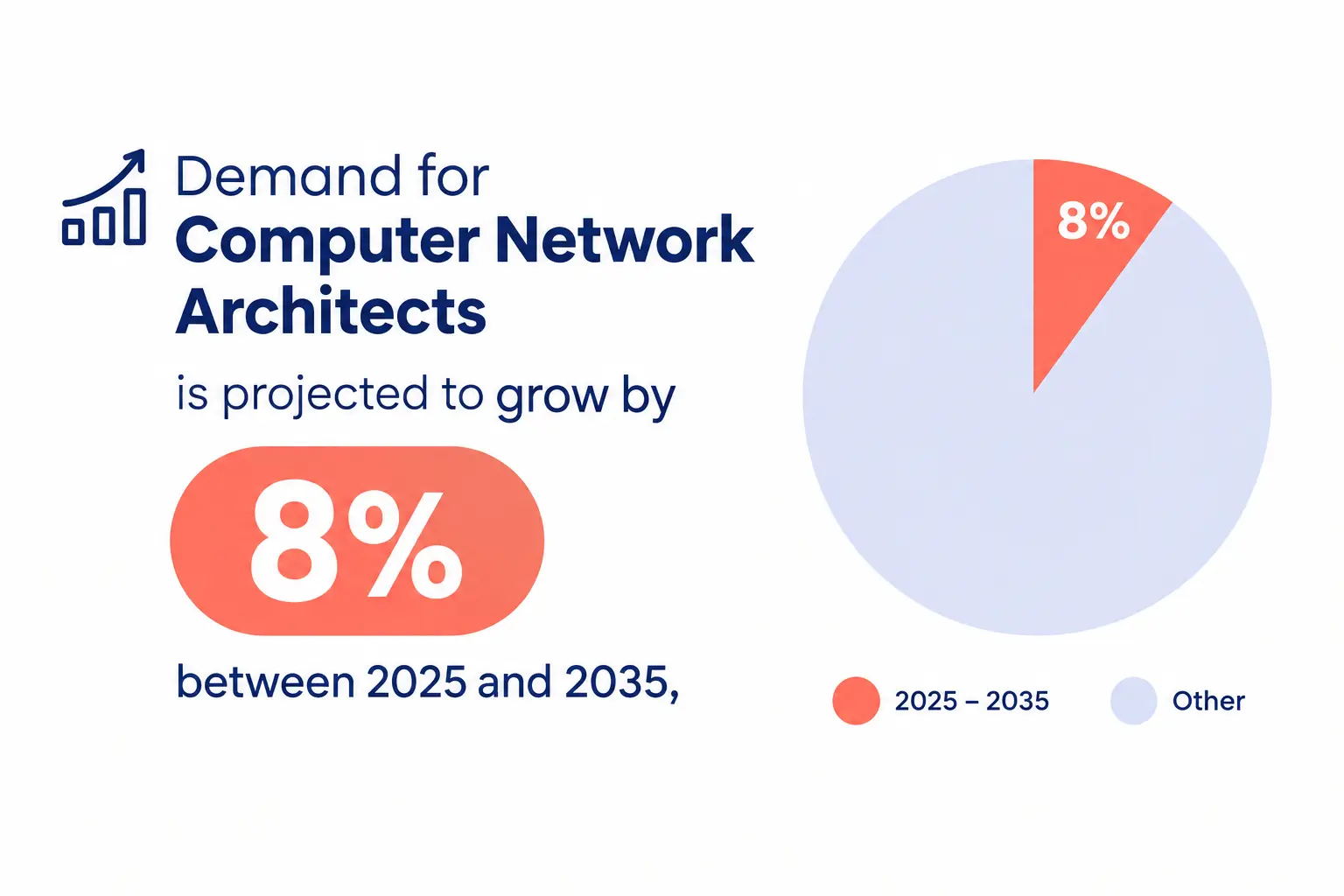
It’s also worth zooming out: the U.S. Bureau of Labor Statistics projects demand for computer network architects will grow about 8% between 2025 and 2035, well above average for all occupations, driven largely by continued cloud adoption — a trend that benefits the whole AWS Solutions Architect vs Cloud Engineer field roughly equally, since neither role grows without the other.
Which One Should You Choose?
If you like solving open-ended problems, enjoy explaining technical ideas to non-technical people, and don’t mind spending a chunk of the week in meetings and documentation, the architect track fits naturally.
If you’d rather be heads-down in a terminal, enjoy the satisfaction of fixing something actively broken, and want your work to be hands-on rather than strategic, Cloud Engineering is the better entry point.
Plenty of people do both across a career — starting as an engineer to build real technical architecture instincts, then moving into architecture once the strategic side becomes more appealing than the operational one.
For students specifically: don’t over-optimize this decision. It isn’t permanent, and the skills overlap enough that switching lanes two or three years in is common and rarely wastes the time already invested. Start wherever you can get real, hands-on AWS experience — internships, labs, personal projects — and let your day-to-day preferences guide the next move rather than trying to predict them from a job description.
A Personal Note
I’ve sat in enough hiring conversations to notice a pattern: people rarely regret picking either side of this path, but they do regret picking one because it sounded more prestigious rather than because it matched how they actually like to work.
If meetings and diagrams energize you, chase architecture without guilt, even if a friend insists engineering is “where the real work happens.” If you’d rather be elbow-deep in a broken pipeline at midnight solving something concrete, that instinct is worth trusting too.
The choice isn’t really about which job pays more or sounds better on a resume — it’s about which version of a Tuesday afternoon you’d rather be living. Pick that one, and the certifications and the salary tend to follow.