Here’s something that surprises most people outside the tech world: a Scrum Master with less than a year on the job can already out-earn a mid-career accountant, and one with eight-plus years of experience can out-earn a hospital nurse manager. Is that fair, or is it just supply and demand doing what it always does?
Either way, the scrum master salary conversation has quietly become one of the more interesting pay stories in corporate life, for a role almost nobody had heard of twenty-five years ago and that now sits comfortably in six figures across most of the English-speaking working world.
I’m writing this after spending a good part of my own career sitting in daily stand-ups and retrospectives, first as a team member and later as the person handling the day-to-day scrum master responsibilities myself. So some of what follows isn’t only pulled from a spreadsheet; it’s things I noticed while actually doing the job.
What Is the Average Scrum Master Salary in 2026?
Ask five salary sites what a Scrum Master actually earns, and you’ll get five different numbers, all measuring slightly different things. July 2026 data puts the average at $126,951 a year in the US, with the middle band earning between $100,006 and $162,648, based on more than ten thousand salaries submitted anonymously by Scrum Master employees.
July 2026 figures land lower, at $120,688 nationally, with most salaries ranging between $103,000 and $137,500. Some reports $123,075, while basic pay is $108,285 for the certified ScrumMaster. None of these figures are wrong; they just measure different things.
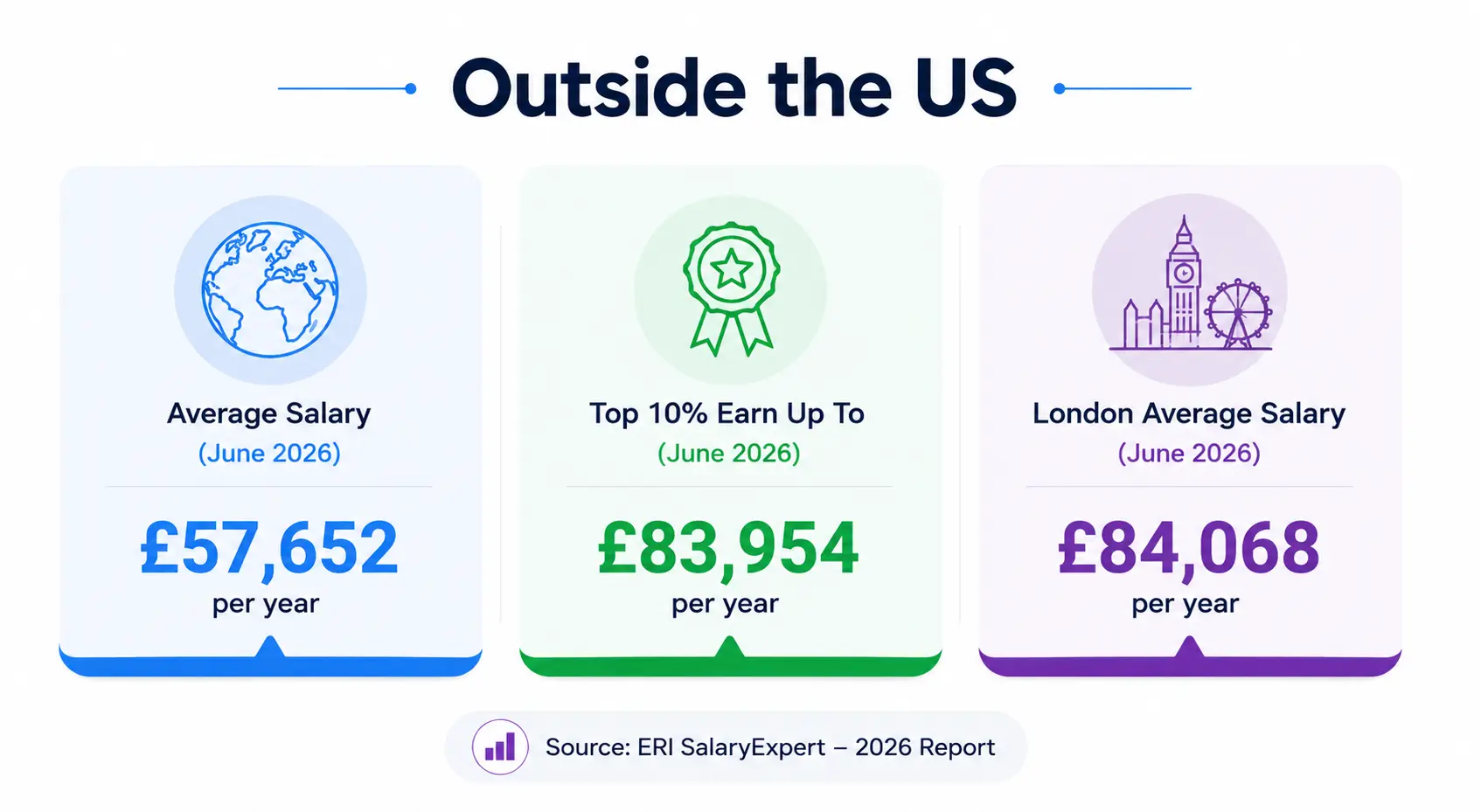
Outside the US, the pattern holds. Data from June 2026 shows an average of £57,652 a year, with the top 10% reporting salaries up to £83,954. London runs higher still, at £84,068 per ERI SalaryExpert’s 2026 report, reflecting its cost of living and dense finance and consulting sector.
Scrum Master Salary by Experience Level
Experience is the single biggest lever on pay here, and the jump between “brand new” and “seasoned” is unusually large.
|
Experience Level |
Typical US Salary Range (2026) |
|
Entry-level (0–1 year) |
$58,751 – $92,546 |
|
Early career (1–4 years) |
$92,000 – $120,000 |
|
Mid-career (4–7 years) |
$110,000 – $137,500 |
|
Senior (7+ years) |
$130,359 – $162,648 |
|
Lead / Agile Coach track |
$140,000 – $202,171+ |
An entry-level salary for a brand-new Scrum Master in the US typically starts between $58,000 and $93,000, depending on company size and prior team-coordination experience. PayScale’s 2026 data on junior professionals shows an average base of $92,546, with the bottom 10% earning around $64,000 and the top 10% closer to $126,000. That wide band usually comes down to industry and location more than raw skill.
Cross into the four-to-seven-year mark, and that entry-level salary ceiling gets left behind fast. Built In’s 2026 figures show professionals with seven-plus years averaging $130,359, and other sources show those with eight-plus years pulling in a range of $88,408 to $141,862. Past that point, many move into Agile Coach or Release Train Engineer titles instead, where pay climbs further.
CSM Salary vs. PSM: Does Certification Change the Number?
Two certifications dominate this field: the CSM from Scrum Alliance and the Professional Scrum Master (PSM) from Scrum.org. Employers mostly don’t care which badge you hold, as long as you have one.
PayScale’s 2026 data puts the average CSM salary at $108,285, with the middle 80% earning between $74,000 and $147,000, meaningfully higher than most non-certified peers report. A CSM salary tends to track closely with a PSM holder’s pay in similar roles; where a gap exists, it’s usually a few thousand dollars, driven by employer and industry.
If you’re deciding between the two, don’t overthink it. A CSM salary and a PSM salary sit close enough together that the certificate matters less than hands-on facilitation experience and the ability to talk through a real sprint problem.
What Do Scrum Masters Actually Do (and Why It Affects Pay)?
Pay in this field tracks closely with how much of the job is meeting facilitation versus genuine organizational problem-solving. The core scrum master responsibilities haven’t changed much in twenty years, but the scope certainly has.
At a baseline, scrum master responsibilities include running the daily stand-up, facilitating sprint planning and retrospectives, and clearing away anything blocking the team’s progress. But the scrum master responsibilities that actually move the salary needle look different: coaching multiple teams at once, managing dependencies across a SAFe release train, and reporting delivery risk directly to senior leadership.
One thing I noticed sitting in this seat myself: the people earning toward the top of the range were rarely the best meeting facilitators in the room. They were the ones who could quietly untangle a cross-team dependency before it became a three-week delay. That’s not taught in any certification course; it’s built by repeating the harder scrum master responsibilities under real pressure, and it’s exactly the kind of judgment companies pay a premium for.
Agile Roles Compared: Where Does the Scrum Master Stand?
A Scrum Master is one of several agile roles, and it helps to see where it sits relative to its closest cousins.
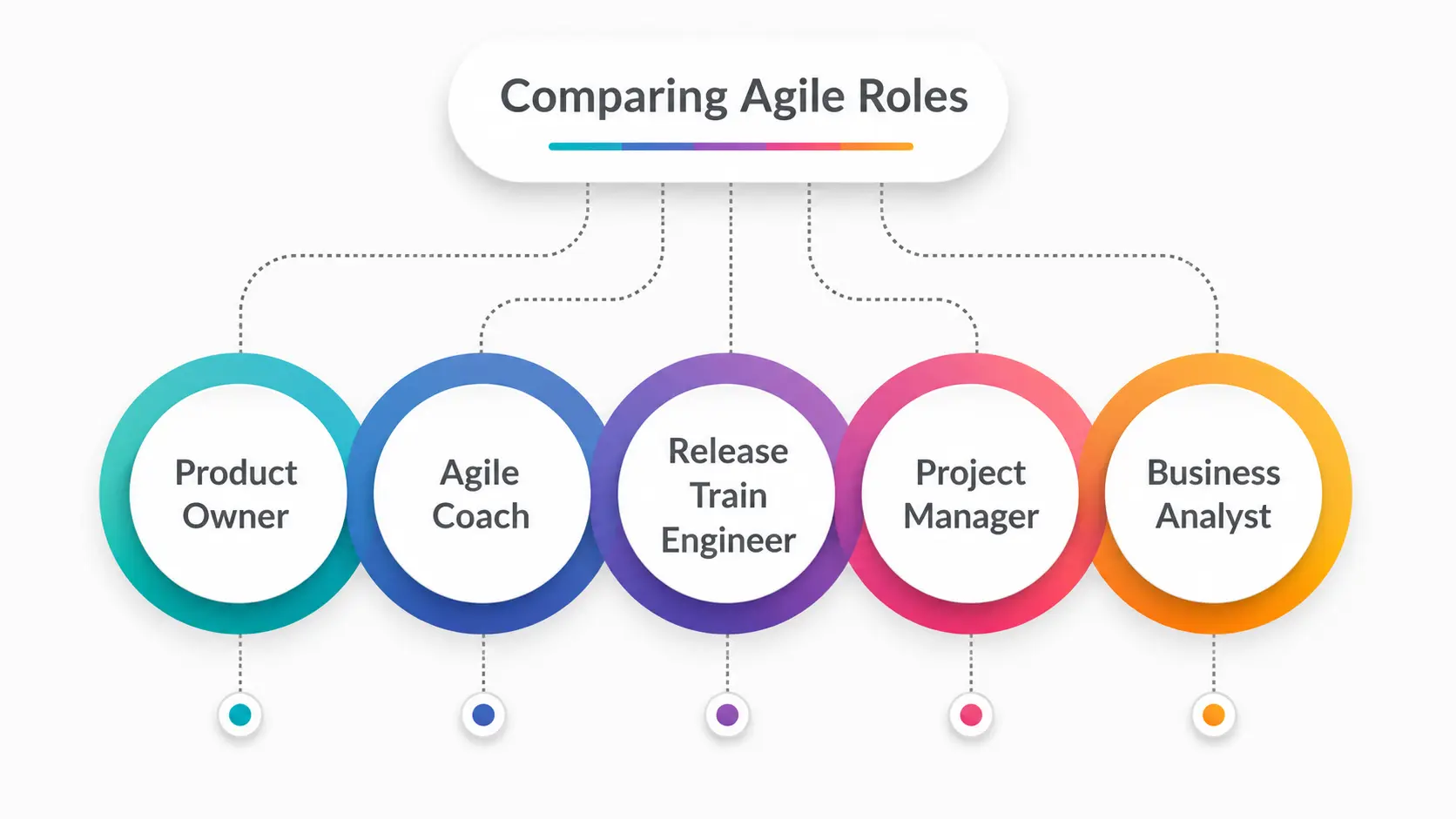
- Product Owner — usually earns modestly more, since the role carries direct accountability for the product roadmap.
- Agile Coach — the highest-paid of the agile roles listed here, often clearing $140,000 to $190,000, since it involves coaching multiple teams at once.
- Release Train Engineer — a scaled-agile role sitting above single-team Scrum Master work, typically between senior Scrum Master and Agile Coach pay.
- Project Manager — similar base pay, different day-to-day work.
- Business Analyst — a common lateral move, generally at comparable pay.
Among these agile roles, the Scrum Master tends to be the entry point. Most people don’t retire as Scrum Masters; they move into coaching or delivery leadership, and their Scrum Master salary becomes the floor they build from, not the ceiling they hit.
Scrum Master Salary by Industry
Not every industry pays the same for identical work, and this is where job seekers often leave money on the table. The 2026 industry breakdown puts Aerospace & Defense at the top, with a median total pay of $140,238, followed by Human Resources & Staffing, Energy, Mining & Utilities, and Financial Services, all landing between roughly $134,000 and $140,000.
Regulatory complexity is the common thread: industries where mistakes are expensive pay more for the person keeping delivery on track. Healthcare technology and consulting firms also sit above average, often fifteen to thirty percent higher than a typical retail or education employer.
Even the entry-level salary stage shows this gap, since industry choice already shapes the offer a first-time Scrum Master sees. Non-profits and government contracting outside of defense tend to land below the national median.
What Actually Pushes Your Pay Higher?
If you’re trying to raise your own scrum master salary, a handful of factors do most of the work:
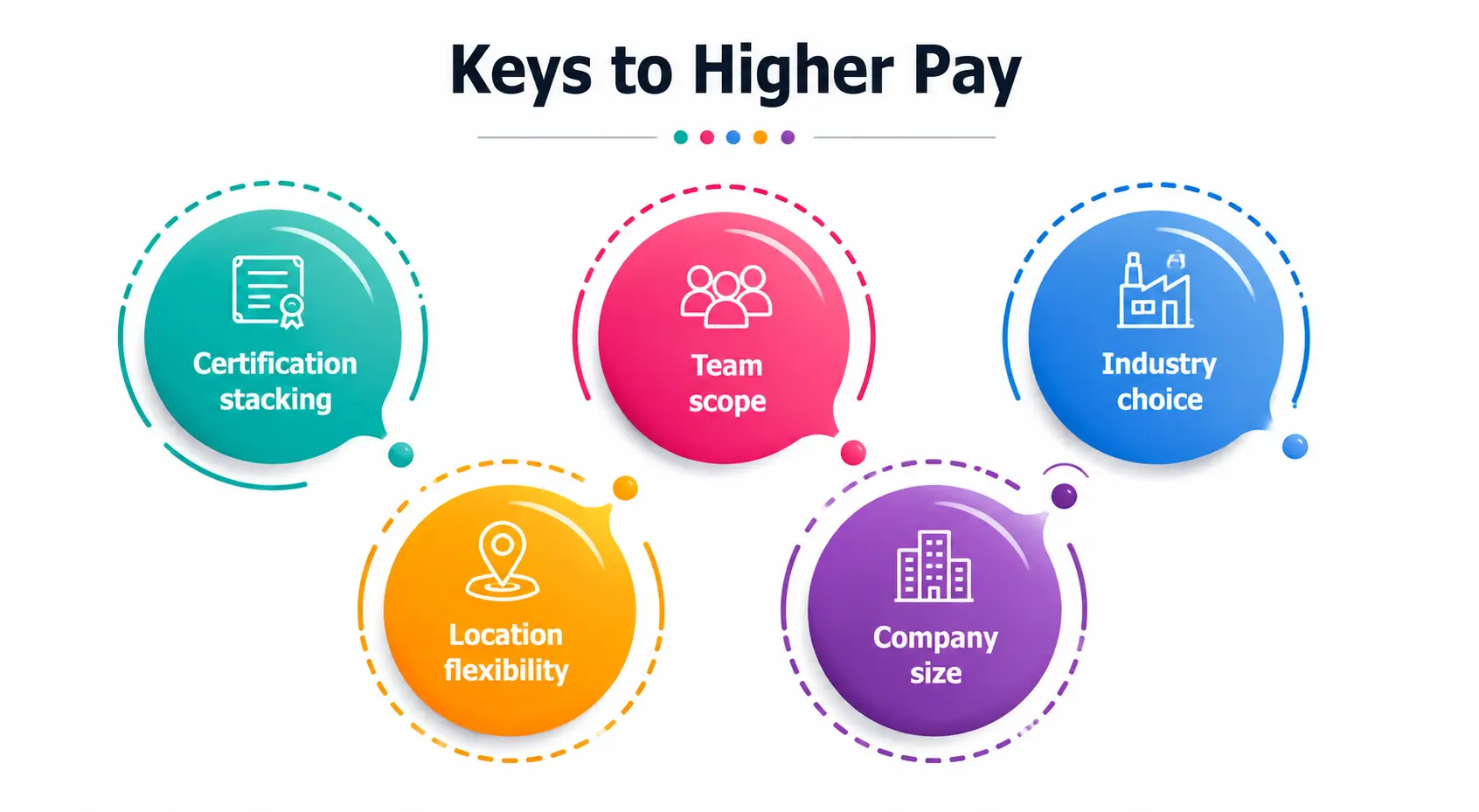
- Certification stacking. A CSM salary rises further when paired with a second credential like PMI-ACP or SAFe RTE, consistently landing professionals at the top of their band.
- Team scope. Coaching two or three teams instead of one is often the fastest route to a senior number.
- Industry choice. Moving from education into finance or aerospace can add tens of thousands of dollars without changing your title.
- Location flexibility. More employers now run location-agnostic pay bands, so remote scrum master jobs increasingly pay closer to major-metro rates.
- Company size. Bigger isn’t always better; large companies sometimes pay less than smaller, leaner ones for the same title.
Finding Scrum Master Jobs in 2026
Demand for scrum master jobs has cooled slightly since the hiring boom of a few years back, but disappeared;sappeared, it’s just gotten more selective. Employers posting scrum master jobs today want demonstrated impact: shorter cycle times, fewer blocked sprints, and better stakeholder trust.
When comparing scrum master jobs, look past the headline number. A posting demanding SAFe experience across four scaled teams is a very different job than single-team facilitation at a fifteen-person startup, even at similar pay. Robert Half’s 2026 guide places the realistic US range between $95,750 and $142,250, in line with most other agile roles at comparable seniority.
My Own Path Into This Field
When I first stepped into a Scrum Master seat, I underpriced myself badly. I had no certification, no real sense of the market, and I accepted an offer near the bottom of the entry level salary range for my city because I was relieved someone had said yes.
It took nearly two years to notice the gap between what I earned and what colleagues made in the same role, handling the same scrum master responsibilities. Getting certified didn’t double my pay overnight, but it gave me the vocabulary to negotiate properly next time.
Conclusion
The scrum master salary landscape in 2026 rewards experience, industry choice, and scope far more than any single certification badge.
Whether you’re eyeing an entry-level salary to get your foot in the door or negotiating a senior package, the pattern holds across every major source: pay climbs steadily with responsibility, and the biggest jumps come from higher-paying industries or expanding beyond a single team.
Use the ranges above as a starting point, not a ceiling. Alongside writing about this field, Thinkcloudly also runs Scrum Master training for people looking to move into this line of work. The course covers certification prep, mock sprint ceremonies, resume and interview coaching, and a community of people who’ve already made the switch, which tends to matter just as much as the certificate itself when job hunting.