
I still remember the first time someone asked me which certification to get first, and I genuinely didn’t have a clean answer. I mumbled something about “it depends,” which is technically true but not very helpful to someone standing at the starting line.
Here’s a fact that puts that confusion in perspective: as of January 2026, the average salary tied to a cybersecurity certification in the United States is running around $132,962 a year. That’s a huge number for a field where so many beginners still don’t know where to start.
This guide is my attempt to lay out a real, working Cybersecurity Certification Path, the kind I wish someone had handed me years ago instead of a random list of acronyms. No fluff, no recycled checklists copied from ten other sites, just a practical order of steps that actually reflects how hiring works in 2026.
Why Do You Need an Actual Cybersecurity Certification Path, Not Just a List of Exams?
Most people entering this field make the same mistake: they grab whichever certification looks impressive on paper and hope it opens doors. It usually doesn’t, at least not on its own. What actually moves the needle is sequencing, meaning which certification you earn first, which one you earn next, and how each one maps to a specific job you’re targeting.
The U.S. Bureau of Labor Statistics projects that employment in this occupational category will grow 29 percent from 2024 to 2034, with roughly 16,000 openings expected every year, which is far faster than almost any other occupation tracked. That kind of growth means employers are hiring constantly, but they’re also getting pickier about who they hire, and a scattered certification history doesn’t help a resume stand out.
That’s exactly why a proper security certification roadmap matters more than any single exam. Think of it less like a checklist and more like a staircase, where each step is supposed to prepare you for the one above it. Skipping steps doesn’t usually save time. It just means struggling through material you weren’t ready for, then having to circle back anyway.
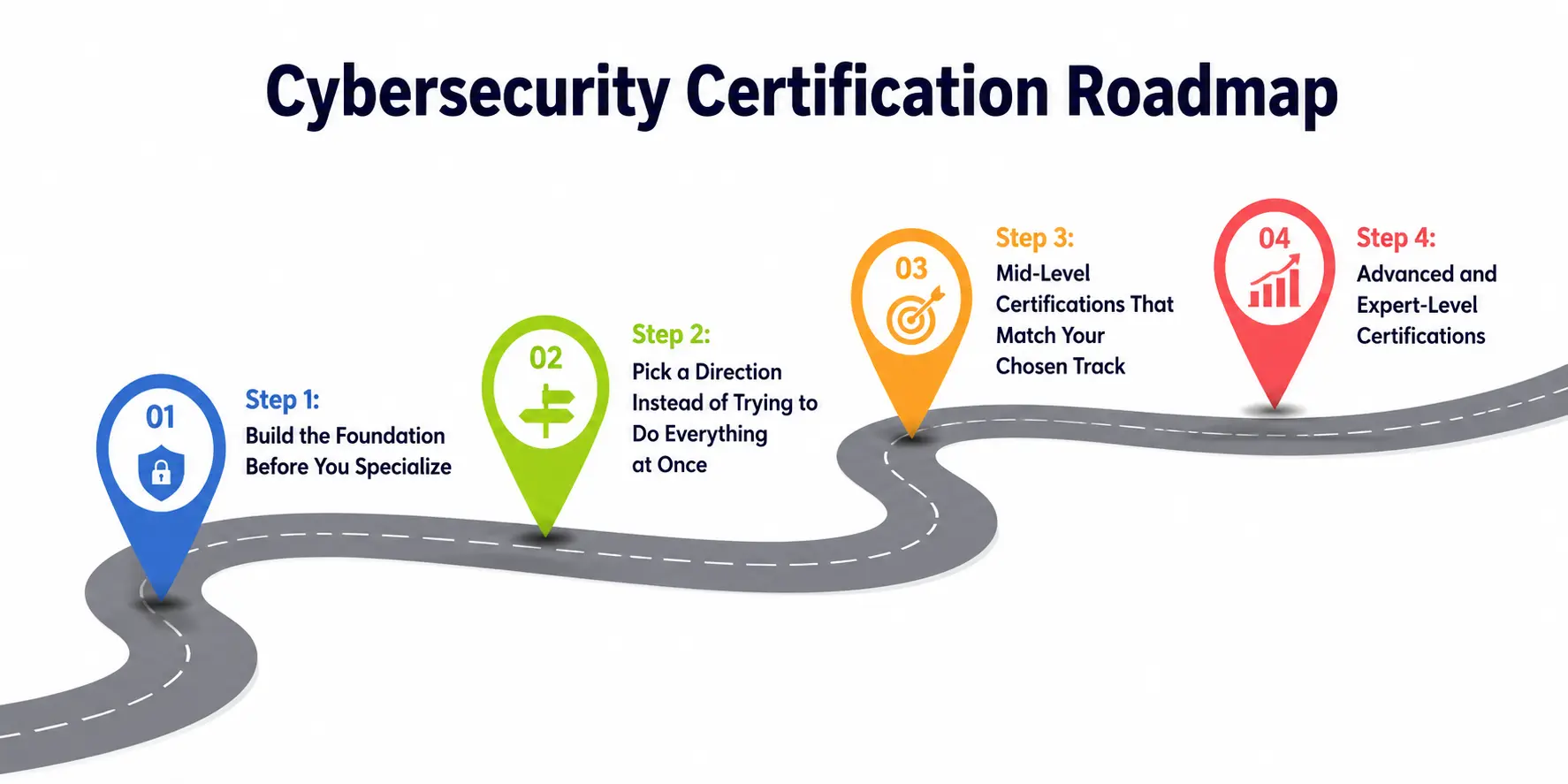
Step 1: Build the Foundation Before You Specialize
Nobody should start with an advanced credential, no matter how tempting it looks. The first stretch of any Cybersecurity Certification Path should cover core IT and networking basics, since almost every security concept sits on top of that knowledge.
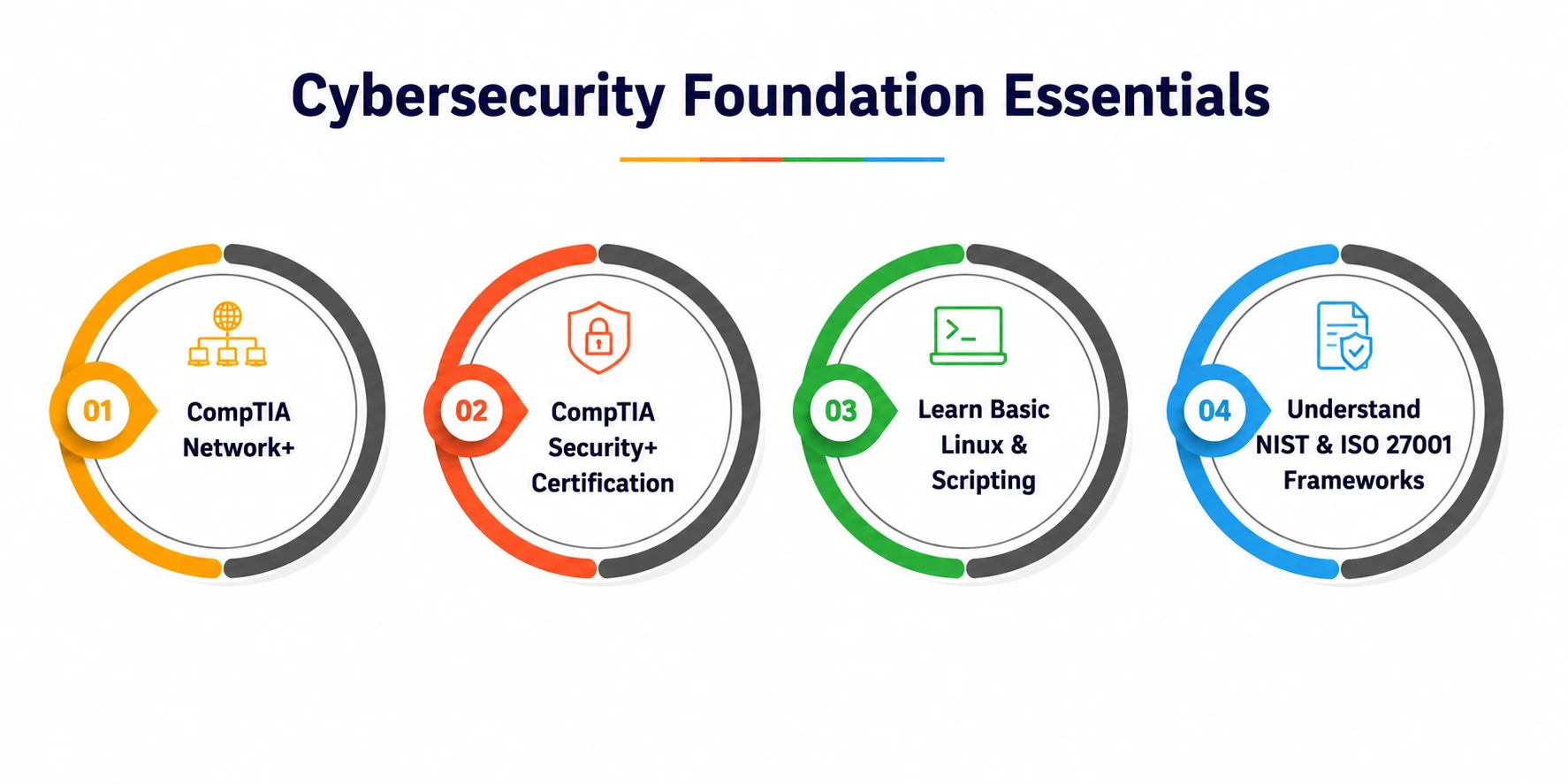
- CompTIA Network+ or an equivalent networking primer, if you’re coming from a non-technical background
- CompTIA Security+, which now shows up in roughly seven out of ten cybersecurity job listings and also satisfies DoD 8140 baseline requirements for many government-adjacent roles
- Basic Linux and scripting familiarity, since almost every tool you’ll touch later assumes at least some comfort with the command line
- A working understanding of common frameworks like NIST or ISO 27001, even at a surface level, since employers increasingly expect familiarity with how organizations structure their security programs
Security+ specifically tends to boost entry-level pay by around 11 percent, based on Unihackers’ 2026 cybersecurity guide, which is a solid return for a certification most people can prepare for in two to three months of steady study.
Step 2: Pick a Direction Instead of Trying to Do Everything at Once
This is the step most beginners skip when mapping out their Cybersecurity Certification Path, and it’s the one that causes the most wasted time later. Cybersecurity isn’t one job; it’s a cluster of very different roles that happen to share a name. A security analyst spends most of their day monitoring alerts, investigating suspicious activity, and tuning detection rules inside a security operations center.
An ethical hacker, on the other hand, spends their time trying to break into systems on purpose, under contract, to find weaknesses before someone with bad intentions does. Neither path is better than the other; they just require different daily habits and different certifications.
A few common directions worth considering at this stage:
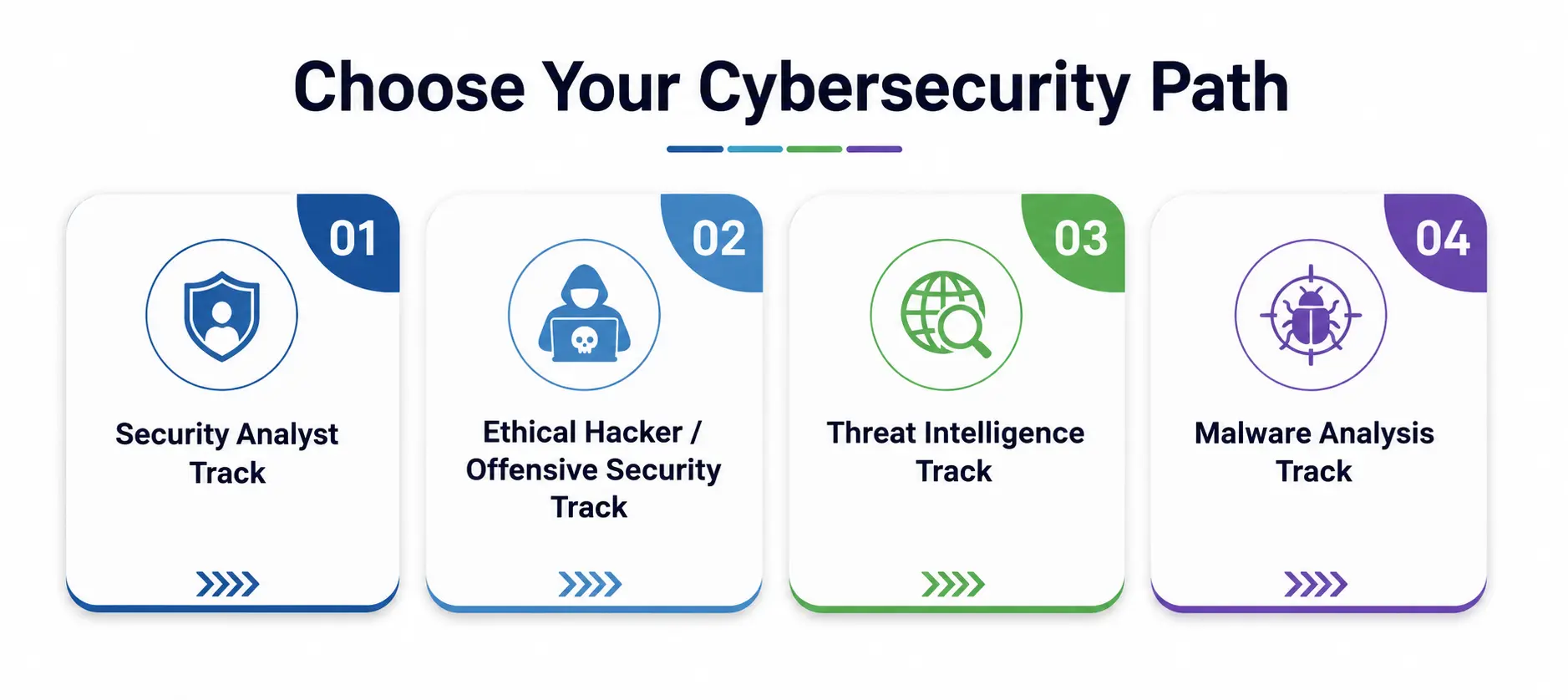
- Security Analyst Track: Focused on monitoring, incident response, and day-to-day cyber defense inside a company’s security operations center.
- Ethical Hacker / Offensive Security Track: Focused on penetration testing, vulnerability research, and thinking like an attacker to strengthen defenses before real damage happens.
- Threat Intelligence Track: Focused on tracking attacker behavior, campaigns, and infrastructure to warn organizations before an attack lands, rather than reacting after one.
- Malware Analysis Track: Focused on reverse-engineering malicious code to understand exactly how it behaves, spreads, and can be stopped.
Choosing one of these tracks doesn’t lock you in forever, but it does tell you which certifications actually deserve your next few months of study, instead of chasing every credential that shows up in a job posting.
Step 3: Mid-Level Certifications That Match Your Chosen Track
Once a direction is chosen, the middle stretch of a Cybersecurity Certification Path usually looks something like this, depending on the track:
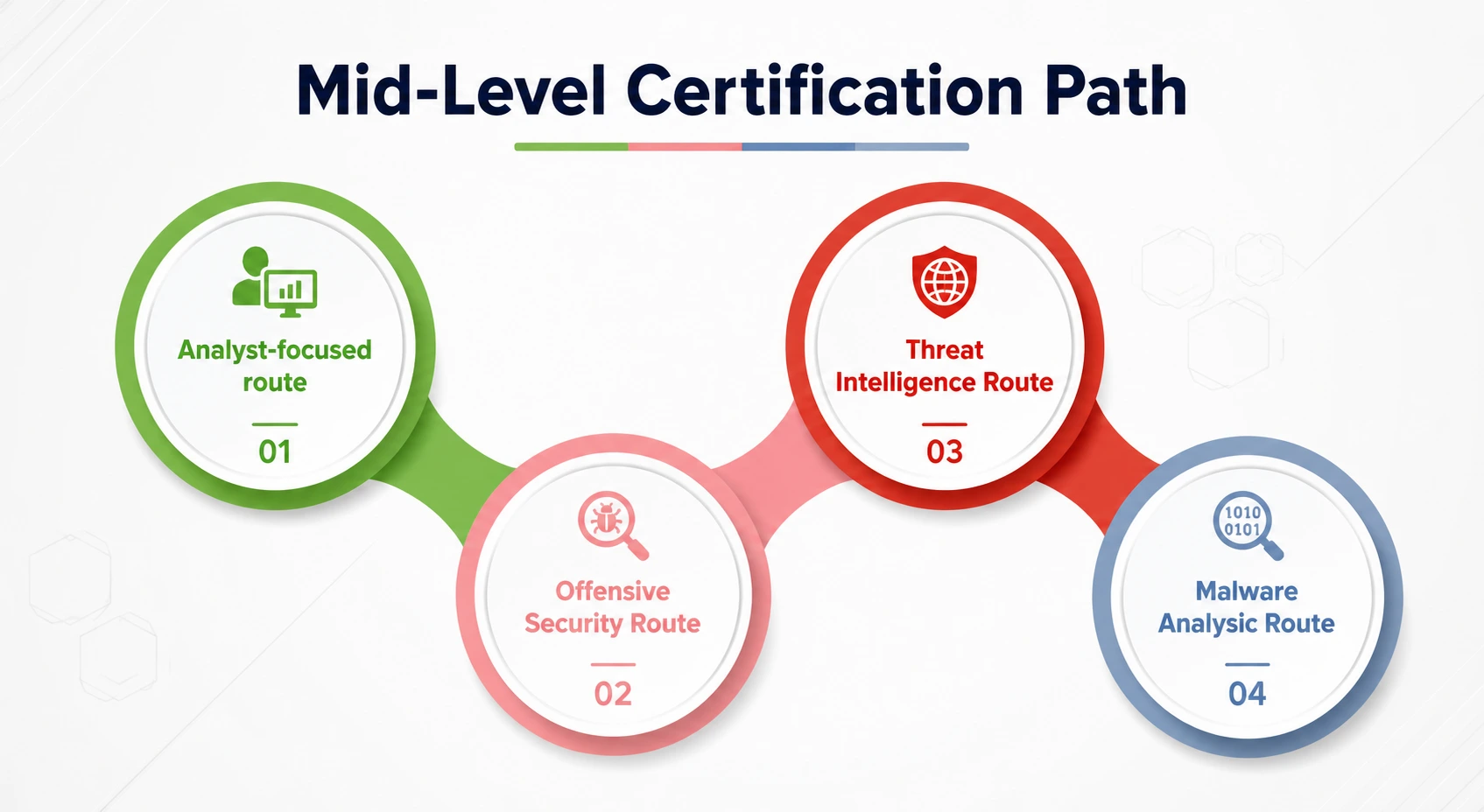
- For the analyst-focused route: CompTIA CySA+, which specifically targets analyst-level skills and carries an average holder salary around $106,490
- For the offensive security route: the CEH credential, followed later by CompTIA PenTest+ for more hands-on offensive testing scenarios
- For the threat intelligence route: GIAC’s GCTI, which focuses heavily on tracking adversary tactics and translating raw data into usable warnings
- For the malware analysis route: GIAC’s GREM, which walks through reverse-engineering techniques used against real-world malware samples
This is also the stage where salaries start climbing noticeably. Mid-level analysts and engineers with three to five years of experience and the right certifications commonly land between $90,000 and $110,000.
Step 4: Advanced and Expert-Level Certifications
The final stretch of any Cybersecurity Certification Path is where the biggest salary jumps happen, but it’s also where experience requirements get strict. Most advanced certifications assume years of hands-on work before you’re even eligible to sit the exam, so rushing this stage rarely pays off.
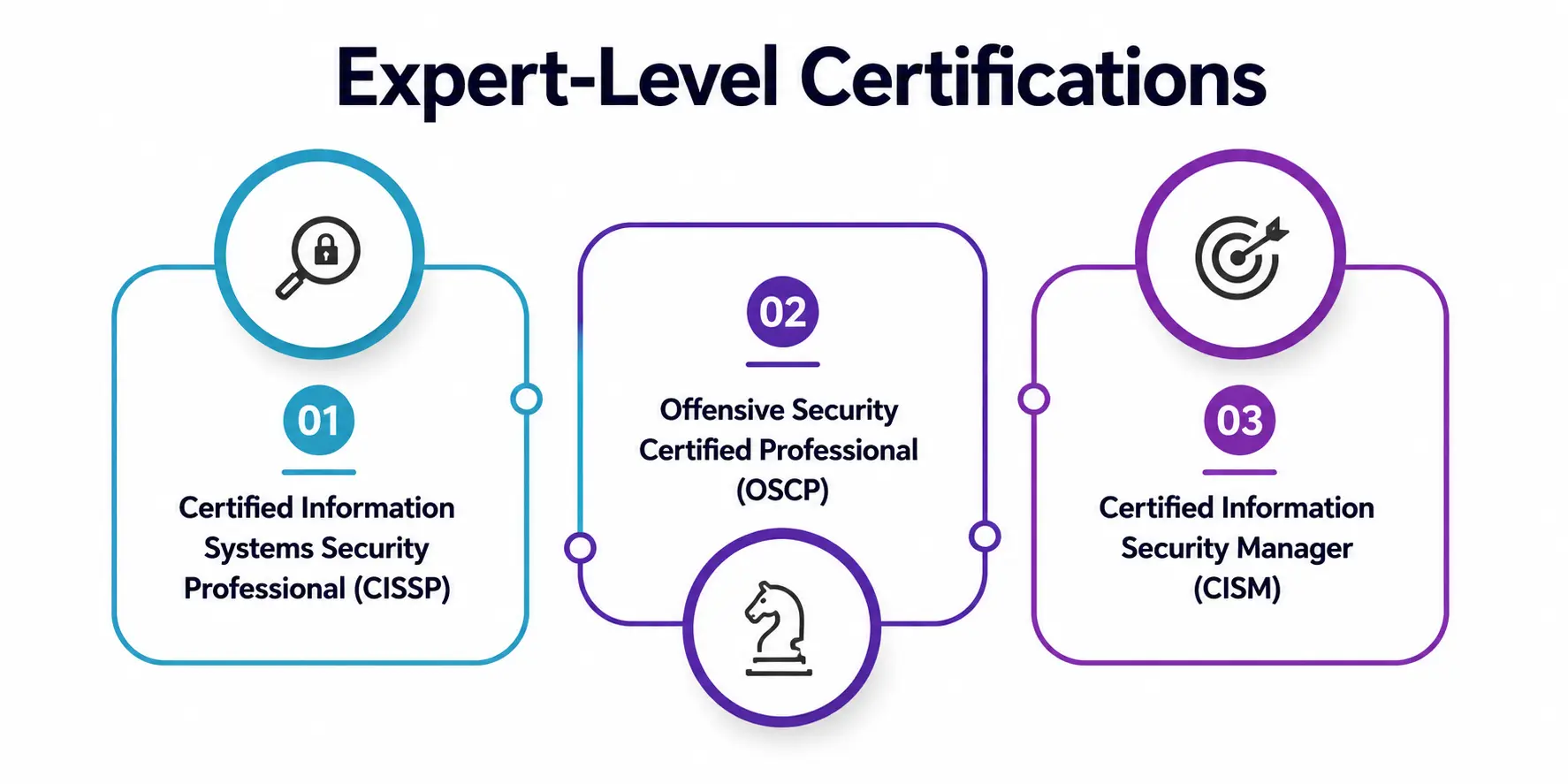
- CISSP (Certified Information Systems Security Professional): Requires five years of relevant experience and delivers one of the largest salary boosts of any credential, with holders earning an average base salary around $131,000, as per Unihackers’ 2026 data
- OSCP (Offensive Security Certified Professional): Widely considered one of the toughest hands-on exams in the industry, and job listings specifying it offer some of the highest salaries in the field, averaging between $126,600 and $180,600.
- CISM (Certified Information Security Manager): Aimed at people moving toward leadership, governance, and risk management rather than purely technical work
By this stage, the certifications aren’t really proving basic knowledge anymore. They’re signaling that someone can be trusted with serious responsibility, whether that’s protecting a company’s entire network or leading a security team through an active incident.
A Sample Security Certification Roadmap
Here’s a simplified table showing how these stages line up in practice.
|
Career Stage |
Typical Certifications | Focus Area |
Approx. Salary Range |
|
Foundation (Year 1) |
Network+, Security+ | General IT & security basics |
$55,000 – $75,000 |
|
Early Specialization (Years 1–3) |
CySA+, CEH, PenTest+ | Analyst work, offensive testing basics, monitoring |
$80,000 – $110,000 |
|
Mid-Career (Years 3–5) |
GCTI, GREM, CySA+ (advanced) | Adversary tracking, code reversing, deeper cyber defense |
$95,000 – $130,000 |
|
Advanced (5+ Years) |
CISSP, OSCP, CISM | Senior technical roles or security leadership |
$130,000 – $185,000+ |
Numbers like these matter, but they’re only half the story. The demand side is arguably more important. ISC2’s Cybersecurity Workforce Study data puts the global shortfall of cybersecurity professionals at roughly 4.8 million unfilled positions, a gap that keeps widening even as attacks grow more sophisticated.
For anyone building a Cybersecurity Certification Path right now, that shortage is genuinely good news. It means demand isn’t slowing down anytime soon.
Common Mistakes People Make Along the Way
A few patterns come up again and again with people I’ve talked to who felt stuck despite holding several certifications:
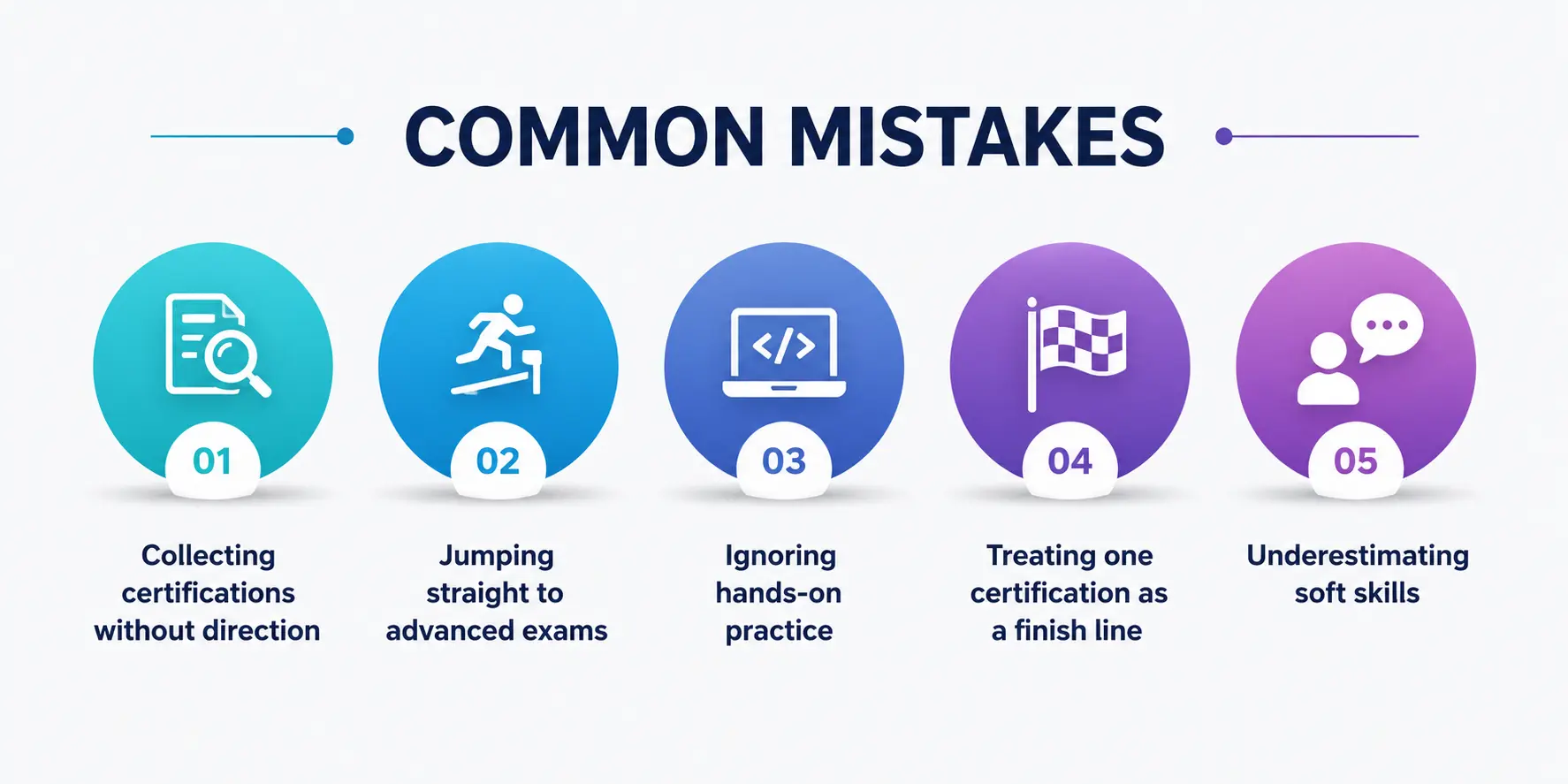
- Collecting certifications without direction. Five unrelated credentials rarely beat two well-chosen ones that clearly support each other.
- Jumping straight to advanced exams. Attempting OSCP or CISSP without the underlying fundamentals almost always ends in a failed attempt and wasted exam fees.
- Ignoring hands-on practice. Certifications prove knowledge on paper, but labs, home projects, and capture-the-flag exercises prove it can actually be applied.
- Treating one certification as a finish line. This field changes constantly, and yesterday’s cyber defense techniques and tools can go stale within a year or two.
- Underestimating soft skills. Even a highly technical analyst role involves writing reports, explaining risk to non-technical stakeholders, and staying calm during incidents.
Wrapping It Up
Building a real Cybersecurity Certification Path isn’t about collecting the shiniest badges available. It’s about choosing a direction, whether that’s becoming a security analyst, an ethical hacker, a threat intelligence specialist, or someone deep in malware analysis, and then picking certifications that genuinely build on each other in that direction.
Start with the fundamentals, specialize with intention, and let the advanced credentials come once real hands-on experience backs them up. The demand is there, the salaries reflect that demand, and the roadmap doesn’t have to be complicated once it’s laid out step by step like this.
What matters most is treating each certification as a building block rather than a trophy, since the people who actually thrive in this field tend to be the ones who can explain why they chose each step, not just list what they’ve passed.
A Personal Note
I’ll be honest about something most guides won’t tell you: I collected three certifications in my first eighteen months in this field before I had any real direction, and two of them barely mattered for the job I eventually landed. It stung a little at the time, but it also taught me that a thoughtful, slower path beats a rushed, scattered one every single time.
If you’re just starting out, give yourself permission to move at a pace that lets things actually sink in, rather than racing toward a title. The people who last in this field aren’t the ones with the most letters after their name; they’re the ones who stayed curious long enough to keep learning after the exam was over.