
Monitor AI Models: Deploying an AI/ML model into production does not mark the end of the machine learning life cycle—rather, it marks the beginning of the requirement for monitoring. While a particular model may have exhibited good performance metrics such as accuracy, precision, recall, and F1 at the development phase, the performance may be impacted when the model starts processing real-life inputs due to changes in customer behavior, changes in market conditions, or new input data types.
As a result, what seemed to be an accurate model six months ago may start showing signs of being unreliable—an effect called model drift or performance drift. However, this problem often becomes evident only when users complain about bad predictions and outputs—until that happens, people would not even know the model has declined.
That’s why production AI systems require constant observability through monitoring with clearly defined thresholds and alerts if anything seems to go wrong. There are four main questions a good monitoring strategy must answer—whether the input data has shifted, whether the model behavior has changed, whether the performance has dropped, and whether the system is still healthy.
Why do AI models drift after going into production?
The fundamental concept for production machine learning models is that the world continues to move forward. Machine learning models rely on data from past patterns, which will be irrelevant in the future because something has happened since then, such as prices, the competitive environment, or the economic situation.
This causes drift. Data drift occurs when input feature distributions have changed; for example, if a recommendation model was trained on mostly desktop traffic, then it is getting mostly mobile traffic now.
Concept drift occurs when the relationship between the input and the target has shifted, meaning that features that used to predict the target no longer do. Prediction drift occurs when the output distributions drastically change, such as a fraud model moving from predicting 2% to 15%.
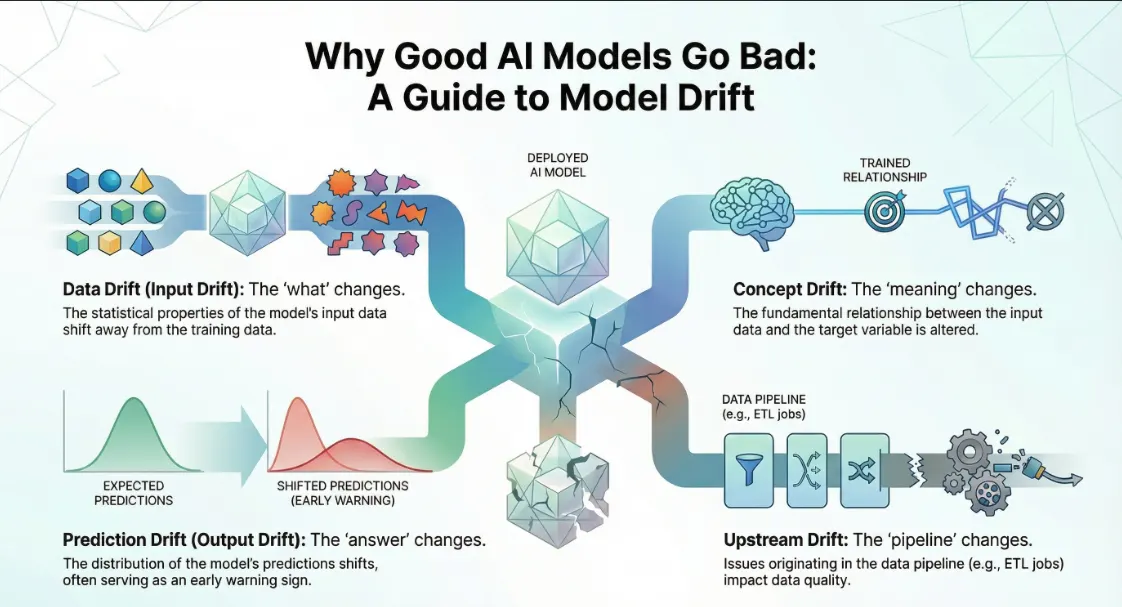
While drift does not necessarily mean that something has gone wrong with the model, it is a potential warning signal. Therefore, any production monitoring system should constantly compare current behavior with the baseline behavior established during validation or at some time in the past.
Go Beyond Accuracy: Four Layers of Model Observability
Another frequent error in production machine learning is monitoring only the accuracy of the model. While accurate predictions may sometimes be useful, accuracy alone can be insufficient, as ground-truth labels will usually be delayed by a certain amount of time.
For instance, while a model of credit risk will make predictions about a customer’s likelihood of default, this information will typically become clear several months down the road. In the case of a churn model, a customer leaving is unknown right away. Thus, production monitoring must incorporate several layers of observability.
-
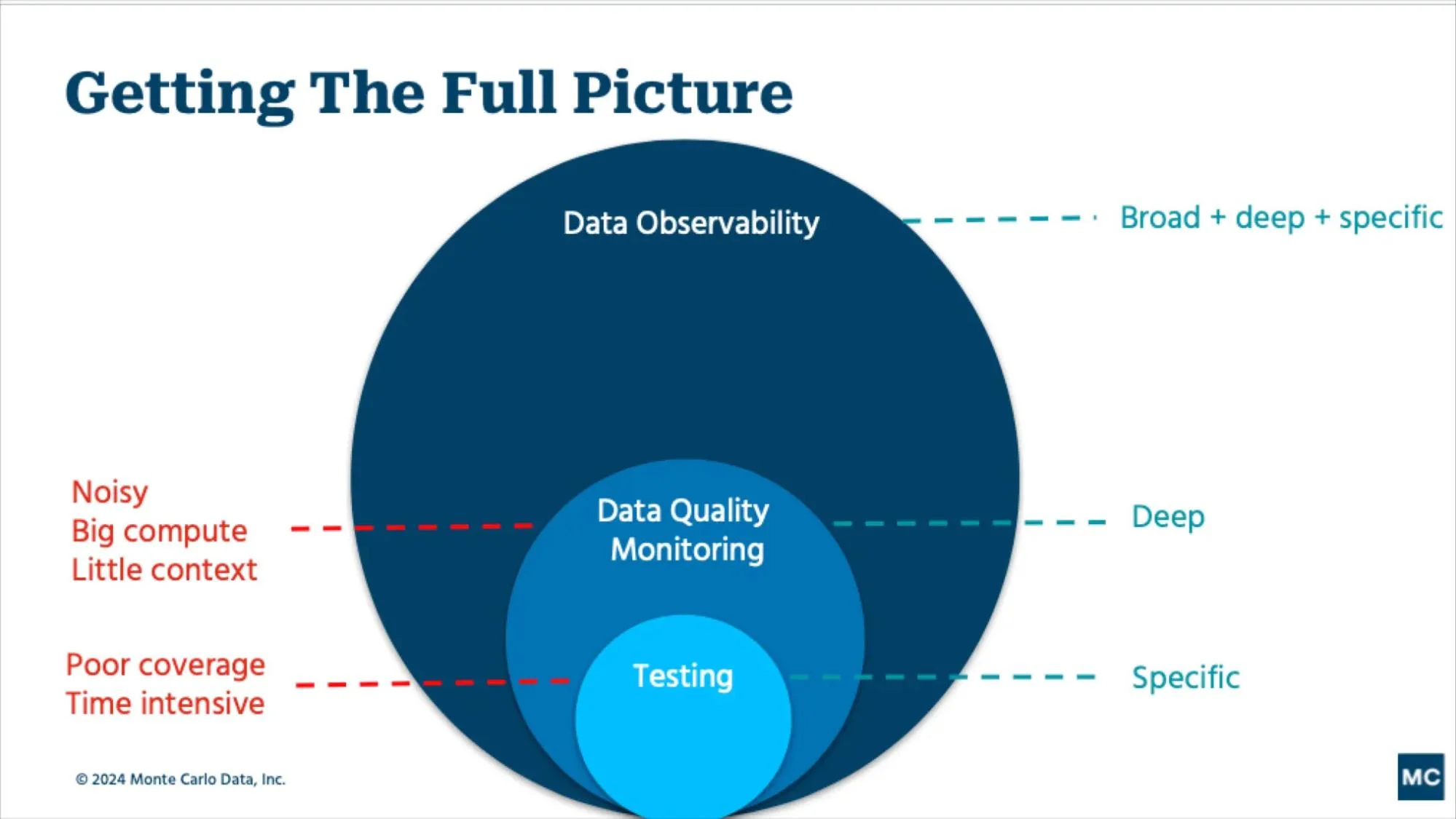
The first one is data quality monitoring, which includes checking for missing values, unexpected categories, duplicates, wrong data types, out-of-range numbers, and schema drifts.
-
The second one is data drift monitoring, where production data is compared against a baseline or a reference dataset.
-
Layer three is monitoring of predictions, in which the team monitors the shift in the distribution of the model outputs, probabilities of the predictions, the confidence score, the classification rate, or regression value. In the case of the fraud detection model that flags 3% of the transactions but all of a sudden flags 20% of the transactions, it would require investigation.
-
Layer four is performance monitoring, which happens when there are actual labels. For classification models, the team can use measures like precision, recall, F1-score, ROC-AUC, PR-AUC, and confusion matrices.
For regression models, the team can monitor for MAE, MSE, RMSE, and R². The recommendation systems, on the other hand, would need some different measures like click-through rate, conversion rate, engagement, or rank. It means that monitoring should always be associated with the business purpose of the model. A model can have a good technical measure while failing to achieve the business objective of the model.
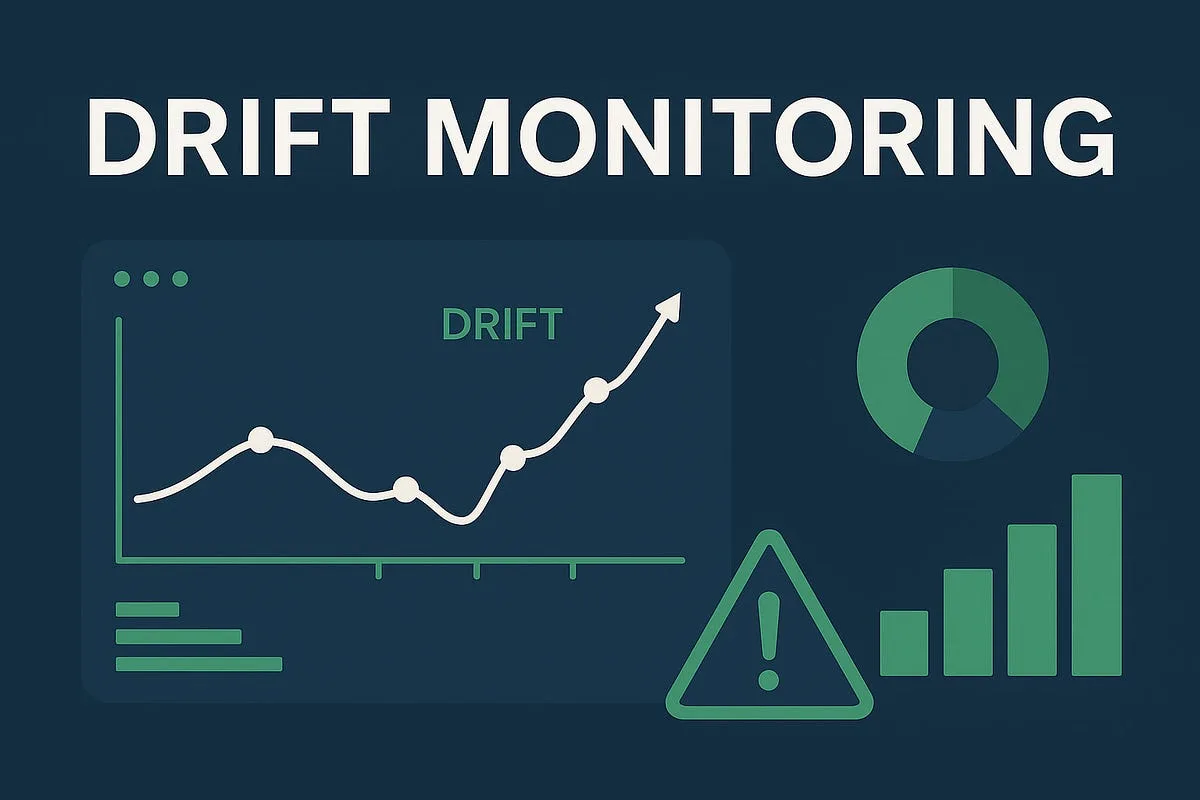
The real goal of model monitoring is not only to have an appealing dashboard. The actual aim here is early detection of issues. To do this, it is necessary for an organization to set up a proper baseline and relevant thresholds. Baselines can be defined as the behavior of the model when it was trained or validated, or even when it was in production for some time.
For instance, if a recommendation model generates an average confidence score within some certain range under normal circumstances, its departure from this range may indicate a problem. If an important feature has normally no more than 2% of missing data, then a jump to 15% can be treated as an anomaly.
Thresholds need to be properly set up to prevent both false alarms caused by overly sensitive monitoring and unnoticed major issues.
The alerts must be classified on the basis of their level of importance by a monitoring system. Minor changes in the distribution of features may lead to an informational alert, whereas major changes in the performance of the model will be a high-priority alert.
Moreover, the alerts must include relevant diagnostic details for taking action, rather than just providing a notification like “Model Drift has been detected.” The alert could contain the name of the affected model, version of the model, the feature causing the problem, amount of change, the timeframe, and the effect on the model performance.
Feature distributions, prediction distributions, error rate, latency, percent of missing values, and trends in model performance can be displayed on dashboards. Automatic alerts can notify data scientists, ML engineers, or application teams via appropriate communication and incident management platforms.
Development of a Model Monitoring Pipeline for the Production Model
A real-time model monitoring system could be built using a feedback loop approach. When the application feeds data into the production model, it is necessary to store relevant information about the data fed into the model, like feature information, prediction outcome, confidence score, timestamps, model version, request IDs, and so on, while considering privacy and security concerns.
The model monitoring pipeline could periodically collect this information and compute data quality metrics, drift metrics, prediction metrics, infrastructure metrics, and performance metrics. The computed metrics could be stored in a proper monitoring/analytics system and presented via dashboards.
An alert system could trigger an alarm when the threshold values are crossed by the system. Once the ground-truth labels are known, late binding performance assessment could be conducted.
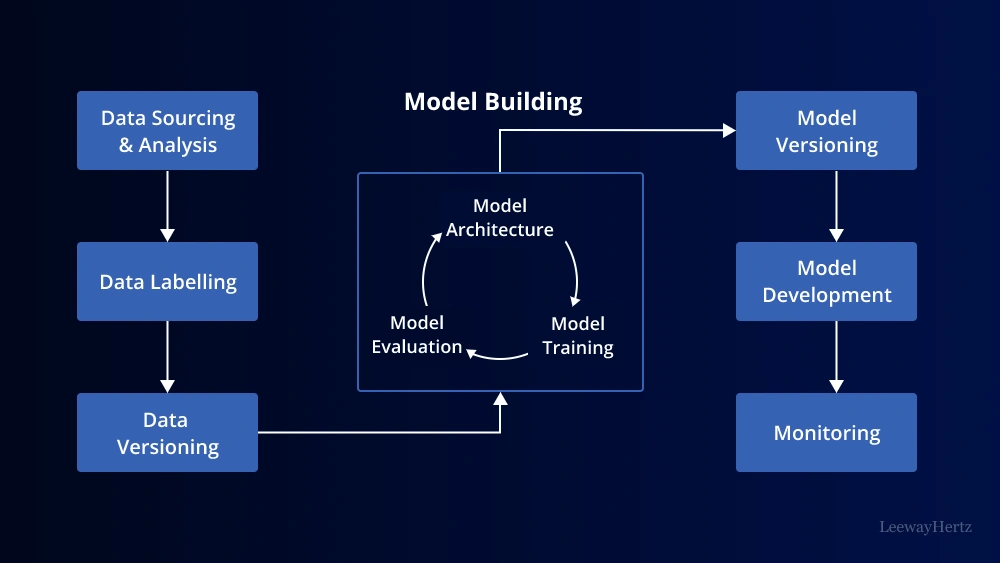
Any good monitoring solution needs to include model versioning and traceability. It would be best if all predictions made in the production environment were linked to the version of the model that created them. This way, it will be easier to know if the issue relates only to that specific version of the model or the entire system.
All organizations should have a monitoring policy for each of their production models, which includes metrics to be monitored, how frequently the monitoring will occur, the thresholds, alert severity, the team responsible for investigating the issue, and conditions for retraining and rollback.
There are various ways to implement monitoring; these include cloud-native solutions, machine learning platforms, observability, databases, orchestration, or special model monitoring tools. But it’s important to remember that tools alone do not constitute monitoring.
What Needs to be Done Once Drift is Discovered?
Discovery of drift is just the beginning of the process. Before retraining a model, it is necessary to find out what the reason for the drift is. There can be various reasons for changes in feature distribution. It can be a real change in customer behavior or something else: an error in the data pipeline, an update of the application, an update of the external API, or an update of the database schema.
Retraining a model on bad data will lead to further problems. Thus, at first, it is necessary to find out if the problem lies with the data, with the model, with the application, or with the external business environment. If the problem appears due to the pipeline failure, then fixing the pipeline can solve all the issues without retraining the model.
If there actually is a change in the underlying data distribution and the performance of the model has degraded, then retraining may be warranted. Newer and representative labeled data can be acquired and used for training candidate models. The new model must be compared to the current production model with regard to predefined acceptance criteria.
If the new model performs better and meets the data quality, fairness, reliability, and business criteria, then it can be transitioned into production. Otherwise, the new model can be ignored, and the current production model can be kept in place, with the Data Science team conducting further investigations.
In mission-critical use cases, the organization may even retain an earlier version of the model that was stable and could be rolled back into production in such cases. More advanced ML systems may automate some parts of the lifecycle, but validation and acceptance should also be automated in such systems.
Conclusion
An effective AI system is not only a machine learning model with a high level of accuracy. It is a constantly monitored production system capable of detecting shifts in data, predictions, performance, and operations. Drifts in data, concepts, predictions, data quality issues, and infrastructure issues, as well as shifts in the requirements of the business, may all influence the effectiveness of the implemented AI model.
Thus, the best monitoring approach would include checks for data quality, statistical shift detection, prediction monitoring, delay in ground-truth verification, infrastructure monitoring, dashboards, and alerts. Thresholds and procedures for acting on the results of monitoring should also be set up within an organization. The key idea here is to focus the monitoring approach on the specific task of the implemented model.
The bottom line of AI monitoring in production is straightforward – to identify problems before they become a problem for users. While in traditional software development the deployment phase marks the end of the process, in ML systems, it is only the beginning of an ongoing cycle of monitoring, evaluating, receiving feedback, training, validating, and improving.
This allows companies that integrate monitoring into their AI solution from the very beginning to catch any issues earlier, mitigate the business risks involved, increase model reliability, and ensure a better user experience. The critical question thus changes from “How accurate was our model at deployment?” to “How do we know our model is working now?”