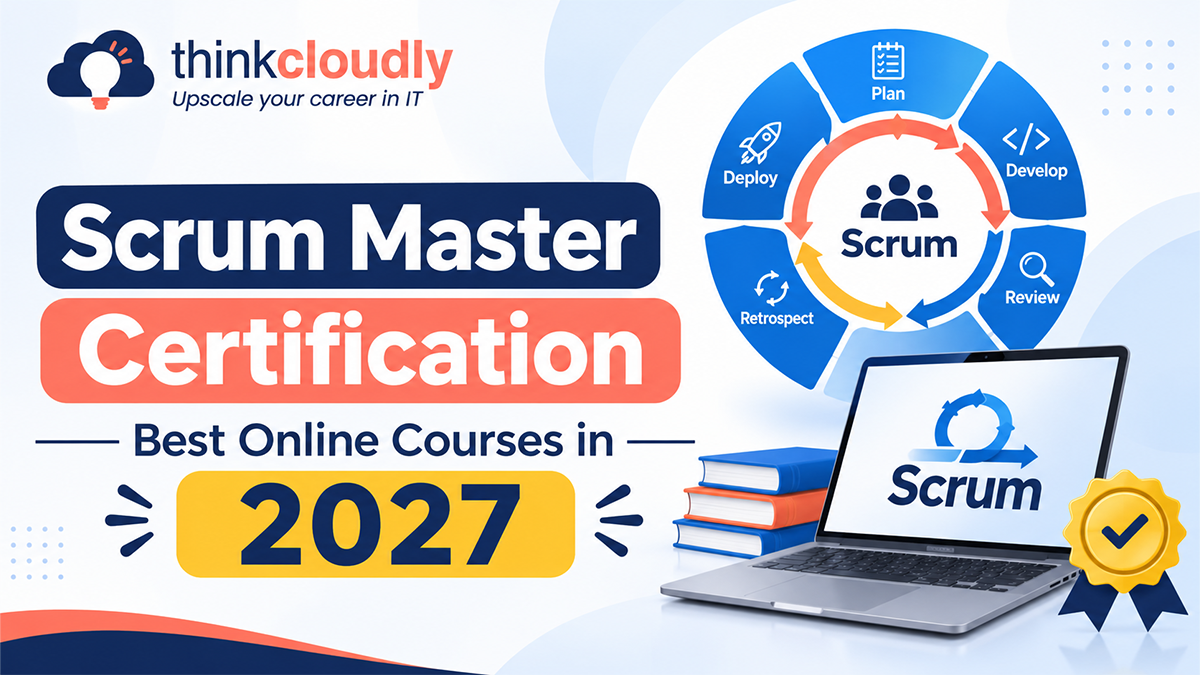





Here’s a quick assumption worth challenging before you spend a weekend comparing course bundles: not every badge on LinkedIn carries the same weight with a hiring manager. A scrum master certification from a recognized body still opens doors in 2027, but the course you pick to get there matters almost as much as the exam itself, because a weak course leaves you with a passing score and almost nothing you can actually use in a stand-up meeting.
This guide walks through the online courses worth your time this year, how the Professional Scrum Master (PSM) and Certified Scrum Master (CSM) tracks actually differ once you look past the marketing pages, what solid Scrum master training courses spend their hours teaching, and how the whole thing connects to Agile project management work you’ll be doing on an actual team. I’ll also flag the courses that are mostly filler, because plenty of them are.
Why Does a Scrum Master Certification Still Pays Off in 2027?
A scrum master certification doesn’t make you a good facilitator by itself. It does something narrower and still useful: it gives a hiring manager a verifiable reason to take your resume seriously before you’ve said a word in an interview. Here’s what that verification actually buys you.
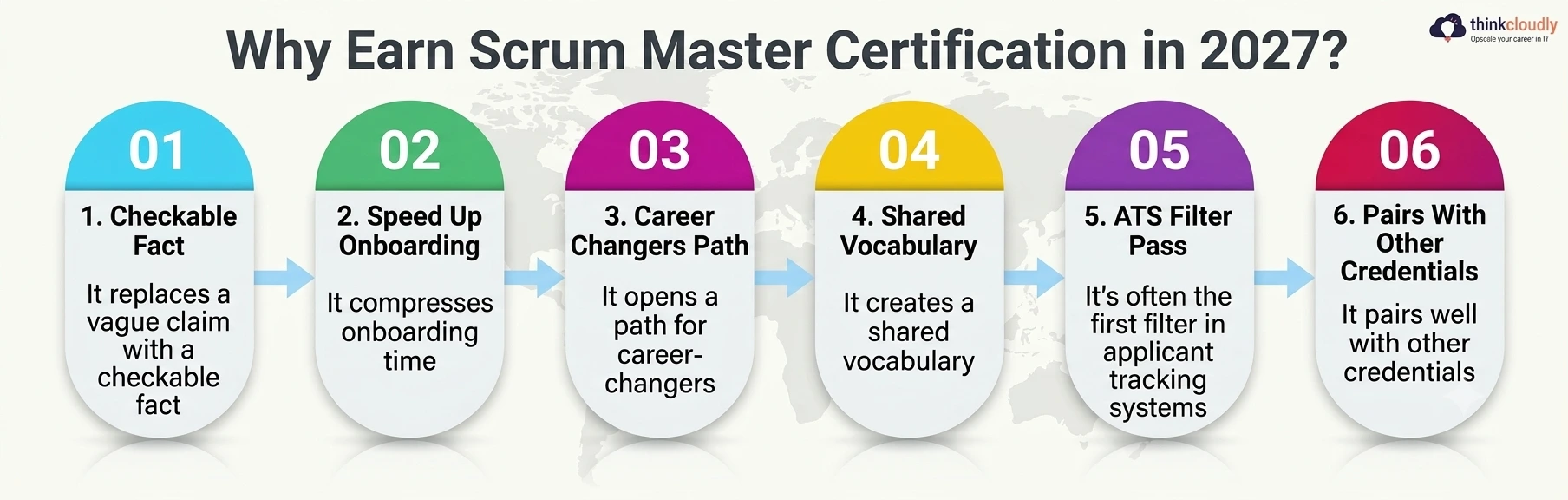
- It replaces a vague claim with a checkable fact. “Comfortable with Agile” means nothing on its own; a certification number against an issuing body’s registry means something.
- It compresses onboarding time. New hires who already understand sprint structure and ceremony roles stop teams from re-explaining the basics in week one.
- It opens a path for career-changers. Business analysts, developers, and even classical project managers use it to move into facilitation-heavy roles without starting from zero.
- It creates a shared vocabulary. Teams where everyone trained through the same framework tend to run planning sessions faster, with fewer “wait, what’s a sprint goal again” detours.
- It’s often the first filter in applicant tracking systems. Recruiters screening hundreds of resumes for Agile roles frequently search for the exact credential name before reading anything else.
- It pairs well with other credentials. Professionals who already hold a PMP often add a scrum credential specifically to cover the facilitation gap that classical project management training doesn’t touch.
None of that replaces judgment earned on the job. But walking into 2027 without a recognized credential puts you behind candidates who have one, even when your actual skills are comparable.
Best Online Courses for Scrum Master Certification in 2027
Picking a course before picking a certifying body usually backfires, so start with the track, then match it to a course format that fits how you actually learn. Here’s how the current online options stack up.
|
Course / Provider |
Format | Approx. Price | Leads To |
Best For |
|
Professional Scrum Master I exam, Scrum.org |
Self-study plus timed exam | ~$200 | PSM I |
Disciplined self-learners who read the Scrum Guide closely |
|
Live CSM course, Scrum Alliance–authorized trainer |
Instructor-led, 2-day cohort | 700–1,400 | Certified ScrumMaster (CSM) |
People who want structured, real-time coaching through role-play |
|
Agile Scrum Master Exam Prep, Udemy |
Self-paced video | 20–80 | Study aid for the CSM or PSM exam |
Budget-conscious learners who want a primer before paying for the real exam |
|
Agile with Atlassian Jira, Coursera |
Guided projects, self-paced | ~$49/month | Skills certificate, not a formal credential |
Learners who want tool fluency alongside the theory |
|
IBM Project Manager Professional Certificate, Coursera |
Multi-course, self-paced | ~$49/month | Broader PM certificate with Agile modules |
Career-changers building a wider project management foundation first |
|
Agile Project Management, LinkedIn Learning |
Short video course | ~$40/month | No certification; completion badge |
A quick primer before committing money to an official exam |
A quick note worth sitting with: only the top two rows of that table actually hand you a scrum master certification recognized by an issuing body. The rest are useful preparations or adjacent skill-building, not a substitute for sitting the real exam.
SkillsCouter’ course rankings make a similar point—most of the popular Udemy and Coursera options are positioned as prep work rather than certification itself, and treating them as the finish line is the single most common mistake first-time applicants make.
Professional Scrum Master (PSM) vs. Certified ScrumMaster (CSM): Which Track Fits You
Most people narrow their decision down to these two paths, so it’s worth being specific about what actually separates them instead of repeating marketing language from either issuing body.
Professional Scrum Master (PSM), issued by Scrum.org, is self-study by design. You read the Scrum Guide, work through practice questions, and sit an 80-question exam with an 85% passing bar—no mandatory course, and the certification never expires once earned. Certified ScrumMaster (CSM), issued by Scrum Alliance, bundles the exam with a mandatory instructor-led course, runs 50 multiple-choice questions with a lower 74% passing bar, and requires renewal every two years through continuing education credits and a renewal fee.
Cloudwards’ comparison found that Professional Scrum Master (PSM) holders reported average U.S. earnings around $120,700, slightly ahead of Certified Scrum Master (CSM) holders at roughly $113,000—though that gap likely reflects a mix of experience and role seniority rather than the letters themselves. Cost cuts are the other way for people who want a structured classroom: a self-study PSM exam runs about $200 total, while a live CSM course with materials and an instructor can run well past $1,000 before you’ve sat the actual test.
Neither track is objectively “better.” Pick Professional Scrum Master (PSM) if you learn well independently and don’t need a live instructor pushing you through role-play exercises. Pick CSM if you want guided practice and don’t mind paying more for it, and budget for renewal every two years rather than treating it as a one-time purchase.
What Scrum Master Training Courses Actually Teach You?
A lot of applicants assume Scrum master training courses are mostly vocabulary drills—sprints, backlogs, retrospectives, repeated until they stick. That’s a reasonable guess, and it undersells what a well-run course actually covers.
Solid Scrum master training courses spend most of their time on facilitation under pressure: running a planning session when the team disagrees on scope, protecting a sprint from mid-cycle changes, and translating Scrum master responsibilities into daily behavior instead of textbook definitions nobody uses in a real meeting.
The better courses also dedicate real time to conflict resolution and stakeholder communication, because that’s where new Scrum Masters consistently struggle once they’re actually on a team. Reading the Scrum Guide alone gets you through the exam. It does not prepare you for a product owner who wants to shift priorities three days into a sprint, or a sprint review that goes sideways in front of leadership.
Weak Scrum master training courses skip this entirely and lean on flashcard-style memorization instead, which is exactly why some newly certified people freeze the first time a real ceremony doesn’t go according to script.
Core Scrum Master Responsibilities Every Course Should Cover
Exam blueprints vary slightly between Scrum.org and Scrum Alliance, but the core duties any credible certification should test are consistent across both. Here’s what you should expect to walk out knowing, not just reciting:
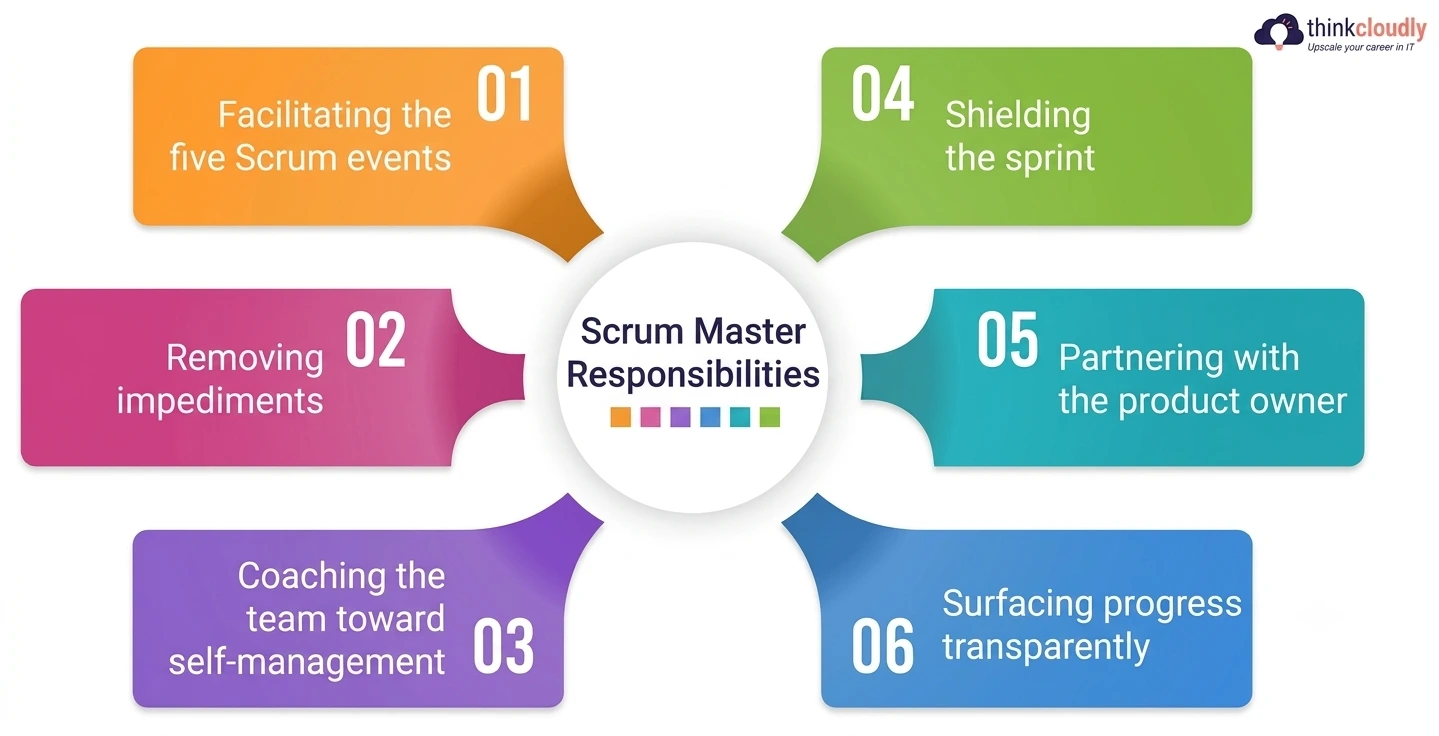
- Facilitating the five Scrum events—sprint planning, the daily Scrum, the sprint review, the retrospective, and backlog refinement—without letting any of them collapse into a status-update meeting.
- Removing impediments the team genuinely can’t clear on their own, whether that’s a stuck dependency or a decision sitting in someone else’s inbox.
- Coaching the team toward self-management, which is a noticeably different skill than directing people’s daily tasks.
- Shielding the sprint from mid-cycle scope changes that would derail whatever the team already committed to.
- Partnering with the product owner on backlog health, so the team never walks into planning with vague or poorly sized work.
- Surfacing progress transparently through burndown charts and velocity trends, without turning those numbers into a tool for pressuring the team.
Notice how little of that list resembles classical project management in the schedule-and-resource-allocation sense. These Scrum master responsibilities are almost entirely about facilitation and protecting focus, which is exactly why people arriving from a command-and-control planning background sometimes struggle to unlearn old habits in their first few months on the job.
How Agile Project Management Skills Show Up on the Job?
Here’s where a lot of course marketing oversimplifies things: Agile project management isn’t a single skill you either have or don’t. It’s a cluster of smaller habits—estimating realistically, protecting a team’s attention, and adapting a plan without throwing out the whole plan every time something changes.
Courses that teach Agile project management as pure theory tend to produce graduates who can define a sprint but can’t run one when a stakeholder pushes back mid-meeting. The courses worth paying for built-in scenario practice: a product owner who keeps adding scope, a team that’s quietly burned out, and a retrospective where nobody wants to speak honestly. That’s the version of it that actually shows up at work, and it’s a different skill than passing a multiple-choice exam about the Scrum Guide.
Salary and Career Outlook for 2027
Numbers help more than vague reassurance about “good career prospects,” so here’s what the current data actually shows. Some figures put the average U.S. Scrum Master salary at roughly $120,700 a year, with a broad range running from about $25,500 at the low end to $169,500 at the 90th percentile—a spread that reflects huge variation by region, industry, and years of experience.
Data shows the climb by experience more clearly: $96,000 for Scrum Masters with zero to one year of experience, rising to $124,000 at the four-to-six-year mark, and reaching $167,000 for practitioners with fifteen or more years in the role.
That same data set found CSM holders reporting slightly higher median pay than PSM holders in its sample, which runs counter to the Cloudwards figures above — a reminder that salary comparisons between certifications shift depending on which dataset you’re reading, and neither number should be treated as gospel.
What stays consistent across every source is that a scrum master certification remains one of the fastest, cheapest credentials for breaking into facilitation-heavy Agile roles, well ahead of unverified experience alone when a recruiter is filtering resumes at scale.
How to Choose the Right Course for Your Stage?
There’s no universal “best” course here, only the right fit for where you currently sit.
- New to Agile entirely? Start with a PSM self-study track or a live CSM course. Both validate foundational Scrum master responsibilities without assuming prior facilitation experience.
- Coming from a classical delivery background? Pair a fundamental-level scrum master certification with deliberate practice unlearning command-and-control habits — that matters more than which logo ends up on your certificate.
- Already working informally as a facilitator? Skip beginner-level training and go straight for an advanced track, since you’ll be bored and under-challenged by material you’re already living daily.
- Working inside a large enterprise running a scaled framework? A SAFe-specific credential may matter more locally than either Scrum.org or Scrum Alliance badges, since it’s built around that exact framework.
Whatever you pick, give yourself real preparation time instead of cramming the week before. A course that skips scenario practice in favor of flashcards produces people who pass the exam and then freeze the first time a real sprint review goes sideways in front of stakeholders.
A personal note
I’ve watched too many capable people treat a scrum master certification like a finish line instead of a starting point. The exam proves you know the framework. It doesn’t prove you can hold a room steady when a sprint falls apart two days before a deadline, or tell a well-meaning product owner their mid-sprint request has to wait until the next cycle.
Give yourself permission to feel clumsy in your first few ceremonies after certifying — that discomfort is just the gap between knowing the Scrum master responsibilities on paper and having actually lived them, and it closes faster than you’d expect if you stay curious instead of defensive about what goes wrong along the way.