






I get some version of the same message almost every week: someone two or three years into a general IT or networking job, asking whether it’s too late to pivot into security and whether cloud is actually the smart entry point or just another buzzword. My answer hasn’t changed in a while, so I finally wrote it down properly instead of retyping it in DMs.
A cloud security career isn’t a trend anymore. It’s quietly become the default shape of a security career, because almost nothing gets built on-premises from scratch anymore. This guide maps out that path for 2027 the way I’d explain it to a friend over coffee—what the work actually looks like day to day, which skills matter versus which are resume filler, which certifications are worth the exam fee, and what you can realistically expect to earn at each stage, wherever in the world you happen to be job hunting.
Why a Cloud Security Career Is One of the Smartest Moves Right Now?
A cloud security career is no longer a niche specialty tucked inside a broader security team. It’s becoming the security team, or close to it, at most companies that run meaningful infrastructure on AWS, Azure, or Google Cloud.
A few numbers explain why this shift happened so fast. Fortinet’s Cloud Security Report found that 88% of organizations now operate in hybrid or multi-cloud environments, and 74% of security professionals surveyed reported an active shortage of qualified cloud staff.
That gap isn’t closing on its own—it’s a direct result of infrastructure complexity growing faster than the talent pipeline. On top of that, the broader cybersecurity market is projected to cross $403 billion by 2027, driven largely by cloud-native threats that traditional, perimeter-based tooling simply wasn’t built to catch.
What that means in practice: companies aren’t just hiring more people into cloud security; they’re paying up to get anyone who already understands how identity, networking, and data protection work differently once you’re not managing your own hardware.
If you’ve been on the fence, this is the part of cybersecurity where demand is least likely to soften over the next few years, and it’s one of the rare corners of the industry where a career changer with the right lab work can still realistically compete against someone with a traditional computer science background.
What Does a Cloud Security Specialist Do?
The job title sounds narrow, but the day-to-day work spans several disciplines at once. Breaking it down into points makes it easier to visualize and easier to turn into a quick reference graphic if you’re putting together training material:
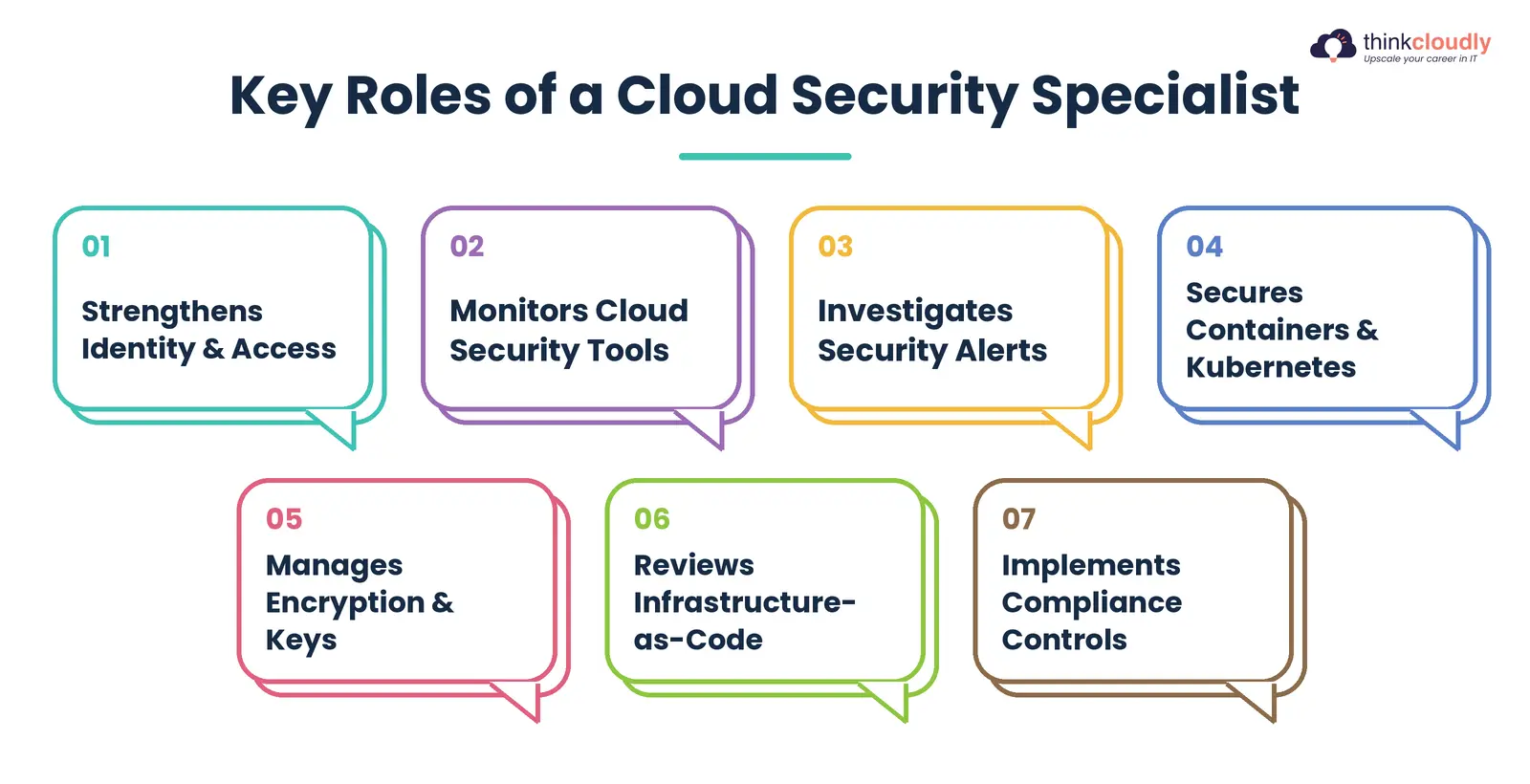
- Reviews and hardens identity and access management policies so nobody has more permission than their role genuinely requires
- Configures and monitors cloud-native security tools like AWS GuardDuty, Microsoft Defender for Cloud, or Google Security Command Center
- Investigates alerts from cloud logging pipelines and decides which ones represent real, active risk
- Secures container and Kubernetes workloads through image scanning, runtime protection, and network policies
- Builds encryption and key management practices that hold up across multiple cloud accounts and regions
- Works directly with developers to fix insecure infrastructure-as-code templates before they ship, not after
- Translates compliance requirements such as SOC 2 or ISO 27001 into concrete controls engineers can actually implement
What ties all of this together is that the role spends more time reasoning about shared responsibility and automation than memorizing a static rulebook. The platforms change every quarter; the underlying judgment calls don’t, which is exactly why hands-on practice tends to matter more than any single piece of theory you memorize for an exam.
Cloud Security Skills You Need to Build in 2027
Job postings are a decent place to start, but they tend to list tools rather than the cloud security training program skills employers actually want underneath those tools. Here’s the list broken into points you can scan quickly:
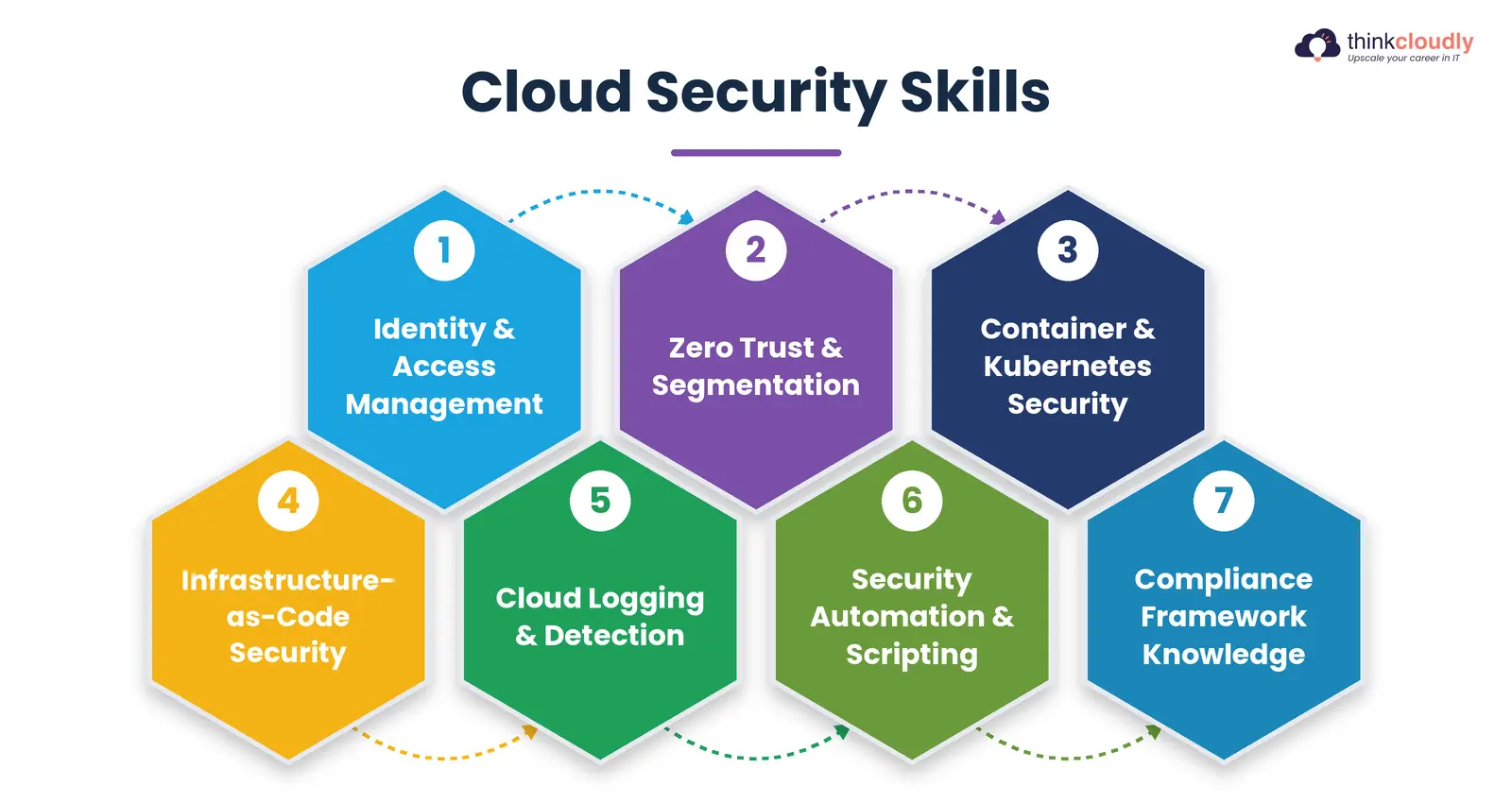
- Identity and access management, including least-privilege design and federated identity across cloud providers
- Network segmentation and zero trust architecture, since perimeter-only thinking no longer matches how workloads actually run
- Container and Kubernetes security, covering image scanning, admission controls, and runtime detection
- Infrastructure-as-code security, catching misconfigurations in Terraform or CloudFormation before deployment
- Cloud-native logging and detection, able to separate real signals from noisy, low-value alerts
- Scripting ability in Python or a similar language, enough to automate repetitive security checks
- Working knowledge of compliance frameworks like SOC 2, ISO 27001, and NIST, translated into day-to-day controls
These cloud security skills separate generalists who can describe a concept from specialists who can actually walk into a misconfigured environment and fix it under time pressure. Certifications validate your cloud security skills on paper, but hands-on labs and a home cloud account you’ve broken and rebuilt a dozen times will carry you further in an interview than any single exam.
Cloud Security Certifications Worth Pursuing in 2027
Choosing among the many cloud security certifications available can feel overwhelming, especially since a few older exams have quietly changed or disappeared entirely in the last year. Here’s where things actually stand.
The Certified Cloud Security Professional (CCSP), issued by ISC2, remains the most vendor-neutral option, covering six domains spanning cloud architecture, data security, platform security, application security, operations, and legal and compliance. It requires five years of relevant work experience and is well recognized across industries, not tied to one cloud provider.
On the vendor side, AWS’s Certified Security Specialty exam was overhauled into SCS-C03 in December 2025, with Identity and Access Management now carrying the heaviest domain weight at 20%, reflecting how much misconfigured IAM still drives real breaches.
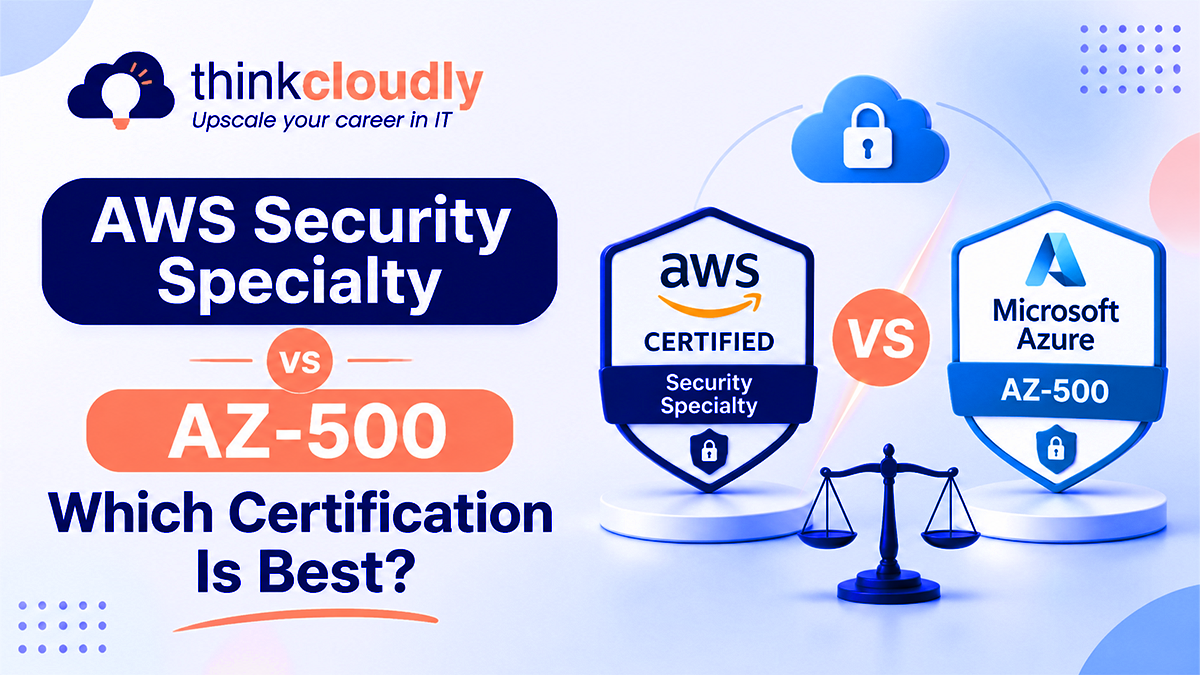
Meanwhile, Microsoft retired AZ-500 in August 2026 and replaced it with SC-500, which bakes AI workload security into the exam from day one rather than treating it as an afterthought. The Cloud Security Alliance’s CCSK is another credential worth knowing, often used as a lighter-weight entry point before committing to CCSP.
A quick comparison of leading cloud security certifications, side by side:
|
Certification |
Issuing Body | Best For |
Experience Needed |
|
CCSP |
ISC2 | Vendor-neutral, multi-cloud roles |
5 years |
|
CCSK |
Cloud Security Alliance | Entry point before CCSP |
None required |
|
AWS Certified Security Specialty (SCS-C03) |
Amazon Web Services | AWS-native environments |
~5 years recommended |
|
SC-500 |
Microsoft | Azure and Microsoft 365-centric teams |
None required |
Stacking cloud security certifications over a couple of years, rather than chasing all of them at once, is a proven way to signal expertise without burning out on exam prep.
AWS Security vs Azure Security: Which Cloud Should You Specialize In?
This question comes up constantly, and the honest answer is that it matters less than people assume. AWS security remains the most requested specialty in job postings simply because AWS still runs the largest share of enterprise cloud workloads, so recruiters default to asking for it first. Strong AWS security fundamentals—IAM policy design, VPC segmentation, KMS key management—transfer conceptually to any other provider once you understand the logic behind them.
Azure security is catching up fast, particularly inside organizations already standardized on Microsoft 365 and Entra ID. SC-500 tests applied Azure security skills around identity governance, Defender, and Sentinel orchestration, rather than isolated trivia, which mirrors how security teams actually operate day to day in that ecosystem.
Recruiters increasingly list AWS security experience as the single most transferable skill on a cloud resume, since so many enterprise workloads still sit on that platform, while Azure security experience has become a close second, especially for roles inside organizations running Microsoft-heavy stacks. Neither one cancels out the other anymore; they’re complementary lines on the same resume rather than competing choices.
|
Factor |
AWS Security |
Azure Security |
|
Market share of cloud workloads |
Largest single share |
Strong second, growing fast |
|
Flagship certification |
Security Specialty (SCS-C03) |
SC-500 |
|
Best fit for |
AWS-native infrastructure teams |
Microsoft 365 / Entra ID-heavy organizations |
|
Hiring pattern |
Most frequently named in job postings | Increasingly a “nice to have” alongside AWS |
Realistically, picking up both over time is becoming the norm rather than the exception, since most mid-size and large companies now run some combination of the two.
Cloud Security Jobs: Where the Demand Is Concentrated
Cloud security jobs have grown faster than almost any other cybersecurity niche over the past few years, and the demand isn’t confined to tech companies anymore. Cloud security jobs now appear across fintech, healthcare, retail, and government agencies migrating legacy systems off aging data centers, each bringing its own compliance pressures on top of the usual technical requirements.
Roles typically fall into a few clear tiers: cloud security analyst as an entry point, a hands-on configuration and incident-response role in the middle, and cloud security architect for teams designing security into infrastructure before it’s built rather than patching it afterward.
Cloud security jobs pay a premium specifically because so few candidates can speak confidently to both the security side and the cloud infrastructure side at once—most people lean heavily toward one or the other, and hiring managers notice the difference within the first few interview questions.
Cloud Security Engineer Salary: What to Expect in 2027
Numbers vary by source and region, but the overall pattern is consistent: a cloud security engineer salary sits comfortably above general IT and even above many traditional security roles, reflecting the specialized, cross-disciplinary nature of the work.
In the United States, average total compensation for a cloud security engineer salary lands around $166,000, with base pay averaging roughly $140,000 and a typical range stretching from about $95,000 at the lower end to $250,000 for senior, specialized roles, according to data compiled by Built In. Engineers with seven or more years of experience often see averages well above $175,000.
A cloud security engineer salary varies significantly by region, and the UK tells a similar growth story. The median salary for permanent cloud security roles reached £75,000 in the twelve months tracked through late 2026, up over 3% year on year, with permanent vacancies citing cloud security nearly doubling compared to two years earlier. That kind of hiring velocity, alongside rising pay, is a fairly reliable signal that demand hasn’t peaked.
How to Start or Pivot Into a Cloud Security Career in 2027?
If you’re serious about building a cloud security career from scratch, or pivoting from a general IT or networking background, the path is more structured than it looks from the outside:
- Get hands-on with a free-tier AWS or Azure account and intentionally misconfigure, then fix, basic resources like storage buckets and IAM roles
- Pick one cloud security certification to start — CCSK or an associate-level AWS credential are gentler entry points than CCSP
- Build small home-lab projects around logging, detection, and container security rather than only reading about them
- Apply for cloud security analyst or junior security engineer roles, since very few companies expect a perfect-fit candidate at entry level
- Layer in a second certification, such as CCSP or SC-500, once you have roughly a year of practical exposure under your belt
None of this requires quitting your current job overnight. Most people I’ve talked to built their cloud security career one evening project and one certification at a time, alongside whatever they were already doing for work.
A realistic timeline from “never touched a cloud console” to a credible junior application is usually somewhere between nine and eighteen months, depending on how much time you can protect each week and whether you already have adjacent IT or networking experience to lean on.
Final Thoughts
A cloud security career rewards curiosity more than credentials, even though certifications still open doors that cold applications usually don’t. The field keeps shifting — exams get restructured, vendors retire certifications, AI workloads add entirely new attack surfaces — but the underlying skill of reasoning clearly about risk in a distributed environment doesn’t go stale nearly as fast as any single tool does. Treat the certifications and the salary numbers as useful waypoints rather than the whole destination, and the rest of the plan tends to fall into place on its own schedule.
A Personal Note
When I started my own cloud security career, I assumed the hardest part would be the technical material, and it wasn’t. The hardest part was accepting that I’d never finish “learning cloud security” the way you finish a textbook — the goalposts move every time a provider ships a new service.
What settled that discomfort for me was realizing nobody else in the room had it all memorized either. The engineers I respect most are the ones who say “I don’t know, let me check” without flinching, then actually go check. If you’re earlier in this path than you’d like to be, that’s a far better habit to build than trying to memorize every acronym before you apply for your first role.