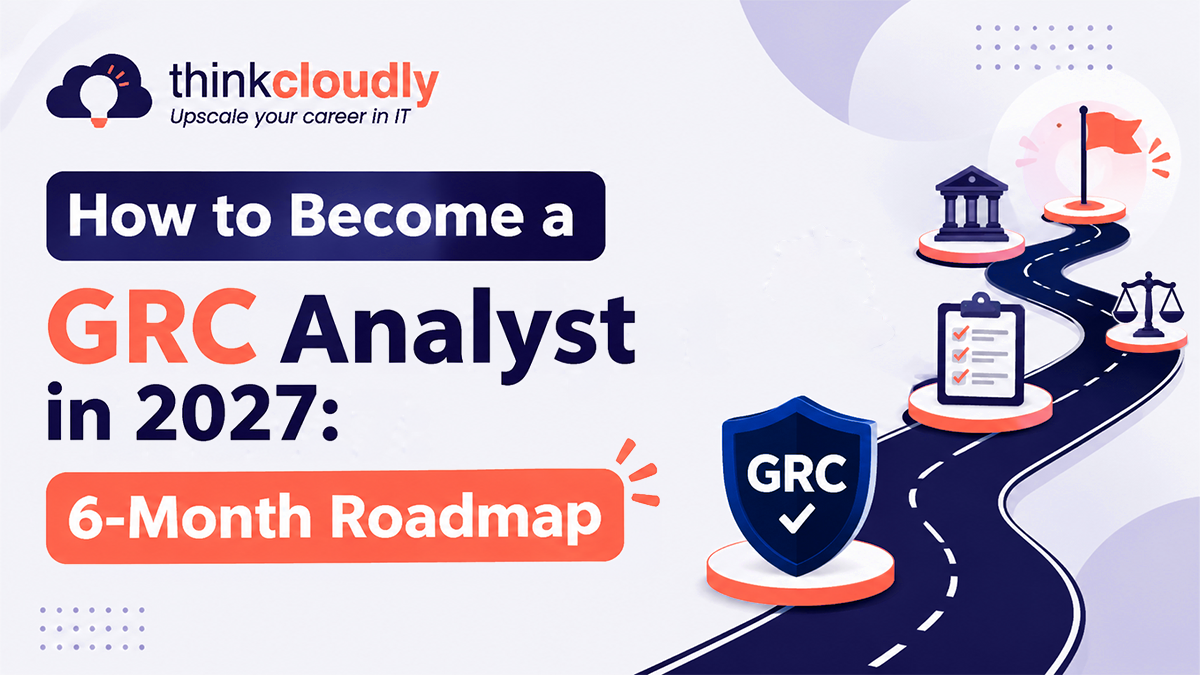







Three years ago, “GRC” was a term most hiring managers had to explain in job postings. Not anymore. Every breach headline, every new privacy law, and every board meeting that now opens with a cyber-risk slide has pushed governance, risk, and compliance work from a back-office function into a front-line career. If you are searching for how to become a GRC analyst, you are looking at one of the few entry points into cybersecurity that does not require you to write a single line of code.
This guide is built for exactly that search. It lays out a practical GRC analyst roadmap you can follow over six months, explains the Governance risk compliance fundamentals employers actually test for, and shows where the realistic entry-level GRC jobs are hiding in a crowded job market.
I have written this the way I wish someone had explained it to me when I was mapping out my own GRC career path — plainly, without the recruiter gloss, and with real numbers wherever I could find them.
By the end, you will know how to become a GRC analyst without a security background, which certifications are worth your money in 2027, what a GRC analyst salary actually looks like at each career stage, and how frameworks like NIST’s RMF fit into your daily work once you land the job.
Starting a career as a GRC analyst in 2027 requires a clear understanding of risk management, compliance frameworks, internal controls, and IT security. An IT Auditing and GRC Program can help beginners develop these essential skills through structured learning and practical exercises. Begin by understanding frameworks such as ISO 27001, SOC 2, and NIST, then build experience with risk assessments, audit documentation, and compliance reporting. With consistent practice and relevant certifications, you can prepare for entry-level GRC opportunities.
What Does a GRC Analyst Do?
A GRC analyst sits at the intersection of three disciplines that used to live in separate departments. Governance covers the policies and decision-making structures an organization uses to manage itself responsibly. Risk is the practice of identifying what could go wrong and sizing up how badly.
Compliance is the ongoing proof that the organization is meeting its legal, regulatory, and contractual obligations. Put together, Governance risk compliance work is less about chasing checkboxes and more about giving leadership an honest picture of where the organization is exposed.
Day to day, a GRC analyst typically:
- Maintains and updates internal policies against frameworks such as ISO 27001, SOC 2, or the NIST risk management framework
- Runs control testing and gathers audit evidence ahead of external assessments
- Tracks risk registers and flags issues that need escalation to management
- Coordinates vendor and third-party risk assessments
- Translates regulatory language into plain-English requirements that engineering and operations teams can actually act on
None of this demands a computer science degree. It demands structured thinking, comfort with documentation, and the patience to follow a framework through to the letter — which is exactly why so many career changers find this one of the more approachable ways into cybersecurity, according to ISACA’s own GRC analyst career guidance. Understanding how to become a GRC analyst really starts here, with the day-to-day scope of the job, long before certifications or exam fees enter the picture.
GRC Analyst Salary: What You Can Realistically Expect
Money is usually the question nobody asks out loud in a careers article, so let’s answer it directly. The median GRC analyst salary in the United States currently sits at roughly $77,472 per year, with the middle band of earners falling between $63,561 and $85,904 depending on location, industry, and the size of the employer.
|
Experience Level |
Typical Annual Salary (USD) |
What Changes at This Stage |
|
Entry-level (0–1 yr) |
$50,000 – $64,000 |
Learning frameworks, shadowing audits, documentation-heavy work |
|
Mid-level (2–4 yrs) |
$64,000 – $86,000 |
Owns a control domain, leads vendor risk reviews |
|
Senior (5+ yrs) |
$86,000 – $94,000+ | Advises leadership, manages audit cycles end-to-end |
|
GRC Manager / Lead |
$100,000 – $130,000+ | Builds the governance program, manages analysts |
A GRC analyst salary climbs noticeably once you add a recognized certification and a second or third audit cycle to your resume. It is one of the more reliable compensation curves in cybersecurity precisely because the role is judged on process rigor rather than a portfolio of flashy projects.
Why This GRC Career Path Is Worth Betting On in 2027?
A few reasons this GRC career path keeps attracting career switchers, auditors, and even paralegals looking for a change:
- Regulatory pressure is not slowing down. New AI governance rules, expanding data-privacy laws across North America and Europe, and sector-specific mandates mean organizations need people who can keep pace with compliance obligations, not fewer of them.
- It is one of the few cybersecurity-adjacent roles where an English, business, or legal background is an asset rather than a liability.
- The ceiling is high. Analysts who specialize in a framework like SOC 2 or ISO 27001 often move into GRC management, internal audit leadership, or dedicated risk leadership within four to five years.
- Remote and hybrid demand remains strong, since much of the work is documentation and interview-based rather than hands-on infrastructure work.
- Entry-level GRC jobs increasingly accept candidates from adjacent fields — IT support, internal audit, paralegal work, even project management — as long as they can demonstrate structured thinking.
None of this makes the role easy. It makes it learnable, which is a different and more useful thing when you are plotting how to become a GRC analyst from a standing start.
The 6-Month GRC Analyst Roadmap
Here is the GRC analyst roadmap I would actually follow if I were starting today, broken into six deliberate months rather than a vague “study compliance” instruction.
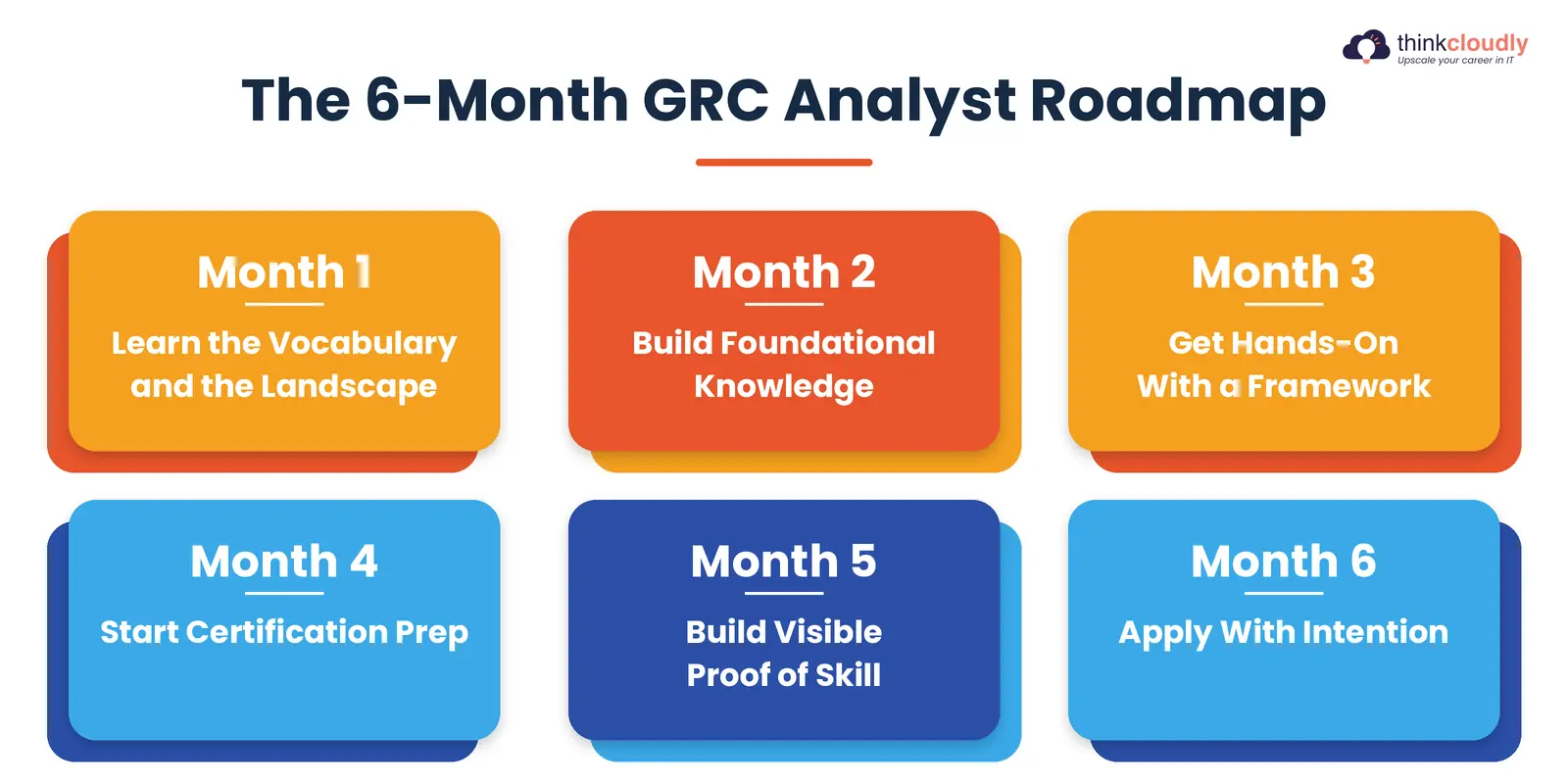
Month 1 — Learn the Vocabulary and the Landscape
- Read through the official NIST risk management framework overview until the seven steps (Prepare, Categorize, Select, Implement, Assess, Authorize, Monitor) feel familiar rather than foreign
- Skim the structure of ISO 27001 and SOC 2 Type II so you can tell someone what each one actually certifies
- Follow two or three GRC-focused newsletters or LinkedIn voices to absorb the terminology in context
Month 2 — Build Foundational Knowledge
- Work through a free or low-cost introductory course on IT governance and risk fundamentals
- Start a personal glossary of terms (control, residual risk, inherent risk, attestation, SOC report) and define each in your own words
- Read one real SOC 2 report or audit summary end to end, even if you do not understand every line yet
Month 3 — Get Hands-On With a Framework
- Pick one framework — the NIST risk management framework is the strongest choice if you want US federal or defense-adjacent roles — and map out its full control set
- Build a sample risk register in a spreadsheet using a fictional company, just to practice the documentation style auditors expect
- Join a study group or forum where people discuss real audit scenarios
Month 4 — Start Certification Prep
- Choose one certification that matches your target industry (ISC2 CGRC, ISACA CRISC, or a SOC 2 readiness course are common starting points)
- Dedicate structured study blocks rather than passive reading — practice questions matter more than re-reading notes
- Begin tailoring your resume around Governance risk compliance terminology recruiters actually search for
Month 5 — Build Visible Proof of Skill
- Document a mock internal audit from start to finish and publish a sanitized version on LinkedIn or a portfolio site
- Volunteer for a small nonprofit or community organization that needs a basic policy review — real experience, even unpaid, outweighs theory
- Sit your chosen certification exam if you feel ready
Month 6 — Apply With Intention
- Target entry-level compliance and risk postings specifically, not generic “cybersecurity analyst” roles that expect hands-on security operations experience
- Customize each application to reference the specific framework the employer uses (SOC 2, ISO 27001, HIPAA, PCI DSS)
- Prepare for interviews by practicing how you would explain NIST’s RMF or a control testing scenario out loud, not just on paper
Following this GRC analyst roadmap in order matters more than rushing it. Employers can tell the difference between someone who memorized acronyms in a weekend and someone who actually understands why a control exists.
Core Skills Employers Actually Screen For
Beyond frameworks, the skills that consistently show up in GRC analyst job postings include:
- Risk assessment and risk scoring methodology
- Policy writing and plain-language documentation
- Internal and external audit support
- Vendor and third-party risk management
- Working knowledge of at least one major framework (ISO 27001, SOC 2, NIST risk management framework, or HIPAA)
- Communication skills strong enough to explain technical risk to non-technical executives
This last point is underrated. A large part of how to become a GRC analyst who actually gets promoted comes down to writing and presenting clearly, not just knowing the control catalog.
The Software You’ll Actually Use on the Job
Textbooks and frameworks only get you halfway. Part of learning how to become a GRC analyst in 2027 means getting comfortable with the tools that have replaced spreadsheets in most modern compliance teams. You do not need to be an expert before you apply, but recognizing these names in a job posting will help you hold your own in an interview:
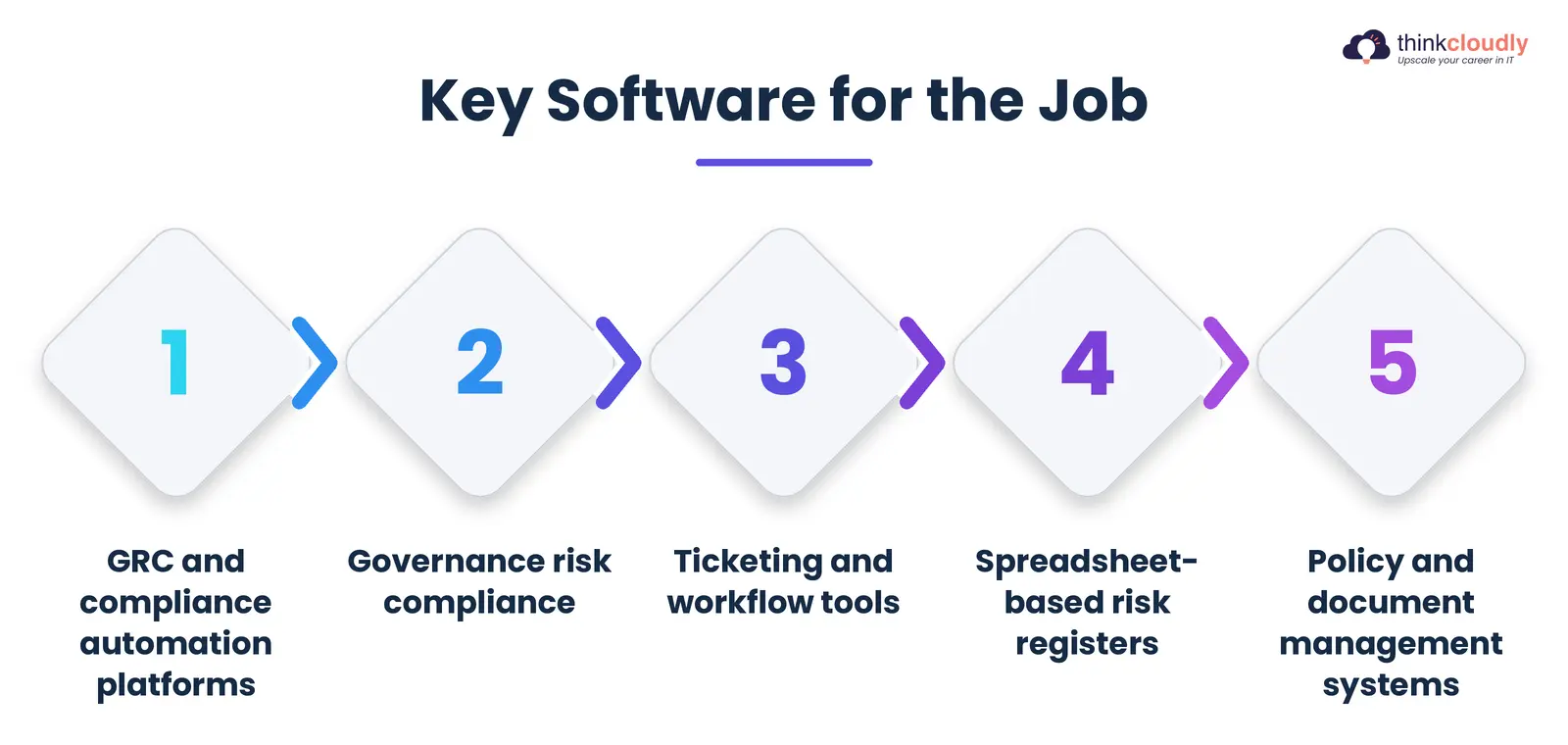
- GRC and compliance automation platforms such as Vanta, Drata, or ServiceNow GRC, which automate evidence collection across multiple frameworks at once
- Governance risk compliance suites like RSA Archer or MetricStream, more common in large enterprises and financial services
- Ticketing and workflow tools such as Jira or ServiceNow, used to track remediation items and control owners
- Spreadsheet-based risk registers, which are still the backbone of smaller teams and worth practicing regardless of which platform an employer eventually uses
- Policy and document management systems, since version control on policies is a recurring audit finding when it is handled poorly
Most job postings will name at least one of these tools. Mentioning familiarity with even a free trial version during an interview signals that you have done real preparation, not just certification study.
Where to Find Entry-Level GRC Jobs?
Entry-level GRC jobs rarely carry the word “entry-level” in the title. Instead, look for postings labeled:
- Compliance Coordinator or Compliance Associate
- Junior Risk Analyst
- IT Audit Associate
- Security Compliance Analyst
- Risk and Controls Analyst
Internal audit teams, insurance companies, healthcare compliance departments, and fintech startups are consistently good hunting grounds for entry-level GRC jobs, often more so than pure cybersecurity vendors, because these industries already run on heavy regulatory obligations. A practical breakdown of the GRC analyst role and its skill requirements is worth reading before you start applying, since it will help you match your resume language to what hiring managers are actually scanning for. Live postings on boards such as ZipRecruiter’s entry-level GRC listings are also a useful reality check on which titles and requirements are actually current right now, rather than relying on what a course provider claims the market looks like.
Certifications Worth Your Time
If you are still deciding how to become a GRC analyst without wasting money on the wrong exam, certifications are exactly where most newcomers overspend. You do not need every certification on the market. In order of practical value for someone early in this GRC career path:
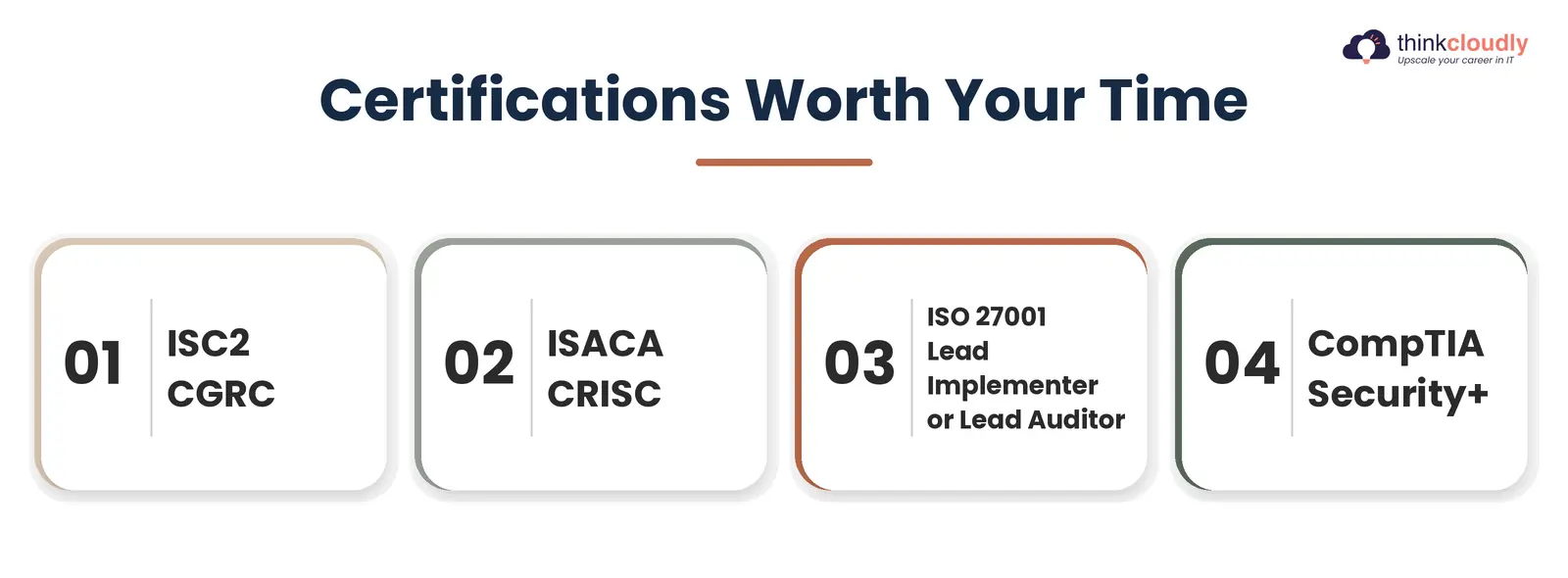
- ISC2 CGRC (formerly CAP) — built specifically around NIST’s RMF and US government risk authorization processes
- ISACA CRISC — strong for IT risk and controls, respected across industries
- ISO 27001 Lead Implementer or Lead Auditor — valuable if you are targeting private-sector or international roles
- CompTIA Security+ — not GRC-specific, but useful if you want baseline cybersecurity credibility alongside your governance knowledge
Pick one, finish it, and let it anchor your resume rather than collecting half-finished exam attempts across three different bodies.
Common Mistakes to Avoid
Treat Governance risk compliance knowledge as a discipline that compounds — the more frameworks you touch, the faster the next one makes sense. With that in mind, the mistakes below are the ones that slow people down most often:
- Treating certification study as a substitute for hands-on documentation practice
- Applying only to postings titled “GRC Analyst” and ignoring equivalent compliance or audit titles
- Skipping the NIST risk management framework because it looks dense — it is one of the most frequently referenced frameworks in US-based postings
- Underselling transferable skills from law, accounting, or operations backgrounds
- Rushing the roadmap instead of building a real understanding of why each control exists
A Personal Note
I will be honest about one thing: nobody falls in love with control testing on day one. The work is methodical, sometimes repetitive, and the wins are quieter than a headline-grabbing security researcher’s.
But if you stick with it past the first few months, you start to see something most people miss — GRC work sits closer to real organizational power than almost any other entry point in cybersecurity, because the people who understand risk and governance end up in the room where decisions actually get made.
If you are serious about how to become a GRC analyst, treat the first six months as an apprenticeship in judgment, not just paperwork. That mindset is what separates the analysts who get promoted from the ones who stall out at year two.