

Did you know that a single company’s software now runs the internal operations of more than 85% of the Fortune 500?
That company is ServiceNow, and in 2026 it is projected to cross $15.5 billion in subscription revenue alone. If you have ever wondered whether a career in ServiceNow is worth the time, the money, and the learning curve, the numbers this year finally give a clear answer.
This blog breaks down real 2026 salary figures, job scope, required skills, and what building a career in ServiceNow actually looks like once you get past the buzzwords.
What Makes a Career in ServiceNow Worth Pursuing in 2026?
Most people first hear about the ServiceNow platform when their company migrates its IT helpdesk to it and never think twice about it again. That is a missed opportunity. ServiceNow has grown from a simple IT ticketing tool into a workflow engine used across HR, finance, procurement, customer service, and security operations.
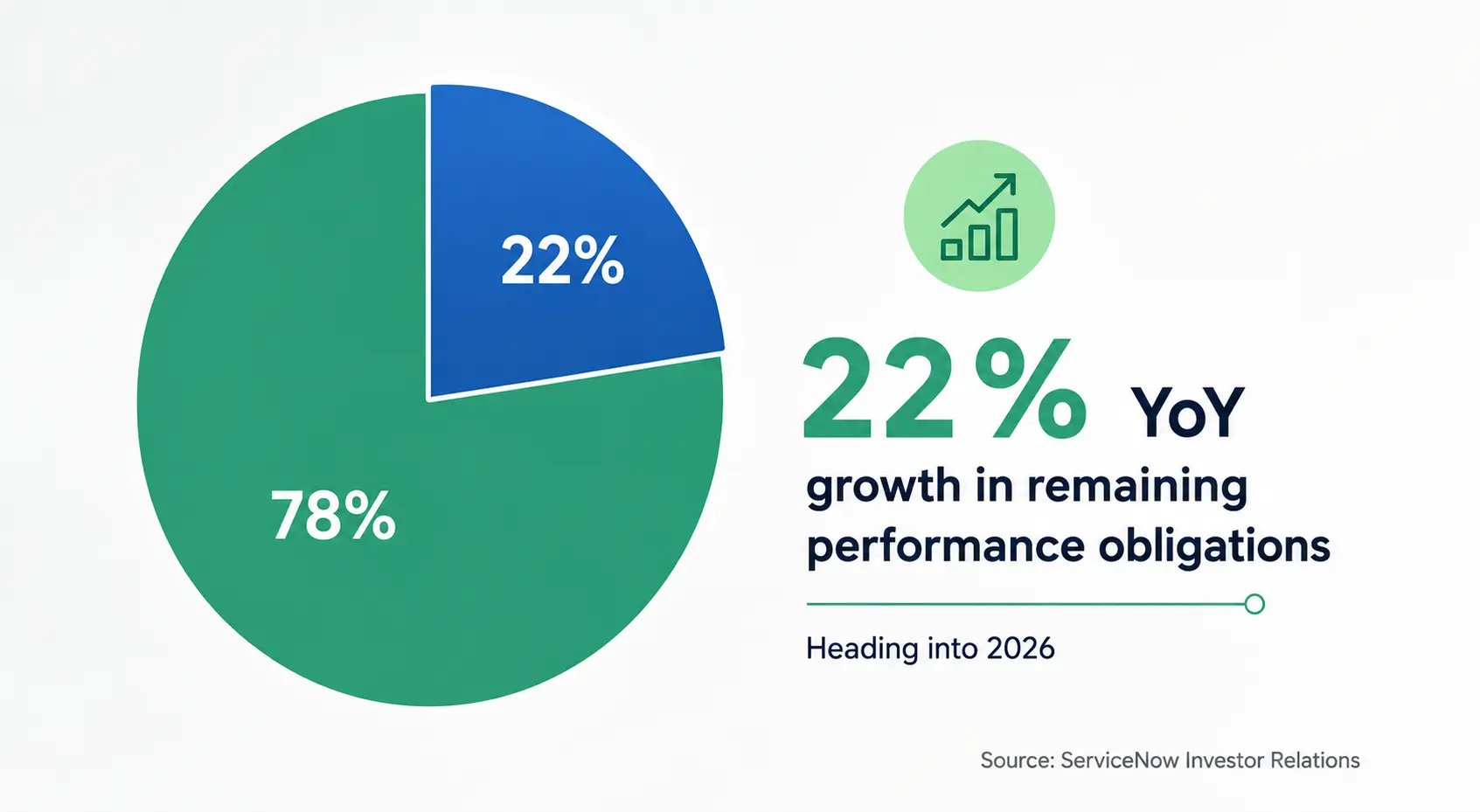
According to ServiceNow’s investor reports, the company’s current remaining performance obligations grew by over 22% year-over-year heading into 2026, which in plain terms means enterprises are signing longer, bigger contracts and are not going anywhere. For anyone weighing a career in ServiceNow against other IT paths, that kind of contract stickiness matters because it points to steady, long-term hiring rather than a short-lived trend.
How Much Can You Earn? ServiceNow Salary Trends for 2026
Money is usually the first question, so let’s start there with real figures instead of guesses. Data compiled from Glassdoor, ZipRecruiter, and Payscale through mid-2026 shows a fairly consistent picture across roles, with pay scaling up as responsibilities move from basic support toward deeper ServiceNow platform architecture and design work.
|
Role |
Average Base Salary (USD, 2026) |
Typical Range |
|
ServiceNow Administrator |
$95,000 |
$75,000 – $130,000 |
|
ServiceNow Developer / software developer |
$124,681 |
$101,512 – $185,917 |
|
ServiceNow business analyst |
$111,703 |
$74,000 – $181,000 |
|
Senior ServiceNow Developer |
$139,000 |
$105,000 – $232,000 |
|
ServiceNow Solution Architect |
$150,000+ |
$130,000 – $210,000 |
(Source: Glassdoor ServiceNow Developer salary data, July 2026; InterviewQuery’s ServiceNow compensation report, March 2026)
A few things stand out here.
- First, even entry-level ServiceNow jobs tend to pay above the general IT support average in most Western markets.
- Second, the jump from a junior role to a senior one is steep, often adding $30,000 to $50,000 within a few years once someone has real project experience.
- Third, a business analyst working specifically on this platform earns noticeably more than a generic BA role elsewhere, simply because the platform-specific skill is scarce relative to demand.
Browsing current ServiceNow jobs on any major job board makes this gap visible quickly, since postings for platform-specific analysts routinely list wider salary bands than generic business-process listings.
Key Roles You Can Build a Career in ServiceNow Around
This kind of specialization is not a single job title; it is closer to an ecosystem of roles. Here are the main paths people usually choose from, and whatever entry point you pick, almost all of them circle back to mastering how the ServiceNow platform structures data, permissions, and workflow logic underneath the surface.
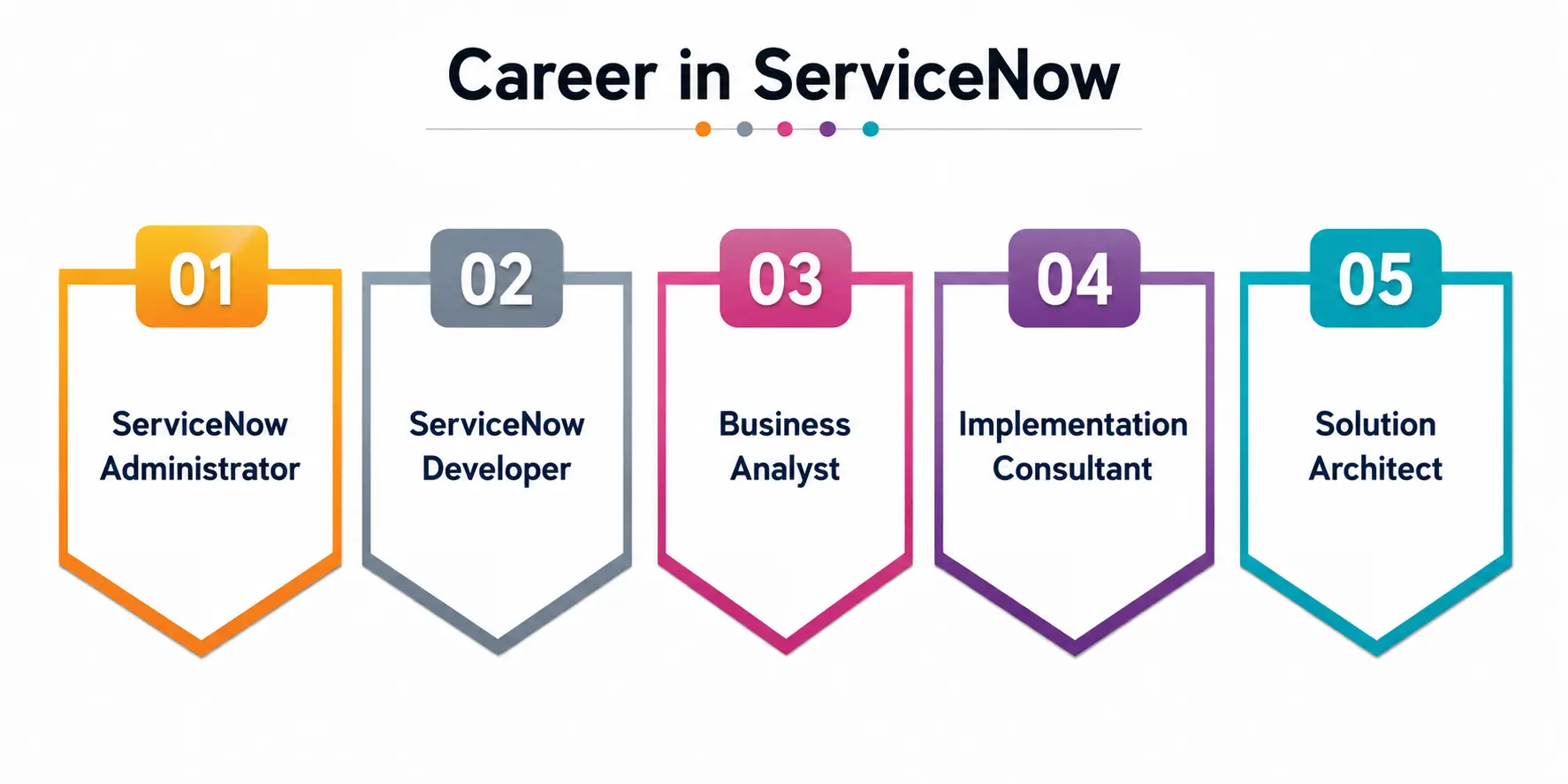
- ServiceNow Administrator – Manages day-to-day platform configuration, user access, and workflow maintenance. A common entry point for people coming from general IT support.
- ServiceNow Developer – Builds custom applications, scripts, and integrations on the platform. This path suits anyone with a software developer background who enjoys writing code and solving logic-heavy problems.
- Business Analyst – Bridges the gap between what a company needs and what the platform can deliver. Strong communication skills matter as much as technical know-how here.
- Implementation Consultant – Works directly with client organizations to design and roll out new modules, often the highest-paying entry route for people with prior consulting experience.
- Solution Architect – A senior role responsible for the overall technical design across large, multi-module deployments; usually reached after five or more years on the platform.
Each of these paths draws from a different mix of skills, but all of them sit under the same growing umbrella, which is exactly why so many professionals are treating this as a genuine long-term specialization rather than a side skill.
Anyone weighing these paths should also think about how much structured ServiceNow training versus self-directed reading they’re comfortable with, since the administrator and analyst tracks reward patient process work, while the developer track rewards people who enjoy debugging and iterating on code until it behaves.
Skills and ServiceNow Learning Path for Beginners
Getting started does not require a computer science degree, and you don’t need to already be a working software developer to make progress in the first few weeks. Most people beginning their ServiceNow learning journey start with the free “Now Learning” modules ServiceNow itself publishes, then move into scripting basics (JavaScript is the core language used across the platform), workflow design, and ITIL fundamentals.
If your background is closer to business than to coding, focus first on process mapping and stakeholder communication, since a business analyst role leans on those skills more than on scripting.
A realistic ServiceNow learning path in 2026 looks something like this: spend four to six weeks on platform fundamentals, another few weeks on your chosen specialization (admin, development, or analysis), and then get hands-on with a personal developer instance, which ServiceNow provides free of charge for practice.
Employers consistently mention in job postings that hands-on instance experience matters more than theoretical knowledge alone. A software developer moving into this space usually finds the transition smoother than expected, since the platform’s scripting engine borrows heavily from standard JavaScript patterns rather than requiring an entirely new language.
It also helps that the ServiceNow platform ships two major releases a year, so staying current is treated as part of the job rather than a one-time task you finish before your first interview. This is worth knowing upfront, because it means the ServiceNow learning process does not really stop once you land a role; it just shifts from structured courses to reading release notes and testing new features on a sandbox instance.
Is ServiceNow Training Worth It? Certification & Career Scope
Certification is where a lot of the hesitation shows up, and it’s a fair question to ask before spending money. Structured ServiceNow training generally leads toward the Certified System Administrator (CSA) exam first, which acts as the baseline credential recognized across almost every job listing in this space.
From there, role-specific certifications like Certified Application Developer (CAD) or Certified Implementation Specialist open doors to higher-paying, specialized ServiceNow jobs. The honest answer on whether ServiceNow training pays off is it shortens the time it takes to get hired, because recruiters use certification as a quick filter when they receive hundreds of applications for a single opening.
It does not replace hands-on practice, but paired with a personal developer instance, it gives a credible signal to employers that you understand the platform beyond a tutorial video. Many recruiters screening ServiceNow jobs today still treat the CSA certificate as a minimum bar before they even open a resume, which is a small, mechanical reason to get it out of the way early rather than later.
My Personal Journey into a Career in ServiceNow
I’ll be honest about how I got here, because most career blogs skip this part. I started as a support engineer who had never heard of workflow automation, let alone this specific platform. I hadn’t planned on becoming a software developer at all, so the shift still catches old colleagues off guard when I explain it.
A colleague pushed me to sit for the CSA exam almost as a joke, and within eight months of studying part-time and building small custom apps on a free developer instance, I moved into a junior developer role earning nearly 40% more than my previous job.
What surprised me most was not the salary jump but how quickly the skill compounded; the scripting I learned in my first few months made every project after that faster, and within a year I was mentoring newer hires through the same ServiceNow learning curve I had just climbed myself.
Looking back, starting a career on this platform was less about chasing a trend and more about picking a skill that companies were clearly not going to stop needing anytime soon.
Future Outlook: Where is the ServiceNow Platform Headed?
The broader IT service management market, of which the ServiceNow platform is the clear leader, is forecast to keep growing at a compound annual rate well above 15% through the late 2020s, according to Mordor Intelligence’s ITSM report. AI-driven automation is the biggest driver right now; the same report notes a sharp rise in AI-related deals on the platform through 2025 and into 2026.
As those AI features expand across the suite, new categories of ServiceNow jobs focused on AI configuration, governance, and prompt-driven workflow design are already starting to show up in job postings, alongside the traditional admin and developer titles.
Training providers are noticing the shift too, and structured ServiceNow training programs are being updated to cover AI Agent Studio and predictive intelligence modules, since those are quickly becoming the two areas driving the most hiring interest this year.
For anyone still deciding, this growth trajectory is one of the strongest arguments for starting a career in ServiceNow now rather than waiting, since early specialists in AI-integrated workflow tools tend to command the steepest salary premiums as adoption scales.
Conclusion
The data from 2026 makes one thing clear: a career in ServiceNow is not a gamble on a passing trend; it’s a bet on a platform that enterprises are actively expanding their contracts with, year after year.
Whether you’re drawn to the technical side as a developer, the people-and-process side as a business analyst, or the administrative backbone of it all, the roles are there, the salaries are competitive, and the learning path is more accessible than most tech specializations. The only real decision left is which path fits how you like to work.
If you’re serious about getting there, Thinkcloudly’s training programs walk through the same fundamentals covered here, from platform basics to hands-on project work on a live developer instance, along with resume support and interview preparation once you’re ready to apply. It’s less about memorizing modules and more about building the kind of practical experience that shows up naturally when you’re actually interviewing.