






I’ve watched enough discount seasons come and go to know that most “biggest sale of the year” emails deserve a quick scroll and an immediate delete. But when a provider runs a genuine two-for-one on its entire certification catalog instead of knocking a token 10% off a handful of courses nobody wanted anyway, it’s worth stopping to actually read the fine print.
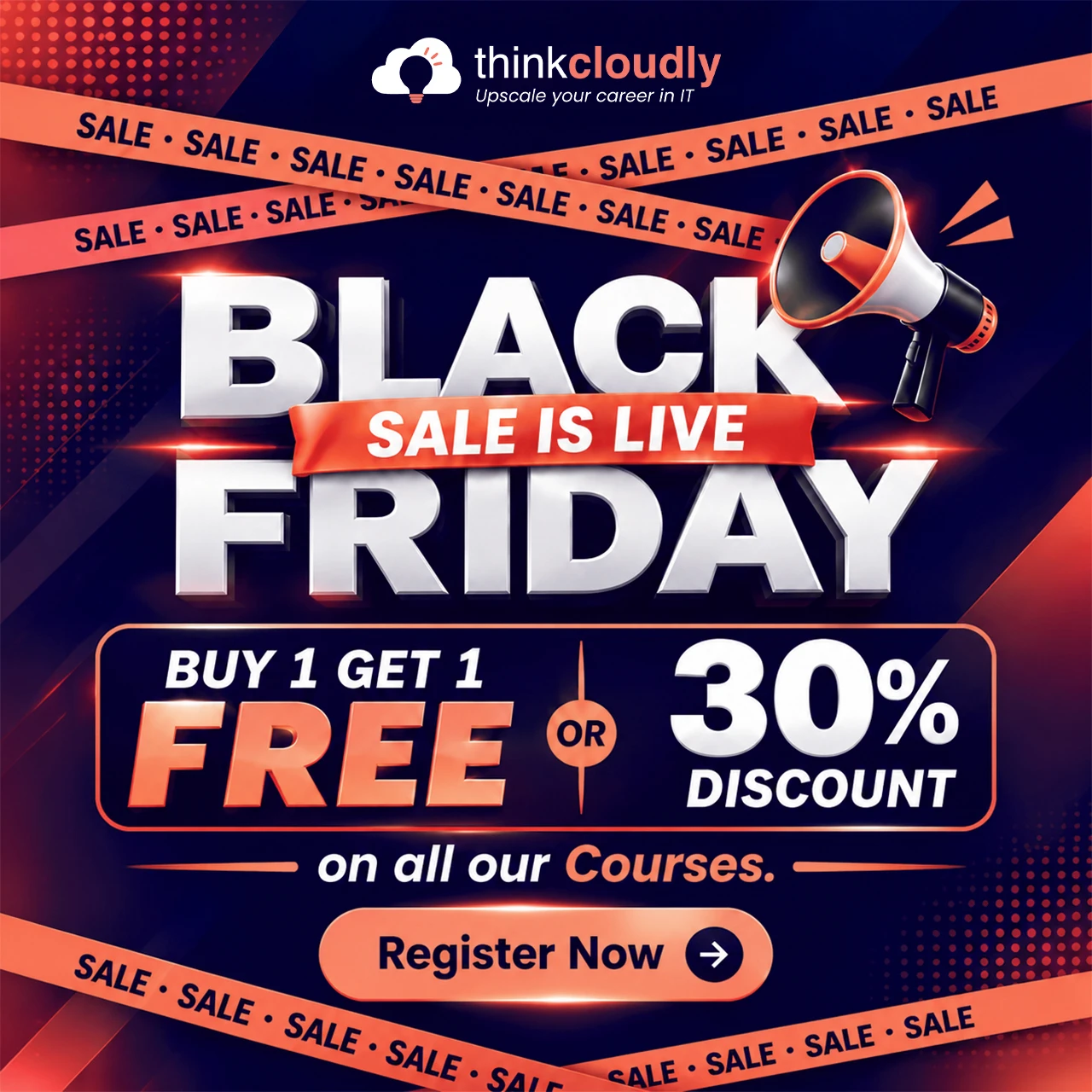
That’s exactly what’s happening this week. ThinkCloudly has turned on a straight Buy 1 Get 1 Free offer across its full course library, and if you’ve been sitting on a certification decision for months, this is the kind of cyber monday IT course deals window that doesn’t come back around until next November.
Online spending data backs up why this particular week gets so much attention from training providers in the first place. Last year’s Cyber Monday set a new U.S. record at $14.25 billion in online spending, up 7.1% year over year, according to Adobe’s Cyber Monday report — and that momentum has only built heading into this season.
Training companies know shoppers are already primed to click “buy” this week, which is precisely why a real two-for-one training deal shows up now instead of being spread evenly across the calendar.
Before you decide whether this particular offer is worth your money, it helps to understand why this week matters more than most, what’s actually included in the bundle, and how to avoid the handful of mistakes that quietly undo a good deal.
Why Does This Season’s Cyber Monday IT Course Deals Matter?
A discount is only interesting if the thing behind it is worth having regardless of price. On that front, the numbers heading into 2027 make a pretty strong case for IT certifications in general.
Start with the skills gap itself. The World Economic Forum’s Future of Jobs Report found that employers expect 39% of workers’ core skills to change by 2030, and that 48% of the global workforce will need to be upskilled or reskilled to keep pace with how fast technology roles are shifting.
That’s not a distant problem — it’s the exact gap a structured, exam-mapped certification course is built to close, and it’s a big part of why this round of cyber monday IT course deals is landing differently than the average retail promotion.
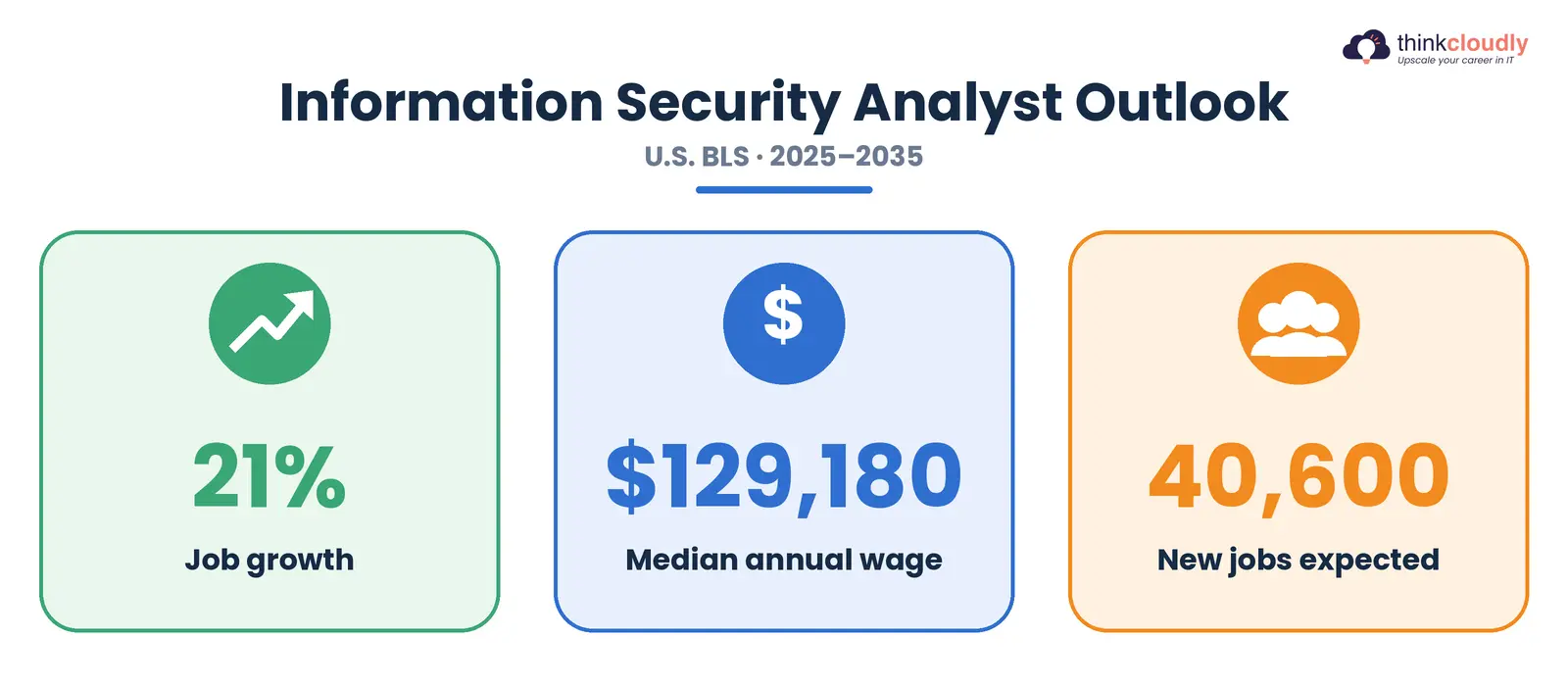
Then there’s what the certified side of the market is actually earning. The U.S. Bureau of Labor Statistics projects 21% employment growth for information security analysts between 2025 and 2035 — several times faster than the average occupation — with a median annual wage of $129,180 and roughly 40,600 new positions expected to open over that decade.
Pair that with a training market that IMARC Group values at $82.4 billion in 2025, projected to grow to $105.9 billion by 2034, and you get a picture of an industry where demand for certified talent isn’t slowing down, even as the course prices themselves get temporarily cheaper this week.
Put plainly: the underlying skill is becoming more valuable at the same moment the certification course that proves you have it is becoming less expensive. That combination is the entire reason this year’s certification sale deserves more than a passing glance.
What’s Inside ThinkCloudly’s BOGO Course Offer?
A “Buy 1 Get 1 Free” banner means nothing if the courses behind it are stripped-down versions of the real thing. Here’s what’s actually bundled into this year’s BOGO course offer, point by point, so there’s no guesswork before you check out:
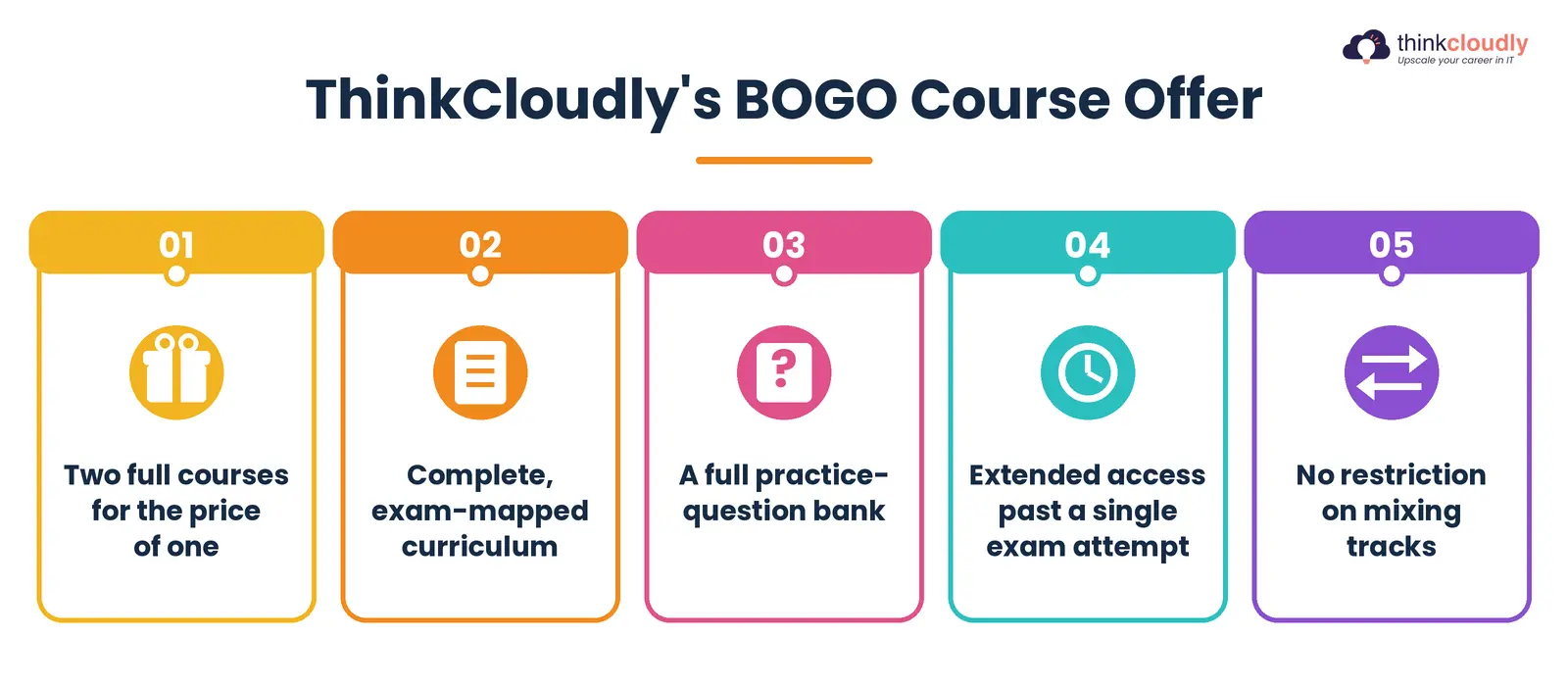
- Two full courses for the price of one — pick any course in the catalog, add a second course of equal or lesser value, and the second one is free, not discounted.
- Complete, exam-mapped curriculum on both courses, covering the current blueprint rather than a trimmed-down highlight reel.
- A full practice-question bank on each course, large enough to sit a complete mock exam more than once before test day.
- Extended access past a single exam attempt, which matters if a retake is ever needed on either course.
- No restriction on mixing tracks — a cloud course and a security course can be paired together, or two courses from the same track if that fits your plan better.
That last point is where most people get this two-for-one offer wrong. The instinct is to grab whatever’s cheapest as the “free” half, but the smarter move is pairing two courses you’d genuinely use — a platform certification with a security certification, for instance, or a foundational course with a more advanced one in the same track. Treated that way, this week’s course bundle turns one certification budget into two usable credentials.
Festive Season Pricing
Course pricing swings by track more than by provider, so here’s roughly how the major categories compare this week once ThinkCloudly‘s two-for-one offer is applied against the regular catalog price.
|
Course Track |
Cyber Monday IT Course Deals Price |
Best Suited For |
|
Cloud Computing (AWS, Azure, GCP) |
Pay for 1, get a 2nd course free |
Cloud engineers, infrastructure teams |
|
Cybersecurity (Security+, CEH-track) |
Pay for 1, get a 2nd course free |
SOC analysts, security engineers |
|
Cloud + Security Combo |
Pay for 1, get a 2nd course free |
Engineers moving into security roles |
|
Governance, Risk & Compliance |
Pay for 1, get a 2nd course free |
Risk analysts, audit and compliance staff |
|
Data & Cloud Analytics |
Pay for 1, get a 2nd course free |
BI analysts, reporting leads |
Who This Online IT Courses Sale Actually Makes Sense For?
Not every learner benefits equally from a two-for-one structure, and pretending otherwise just leads to a half-finished course sitting untouched in January. This particular cyber monday IT course deals window tends to work well for:
- Professionals already working hands-on in cloud or security roles who are missing only the paper credential standing between them and the next pay grade.
- Anyone who already knows they’ll want a second certification within the next year or two and can use the free course now instead of paying full price for it later.
- Career changers moving into tech from an adjacent field who want a structured, exam-mapped course rather than scattered free tutorials pieced together from forums.
- Self-studiers who’ve been circling an exam date for months and just need a firm deadline to actually commit.
- Teams or small groups where two colleagues can split a single BOGO course offer and each walk away with one certification apiece.
If none of that sounds like your situation right now, there’s no real cost to waiting. This same online IT courses sale effectively repeats every year around this exact week, so buying a course before you have a plan to finish it just moves the spending earlier on the calendar instead of saving you anything.
Mistakes That Quietly Undo a Good Cyber Monday IT Course Deals Purchase
The same handful of errors shows up every single year during this kind of sale window, and all of them are avoidable once you know to watch for them:
Chasing whichever course has the loudest discount badge instead of picking one that actually maps to your current or target role wastes the free course entirely — a cloud-heavy certification helps very little in a job that’s mostly governance and compliance work, and the reverse holds just as true.
Grabbing three or four courses at once because the two-for-one deal feels too good to pass up, then finishing none of them before the access window narrows, is another common trap; one completed certification is worth more on a resume than two half-started ones.
And skipping the accreditation check entirely — assuming any provider running this seasonal promotion is automatically legitimate — is worth five extra minutes of verifying authorized-partner status directly with the certifying body before paying anything.
Making the Free Course Actually Count Through 2027
Finishing the paid course and letting the free one sit untouched is the single most common way people waste this kind of offer. Both courses in the bundle come with the same access window, so it helps to treat them as two parallel commitments from day one rather than planning to “get to the second one eventually.”
Most certifications also carry continuing-education requirements once you’ve passed, so that renewal cost is worth budgeting for the same day you pass the exam rather than scrambling when the notice eventually lands.
Given the skills-gap and salary data cited earlier, a certification earned through this online IT courses sale tends to pay for itself well before the renewal cycle even comes up. Enterprise demand for cloud and security talent isn’t slowing down heading into 2027, and a two-for-one certification purchase made with an actual plan behind it does more for a career than the same money spent chasing whichever single course had the biggest discount sticker.
A Personal Note
A former coworker texted me this week asking whether she should finally pull the trigger on a security certification or wait and see if an even better deal shows up later. I told her what I’d tell anyone in that spot: the deal isn’t really the deciding factor. She’d already known for the better part of a year that the one thing standing between her current role and the one she actually wanted was a credential, not more experience.
For someone already in that position, a two-for-one offer is simply the moment the math finally works in her favor — the decision was made long before this sale appeared, and the free course just made it cheaper to act on.
The people who end up disappointed by a certification purchase are almost always the ones working backward from the discount instead of forward from an actual goal. If you’re not yet sure which track genuinely moves your career forward, spend this week figuring that out before spending a cent on it.
The price will still be fair once the answer is clear — but if the answer is already clear, there’s very little reason to let this particular two-for-one window pass by unused.
Note :- Pricing, offer structure, and course inclusions above reflect typical ranges for this sale season and are subject to change without notice — confirm the exact terms, voucher inclusion, and access window directly with ThinkCloudly before enrolling.